
I first heard about James Castle at the Outsider Art Fair on Houston Street almost twenty years ago.
A gallerist told me a story that lodged in my brain, one of those stories that I may have misheard and embellished but still seems so touching and relatable that most of it had to be true.
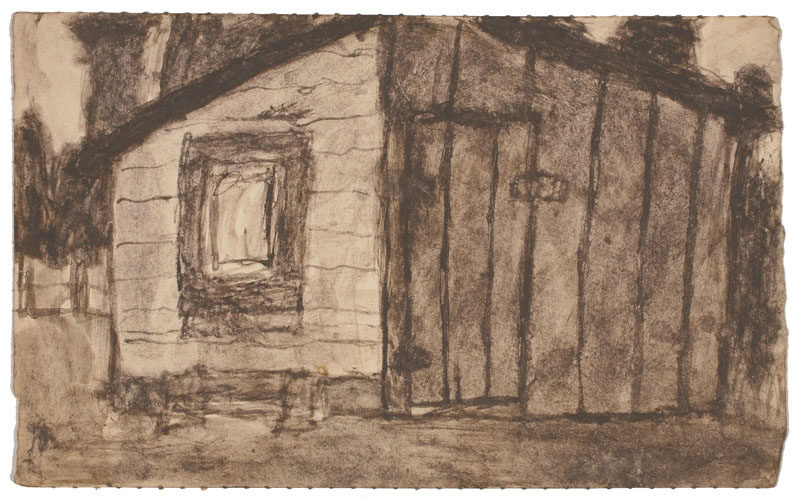
The story was that James was a deaf mute who one day started to make art. He lived on a tiny farm in a remote part of Idaho and knew nothing of the Art world beyond. He taught himself to make art, using home made art supplies. He would draw on any piece of cardboard that came to hand — many of my favorite pieces were on the backs of unfolded ice cream cartons. He made his own ink, mixing soot from the wood stove with his own spittle. He soaked the pigment out of crepe paper to add color to his paintings. He drew with sharpened sticks.
What I remember most vividly about James’s story was his subject matter. Profoundly deaf and unable to use sign language, James lived his whole life with his family, subsistence farmers who barely got by. And so James compulsively drew houses, dream houses, big and small, making hundreds of paintings and drawings of the houses he saw and the ones he imagined.
One day, James’ nephew came to visit. Bob worked at an art school in Oregon and recognized the genius of James’ house drawings. Soon the Castles were overwhelmed by offers to stage exhibits and to buy the art. The family finally had enough money to build James his own little house on the property.
As soon as the house was completed and James moved in, he never made paintings of houses again. His work was done.
Art has that power for me too — not to create real estate perhaps, but to focus me on what’s really important. To communicate with those parts deep inside me that don’t have a voice. To take that yearning and draw it out.
In my case, it’s not as simple as just wish fulfillment. It’s a barometer on how I feel, my degree of confidence or of focus. It shows me the value of what I have, the wonders of my city, the treasures in my home, the beauty of the people who fill my life. It puts a beautiful gilt frame around the things I have been too distracted to see.
Drawing alone can clear a path through the fog and chaos and help me see what I truly want out of life.
But unlike James, my work will never be done. At least I hope not.

 Danny Gregory