Notes from a chat with Julie Dermansky

julie-journal-1

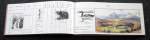
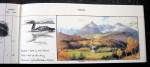
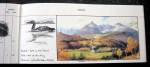
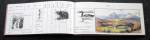
Julie Dermansky: Journal page – European monumental architecture

Julie is one of my favorite artists and she has always been a huge source of inspiration and encouragement to me. She is so committed to making art and has a lot of experience in how one survives financially and psychically as a creative person.

JULIE: Inspiration is overrated. It’s all about discipline. There are glimmers of inspiration, when you lose touch with time and place but you can’t wait around for that. When I start working on something where I am so excited it’s like some sort of drug, I’m just alive. But the only way to get there is through discipline.
It doesn’t matter why you make art, you’ve just got to make stuff and eventually you’ll understand. I won this grant that allowed me to travel for a year. I just had to write four letters back to the foundation over that year. That was it. I was 20 and I could do whatever I wanted. So I just made drawings in my journal, drawing monumental architecture all over Europe. That was my only discipline, my commitment to do at least one drawing every single day. And because the fancy journal books were too expensive, I made my own, ripping up water color paper and tying it together. It evolved as I went. And when a book was filled, I would send it home and I had no idea what the value of what I was doing could be until I came home and saw all those journals. It came out of me with no forethought and I’d never done it that way before. It just came out that way. I didn’t worry what people would think, I just tried to be honest. And I didn’t worry about the quality of the drawing, I just went with it. I hated having a page I didn’t like so I kept working it until I liked it. Those pages are so vibrant and visceral, so raw. I don’t know if I can get back to that looseness, pure hand /eye. The more time I had the more I let go, the looser, the better it all got. That art was my reason for getting up each day. For me, travel is a lot of work. Nothing planned, figuring everything out on the fly, real work.

julie-2Julie Dermansky: Steel Gate at her studio in Deposit, New York

JULIE: I was at the art students league taking drawing and this teacher came behind me and I was making a mess like I do and he said “Ah, a lefty. But its nothing like Rembrandt,” and I was, like, “Rembrandt? Fuck you! Why would I draw like him? He was great but he already drew like that. I’m not here to do that.”
If I can recognize something you did without being told you did it, you have done something magic, you have created a visual vocabulary. Good, bad, doesn’t matter you’ve created something brand new. Everything’s been tried but no one can draw like you, unique, special. It’s not the materials, it’s you.
Everyone can multiply. You struggle at algebra but you can learn it. Everyone can draw. Everyone can do their times table. It’s just a matter of developing the skill. Drawing is a skill and a science, like learning perspective.
I love Tennessee Williams – At the beginning of Cat on a Hot Tin Roof., he says something like “Every human being is in their own jail call and all we can do to communicate is to take the thing you know the best and put it out there. The strongest part of you that everyone can interpret in their own language.” He took his internal dramas and made works of art that are in the mainstream yet retain that rawness. You don’t need to know all about his internal extremeness to enjoy his work.
I don’t know why I make the things that I do and I don’t overanalyze it. I never took formal art education classes, I learned it from art historians, composition, color theory, I learned it right from the work, not from academics.
There’s work I’ve done that was completely derivative and I wouldn’t show it. It’s not part of my vocabulary. It’s my homage to the artists I love.
If you go to a museum or a gallery and you have to read the thing on the wall to understand the art, the work is bullshit. However if you go that museum and have some sort of response to the work you can’t understand, and then you read the wall, and reading the explanation helps you develop another layer of appreciation and understanding, that makes the work more rewarding, it will be a beautiful thing.
I went to see the Calder retrospective at the Whitney when I was in second grade. And I appreciated that he is a great artist but I just didn’t like it and it bugged me and I said to myself, I can make better things than that and I knew that I would. I was that confident as a child. Then looking at Picasso, I thought how did he make so many pictures and then when I really started rolling with my own stuff, I said, Oh, if you make work everyday it’s not that hard to make that much stuff. I just compared myself to the pros and never found that conceited. In Europe, it’s very conceited to say ‘I’m an artist’ but it’s fine to say ‘I’m a painter’ or ‘I’m a sculptor’.
For me the definition of an artist is someone who has created a visual vocabulary. I may not like it. But when you look at a retrospective of an artist’s work, you can check it and look for the vision, the palette, even if you don’t respond to it. It’s not about liking but seeing quality, consistency.

julie-bird

Julie Dermansky: from the Lumis Collection in the basement of the Robinson science center, Binghamton, NY

JULIE: My work isn’t really done until it’s out in the world.
My uncle is an artist and told me, never sell anything for less than say $100, or make up your own number. If it’s less than that number, then just give it away. But don’t sell it. I like that rule. Keep the value for yourself. Joseph Cornell hated to sell his stuff. Leo Castelli could never get it away from him.
Andy Warhol said make pictures you’d sell for $100 and others you’d sell for $10,000. That way you just get your work out there by having something for every budget.
Some people feel the universe should take care of you, and others get out there and hustle.
There’s always a way to make money, one way or another. I grew up around the drive to make it for its own sake but for me it was a way to be an artist. Being an artist costs money and I needed money in my pocket. I started making and selling jewelry when I was 14. In college, I would go to the dorms, not be shy, just say, “would you like to see some jewelry” and spill it on the bed. I’d make $400 or $500 which made it pretty impossible to go do some job for $6 an hour. It didn’t make any sense. My art objects always sold.
I’m not qualified to do anything so it’s lucky people have always bought my stuff.
People romanticize self-employment but it’s a heavy burden because you can’t count on regular money coming in. I’ve envy people with steady jobs on one level. I have no safety net but then again no one is 100% safe and the rug can be pulled out from under anyone.
A lot artists don’t do their homework. You have to hustle, have to keep going, Have to have faith in your work. You have to be willing to go below your level sometimes without bumming out. If you insist on selling everything for thousands and never do, you’ll end up with no money and no collectors. If you need the money, don’t feel bad, get your work out there. That’s what makes your work into a commodity, because it’s visible. I don’t know who created the rules about artistic integrity, that money is evil, that you shouldn’t make work in order to sell it, that it shouldn’t have a decorative element. And no art schools have classes about marketing. It’s frowned upon.
It’s so easy to give up, to forget to market, to forget to find a market place, to not do your homework. You’ve got to feel confident about your work, that’s a key to salesmanship. You’ve got to learn about grants and sources of funding. Artists have a knack for being self effacing and for being overly self critical instead of learning skills and promoting themselves.
The art world is very seductive and full of hangers-onners. there’s so much energy and people want to latch on to it. When I’ve had relationships that have reached the point where men say you’ve got to decided between me and the work, it’s too much and there just wasn’t a choice for me, of course, it was the work.
I can’t be something else, even if I wanted to.

To see more of Julie’s work, please visit her website.

Cross Country

trip-mapI have just returned from a cross country trip to visit some of my journaling friends.
My first stop was in Minneapolis where I spent several days with Roz Stendahl whom I first encountered through the 45 wonderful journals she kept documenting the life of her dog, Dot.

Roz is a designer, illustrator, teacher, and writer who has been enormously generous to me with her time, advice and friendship.roz
Roz has been teaching me a great deal about pens and watercolors and I was anxious to see her studio. She has every conceivable type of paint and brush, marker and pencil, not to nention 3,000 rubber stamps in a painfully orderly library. My current journal was bound by Roz with 140lb. Arches watercolor paper and a hemp canvas cover. It was terrrific to work in and I have really been enjoying working in a book with landscape proportions once again.

Spending time with such a dedicated, prolific, fastidious, creative and talented artist was a great treat. I was really happy with just about every drawing and painting I did in Minesota and it was largely due to Roz’s example. She’s so full of energy and ideas that I really wish I’d had another month to visit with her.
Our drawing trip began at a hilarious junk store called Axman filled with my favorite sort of drawing subject – intricate gizmos. I couldn’t make up my mind what to tackle until I saw Roz and her mini paint box hovering over a gas mask.
ottersNext we headed to the Minnesota zoo and turned ourselves into major attractions by drawing various critters. Roz draws standing up so I joined her and foud it quite comfortable though it was a little tricky propping up my paint box and my pub towel and all.
I’ve never drawn at the zoo before, thinking it would be impossible to capture moving animals but I discovered that they tend to assume a handful of positions and if you keep a bunch of drawings going at once you can go back and forth between them to capture the different positions. we draw a bunch of beavers in an overly chlorinated pond. One of them scratches himself with feverish determination.

Roz is a prodigious notetaker; she speckles her drawings with all sorts of observations about her subject, writing down colors, behavior, funny things passers by say to each other.
I tried to emulate her but all of my notes tend to be a string of jokes instead. But I do love the look of hand writing and drawings together.

gasmask-etcIt’s quite amazing how people just zoom past exhibits, checking off the animals they’ve seen as if it was a competition. If they linger, it’s often to say something mind-blowingly ignorant or mean, particularly the adults.
Drawing them makes me appreciate the incredible miracle theses beats are and how extraordinary that they are right here in front of me, in Minnesota.

lion1It’s so intimate to be just on the other side of a thin sheet of glass watching a slumbering lion. I was no more than a foot from him; I could have taken his big soft catcher’s mitt of a paw in my hand and felt the coarse hair of his beard were it not for the window.

After two zoos, we decided to check out some cadavers. I love natural history museums and Minneapolis’s is a pip — the specimens were posed in wonderful dioramas with wax leaves and meticulous details. I enjoyed standing close so the painted backgrounds filled my peripheral vision and I could imagine that I was standing in the forest with wild beasties. It was a nice change to draw a critter that wasn’t going to turn around and scratch its butt, lick its genitals or wander behind a tree in mid-drawing.

We were basically the only visitors looking at the taxidermy and, after drawing this sheep, I took a nine minute nap on one of the hard wooden benches. The museum also had a touchie-feelie exhibit where you could pet taxidermy and toss skulls around so we drew a few of them.skull20

My time with Roz and Dick was running out; I took pictures of her voluminous collection of hand-bound journals, we ate dinner at an Afghani restaurant, and the next morning I began the most arduous leg of my trip, flying to San Jose, connecting to Portland and then renting a car to drive 300 miles across Oregon to visit my pal, d.price.

rosz-studio.jpg
Here are a few more souvenirs from Minneapolis. I so envy Roz her neat and orderly studio. What you don’t see are the big computer/scanner/printer end of her studio as well as a second room crammed with journals, research materials, bookbinding stuff, and some 60 drawers full of boxes of rubber stamps. Heaven!

collage.jpg
Upon arriving in Portland, I began the longest drive of my life, across Oregon. I am a native NYer and don’t drive much so tackling the endless, dead straight roads of the West was a new and somewhat daunting experience.

signs.jpg
I broke the trip in the small town of Pendleton, bought myself a magenta cowboy shirt, and checked into a wee motel. The next morning, I headed out at 7 a.m. and promptly got my first ever speeding ticket.
From my letter to the judge:
Dear Judge Dahl:
On August 19, 2004, I received a traffic ticket (#32914) for driving over the speed limit. While I do not deny that I was traveling at the recorded speed, I would like to explain some of the circumstances to help you reach a final decision on the matter.
This was the first time I have driven in Oregon. I live in New York City, NY and was driving across state in a rented car. I had just come off Rt. 84 (where the speed limit is 65) and onto Rt. 82. The roads were fairly empty at this early hour of the morning and very straight. I have never driven in the West before on such long straight, sparsely populated roads and, after driving 200 miles from Portland in an unfamiliar vehicle, I did not gauge the appropriate speed properly. I have been driving for over twenty years and have never received a speeding ticket before, so I hope you can appreciate that this sort of driving is certainly not a habit with me. I’m sorry for any inconvenience I may have caused you, the officer or the State of Oregon but can assure you that I will never drive in this manner again.
I enclose a check for $237 but hope that you can see your way to reducing my fine.
Yours,
In a state of shock and high anxiety, I finished the drive and pulled into Dan Price’s little town, Joseph. After a restorative cup of tea, we headed over to the cemetery where d.price is the groundskeeper.
finally-joseph.jpg

Joseph has an interesting blend of residents. There are cowboys and construction workers like you’d expect in a small Western town. There are also several bronze foundries so a healthy art community has sprung up. There are aging hippies and young anarchist freaks. And there are a few very rich folk, some quite mysterious.
Dan’s friend Dave is one such millionaire and the source of his money is of endless intrigue to his neighbors. I proposed that he might be D.B.Cooper — he hijacked a plane in the early 1970s and then parachuted out over Oregon with the ransom and was never found. Dave collects planes and loves ultra lights. We drew this one in his hangar at the Joseph airport. davesthingOn Saturday, Dan assembled a group of local artists for a drawing get-together. We breakfasted at the Wild Flour Bakery and shared journals, then headed out to the Kooch’s farm to draw stuff. As usual, it was great to draw with like-minded folks.
It is so different here from my life. Everyone knows each other and there’s endless gossip. The pace is gentle and free and open-minded. I don’t know if I could stand small town life for long but it makes a great break.

saturday-2eagle-collage

Last winter, Dan Price’s son, Shane, volunteered to make a sculpture of his school’s mascot. Dan offered to help. Before long, the project has mushroomed, the eagle was seven feet tall and, while Shane put in a couple of hours here and there, Dan was working ten hours a day on this massive bronze bird. Neither of them had ever welded or sculpted before and they used the welding test scraps from the school’s metal shop as their raw materials.
After several months of herculean effort, the bird was unveiled at graduation and it looks like it’s been there forever. A family of yellow jackets has taken residence in a klieg horn between the bird’s scapulae.

less=more.jpg
The highlight of my visits to Oregon is always staying in Dan’s place, Indian River Ranch. Over the past decade or so, he has lived on a meadow on a river bank and had erected various sorts of residences there. He has lived in a teepee, in a one man tent and then built a kiva, an underground structure like a hobbit house. You enter through a knee-high door and crawl into a wood-lined burrow, a round room about seven feet in diameter. It has wall-to-wall carpeting, electricity, a sky light and is always 55 degrees, year round. I always sleep like a hibernating squirrel in there.
The meadow contains other buildings: a garage for Dan’s trike (he recently drove it 5,000 miles across country) ; a little kitchen/shower; a sweat lodge; an outhouse; and his most recent construction : a fantastic boulder covered studio where Dan publishes his zine, Moonlight Chronicles.
(If you don’t subscribe to it yet, I’d be very disappointed. It inspired me to start drawing, journaling, and get on the path I’ve been on for years. It is a mixture of adventure, philosophy and art that will make a serious impact on your life. I simply insist you subscribe right now. Come on! It’s inexpensive and wonderful! Or at least download yourself a copy of your license to be a kid).
The meadow has a lawn, a vegetable garden, and a couple of acres of wilderness. It is a Walden-esque paradise.
I have created a special gallery of images from the meadow. I hope they bring you peace.

baylerWe finish up our sketching for the day and pack up the car for the hour drive to LaGrande where Dan’s parents live, stopping en route to pick a bouquet for Joanne Price.

The Prices have a large bison ranch and I drive out with Dan’s dad to visit the herd, about a hundred of these monsters and their families. Dan’s mom is an accomplished pianist and after dinner she plays beautiful music as I draw. The serene evening is jarred by the abrupt and uninvited arrival of Dan’s ex-wife, Lynn, who, as is her wont, causes a scene. Nonetheless, I sleep well and head out early for the long, leisurely drive back to Portland. No speeding tickets this time!

joannedan-in-fieldbison

quincy

Last stop on my cross-country trip: the Mission district of San Francisco to visit my e-pal, Andrea Scher. If not for Andrea, this blog wouldn’t exist. Last December, she convinced me that I could and should start a blog of my own after I showed admiration for her site, Superhero Designs, a combination jewelry showroom, photography gallery and creative coffee klutsch.
andrea We spend a couple of days walking around her neighborhood, drawing, shooting photos (she also convinced me to buy my wonderful new Canon Rebel digital camera), and talking about art, commerce, and her time working for SARK. Andrea is wise beyond her years and has given me so much sound and illuminating advice. Like many young people and creative and sensitive people she is still looking around to define her own identity, to figure out what she should do for a living, how to make ends meet without surrendering her spirit and her creativity.
For a weird West Coast experience, she took me to Psychic Horizons for a psychic reading. An intense looking man examined my aura and told me that he saw a floating glass vial of red liquid that indicated that I had a substance abuse problem. All I could think was that perhaps the vial represented ink, the only substance I indulge in with any regularly. Then he cleaned my chakras and filled my being with an imaginary pink liquid filled with golden flecks. I felt rejuvenated and my walled was lighter by ten bucks.
There was a madonna in the psychic courtyard and, to avoid being ensared in conversation by any of the inmates, I drew and Andrea photographed her.

sf

balmy-casa

“Mi Casa”

When I was in San Francisco, I stayed in a little guest house called “Balmy Casa” . It was a lovely apartment that even came with two bikes to rise up and down (puff) the hills of the Mission. My favorite thing was the street, every house of which was covered in spectacular murals. There is street art all over the neighborhood and, on one morning, I saw no fewer than four artists at work on fresh ones. New York has occasional murals but they are are rarely well done and quickly desecrated. In SF, the art makes the street glow. If I wasn’t so in love with NYC, I would definitely be packing for ‘Frisco town.
I took a few pictures of my neighbors’ digs to share with you.

Summer past

During the summer of the Iran-Contra hearings, my wife and I rented a remote farmhouse in Delhi, upstate New York. Each day, we would lie on inflatable rafts in the pond as our dog hunted for frogs in the reeds. Each evening, we would barbecue and play gin rummy. Each night, the terror returned. The darkness was impenetrable. The silence was unbroken but for the occasional creak from the old house or the vermin skittering in the walls. We lay awake, clutching the counterpane, as the same lone pickup rattled back and forth across the county road beyond our front door. We whispered to each other: Gein, Gacy, Bundy, Berkowitz, Bianchi, Buono… In the morning sunshine, those fears seemed absurd. But finally, unable to get a decent night’s sleep, we cut our vacation short.

That Christmas an item appeared in the Times. A serial killer had been arrested in Delhi. Operating in the area for years, he had been particularly active the previous summer, burying six prostitutes and hitchhikers in the farmyard directly next door to the one we had rented. The following summer, we went to Disney World.

Published in The Morning News.

Homeless Journal

Recently, I found myself angsting about money. I decided that I should go out and talk to people who had none. I approached homeless people in my neighborhood and asked them to share their stories with me. At first it was terrifying, breaking the barrier. But I soon found that if you don’t want anything from people but their story and perspective, they are enormously forthcoming and trusting. They’ll soon forget to wonder why you’re asking.

These images and stories were published in the Morning News where my journal entires were transcribed into text.

Living well through bad drawings

gravestone

When some people see an illustrated journal, they say, “Wow, that’s great. I could never do that.” With some coaxing, they may be persuaded nonetheless to give it a try. Others say, “Wow, I’m going to do that.” And they start too. And quite a few say, “Huh, where do you find the time?” then use your journal as a coaster.
It’s comparatively easy to start. To bring yourself to draw your breakfast once or your coffee cup once and to keep it up for a couple of days. Ideally those first few days infect you with the fever and you’re compelled to carry a long series of journal books around with you for the rest of your days.
But more likely, your initial enthusiasm will wane. You’ll forget to do it one day, give in to resistance the next, then feel like you’ve broken the chain, the narrative is lost, a month’s gone by, and you drop it altogether. Why? Often it’s because you are disappointed with your drawings. You may say you don’t have the time, forgot your book, grew bored but it’s really because you aren’t that impressed with your drawing skill. You haven’t made something that looks like Art.
I don’t think that illustrated journaling is really about doing great drawings. You’re not out to make something that you could frame or give as an Xmas present. I’m not really into doing the sort of exercises on perspective and tone that you see in most drawing books, exercises that will move your skills to another level artistically. Not that you shouldn’t do them if they are fun or if you have some other goal in mind but I don’t think they are essential for the true purpose of illustrated journaling.
That purpose? To celebrate your life. No matter how small or mundane or redundant, each drawing and little essay you write to commemorate an event or an object or a place makes it all the more special. Celebrate your hairbrush and it will make you appreciate the intricacy of the bristles, the miracle of your lost hair, the beauty of you. Sounds sappy but it’s in there. Draw your lunch and it will be a very different experience from bolting down another tuna on rye. If you take your time (and we’re just talking maybe 10-20 minutes here, folks) and really study that sandwich, the nooks and valleys, the crinoline of the lettuce, the textures of the tuna, you will do a drawing that recognized the particularity of that sandwich,. That’s the point: to record this particular moment, this sandwich, not something generic. If you approach it with that attitude, you will create something as unique. reaching that place is just a matter of concentration and attention. A brief meditation and you will have a souvenir to jog your memory back to that a moment forever more. Imagine if you can keep doing that, keep dropping these little gems in your day, recognizing the incredible gift you are given each morning upon awakening. You will be a millionaire.
There’s a demon in your mind that will fight this, that will tell you your life is unworthy of acknowledgment, that today sucks through and through. It will tell you you have no time for this, that you are too harried, too stressed. Which brings me to Marybethd who wrote to me from Nebraska where she just had emergency eye surgery. For two weeks, she could only see the floor. She wasn’t sidelined though— she drew all of her visitor’s feet. She pulled art out of that tragedy, celebrated her visitors, created a positive memory that she will have to cherish long after her vision is back to normal. He nightmare became a lesson.
I have gone through my fair share of shit. My regret is that I didn’t celebrate all of it. I can’t say it often enough: life is short, art is long. Get the habit.

Inspiration Journal: Tony Forster

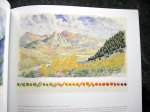
This guy is scarily good. Tony Forster’s watercolors depict his treks around the world, to the rain forests of Costa Rica, the volcanic island of Montserrat, Bolivia’s mile-high lakes, the slopes of the Sierra Nevada and the scorching desert of Death Valley. I first saw them in a froo-froo gallery, stopped dead in my tracks on Madison Avenue, thinking “Wait, wasn’t I supposed to have made these, y’know, in some parallel universe?” On the edges of his gorgeous landscapes paintings (he paints on sheets of watercolor paper, usually 22″x31″), he attaches little sample swatches, topographic maps, and then stencils, types, and hand writes notes. This softcover book of his work was published by the Frye Art Museum in 2000.

Inspirational Journal: GI Sketchbook

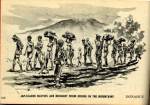
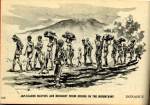
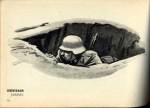
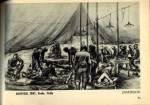
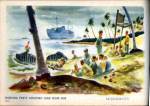
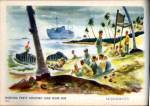
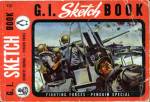
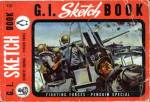
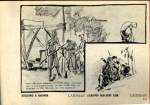
For anyone who has ever felt that they had no time to draw, were too stressed out to draw, had nothing interesting to draw, I offer a few pages from “G.I. Sketch Book”, published by Penguin Books on July 1944:

From the FOREWORD
WHEN YOU get upward of ten million men together from every walk of life, you find a large number of them who think pictorially and who burn with a desire to record their thoughts. What cries out more for the permanent record of the artist than enormous masses of men in combat, in preparation for combat, at rest, or at play! The skill of an artist is not always the same; there are influences that heighten or lessen the ability to transmute mood and scene. If he is greatly moved by what he sees, it is very probable that he will transcend his ordinary technical limitations and produce something that will come close to satisfying even him.
The pictures in this book have all been made by American G.I.’s and, as you thumb your way through the pages of sketches and finished pictures, bear in mind under what conditions some of these chef d’oeuvres were produced. What foxhole did a marine use as his studio? What bombed and burning deck inspired the sailor-painter to portray magnificent light and atmospheric effects? Many scenes were sketched on wrapping paper, some painted on ship’s canvas with ship’s paint. One lad in the Air Forces sends his wife a daily letter from China, from India or from Burma, constantly illustrating a point with a pen and ink sketch. This is what he writes about his G.I. life and art: “It’s a nice feeling that though I am so far away, I am still contributing to the cultural life of our community. Also to know that I am still doing art work in the combat zone, and under real primitive and warring conditions, proves conclusively that the desire for the fine and aesthetic is not a shallow, meek appendage to the lives of humans, but a forceful necessity to life.”

Inspirational Journal: Muriel Foster

This is one of my prized possessions. In fact, I prize it so much I repeatedly give it away and then go hunt for a new copy.
Muriel Foster(1884-1963) started keeping this diary in 1913 whenever she went fishing and, for the next thirty-five years, filled it with sketches, watercolors, observations and poetry. While she was a professional artist, this little diary was just for her and never intended to be shown. Her grand niece released it for publication as a facsimile decades after her death and it is the work for which she’ll always be known (if I have anything to do with it). You can find a copy or two of the book on abebooks.com but act quickly — I may snap it up first.

Booking a vacation

lighthouseI dream very intensely on the first few days of a vacation, as my brain reorganizes its hard drive. Weird hallucinogenic dreams feather into each other, dredging up dramas, ancient and new. Old bosses, old addresses, old mistakes, reappear in new masks to cavort on the brinks of skyscrapers or wrestle in Jello®. It’s like File Day, as rusty drawers squeak open, folders and envelopes get hauled out and dumped in piles, sifted through, tossed or reformatted. All this housework doesn’t necessarily result in clarity but it’s an important part of growing and assimilating experiences.
Here, however, are a few of the things I gleaned while lying poolside:
• It’s a mistake to start a vacation by saying, “I sure hope nobody gets sick on this trip.” I am a hardy type, rarely sick, but in Tuscany I got a virulent ear infection (my first in thirty five years); in Puerto Rico, Jack got chicken pox; on the Jersey shore, I got poison ivy (that required two courses of steroids) and so, inevitably, we succumbed in the Dominican Republic too: head colds, coughs, skin allergy, sunburn, insomnia, and diarrhea made for a fun time.
• Cheap rum is cheap for a reason.
• Al Franken is funny, right, and a bit too much of a shrill wonk.
• You can only draw so many palm trees and no one but Albert Bierstadt should try to paint sunsets.
The Da Vinci Code is an abominably written regurgitation of Holy Blood, Holy Grail, a preposterous best seller I read ten years ago and is just a disservice to Leonardo. It wreaks with wooden dialogue, leaden characters and lumbering plot twists and treats art like some sort of word jumble. Wait for the TNT miniseries to come out.
• European and South American pop music uses harmonizing vocal chorus in almost every hit. American pop almost never does.
•Jhumpa Lahiri richly deserved her Pulitzer prize. Many of the characters in The Namesake are still hanging around me, offering me pakoras. I can’t wait for her next one.
• Rapidographs leak after air travel.
How to be Good suggests that Nick Hornby may have been a one or possibly two book wonder.
• I still love James Herriot, almost as much as I did at twelve.
Sixpence House is the story of Paul Collins’ year in Hay-on-Waye, the Welsh town with 1,500 inhabitants and 40 antiquarian bookstores. He is a deep and infectious bibliophile and the book is very entertaining. If you love sifting through shelves of dusty obscure books that no one has read in a century (as I do), it’s worth a quick read.
• Topless sunbathers make me yearn for more covering, rather than less.
• A.P.P.B. (Always Pack Peanut Butter)
• It’s nice to go traveling, but, oh, so nice to come home.

Tanned, semi-rested and ready

swisscheeseWe just came back from a pleasantish week in the Dominican Republic. Every so often, I would stagger out of my deck chair and draw some of the scenery. In lieu of sending you a postcard, I have put together a special little gallery of my favorite journal pages.Check it out here.