The art of friendship

20140323-085717.jpg
My pal, Tommy Kane and his wife Yun just spent a few days with us in California. It was so good to have them with us and we spent a lot of time eating in good restaurants, wandering through Venice and, of course, drawing.
I have known Tom for thirty years and we have drawn together for the last ten. Despite how close we are, when it comes to drawing we are quite different. Tommy is an illustrator, an artist who works toward beautiful finished pages, every one suitable for framing. His journals are immaculate, and each page is perfect from corner to corner. He just put out a lovely book of his work and it is a treat to have all that perfection in one place. The experience of looking at his journals is like looking at a final, published book—so immaculate, so rich.
My style of drawing is far more hasty, slapdash and impatient. And that can be a problem when we draw together. Tom expects to spend hours and hours doing a single drawing. He has a very specific way of doing a page, starting with his uniball pen, putting in loads of careful hatching, then adding watercolors and finally a layer of bright pencil marks. He’d prefer to do the entire thing on location, perched on his little stool. He has a patient wife/traveling companion and has drawn this way all over the world.
When we sit down together, as we did on the Venice Boardwalk and on Lincoln Boulevard, I find myself adjusting to his pace and do horrible overdrawn pages that don’t look like my normal work. I find it impossible with the way I draw to spend hours on a single page, Tom also compromises when we’re together and usually only manages to finish his line drawing before I start squirming and pacing and has to color his picture later on, from a photo.
I don’t begrudge Tom his slow and careful pace. He manages to capture so much detail and observation and yet keep his work fresh and bright. I draw, like almost everything else, at a neurotic pace, and the luxury of time just stirs up the mud.
Everyone has their own speed. Our friend Butch draws at a glacial pace, thinking nothing of spending ten or twenty hours on a page, D.Price, on the other hand, can knock out a drawing in three minutes. We have all drawn together and it’s like a tap dancer, a heavy metal guitarist, a tuba player and a sitarist trying to jam.
Whenever I go on a sketchcrawl, I have to adjust to the group, moving toward the mean of all the people drawing together. And it’s good to challenge that someotimes, to go faster or slower to add variation and stretch. In the long run, though, the work I do with others is never my favorite. It’s more of a fun, communal, social experience than a satisfying artistic one.
I’m not antisocial and I love to hang out with my friends.
But I’d rather pee, nap and draw alone

PS if you’d like to draw with Tommy Kane, join his klass at sketchbook skool.
Let them draw cake.

alliknow tshirt

I never paid much attention in art class in high school. I never went to art college. I’ve never gone to a single weekend watercolor workshop. I’ve just blundered along for a decade or more, spilling ink, contaminating my palette and painting on non-archival cardboard.

I’m uneducated. And so when it came to teaching other people how to make art, gulp.

This year though I’ve committed to shedding my “aw, shucks, I never lurned nuffin” guise and start trying to be a decent teacher. At first, that was like sitting down with a delicious, lavishly decorated three-tiered German chocolate cake and trying to work out the recipe. I thought I’d have to retrofit everything I have layered onto my brain through all these years of experimenting and dissecting art in museums and talking to people whose work blows me away and weeping bitterly at another god-awful journal page.

I like talking about ideas and all of the experiments I’ve done and the discoveries I’ve made but when I taught classes I thought to give folks their money’s worth I’d better start with the basics of drawings as they come out of all the how-to books in the library. Contours, negative space,  proportion, etc. That is useful stuff to know, in hindsight, but it can be awfully dry. Like starting to learn a language by spending a few semesters studying grammar or learning music theory before you pick up your first guitar.

My old hobo pal, Dan Price would say to me, “I just draw a shape, then the shape next to it, then the one next to that and before long you got a drawing that looks like something and then we can go have  a beer.” And that’s probably the most valuable art lesson I ever got. Just start somewhere and keep it interesting so you keep going.

Keep it interesting.

What’s been so incredible about working on Sketchbook Skool is seeing all the ways my friends approach the assignment we have given them all: to boil down everything they know about drawing and journaling into a one-time, one-week klass. And they’ve all done completely different things! Nothing you’d find in a  textbook. Just the stuff that comes out of them when they sit down to draw, as varied as they are. There’re no detailed recipes, but there’s lots of delicious cake and, by watching them bake it, you come away just knowing how you will do it. And that’s the key, how you will do it.

All of which has made me do two things: one, rethink the workshops I’m going to be doing, starting with the one at the Open Center in New York as the beginning of next month.  and two, have really fun doing it. Because instead of teaching others how to do what I  was never taught to do, I’m just going to grab them by the scruff and toss them into the deep end. I’m thinking of all kinds of ways of getting people who are deathly afraid of drawing and stabbing a syringe full of adrenaline into their artistic hearts. And the same and more goes for people who think they all know there is about drawing but want a little something to spice up their marriage to the muse.

I have had that feeling so often with drawing, when you sort of sigh and the pen feels like it’s made of lead dipped in shit and then suddenly there’s a hairpin turn that rattles my bones, and I’m off on some wild groove through a place I’ve never been before and it’s all very new and energizing and the page I’m making is fresh and sparkly. Hey, and don’t forget, at this point I am a clown school grad so I know first hand how to slip on a red nose and get embarrassing.

My revelation: it’s not about showing people how to read a map and use a compass and where to get their shots and what to pack and where all the tourists go for pizza. It’s about flinging open the door of the plane, grabbing hold of them and jumping the hell out in the middle of the jungle.

So I’m thinking of weird and silly things to do that will either send them off itching to draw every waking minute of every day or lining up at the registrar’s office to get a full refund. (Hey, and if you have any genius thoughts I can totally steal, let me know.  I still have twenty-three days till the workshop).

I think there’s a week left on The Open Center’s Early Bird rate so if you like worms, fly over to their web site and sign up.

My way or the highway

readingWhen I was nine in Pakistan, my grandfather’s chauffeur drove me to school every day. After a year, my grandfather told me that today he wanted me to tell the driver how to get to school.  He instructed the driver to follow my directions to the letter and we would see where we ended up. Ninety minutes later, we ran into the Indian/Pakistan border. I had guided us out of the country. I shrugged and the driver turned around and took me to school.

Living in Los Angeles means spending a lot of time almost lost. I am forever heading toward destinations unknown, with no landmarks to aim at, no Empire State to reckon by, no buildings more than a story or two tall, the horizon shrouded in smog or the marine layer. And Los Angeles, even more than New York, has no time for the timid, does not allow you to hesitate and peer around in confusion or slow down to read road signs or fumble for the map. It’s a brutal town that way.

Thank God for Roger L. Easton, the inventor of GPS. For nearly six months, I have relied on that computer lady to tell me exactly where to go anyhow to get there. Actually I have three computer ladies, one of whom is an Australian man. They dispense wisdom from our two phones and our car’s built-in sat nav system. When I am feeling especially disoriented and insecure, I sometimes have them all on at the same time,  barking out conflicting commands in various accents or recalculating in disgust at my inability to follow the most basic orders.

All these decades later, I am just as lost behind the wheel of my truck as I was in the backseat of Gran’s Mercedes.  All this step-by-step guidance is now as useless as last summer’s directions for assembling my Ikea bookshelves, in one ear and out the window.  I barely know my way around town, have only the vaguest sense of where Hollywood is relative to Downtown and that there are lots of town and cities and neighborhoods in between with names that are familiar from the movies but which I couldn’t begin to drive toward if my cel service went out.

Which brings me, inevitably of course, to drawing.

For the last few months, I have gotten more and more deeply into teaching people how to make art. I’m doing workshops, I’m writing a new book, and I’m pretending to be the co-headmaster of Sketchbook Skool. So I have to figure out how to tell other people, sometimes in just a couple of hours, how to do what I have taken a decade and a half to do.
blind-handI never learned much of anything from those step-by-step diagrams in art instruction books or in “watch me paint” demos on YouTube. Following someone’s suggestion to first draw a circle and then draw two more circles and then add a triangle and then erase this bit and that till it looks like an old sea captain just has nothing to do with why I draw. I love Bob Ross’ voice and his Afro but I never learned anything about picture making from watching him paint the reflections of pine trees in a tranquil lake. 

I think the way you have to teach people is by releasing a catch hidden deep inside of them. That catch that’s locking them down with the fear of making a mistake. They are so concerned that their drawings won’t look exactly like what they are trying to draw that they can’t get off their duffs and start making some marks on paper. They so badly want to be able to pick up a pencil and draw like da Vinci that anything less unrealistic seems pointless and defeating. Instead, they waste a bunch of time saying they have no talent, can’t draw a straight line, are so stupid, and so on.

But if you can just reach that catch and unlatch it, the world of possibilities swings open. Suddenly you see that drawing isn’t a way of making wall decorations or proving you have some innate gift, it’s how you see the world.  And the funny thing is, there are as many ways of seeing the world as there are see-ers of the world.  All cameras make the same sorts of images but all artists make things differently.  As Oscar Wilde put it, ”Be yourself. Every one else is taken.”

One man wrote to us at Sketchbook Skool and said, “Before I sign up, can you guarantee that you’ll teach me to draw?” I told him, um, absolutely not. Only he can guarantee to teach himself to draw. One less customer, I guess.

So how do you teach people to make art? Well, you start by turning off the GPS lady. You can’t draw if I’m holding your hand. Instead of turn-by-turns, you start by inspiring them with some postcards of wonderful places other people have sent back from their travels and then you let them start off in a random direction.

In the driveway, you might teach them a couple of simple principles like negative space and how to take measurements but you explain that these aren’t really rules, they’re just helpful suggestions to grasp at when you worry you’re going off the rails. You hang on in the back seat and encourage them to keep going, and make a few gentle suggestions, to maybe slow down on the curves a bit, and to stop pumping the gas and the brakes together. You tell them to loosen up and not clutch the pen so tight. You point out where they made an interesting turn and you console them when they think they are hopelessly off the road. You show them that if they just keep going, they will always end up somewhere new and interesting and probably not where they thought they were headed. And the driving metaphor finally runs out when you tell them that they can and should take risks and be brave, that no one ever died making a drawing, no matter how ‘bad’ it was.

The key is to build their confidence. To let them know that they can do it. If you have confidence, then you can start to let your self come out, the self that has been watching the world through your eyeholes all these years, that has noticed odd little things. that feels deeply about certain matters, that doesn’t necessarily speak in words, and that wants really badly to share its POV with the world, if only you will let it.  You can’t force that voice and vision or even describe shortcuts to it. You just have to let it feel safe and have ample opportunity to stick is head out from that deep hole in your soul.

It’s up to you. Your mom taught you to walk. But you taught you to run. Your dad taught you to drive in a parking lot. But you taught you to drive down the 405 while checking your email, singing along with Pharrell, applying lip gloss, arguing with your husband, and remembering to buy milk.

There are no shortcuts or instruction books to being a human being or to being an artist. Every single day is a lesson and the skool year never ends.

Command Z

Day before yesterday, I was working on a painting. A proper easel painting of a still life, as if I was Paul Cezanne or Wayne Thiebaud or someone. It was quite idyllic, a mild breeze coming in the studio door, hounds slumbering on the rug, Badly Drawn Boy playing on Spotify.

I had sort of blundered into the painting as if it was just another page in my sketchbook. I had a bunch of dirty breakfast dishes piled on the table and I plunked a sheet of cardboard on my easel and started making marks. The fact that I had just plowed into it kept haunting me, a little monkey voice in my head reminding me that I’m not Jan Davidszoon de Heem and I wasn’t even painting on a canvas, for crissakes. Before I had even put the second snausage of paint on the palette, a large percentage of me was convinced it was futile.

Nonetheless, soon the whole picture was covered with a first layer of paint. It all felt a little top heavy, the things in the foreground seemed distorted for no good reason, and my palette just seemed to contain shades of brown. I was tempted to stop thinking of it as a painting and get out a big Sharpie and start drawing on top of the paint with black lines that might somehow fix it.

But a little donkey in my head kept on painting. It refused to listen and just kept traveling back and forth to the dishes, then back at the palette, then up to the painting and back to the dishes, ‘round and ‘round.

Every so often I stepped back and walked out into the garden, listened to the doves that loiter on our neighbors’ phone lines, ate a tangerine off the tree, then came back and was pleasantly surprised.  It was starting to look more like, well, a pile of dirty dishes. Fair enough.

Mid-afternoon, Jack texted me, attaching the half-dozen brilliant paintings he’d just done. I fired back a snapshot of my easel and grumbled, ”I am wrestling with a shitty painting at the moment.” He texted back encouragement and support — but what does he know about painting, he’s a kid.

At one point, I got a bit highlight mad and started putting little flecks of white on everything that could be even vaguely reflective. Maybe years of watercoloring have starved me for the luxury of using white paint, but soon my painting was a snow storm and I had to rework it all back down.

The most notable moment, and the reason I even thought to write about it today, was a moment when I was painting the corner of the teapot and the paint I had managed to get on the sleeve of my hoodie sudden slalomed across the painting and left an ugly magenta streak across what was supposed to be white china.  And at that moment (and it was a moment, so fast, so subconscious), I felt my thumb and index finger and some glinting little part of my brain simultaneously type and say, “Command Z”.

Command Z.  That’s the keyboard shortcut for ‘undo’.

What a scary moment, on several levels.  The most obvious being that, despite my new creative odyssey into my garage/studio, I still find myself tapping away at the keys of this infernal machine too many hours a day as I have done since 1983, and I have clearly been reprogrammed like some bloody pigeon in a box in a Psych 101 lab.

But on another level, despite all of the conflict between my mental monkey and my mental donkey, I don’t like to fail. I don’t want to make mistakes. I just want to create effortlessly, perfect paintings with very little work or thought.

The painting I ended up with, for better or worse, was not what I set out to do.  In fact, I’m not sure what it was I had in mind when I set up my easel but I hadn’t imagined this. And again, for better or worse, this painting, like most art worth spending most of the day doing, is a constant negotiation between mistakes and rethinking. You draw something too big or too blue, or your line’s too fat or too straight or too just wrong, and you’ve gotta just keep going, donkey head down, until it gets better. You come up with  a solution and the work gets a bit better and richer and more interesting. You don’t just drive from A to B. You zig and zag deep into adventure and discovery.

But Command Z robs you of that possibility.

Bottom line, despite my weaknesses. I don’t want to undo my mistakes, I want to triumph over them. Because the keyboard of my life doesn’t have an escape key or a delete key or control or command or return.

I blunder on and eventually get to places I’d never planned. And that’s no mistake.

after breakfast painting

The way to work

My last office was about two miles from my home.  I could walk three blocks west, hop on the subway, get off at 23rd Street, then walk the three streets and three avenues to get to my desk in about 30 minutes. I became so used to this commute, that I could read a book the whole way. Not just while sitting in the train but while walking the streets, even when crossing them, eyes down, turning the pages.

Then I began to experiment. Some times I’d take a cab. That would save me five minutes and cost me ten bucks.  When I walked, I’d add five minutes but the trip was an adventure. I would pick a slightly different path each day, because it was grassy and wanted wear, trying to never take the exact same route. I would never read a book when I walked, never wanted to. I might listen to a podcast or some music but most of the times I left my ears as open as my eyes and I just strolled. I walked year round, no matter the temperature, taking mass transportation only when it was pouring with rain.

treeMy commute went from being a drudgery to something I genuinely looked forward to. I saw so many strange and beautiful things as I walked, I connected with the seasons, with the changes in my neighborhood, with the world around me. I would get to my office refreshed and charged up.

As drawing becomes a habit, the way I draw can become habitual too. I go through periods of being in love with the same brand of pen, using the same colors in my watercolor box, reaching for the same shades of colored pencil. In some ways that’s a good thing. Working with the same approach and the same media over a long time give me more and more proficiency. I become more efficient, more adept, and able to get my tools to work just as I want them to.

But that rarely lasts. I shake things up every few weeks. In part, it’s because I get bored with the same playmates. When I grab some new media, my drawings astonish me again. They looked like someone else, someone new drew them.  I’ll study a new illustrator, a new artist, and find their influence popping up in my own work. The journey continues over new terrain.

The deep reason for my promiscuity is that I don’t want to walk through life with my nose in a book. I want adventure and I want clarity.  It’s too easy to slide into a rut and grind out more of the same. But with novelty comes a renewed awareness, another bucket of ice water over the head, the shock of the new.

Drawing is seeing is living. Keep it real. Keep it fresh.

Drawing away the veil.

like drawing because it helps me to see. It shows me what is actually in front of me. That is important to me because I’ve tended to live in my head a lot. 

I think that started when I was very small, when a lot of time the world around me wasn’t very nice and the hard walls of my skull offered me protection. I disappeared into books. I constructed theories about the world that would explain a lot of things that even to this day are inexplicable. The seismic changes in my life that were beyond my control, peoples’ disappearances, the random and selfish behavior of grownups. In my head, things could become rational, orderly and manageable.

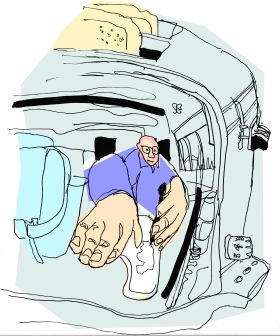
toaster reflection

But my constructions weren’t accurate. They couldn’t be. They were purposeful distortions that worked to protect me, at least for a while.  I didn’t really want to live in the real world, to face reality, because it wasn’t a good place for me. Reality didn’t use to be a friend of mine.

As an adult, when the world did mean things to me, it was very tempting to move deeper into my intellectualized view of the world.  By creating my own logic to explain the world, I could save myself from random acts.  But one pays a heavy price for disconnecting. It’s impossible to understand other people, to get a real bearing on one’s life, and ultimately to be happy. Because when you live in unreality, you can never trust your feelings.

And that’s where drawing has come in. When I hold a pen and look hard at something, I am piercing the veil and stepping out of the Matrix. It may not last for long, like diving deep to see a coral reef. But the bursting of the bubble, again and again, means breaking the temptation to disassociate from reality and run away. Instead of making habit out of fantasy, I force myself to see.

I’ve learned that being here now is not as scary as it might seem. I find now that it is easier to face even awful things things than to dwell in a fog of denial and fantasy. Some things in the world are harmful, most aren’t. Clarity makes it easier to distinguish them rather than establishing a blanket policy that keeps everyone and everything at arms’ length.  Anxiety comes from repeating old patterns when they are no longer appropriate. Treating every noise as the approach of a saber tooth tiger may have protected our ancestors but it can leave us as quivering messes. Better to face your fears, one a time, and vanquish them.

Drawing has made me look the world in the eye. That’s the only way to do it. That’s why I rarely draw from my head any more, rarely draw the cartoony faces and silly monsters that filled the margins of my high school notebooks. Now I look at a half-eaten piece of toast, a pile of bills, a broken tree branch and I boldly examine its every inch. And I do it with a pen, like an upright sword, compelling me to advance out of the shadows, to see and be seen, to take my punishment if I must, but to never again run away in fear.

Working it.

IMG_1113Sorry if I seem to have vanished.  I am hard at work on my next book, art Before Breakfast, which I have to turn in to my publisher all too soon.

I love working on this book and it has taken a back seat for far too long. It’s funny how one can love doing something and somehow forget how much, especially when it’s your own project and nobody else is prodding you back to work.

In the old days, when my creative work was being done for large corporations, there were always herds of people in suits thundering in and out of my office, making sure I was being productive.

But now, as I sit in my studio with my hounds and pre-war Swedish jazz on the radio, I’m the only one to remind myself of why I’m here. The most insistent voices are the dinging of incoming emails, the buzzing of text messages, and the growling of my stomach. Like some great Pavlovian dog, my instinct is to respond to them first, dutifully answering emails, updating my calendar, and debating whether I have to go to the gym before or after lunch.

Being an artist or an author or a blogger or an Olympic biathlete requires tenacity and discipline. Creative habits are all too easy to break, especially if there are louder voices in the room to lead you astray. That goes for me in the studio all day but probably for you too, struggling to fit in the time to draw in your journal between chores and obligations and paid work.

What I discovered years ago —but all too often forgot under the pressures of life — is that making art is not a guilty pleasure. It’s as essential to living properly as flossing and getting aerobic. Without it, life is shorter and duller, and the world lacks meaning and beauty. Not to mention it’s fun.

However, no one will tell you to make time for art. No one will find the time on your calendar to draw your lunch. No one will make watercoloring your bagel a priority for you. You must do it — and do it you must.

Speaking of which, I have to get back to work. Scratch that, I want to get back to making stuff. I hope you’ll find the opportunity to do the same.

Welkome to Sketchbook Skool

This may sound selfish but I don’t care.

Art makes my life richer and happier. And I want share that discovery with as many people as I can. The more people I meet who make art and are crazy about it, the more inspired I get to make stuff too.

On Wednesday, I spoke to a group of eighty people in Scottsdale, most of whom had never drawn since grade school. Now, a good number of them have caught the fever to keep an illustrated journal too. It was a day well spent.

I want more days like that. And I want to infect a lot more people with the passion for making art. I can travel around and give workshops and talks and speeches. And I can write more books. I plan to continue doing all those things. But I want more….

I’ve been blogging here for a decade. And I’ve been part of several great Everyday Matters communities, on Yahoo, Facebook, and Flickr. I’ve met hundreds of amazing artists and collaborated with many of them on my books.

And now, finally, thanks to an email exchange with my friend Koosje Koene, I get to be part of one of the most exciting online experiences anyone can have.

Koosje and I have been working with a group of insanely talented sketchbook artists to create an amazing project called Sketchbook Skool.  It’s sort of a high-quality online/video art school dedicated to illustrated journaling — to recording everyday life in a little sketchbook, to discovering how beautiful the world is, to getting a deeper sense of meaning and of creative confidence.

Here’s a film about it.  You can learn a lot more at the Skool’s website.

Our dream is to bring together people who love to draw and paint and record their lives into one large community and together to discover new habits, techniques, opportunities, friendships, and adventures. It starts today as we open our doors with our first online semester of klasses, taught by six artists who love to teach and share what they know. Hopefully you will join us and deepen your skills and passion, whatever your level of experience so far.

At the beginning of the summer, another group of artists will join us and we will begin the second semester of Sketchbook Skool. We already have  commitments from an amazing group, enough to fill the fakulty bench of Term Two. We plan to have four such semesters in the next year — more teachers with more stories, ideas, inspiration to get us all filling a library full of sketchbooks. And we have even bigger dreams beyond….

I know it’s selfish. It’s rare that you get to build a school just so you can take klasses in it with amazing teachers you idolize. Koosje and I think we’ve done just that. We’re lucky . And so are you. You get to join us.

Find out more about Sketchbook Skool.

The fears of a clown.

I am afraid. I am afraid of lots of things and always have been.
When I was little, I was afraid of getting lost, of monsters, of the dark.

Later I became afraid of girls.
Of exams.
Of plane crashes.
Of my stepfather.
Of fire engines pulling up outside my house.
For a while, I was afraid of going to the ATM, afraid I had no money
I have long been afraid of my body, of the hidden diseases and disasters it is concealing.
I have been afraid of strangers who write me mean emails telling me why they no longer like me or my blog.
I have been afraid of speaking to crowded rooms.
I have been afraid of death, especially the deaths of people I love.
I have been afraid to draw, afraid I can’t do it.

If we are willing to open ourselves up and be laid bare, to respond to the moment and without hesitation, to connect deeply with our audience’s eyeballs and the minds behind, we will be freed of the bullshit that holds us back.

I have come to believe that my life’s purpose, the key to my happiness, is to pare away the things I fear.

Some I have outgrown — I can now sleep with the door closed and the lights off.

Some I have had shaken out of me — I don’t fear death much anymore. Bring it on, bitch.

Some I have just faced — I have had a physical, so I know I am healthy, regardless of what the monkey voice tries to make of that twinge in my gut, the ache in my knee. I speak to groups of all sizes, no butterflies. I drive the freeways, radio blasting. I fly hundreds of thousands of miles, cool as a clam. I quit my fucking job. I fell in love again. I moved across the country. I roar, goddamn it, and I rock.

A few months ago, I overheard somebody at the gym talking about something called “Clown School”. I googled it. I found there’s one here in town. I signed up for the next intensive session. Why? Because I have no idea what it is but it sounds scary and important and utterly alien. Then I committed to not to think about it again until the day arrived. Why? So I wouldn’t chicken out.

I am now in my final day of Clown School. It was very scary — as clowns can be. Not because we wore makeup and big shoes, which we haven’t, but because we confronted many of the things that scare me the most. I stood in front of a room of strangers staring each one in the eye and telling embarrassing shameful things. I collaborated with strangers on humiliating choreography. I shrieked with fear, wailed with grief, howled with anger until I literally lost my voice. I sung a spontaneous song about what I loathe most. I danced across the stage, by myself, to demonstrate my self-confidence, and then had to do it again and again and again, until I was utterly without guile or reserve.

I have never before seen the people who saw me do this, and I sincerely hope that, though I loved them all, I never see them again. I couldn’t have done it otherwise.

Mostly, I revisited the most powerful emotions there are, familiar and often hateful emotions that I have worked so hard for so long to deny and avoid. And now, for day after day, I have sought them out and felt them surge through my body, grip my throat, shudder through my veins, cramp my stomach, churn my bowels. Terror. Loss. Humiliation. Sorrow. And joy, lots of joys — the longest lasting physical toll was the aches in my cheeks and neck and stomach: aches from too much laughter.

I am not a physical person, I spend all too much time living exclusively between my ears. But a few days of Clown School have helped me loosen my hips, have reminded me of what it is to really move with feeling, to express myself spontaneously from my gut, from my spine, from my balls, to be gripped by rhythm and to respond on a subconscious visceral level to another’s movement, to an impulse, to an emotion deep within.

Our teacher, a wise and hilarious clown, told us that clowning is about the importance of being ridiculous, because to be ridiculous is to fail, and failure is what we all have in common, the most basic and honest human experience, the one that helps us grow and change and improve and survive. If we are willing to open ourselves up and be laid bare, to respond to the moment and without hesitation, to connect deeply with our audience’s eyeballs and the minds behind, we will be freed of the bullshit that holds us back. We will tap into the deep wellsprings of creativity that lie beneath our artifice and style and self-conscious crap and hesitation and self-deception and excuses and fears. We will make art of truth.

Time and again, as I addressed old emotions in a new way, I thought about drawing.

About how the most important part of drawing is not what pen you use or the weight of your paper. At their core, drawing, painting, clowning, all art, are about letting go, of responding from your gut, of trusting, of working hard. Can you let go of all your preconceptions and finally, truly, truthfully see? Can you embrace and trust your audience rather than trying desperately to impress or con them? Can you put in the hours, the sweat, the pain of failure, so you can get deeper and deeper, looser and looser, sharper and sharper, digging down to essential truths?

Art is not entertainment. It is the way to what matters in our lives. To conquer our fears, we must face them, turn their ugly lies to beautiful truth, and share what we have made of them on the page or the stage.

I may just be a clown and a not very good one at that, but I ask you this: If you aren’t making art, what are you afraid of?

Fallink in love again

fallinkWhile visiting Bergamot Station, a collection of art galleries in Santa Monica, I happened into Hiromi, a lovely store full of exotic paper from around the world. The store blind-sided me — Jack and I really just wanted to see some art — so I wasn’t prepared to start properly drooling over Korean mulberry Hanjo, Bhutani Dekar, or handmade tissue from Berlin.
Rooting around the shop’s counter for a business card as a reminder for a future more leisurely and acquisitive visit, I came upon a basket of what seemed to be regular old rollerballs pens. But on closer inspection, these unassuming bits of white plastic revealed themselves to be superfine Kuretake Fudegokochi brush pens. Their tips weren’t brush shaped, more like a plasticky fiber tip, so I tried one out on a scrap of paper.
As the first line serpentined out onto the page, clouds parted, birds tweeted, the world became ashimmer in a golden glow. This pen was amazing, as flexible and responsive as a steel nib, capable of super thin lines, then big fat wet ones, and all the gradations in between. The lines were jet black, crisp when I wanted, mushy when I didn’t.
I was in love. Again.
My name is Danny and I am a pen Lothario, a promiscuous and fickle romantic. It’s high time to sit down and discuss my oat-sowing ways before I commit blindly to yet another drawing playmate.
Flash back. My first pen was a roller ball, the Uniball, a friendly and welcoming old stand-by. It’s cheap, widely available, waterproof and a sensible choice, the pen next door. But after a while, its dependable lines began to bug me. They had so little character and variation. And the way the hard ball tracked a groove into soft paper began to grate, high heels tap-tap-tapping on parquet.
Another fling: a superfine needle-nosed technical pen with a pointy backside and a cap that always got lost. I drew microscopically with this pen, favoring smaller and smaller sketchbooks, until I was tempted to draw entire landscapes on the head of a pin while peering through a loupe. It was a super-anal relationship — clearly not healthy.
In a stationery store in the Esposizione Universale Roma, where Mussolini built a grand expo to celebrate the triumph of fascism, I came upon my first Faber-Castell PITT artist pen. Despite the unseemly way in which we met, these pens have been loyal friends to me ever since and I have PITTs stuffed in every drawer and pocket. They are the old standbys, the ones I come back to when the latest fling lets me down. I am never quite ready to settle down with any of the PITT family. Not even the soft, warm embrace of the Big Brush Pen. Always a bridesmaid, alas.
Speaking of big-boned pens, I spend a crazy month or so this fall scrawling on cardboard with increasingly huger Sharpies, working my way up to the King Size and finally the Magnum. Wow. I was a little wild and out of control for a few weeks, going on pure instinct and I loved the abandon of these fist-filling chunks of inky permanence. They can’t be let near my sketchbooks, however, drooling and seeping through the pages like Rottweiler puppies.
Another pal let me down this fall. My Lamy Safaris have fallen out of favor; well, to be fair, the blame falls on the ink that runs through their veins. For some time, I had been blaming my steel-nibbed calligraphy pens for the smears and speckles that kept appearing on my finished drawings but finally realized that the real culprit was the Noodler’s Bulletproof black ink in the Lamys I draw with. Now this ink is amazingly good stuff, black, waterproof, and super-permanent when it’s thoroughly dry. And there, quite literally, is the rub. I work fast, I work messy and if the page isn’t 100% dry before I turn it — catastrophe. Supposedly, it dries in under a minute; I have waited far longer still with disastrous results. And when I am in a period of wild abandon, cavorting with Sharpie Magnums, I have no time for noodling with Noodler’s plodding pace. So my Lamy’s are at the back of the desk until my pulse slows once more.
Back to my new Japanese amor. It didn’t take me long to discover her flaw — the ink is not waterproof. With a moist brush, her lines turn into a pool of ink. However, if decades of marriage taught me anything, it’s that one must compromise to be happy. And so for now, I am willing to draw and only draw. No slatherings of Dr. Ph Martin’s, no limpid pools of Winsor Newton. Simple line drawings are fine for now. Especially when those lines are springy, expressive and full of life. They suggest color, even in black and white. As we head into the grays of winter, I will work within Kurtake’s limitations. But Spring is not far off and my heart may soon wander again. Just saying.

Addendum.  This is the specific pen I just fell in love with. You can find it also on JetPen.