Spare the rod.

My second stepfather was quick with his fists. He would escalate disagreements with waiters into brawls in parking lots.  He threw chairs in parent-teacher conferences. He wouldn’t hesitate to pull the car over and reach into the back seat to swing at me and my little sister. He was six feet tall with meaty forearms covered with red hairs. When I was ten years old, his right hand left an imprint on my left cheek which I wore to school for a week.

We moved a lot when I was little and, as the new kid, I was an easy target for bullies. I was tripped, teased, and occasionally had to get stitches. I was told to just walk away or to stand up for myself or to name names, but nothing made much difference. I was a wimp and a weed.

I’m no longer the new kid. And my second stepfather has been dead of pancreatic cancer for over a decade. These days, the only likely sources of physical violence I encounter are drunks and madmen. I live in Greenwich Village so there are a fair number of each around but I haven’t been struck since a large, intoxicated man appeared out of nowhere and knocked me to the ground in Washington DC. That was during the first Clinton Administration. Except for 9/11, the Bush and Obama years have been without incident.

It’s pretty unusual to see an adult strike a child in public these days. When it happens, it seems so barbaric, like witnessing a street fight. No doubt family services will soon be called, courts, foster care, but when I was a kid, it was an everyday thing, never discussed with outsiders, a family affair. I can’t imagine striking Jack. He’s taller than me these days and goes to the gym all the time, but even when he was knee-high, I would never have turned my frustration into any sort of physical response. It just wasn’t in me.

But what is in me is the battle against the impending threat. While I haven’t been physically assaulted in this millennium, a part of me is ever vigilant, waiting for an attack. It’s the part of me that bruises too easily. My ego. The slings and arrows of garden-variety disagreements and critiques can still sting disproportionately. A blog comment, a client request, a passing suggestion from my girlfriend, all can raise the specter of my second stepfather, his shadow on my doorstep.  My only weapons are flimsy and malfunctioning: defensiveness, sarcasm, withdrawal — the sorts of things that do me more harm than good.

I have long been working on toughening up. I’ve had to. I spent decades in the trenches of advertising where curt dismissal was part of the job, where hard-earned ideas would ride out of conference rooms on their shields, where creative competitions are called “gang bangs.” I have spent decades on the Internet too, where anonymous trolls are free to lumber in, 24/7, and empty their bowels on my creations with the click of  a mouse.

Here’s what I tell myself, not always successfully:

A) Everyone has the right to an opinion.

B) Each critique is an opportunity to better my work.

C) My second stepfather is dead. Even if he does live on in my head.

I force myself to first take a deep breath and try to clear the fog of emotion. This is now. It is not the past. (I know, I know. Easier said than done).

Then I consider the content of the input. (God, even the way I wrote that last sentence shows how tightly I clutch the reins). I look at my idea as objectively as I can, as if it was not mine, unvested — and then I apply the critique. Is it helpful? Can I use it? If so, all good. Thanks very much for saving me from myself. Now I can do better.

But if I am unsure of the critique, if it seems not to fit at all with the way I see the situation, then it’s time to consider the intention behind it. Is the critic there to help? Or to throw a fist? Do they want me and my idea to succeed? Or will they profit in some way from my failure? Will it make them bigger? Will it prop up their vanity and insecurity?  Because if their motives are suspect, maybe their criticism is too.

This is easier said than done, but I think it’s right.

Whatever sort of childhood you’ve had, being creative thins your skin. You take your work so personally. You have to, that why you care enough to make it good.  Not because of the money or the acclaim but because it’s a part of you that you are putting out there.

But remember that the world is essentially kind and welcoming. The people who matter want you to succeed. They will collaborate with you to help you make your work as good as it can be, because good work makes the world a better place for all of us.  And the assholes? They see your success as further proof of their own failures. That’s not your concern.

Unfortunately, I have long given my second stepfather a sort of immortality by letting him enter my dreams. But I won’t let him crush them too.

No returns, no regrets

Getting what you want out of any creative form takes work. You have to make a lot of crap to get to the good stuff. You invest time. You tussle with the monkey. You doubt yourself.

Why bother?

It’s easy to avoid being great. In fact, the world seems to want you to avoid it. It bombards you with temptations and distractions. It seems not to understand why you are wasting your time. It fills your browser with zillions of example of people who are doing what you should be doing, only better and seemingly without effort.

But being great at what you’re good at has lots of benefits. And they’re not the benefits you imagine. The goal is not numbers: not more $ in the bank, more Twitter followers, more awards on your mantle.

The goal is to be who you are meant to be: a person who is living a life of fulfillment, who is working for something bigger than themselves, who is helping, who matters.

You have gifts to give to the world. But it may just take some sweat to unwrap them.

The Stare Master.

What were the very first things you ever learned? Unless you are Mozart, they were probably things like walking, talking, using a spoon and a sippy cup. You learned these skills from someone who knew how to do them well, like your mum or your older brother. And you learned them by watching, watching intently. Check out how a baby or a toddler watches — it’s like a lion on the veld or my dachshunds as we unpack groceries. Unblinking, rigid with attention.

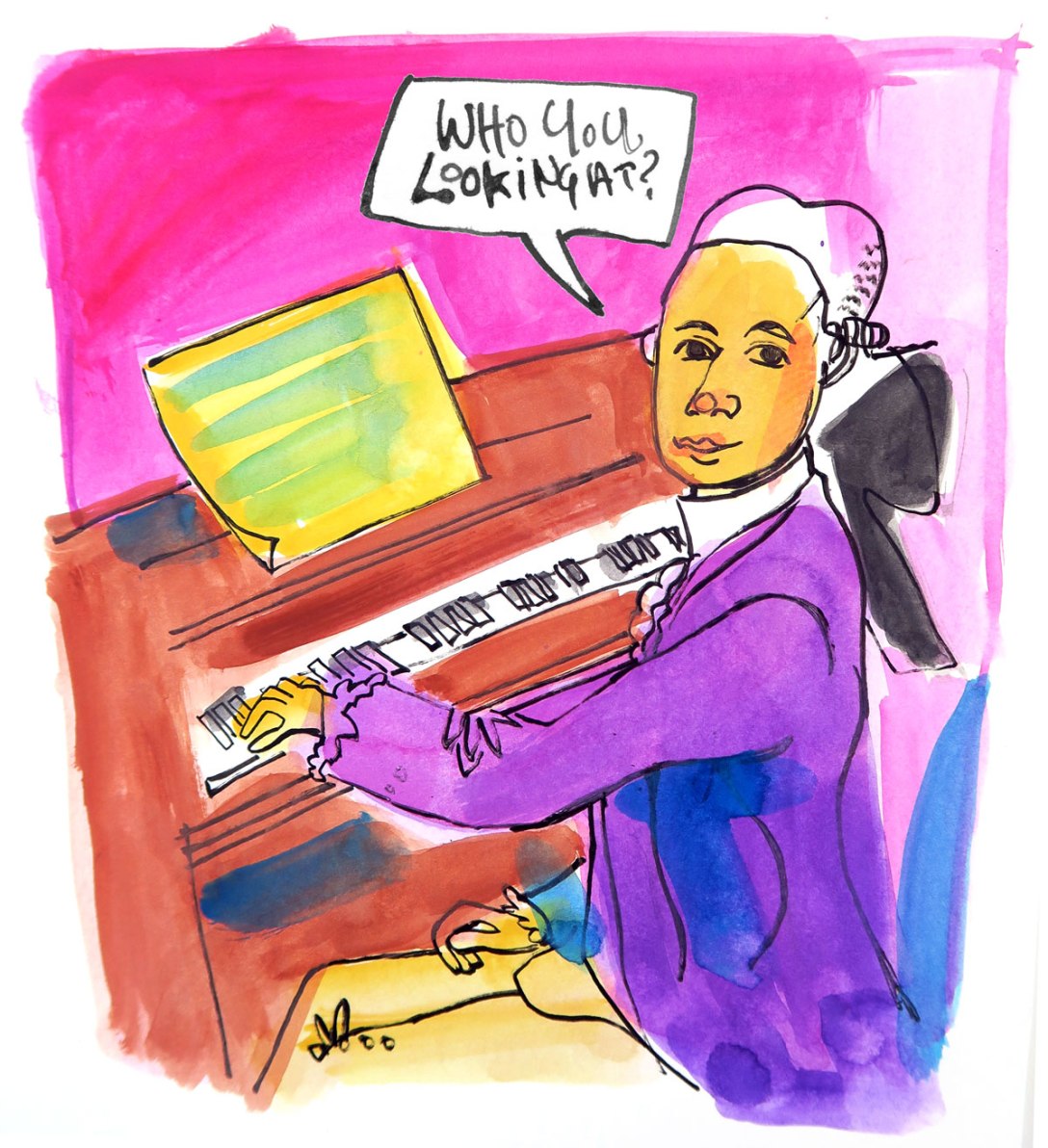
Oh, and speaking of Mozart, how do you think he became a prodigy at three? He watched his older sister take harpsichord lessons and he watched his father play the violin. It’s no coincidence that so many prodigies, from Michael Jackson to Wayne Gretzky, were the youngest kids in large families. Lots of people to stare at and learn from.

When you learn this way, you create a vision of yourself performing the skill, a mental video you play over and over. As the scene loops, it is burned into your brain, creating new neural pathways and locking in the nuances of the skill. You notice not only the steps the experts take but the intensity and rhythms with which they perform the action, the way that all the component parts of actions come together into one cohesive and coordinated whole. In time, these observations lead to fluid and confident motions.

Learning a physical skill is a very complex process, most of it nonverbal. You are programming your head and body to dance together in a thousand little ways. You must keep refining those dance steps, polishing them until there are no hitches or hesitations, until they run like greased, teflon-dipped clockwork. That’s how you learn to walk, to dribble a soccer ball, to drive a car, to play the guitar, and to draw. You program neurons.

If you want to improve your golf swing, watch Ben Hogan on YouTube. If you want to improve your jump shot, watch LeBron during this week’s NBA finals. If you want to improve your drawing, watch any of my Sketchbook Films or the demo videos on Sketchbook Skool. Watch them again and again. And don’t watch passively, like you were dozing off in front of a Seinfeld rerun. Sit forward, engage, focus, mimic, stare. Let your body respond as you watch. Feel your muscles tense, your fingers twitch. Throw yourself into it and absorb the rhythms, the linkages, the unspoken logic behind the scenes.

Your meat computer takes longer to train than silicon chips, but it lasts longer too. Once you have forged these connections, they will last a lifetime. Neglected, they may get rusty and overgrown, but, with a little practice, you can prune them and get them up and running again, like a long forgotten stretch of railroad track. You never fully forget how to ride a bike. And the same holds true for the network you’ve built between your brain, eyes, and hands so your pen will make lovely marks in your sketchbook.

Stare, engage, mimic. And repeat.


Q: “Whither advertising?”

Another student question posed during my recent visit to the Brand Center at Virginia Commonwealth University.

This is an advertising/media focused question, “What is your overall view of the advertising industry and what do you think we have to do to stay relevant?”  I will post a few others over the course of this week.


BTW, I will be speaking at Kutztown University tonight.

Q: “How has your past influenced your creativity?”

Another student question posed during my visit to the Brand Center at Virginia Commonwealth University last month.

I was asked, “How has your eclectic past influenced your views and your creative problem solving?”  I will post a few other snippets from the interview over the course of this week.

Q: “How do you make it all work?”

I was recently speaking at the Brand Center at Virginia Commonwealth University and was asked a number of questions by the students there.   I am pleased with the outcome (though somewhat horrified by the opening shot of me, laughing in slow motion. (Granted, it was filmed on Halloween)).

Here is the first question, “How do you make it all work?”  I will post a few others over the course of this week.

How to make an artist.

When I first started drawing in a journal, almost twenty years ago, I didn’t know anyone else who did it. I bought books on drawing and I looked at catalogs of art workshops and courses but none of them described what I was getting out of drawing and recording my life: a real personal transformation. I wasn’t just interested in mastering media and technical challenges.  I wanted to change how I saw the world.

Then I found one book that described illustrated journaling. It was called “A Life in Hand: Creating the Illuminated Journal” by Hannah Hinchman. Hannah draws beautifully but underlying her lovely illustrations was the message I had been seeking: draw your life and you’ll live it more deeply. I carried the little paperback everywhere ’till the binding broke and the pages fell out.
Next I discovered a  ‘zine in a record store in the East Village. It was called “Moonlight Chronicles” published by D.Price who lived in Eastern Oregon. It was a simple illustrated journal, drawn with a pen in a book and chronicling his life.  Just what I was doing.  I wrote to him and asked for some back issues.  Soon we were writing to each other regularly and we became fast friends. We traveled across the country to meet up and draw. In Manhattan, in Oregon, in California, in Death Valley. Our lives were completely different. I was an ad guy living in Manhattan. He was a hobo living in a kiva in the woods. But we had this thing in common, a thing that could include the world.
Then, as I spent more time online, I met Richard Bell.  He was recording his life and observational drawings and sharing it on a web site called Wild Yorkshire.  We started corresponding and eventually I started keeping a blog, just to share things with him.
One day, I was walking through the East Village and saw a guy sitting on the curb drawing in a book. As I got closer, I saw it was my old pal Tommy Kane.  We hadn’t seen each other in a half dozen years.  I told him I also drew in a book He said he knew, he’d read my blog and it had given him the idea.
Fast forward a decade. Now I have thousands of friends around the world who all love what I love: recording their lives in drawings in a book. This simple habit has changed my life.  But what has made it all the more rewarding is sharing my drawings, learning from others, getting support and encouragement.
Maybe you also draw in book. But maybe you don’t know anyone else who does. Maybe you live far away and feel all alone in what you are doing. You may have joined an online community but deep down you would love it if someone you knew shared your passion, someone you could sit with on the weekend, someone whose journal you could hold, someone who could share their experiences and experiments. A neighbor, a relative, a colleague.
You can make it happen.
Just pick up an extra sketchbook and pen and ask them to sit with you. Show them the basics you have learned. Show them the work you admire. Help them overcome their own fears about not having skills or talent. Encourage them in what they do.
The habit of making art is wonderful. Sharing it is sublime.

Pass it on.

Think of all the people who’ve inspired you. The authors you love, the directors whose movies have moved you, the musicians who kept you company in the studio, all of them. And now think of your creative work as payback. Rather than being intimidated by the greatness of the people you admire, see your work as a way to pass on the favor.

Maybe your mentors will see your work and be inspired by it (I’ve had that experience and it is one of the most gratifying there is). Or maybe your work will inspire a total stranger, someone in need of your help. That is the greatest kind of gift —  to give anonymously — and do your work has the potential to do that.

Think about these things next time the monkey is trying to squash your productivity. Think of those who will not benefit from your unborn work.

Hard confession

I’ve spent a lot of time over the years convincing people that making art is just as natural as breathing. And as easy. 

But maybe I’ve been avoiding the hard truth. That making art can be hard. It can be hard keeping to a habit. Hard pushing past blocks. Hard mastering new media. Hard facing your mistakes. Hard being your own cheerleader. Hard seeing clearly. And hard putting yourself out there.

I’d convinced myself that if I make it seem like the barrier to entry is just a bead curtain that I will be doing people a favor. But when I make it seem easy and you find it hard, you might worry that you are exceptionally untalented or lazy or dumb. Which is far from true. 

The fact is that sometimes making art can be very demanding. 

And that’s okay.

Just because something is hard doesn’t mean it’s scary or to be avoided. Hard can be good. It can make the corpuscles course through your veins. It can make you stand taller. The things that are hard to do are often the ones worth doing. Success isn’t meant to be easy. 

In my own life, I have many things on my plate, but I’ve been working to eat my vegetables first and save dessert for last. Just because something is easy to tick off the list doesn’t mean I should do it first. Instead, I try to crack at least one tough nut a day.

At times, I’ve had the reverse approach. I told myself that it is better to have a sense of accomplishment by plucking low-hanging fruit and doing something easy — making the bed, answering email, emptying the dishwasher — than it is to tackle the things I dread.

But Ive learned that the pleasure of having won the hard battle is far greater and worth the pain. 

Now I start the day by thinking and writing and inching ahead, and end it in front of the TV with a basket of towels to fold. Life is easier when you scale the mountain first and coast down it the rest of the day.

My advice: Your days are numbered and there’s loads to learn — so don’t be afraid of something because it seems difficult. Rather, seek out the toughest challenges and fight your way through them.

It can be done. And you are the one to do it.

Calaveras

dayofthedead

This past weekend was the Day of the Dead, a lovely Mexican tradition in which people visit the graves of their loved ones and bring a picnic to share with the souls of the departed. Patti and I loved this holiday — it combined our morbid fascination with graveyards and mortuaries with a sense of humor and cartoony festivities. I wrote about this three years ago, when thoughts of death had suddenly assumed a new and less whimsical tone.

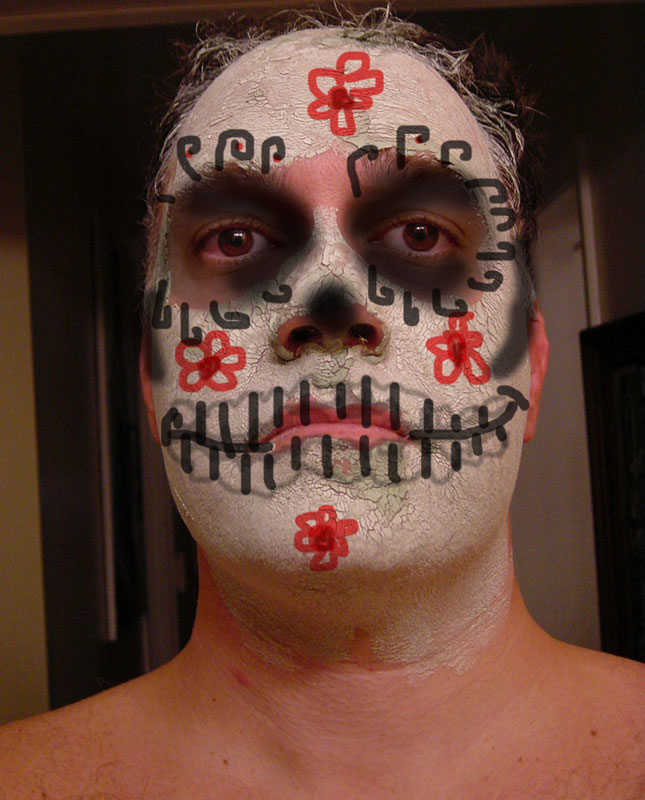
Last Saturday, Jenny and I joined thousands of other Angelinos at the Hollywood Forever cemetery to commemorate the Día de los Muertos. It’s a huge party. There’s a contest for who can build the most impressive memorial shrine and everyone has their faces painted to look like grinning skulls encrusted with jewels and flowers.

I love that this holiday turns the traditional gloominess surrounding death on its head.  Instead of an occasion for grief, it is a celebration of the lives of the deceased. The Mexicans believe that a person dies a second death when their memory is forgotten and that makes a lot of sense to me. Immortality means you had an enduring effect on the world, that the things you did for people while you were here will be carried around in their hearts. If you set an example for others to follow, you never really pass away. I see that in Patti — because people have such vivid and positive memories of her, she lives on.

These days, I live a life that is three thousand miles from many of the memories Patti and I shared.  I am not walking the streets she did, no longer live in her house or sleep in her bed or see the people who knew her so well. I worried about that when we Jenny and I first talked about coming West, that Patti’s memory would somehow fade when I was far from the physical world she lived in.

Now I know that’s not true, because I brought Patti with me.

I brought her photo in a frame that I see every day but more importantly, I brought the part of me she created over the quarter of a century we spent together. I also believe that Patti wanted me to grow and change and have adventures. She told me so a million times,  a million times I did not hear because I was encrusted in my habits and fears. Now, when I feel the pieces scrape and shift inside me, I know that she would approve. She would be so happy that I am here, with Jenny, in this mini house, painting in this garage.

Patti was the one who taught me how to love, how to go beyond my self-absorption and love another unconditionally.  If she hadn’t taught me the importance of true love, I could not truly love Jenny as I do today. But loving again does not diminish my first love. And conversely, the bottomless well of love I had to share in my past with Patti does not mean a drop less in my future with Jenny. There’s plenty to go around. The more love you give, the more love you have. And the hardest part is learning to share that endless love with yourself, to be kind and generous with who you are.

Recently, a Facebook friend who had suffered a recent loss, sent me a few questions about my experience with death. I’ve been waiting for a reason to share them with you and DIa de los Muertos seems as good a one as any.

-How did you survive your worst sort of days?

I guess I had no choice. I had a loving wife and small son and what other option was there but to persevere? I didn’t believe in God. I didn’t believe in karma or fate. Life was shitty and I could either deal with it or check out. In retrospect, I think that my love for my wife was a key factor to my will to continue. We planned a life together and her accident was not going to stop us from being together and having a meaningful time of it.  When she died, I no longer had that to hold me together, But I had my son and my commitment to be there for him. And I had my memory of Patti and her example, the fact that she had survived a huge blow and had carried on for so long. She loved life and she loved people and I tried to absorb some of that spirit, to look on the bright side, to count my blessings, to continue to be creative. I used my art to gain perspective on the blows that were dealt me, to get them out of my head and on to the page, so I could start to put the loss behind me, and have some thing to live for. And I reached out to other people, I shared my story, I tried to make my life meaningful, and of service to others.

-Days when getting out of bed seemed impossible what motivated you?

After Patti had her accident, I got out of bed to change Jack’s diapers. He was nine months old. Life was going on. The sun was still rising and setting. There were new things to experience. I wanted each day to be better than what had preceded it and slowly but surely it did.

-What do you say to people who say things that they think are very helpful and seems to create a deeper hole in your soul?

I am glad they are trying to help and I think them for it. In each person’s story there is something useful. But I know that only I can truly understand what I have gone through.  Platitudes can be so annoying and distancing but I try to concentrate on the love that is behind them.  The fact is, people don’t really know what to say. And often it is surprising how certain people react to tragedy and change. I was amazed when people I thought had seen it all disappeared when we needed them. And I was equally amazed at people who I thought barely knew me stepped forward, rolled up their sleeves, and helped me so much.  Do not underestimate the importance of other people’s love and comfort. But don’t be disappointed if they don’t know how exactly to help.

-being blindsided… Moments or days where you almost feel normal and a smell or a texture brings you to your knees in grief. 

Yup. That’s very familiar. Grief appeared and knocked me on my ass when I thought I was long out of the woods. And it isn’t necessarily prompted by a smell or a sound, it can just pop up out of the blue.  The flip side of this is that in time those little moments turn from painful to sweet, a lovely reminder of what one has  lost, of how much it meant, of how dear it still is.  I can smell perfume, hear an Ohio accent, and be transported back into Patti’s arms.  What was once unbearable becomes cherished. Give. It. Time.

-Does it get better, Danny?

If it didn’t our species would have long vanished in a never-ending rain of pain.  Every day you make progress. Sometimes you slip, sometimes you jump forward.  It is a wound and if it doesn’t kill you, you emerge wiser and happier.  As the Buddha told us, “Pain is inevitable, suffering is optional.”

– What helped and helps you the most as you continue moving forward?

In so many ways, my life today is better than ever. It is the life Patti always wanted for me. I have changed almost every aspect of my work and my home and am now on new adventures.  My life is going on. It took three and a half years to get here.  It was worth the trip. Thank you, Pat.

— Anything other words of experience you can think to offer?

I got a lot out of The Other Side of Sadness: What the New Science of Bereavement Tells Us About Life After Loss by George A. Bonnano. He points out that 95% or so of people emerge from grief in a year or less.  And of course, I  got a huge amount of help and wisdom from my grief counselor and from my lovely and wise girlfriend, Jenny James.