Thinking outside the books.

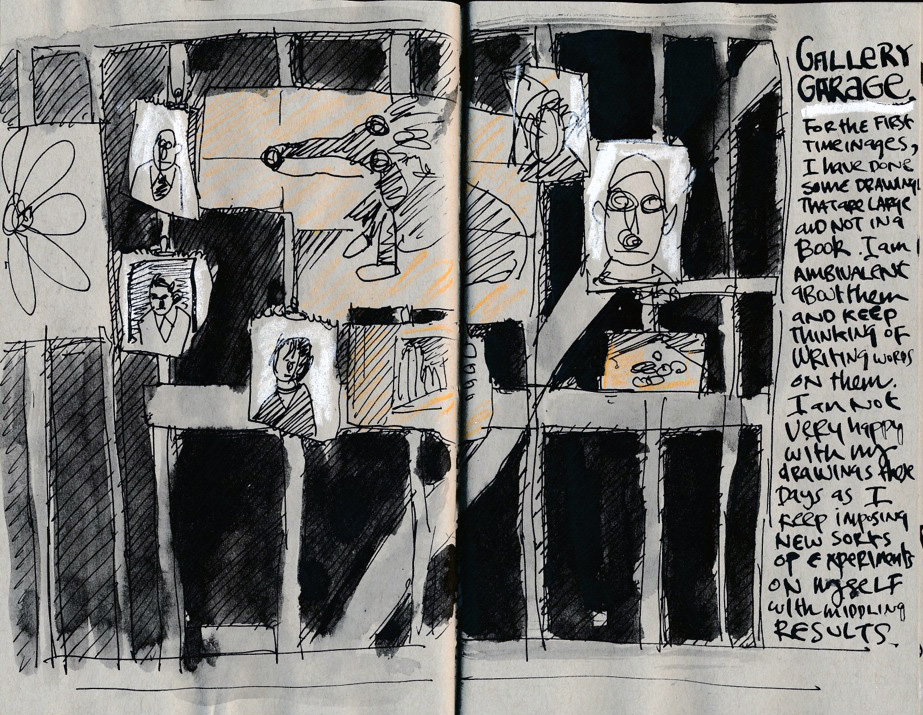
gallery garage

A canary sits in its cage, gazing through the bars. Year after year, it watches the world beyond and dreams. One morning, it notices that the cage door is open. The canary catches its breath and waits to see when it will close.

Eventually, the canary hops onto the edge of the door and pops out of its cage. It flies around the room, sits on the back of the couch, perches on the bookshelf. An hour later, it returns to the cage and goes back to gazing through the bars, dreaming. The door is still open. So is the window beyond.

Freedom is not easy. Security, comfort and familiarity are.

……..

Many birthdays ago, long before I had the habit of drawing, my mother and my sister chipped in and rent me a studio for a month. It was the most terrifying gift I had ever received. I went down to Desbrosses Street in Tribeca, and walked into the studio. “Mine, all mine,” I muttered under my breath. The room was about fifteen feet square and empty. I took out a pad and a piece of charcoal and wrote about how I felt having studio all of my own. I filled several pages with writing in charcoal, taped them to the wall, and left.

I came back a week later and made a small collage from cut-up pieces of magazine. I taped that to the wall and left. A week after that, I drew colored lines on the collages with a highlighter marker. The final week in the studio, I brought in a photo of my grandfather and a large canvas. I painted a very bad copy of the portrait onto the canvas. At the end of the day, I left the canvas, the collage, and the charcoal writing on the studio, locked the door, and never went back.

……..

When I arrived in Los Angeles, I had planned to work in the second bedroom of our house, to sit at a small desk in the corner and write my new book. Then I saw our two-car garage, 300 or so feet of emptiness. Like the garage, I stood with my mouth wide open. I spent the first week, filling it with tables and shelves and cubbyholes.  I spent the second week sitting at my desk, writing my new book and rearranging bottles of ink. Occasionally I would draw in my journal, using a fountain pen and a white pencil.

I spent the third week thinking. I realized had managed to reproduce my office in New York. I had a lamp, a rug, a laptop, a phone, a box of thumbtacks. I ate lunch at my desk and surfed the web. I was even filling my calendar with a record of my daily doings in case I had to fill in timesheets at the end of the month. All that was missing was a couple of account executives and a client.

So I went to the art supply store and bought whatever I wanted (if you remember my old essay, “Art Supply Porn“, you’ll know my fantasies are legion). At first, however, that just amounted to a few tiny palettes for gouache and a bottle of ink. Oh, and a block of 14 x 17” mixed media paper.

Back in my empty garage, I opened the block and did a tentative self-portrait in ink. This simple act I was breaking one of my cardinal agreements with myself. I was making drawing, with no writing , that was not in a book. No wonder the self-portrait looked like I had just eaten something bad. Then I did a gouache painting on the block and pinned it up next to the self-portrait. Then in a fit of pique, I got a house paint brush, dipped it in inks and drew a huge painting of Tim on the back of an empty Ikea box.

I felt slightly winded and rather nauseated. I took out my journal and told it what I had done, revealing my betrayal and the dim feelings I had about it.

The next day, I bought a 64-box of Crayolas and some tempera and did a wax resist portrait. Then I did some more gouache paintings, then a painting of the back of the house in poster paints on cardboard. Soon the garage wall was full.

michael-ave-hi-resAThe following week, I sat on the corner of my street holding the fattest Sharpie I could find. On a big sheet of cardboard, I drew the house across the intersection. When I had filled the whole board, I went back to the garage and got another piece of cardboard and continued the drawing, a big, grubby, dog-eared diptych.

michael-ave-hi-resBThe next day, I continued the drawing, working my way down the street. When I was done, it was eleven and a half feet wide. Then I added gouache, creating a cheerful portrait of another glorious day in my new neighborhood. Just as my hero David Hockney was transformed by the California sunshine, I felt a call to use candy colors and bold lines and to work as big as all outdoors.

michael-ave-hi-res
Click to see it bigger.

Now I am working on a drawing that is as big as my garage wall, fourteen feet in all, a broad panorama of all the crazy houses arrayed along the Venice canal. I even added a gondolier.

My sketchbook now looks a bit small and grey but, despite my sudden expansiveness, I love it still.

If you are getting little set in your ways, check out the door of your cage. The world is wide and a little terrifying, but it’s wonderful out here.  You don’t need to chuck your job, your home and all the rest, but try flying around the living room a bit and enjoy the view. There may be a cat out there, but if you fly high and far, you’ll be safer than you are trapped in a cage with an open door.
Yarddogs.

IMG_0163

Since they were wee pups, my dogs Tim and Joe have spent their days on our apartment on the 8th floor of a Greenwich Village building. They had free rein — running around the living room, rassling on the cowhide rug, napping on the couch, yapping at the elevator — and if they want fresh air, they could go out on one of our balconies and look down on the street to monitor for cats and large black dogs.

Three times a day, they would don their collars and leashes for a walk up to the Park and down Thompson Street. Tim would pee on the corner of West 3rd Street, Joe would poo outside the Catholic Center, then they would come back through the double doors of our lobby and hop in the elevator. They were so comfortable with this routine that if I had a chore to run, I could let them ride up on the elevator on their own, confident that they would get out on 8 and wait for me in the apartment.

Their lives were pretty typical of New York dogs, many of whose lives are quite unusual. I have a friend who cooks her dog breakfast every morning and then pays a person to sit in her apartment all day with her dog so she never has to be alone. Maybe that’s typical too. When she complains about how badly the dog behaves, I would tell her (jokingly),”You need to just chain that dawg up in the yard and leave her to guard your property.”

When we arrived in L.A., Tim and Joe were a little bewildered. No elevators to ride, no fire engines to bark at, no half-eaten chicken bones to snatch off the sidewalk.

At first, we left them briefly alone in the house and they had a field day, knocking things over, peeing, howling at the neighbors.  Then we bought a gate so they could be sequestered in the kitchen — more peeing, more whining. I was getting worried — while I do spend a lot of time working in the house, I need to be able to go to Costco without hiring a dog sitter every time.

Each morning, I open the kitchen door and they trip down the steps into the backyard.  Within seconds of waking up, they can be peeing — dog heaven. But for Tim this luxury was utterly confusing. He looked up at me as if to say,”If you don’t want to pee in the house, but only outside on a leash when we go for a walk, what am I supposed to do here in the yard ?” Meanwhile, his brother was under a lemon tree, extruding a foot-long turd.

As I walked them, around the block several times a day, I noticed all the dogs barking at us from behind our neighbors’ fences. A lightbulb went on in my head. Aha! People leave their dogs in the backyard all day while they are at work. Yarddogs!

And so began Tim and Joe’s, transitions to yarddogginess. After several days in the back, they are content to spend the day lolling in the grass, sniffing through the geraniums, or relaxing in the shade of the orange trees. When I come home, they amble up to me casually, not clambering up my shins or clawing madly at the screen door. They meet me like a fellow animal. Being yard dogs, spending the day watching the hummingbirds at the feeder or rolling on the lawn, has made them more dog-like. The cold, hard streets of New York seem far away.

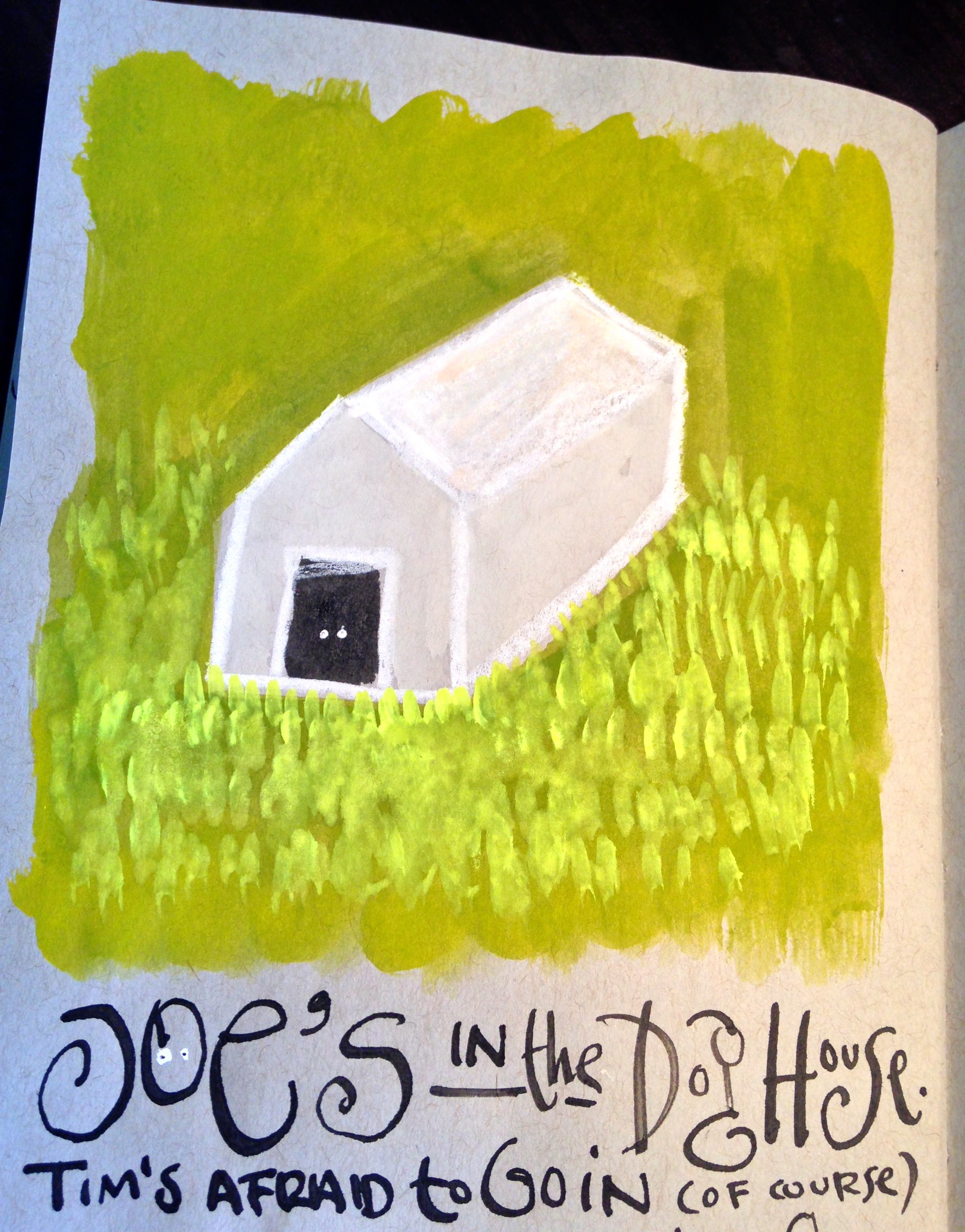
We built  a fomecore dog house. Joe likes it. Tim's not so sure.
We built a fomecore dog house. Joe likes it. Tim’s not so sure.

Slowly, I am undergoing my own yarddog transformation. I spent my first two weeks here in a frenzy of activity, building furnitures, stocking the pantry, reading guidebooks, writing and painting to fill the walls. I felt like I was still doing a job, in this new jury-rigged office I’d built in the back yard. I was still putting on my collar and leash and mimicking my old life in New York. But no one was holding the other end, no one was there to guide me and tell me what do.  I’d started to work for myself, but I had an absentee boss. I lost my sense of what the day’s work amounted to, because I was doing a lot of busy work to fill the day and it wasn’t moving me forward. And, for the first time in my adult life, I was alone all day. Instead of being surrounded by colleagues, meetings and deadlines, I was an old weirdo sitting alone in the garage drawing pictures for the hell of it. It should have felt liberating but I was still far from liberation.

So I made a couple of changes.

I started to structure my day and to set up some goals. I put landmarks on my calendar: going to the gym, drawing, working on my book, preparing my presentations, going to museums, and so on.  I would work on one project for a couple of hours, take a break and switch to some thing else.  It was still orderly, and somewhat corporate in its structure, but it provided me with a lot of relief, just like walking Tim around the bock before setting him free in the yard.  Eventually, I’m sure my regimen will loosen up as I discover new rhythms and a sense of accomplishment, but for now, I am getting lot more done and I feel more relaxed in this new life.

Another realization I had was that though I am not physically surrounded by co-workers, I do know a lot of people who are doing similar things. They are the ones who inspired me and showed me what a different sort of work life could be like. Illustrators, designers, drawing teachers, entrepreneurs, who work on their own and have designed successful creative careers and who I can reach with a an email or by opening Skype. They are my new colleagues. So many of my friends have generously offered me their time, chatting with me and giving me perspective. Sharing their wisdom has shown me how to do this. I am still weird, still in the garage, but I am not alone.

Changing one’s life is exciting and fresh but it is also scary and a lot of work.  I am learning so much every day.

FOM (Friends of the Monkey)

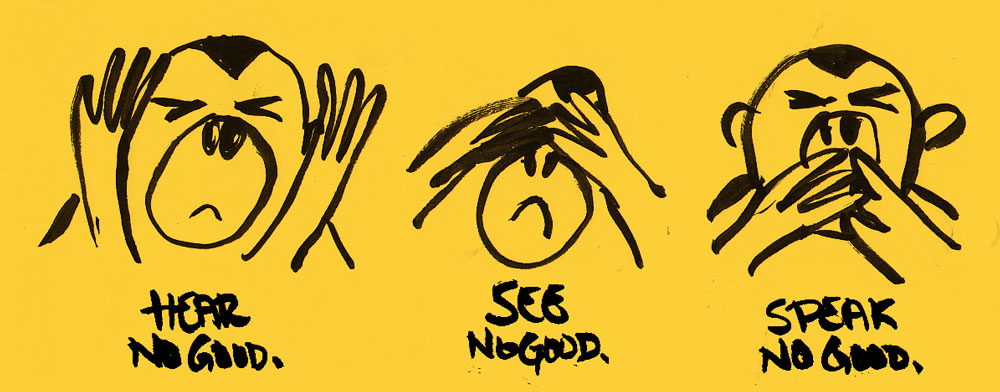
3-monkeys

While your inner critic, that churlish monkey, sits glowering in your head, he has allies all around. They are camped on the hill and are riding in from all points of the compass, waiting for their colleague on the inside to lower the gates and let them flood in and maraud.  Most of these confederates are unwitting. They don’t know they are part of the army that can bring you down. But the monkey knows.

Some of them are driven by monkeys of their own. When you share your creative plans, your intention to start making art or to invest in yourself, they will start chattering from the trees, gibbering in fear. Fear for themselves. When you announce your brave decision to reverse the course of your life, to begin to make things again as you haven’t since third grade, you will set a shining example that will reflect back their own failures to live up to their dreams.

This isn’t universal of course. Many will applaud you and offer you encouragement. But skulking in the crowd will be those who are resentful and bitter and frustrated. And they will begin to lob suggestions, improvements, cautions, and advocacy for the Devil, designed to make you balk and backtrack.

Creativity is a particular magnet for this sort of monkey convocation. In my decades as a creative professional, I have encountered this spirit time and again. When I am awash with excitement at a new project or the possibilities of an assignment, these monkeys slink into my office, slump on to my couch and start to tell me the latest gossip, the latest management bungle, the latest reason to lose faith. They will complain about the assignment, the industry, the market. They will try to drag me into long sessions of venom and bile. They will splash me but I work to remain unblemished. Better to get up and leave that be infected with their toxicity. They are creative at coming up with reasons to stall and malinger, such is their monkeys’ gift of gab, and my own internal monkey howls with glee and joins the chorus.  These voices get me nowhere and need not to be heeded. Cut the chat short and get back to work.

And, while I am busy pointing fingers, let me point them at the mirror too. For in my own moments of weakness and doubt, I have been equally capable of joining or even initiating these grumblefests, feeling insecure in myself, acquiescing to the primate within and dragging in to a colleague’s office, leaning on my hairy knuckles. It’s a toxic affair that makes everyone feel, not purged, but depleted and sick.

Another band of accomplices are the media. The monkey loves the mindless vegetation of watching TV, numbing you with celebrities and gossip. Not the stories of artists and creative inspiration but the mindless doings of fabricated and often malignant chitchat. Besides being a time waster and anesthetic, the media can also skew your perception of art, artists and the true nature of success.

The banker is another friend of the monkey, cajoling you to focus on the bottom line. So is the electric company and the credit card company. They can make you do the monkey’s bidding, downscaling your ambitions because you feel trapped. They don’t deal in might-bes, they want theirs and now. They warn you not to take risks, to keep your day job, to be sensible. Of course, they have the right to get paid. But not to decide your future.

If you are a creative professional, you had to overcome the monkey just to get your career started. The monkey probably warned you and your parents: Don’t be a designer, an art director, an illustrator, an architect, a programmer, a musician, etc. It’s too risky, too competitive, etc. but you did nonetheless. But maybe now you see that the monkey finally let you follow this professional path but now won’t let you pursue your true passion — making art, speaking in your own voice, being your own client. The monkey giveth and he taketh away.

If you are wrestling with this issue, stop thinking. The monkey wants to engage you, wants you to obsess about his heckling and turn your creative energy into a response ego him. Don’t. Focus instead on what you want to do. Draw something. Write something. Then don’t look at it. Don’t judge it. Don’t show it to anyone else. Turn the page and write some more, do another drawing, dream another dream. When the books is done, fill another. Just keep going. Don’t ask for feedback from anyone who might derail you. Better to work alone in a cave than throw your work to the monkeys. Distance and perseverance are the best antidotes to this scourge. Build up your ramparts and lock the beast in your darkest, deepest dungeon.

Then get back to work.

Do you find your monkey has allies? What do they say? How do you deal with them? I’d love to know.

Fresh wisdom to trump the monkey.

3-monkeys

I was served two giant helpings of insight this morning, both in my email inbox.

First, this note from Evelyn:

Hi Danny,

I recently ran a drawing class for adults – a sort of introduction to urban sketching, really. On the first day I shared the story of my own rediscovery of drawing, a rediscovery largely fueled by Everyday Matters. I talked about letting go of attachment to the outcome, focusing on seeing and the connection that is made with the world around us as we draw. I said don’t wait for it to be perfect before you share what you draw.

One of the participants then told me, ” I don’t have much confidence and I have no experience. The reason I signed up for this class was because the drawing on the flyer was not that good.”

It was a drawing I’d done with a bamboo pen and ink I didn’t know was water soluble, so the watercolour kind of ran into the ink and there are some pretty messy bits.

This woman’s words made a big impression on me. There is so much value in modelling joyful imperfection!!

When I teach in high schools, I don’t teach art, but the same principle holds. We need to help people to be able to love themselves unconditionally. To be self critical without anxiety and to create fearlessly.

With gratitude for all you have given, and my best wishes, Evelyn

And then, on a different but somehow related note, this blogpost from Jennifer: Live up to your full potential. It’s a lovely perspective on how to judge whether you are making the most of your gifts.

What if we redefined what this whole potential thing really meant? What if, instead of having to prove our creative selves in a particular area of art, we could reach our potential by simply living artfully? What if, instead of striving to make lots of money with our art, or show just how technically perfect we could draw… what if we engaged in our everyday lives with an artful eye, probing the moments for beauty? What if, we reached our potential by daily living the life WE HAVE, the good and the bad, the mundane and the magical, with open arms and full hearts, celebrating and capturing some of it in an artful manner along the way? What if living up to our potential as artists had MORE to do with seeing the beauty in all of life and sharing it with one or more persons, than with being able to say we have devoted our whole lives to making a career of x or y or z.

To me, these are both conversations about the monkey, about how we can cope with the incessant jabber of our self-doubt and -criticism that wastes so much energy and time. As Evelyn points out, our ‘failures’ are in fact our richest lessons. The most important things is just to start, to make, to move forward, and to shun the wimper within that woud keep us forever in the starting blocks. That voice isn’t just an impediment, it’s a cancer that chews on us, winnowing us down to smaller and smaller versions of ourselves, as we brutalize ourselves with doubt and recrimination. Be kind to yourself, and be creative.

Jennifer’s lessons comes from outside, from the larger world that uses the dollars as the only true yardstick, from the golden monkey now internalized. This monkey voice is just one of the sheepdogs of economics and really has nothing to do with us.  It barks the simple cry of the market. For art to be valued financially, it must be a limited commodity. If everybody made art, it would be so common it would have no financial value. So our society is geared towards making art an exceptional behavior created by the few, a meager supply managed by the system of galleries and museums that turn human creativity into a market.

So it’s not surprising that when you graduate from crayons and want to continue creating art as part of your everyday life, you are discouraged from making at every turn. The only way that art can be sanctioned is if you pass through the system of art schools, galleries and critics that will cull the herd and protect the market.

Fortunately, the Internet has made it possible to share your creativity with other people and to get positive feedback and constructive criticism without financial transactions. The Internet has liberated us from the marketplace of art. It has restored the impulse for creative expression that has existed in our species since we painted bison on the  walls of caves.

This isn’t anti-capitalist. It is pro-self-expression. And it is optimistic. Because no matter whether it is stifled by the government, by religion, by the marketplace or by snobs and bores, ultimately that impulse will return and prevail. Now more than ever.

One of the wonderful things about the Internet is that value and scarcity are no longer inextricably linked. Now good ideas are what are valuable and good ideas can be copied over and over and shared with billions and still retain their value. We live in the golden age of creativity, a new renaissance. Now making art will no longer be discouraged. it will be essential.

art with a small a is not a product. It’s a point of view.  It’s a way of life.

art isn’t for museums. art is for everyday.

The Art world is about money. art is about passion, love, life, humanity — everything that is truly valuable.

Calling all teachers!

Are you a school teacher? Have you used illustrated journaling to teach your kids? Have you used any of my books in class? If so, I would love to talk to you about your experience and what you’ve learned. Please write to me at dannygregory@mac.com

Please share this request with any teachers you know.Thanks so much.

How to kick monkey butt.

I’ve written a lot about the nature of the inner critic that confounds our creativity. And so far, I’ve urged you to fight it by just getting to work. That may not be as easy as all that, so let me be more specific with some ways you can push past that hectoring little voice in your head.

Just start. Do one small drawing on one small piece of paper. A Post-It. Or draw a loose grid on your sketchbook page and fill in one single square with a line drawing of your foot. Whistle while you do it. If the monkey starts to grumble, hum louder. Push off that inner criticism for 120 seconds until you can get something down on the page.

Creating something, anything, can break the logjam. And it can give you something to look back at hours later, to get excited about. Initially, the monkey may sneer about your tiny attempt but go back at it and look at it again. Find something to love in it. It’s in there.

Don’t talk about it. If you are having block, don’t endlessly discuss it and seek solace from others. The more you do, naming it and broadcasting it, The more you solidify the block, the more of  a living entity it becomes. Give it a name and you give it power. Stress over it and you become twisted and jailed.

My words here are a double-edged sword. I want you to be able to see that your problem is a common one, that you don’t suck any more than the rest of us. But the more we dwell on this discussion, the more attention the monkey gets, and the less time we are spending making something.

Give him a banana.  Try holding out some sort of reward to yourself. A bribe to get it done. Say, “if I do three drawings today, I can buy a new fountain pen. ” “Or I can watch TV for an hour if I draw during three of the commercial breaks”. Or “I can eat that donut, if I draw it first .”

Use this tool judiciously. You don’t want to end up obese, broke, or in jail.

donut

Get your lazy ass up. If the monkey tells you are a hopeless slug, agree with him. Tell him you want to improve and so you are going to set the alarm a little earlier and start the day right. Sit down and draw before your first cup of coffee. Fifteen minutes of drawing the reflections in the toaster as the coffee perks. Monkeys are lazy bastards too and they can’t get it together so early. I find I do my best work before I start reading email and talking to people and dealing with the day. Then for the rest of the day, I glow with that knowledge that I have already made art today and the rest is gravy. By knocking out a few drawings with the dawn, you will lubricate the wheels of habit while the monkey turns over and keep on snoring.

Do something you definitely suck at. Buy a medium that’s absolutely new to you. Draw on your iPad for the first time. Paint with ketchup on the kitchen counter. Play the digeridoo. By doing something you have never done before, you have the perfect excuse for sucking. If the monkey pops up, you can say, yes, yes, I know but this is my first time. Have fun. You’re making something. Sure, it’s no good. But keep going. Keep making. Keep exploring.

The great ape debates. If you can’t screen out your monkey, tune him in. Really put his critiques to the test. Ask the monkey to take the stand. Grill him.  But this time bring your inner lawyer to dissect his arguments.

Give the primate the benefit of the doubt. Take his arguments at face value and see if they hold any water. Maybe you do have room for improvement — none of us is perfect. You can learn and grow from self-examination. The thing we must avoid is self-destruction and abuse.

So, write down his complaints about you and come up with strong rational responses.  Write these down too. Next time the monkey levels these same criticisms at you, just tell him, “I’ve heard you and responded to the charges. What else you got?”

Stock your own arsenal. Sit down, like I’m doing, and come up with a bunch of ideas to trick yourself into sitting down and coming up with a bunch of ideas. If you want, start by critiquing my suggestions and then making up better ones that will work for you. Hate the idea of getting up at dawn? Fine, then draw at lunch, draw in the train, draw on the toilet. Come on, plus my ideas. What works for you?

The Voice continues

monkey-2
I am traveling again, this time on the 6 a.m. train to Washington DC. And again, I am thinking about the Voice in my head (I first wrote about it a couple of days ago) and the other ways in which it can monkey with my creative plans.
This jabbering voice doesn’t resort only to vicious critiques to stymy my creativity. It likes to concoct diversions to distract me too:
Like, why make a drawings with the pen that’s in my pocket when I could plan a trip to the art supply store, and burn up money and energy instead? That’ll make sure I end up on the couch, dozing, my new art supplies still in the bag by the door.
Or, maybe I should just check out some of my pals’ blogs, see what they’re up to. Man, they are so creative and productive. I really do suck by comparison.
Or how about a snack? Maybe we should go out for a donut?
Okay, back to work. Wait, I should get some inspiration, do some research. Let me try to find that David Hockney book I have on the shelf somewhere. Ah, here it is. Hmm, so Hockney mentions a Franz Hals painting here, what did that look like exactly? Let me just pop open Google Images and see… Oh, look, that cat is cute…
All this activity makes it seem like I am doing something, but I’m not really. I’m just pissing away time and defeating my creative impulse with thoughts of fine art, chocolate, naps, sex… The illusion of productivity is the bone the monkey throws me. We’ll start tomorrow, I swear .
Negotiation is the monkey’s ploy. If it isn’t condemning or seducing, it’s bargaining.
But remember, the monkey doesn’t want what’s good for me. He is selfish and vindictive. He wants me slow and weak and distracted so he can have his way — uncreative, status quo,
Here’s another ploy: “There’s no point in starting until you have your act together so let’s get the ducks in a row”. A good stalling tactic but I wont fall for it. Back off, chimp. There are way too many ducks and rows are for accountants. Organization is irrelevant to making stuff. Art needs to be messy. A neat stall is the sign of a dead horse. Sure, it’s a good idea to know where you keep your pencils but being anal doesn’t help you create shit (as it were). The random juxtaposition of stuff and chaos is the seeds of art. If oysters were prissy about keeping out all the sand, we wouldn’t have pearls.
The fact is order, security, and perfection are all illusions. Life can never be perfect and again I am just wasting time.

no-pearl
(For some reason, I am reminded of those boat owners who sit in the marina drinking beer on board and never raise their anchors and head out to sea. Rather than adventures, they have the most expensive bar stools in town.)
The ape loves a good fight too. If I find I am quarreling with others and venting emotion inappropriately, chances are that I am not drawing, not writing, not thinking. Or alternatively, I may find myself overworking, nights and weekends (on projects fueled by drudgery and obligation not passion) living out of balance, out of harmony, out of fast food containers, far from my true self. The monkey loves french fries and insomnia.
In my job, I often encounter people who are driven to melodramatics by their inner monkey puppeteers. They act out, drawing attention to themselves, making excuses, having fits, being prima donnas, making demands, when they could just put their heads down and make more stuff. Client questions your decision? Throw a fit. Need to cover up a blunder? The best defense is a good offensive speech of self-righteous indignation. Not.
Making more stuff is the best revenge. Put your creative energies to work coming up with more ideas, not with histrionics. Get back to work.
Another monkey game is monkeying with my health, mental and physical. Am I not productive because I am depressed? Or is the other way round? Is this cancer or hypochondria? Start doing and see what happens to your mood. If something indeterminate ails me, I hang it up for long enough to write or draw a page or two of my dream. See if I feel better, less blue, more energized. My back won’t hurt, my allergies will recede. When I wake up at 3 a.m. with the ape chattering in my ear, I can only take so much lying there in the darkness. So I crawl out of bed, go to my desk and draw or write something, anything, Then my mind is eased, the chimp goes back to sleep and so do I.

How does the Voice monkey with you? I’d love to know…

The Voice.

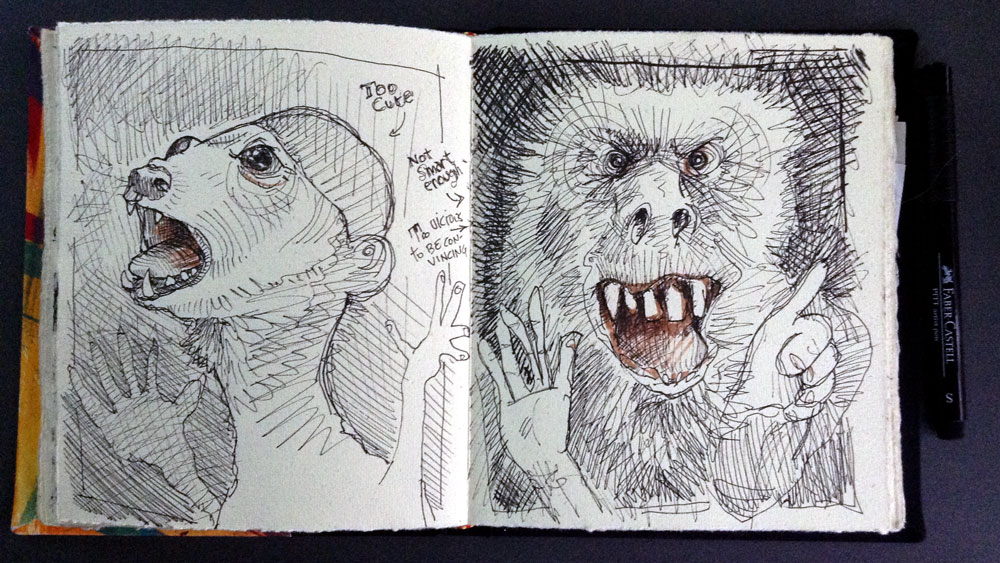
monkeyWhy are you here? Here, on my blog, why are you here?

Are you here for the reason that I’m here? Which is, I think, because I have a vague itching inside that says ‘make something.’ But the thing I feel I ought to be doing when that impulse arises, namely drawing something, is somehow not appealing right now.  Maybe that’s because it’s after midnight, I’m sitting in the darkened cabin of an airplane flying to Tokyo, and the only thing I could draw at this moment is the dimly lit, freckled, meaty arm of the guy sleeping in the next seat. So I’m doing something else instead. Writing this.

But maybe a more honest reason why I’m typing instead of drawing is that I am afraid. I’m often a wee bit afraid when I start to make a drawing — yes, even now after zillions of drawings over a decade and a half. I’m afraid of the Voice. Not the TV show (though that can be scary too) but that teeny, nagging voice saying that the drawing will possibly (or probably) suck. The Voice isn’t always there when I uncap my pen, but it often pipes up once the first line starts to go down. “Oh, well, you blew that one. It’s all gonna be repair-work from here on.” Or “Better start cross hatching now, it looks flat and weak.” Or “Come on, let’s finish this one up and watch TV.” Or just “Puhleez … you cannot draw for beans, you worthless, posturing fraud.”

Whose voice is that?

I used to suppose it was my art/shop teacher from 6th grade. Or maybe it was my second stepfather. Or my father. Or my mother. Or a kid I knew in high school who was way cooler than almost all of us. Or a guy who thumbed through one of my books in a Barnes & Noble in Dayton and shrugged it back not the shelf. Or maybe it was your voice — maybe that was the real reason you came here today, to tell me how much this drawing will suck.

But I know now it’s not any of those voices. It’s one I know much better. It’s the voice that’s editing this blogpost as I write it. It’s critiquing my typing skills. It’s correcting my posture. It’s the voice of fear.

The voice that says,”Why bother? Why take a risk? Why put yourself out there? You suck, it will suck, and nothing good will come of it.”

It’s not Linda Blair’s possessed voice in the Exorcist. It’s not the sneering, sing-song voice of the bully that cracked open my head with a rock when I was eleven. It’s a voice that sounds just exactly like mine, though it whispers, hisses even, back there in my skillet darkness of my skull.

That voice doesn’t just concern itself with drawing. No, it has opinions about most things. Whether I should wear this shirt, whether I floss enough, whether I should have desert, what my client meant by that remark, whether I should write another book, teach another class, look for a new place to live, have another cookie. It’s a busy little voice and it can think of a good reason to be afraid of most decisions, of any impending event, big or small. It can give me umpteen reasons to do something tomorrow instead of now, to ask more and more people’s opinions before I make a move, can tell me what that stranger at the cocktail party will reply if I say hi. Despite its apparent rock-solid convictions about things, the voice is always willing to switch sides with alacrity if it will serve to unsettle me. It can say I’m not good enough — or too good. It can say I should settle for the easy way out — or tell me I always refuse to go the extra mile.

I imagine that voice coming from a smallish, hunched-over ape with bright eyes and twitching fingers crouching right behind the backside of my eyeballs. Sort of like Gollum, but meatier, furred. It’s the voice that tells me the water is too cold and too deep, the girl’s too pretty, the assignment’s too hard, the competition’s too stiff, the road’s too long.

This voice has the keys to the file room and knows the combination of the vault. It can use everything I know against me, push very button, pull every lever, and it is unrelenting. It is smarter than me and it has plenty of time on its hand.

Think about this — would the voice put so much effort into fighting me if it didn’t matter?  Do dragons guard empty caves? Maybe it’s so hard to do this because it matters so much?

But don’t worry about that now. It’s time to silence the voice.

Because it can be hushed. It can be beaten.

The secret is so easy, so simple, it took me ages to figure it out. I tried fighting back, debating, fresh approaches, corroborating opinions. But the answer, plain is simple, is to out-dumb it. To not look but just leap. To make not a plan but a move. To get the lead, or the ink, out. Now.

I pick up a pen and mindlessly start to draw. I don’t try to figure out what I’m drawing. I don’t consider the anatomy of the eyeball or the laws of light reflection or where the vanishing point should be. I don’t think about whether my proportions are off, or whether the subject is interesting, or whether my butt is falling asleep, or if the ink is soaking through the paper.

I am the whistling mule, head down, shoulder to the plow, just here to draw, ma’am, pushing the pen on and on. If the voice clambers out of its grotto and starts to harangue me, I switch to humming and I keep pushing that pen. And when the drawing is done, I don’t stop to look at it, I don’t evaluate it or make a few changes. I turn the page and I start the next one. I am not here to have drawn, I am here to be drawing.

And after a couple of pages, the voice has fallen silent. Given up because it is a bully and it can’t face defeat.  Poor little ape. See you tomorrow.

This blogpost is a demonstration of this secret weapon. I started writing with no real idea of what I wanted to say exactly but just an urge to say something.  And somehow I managed to get all these words typed and, when I get around to rereading them, I think they’ll stand up (I was about to start making some self-deprecating, parenthetic aside apologizing for how second-rate what I ended up doing is in fact, but screw it, I stand by these words and that monkey better get back in its box).

So, if you’re here because you’re killing time, time to get back to work. And if you’re looking for inspiration, you got it. Now, put on your expensive, high-performance drawing shoes and just do it.

It may well suck, but so what? A bad drawing beats no drawing every time. And good drawings are just bad drawings’ grandchildren.

What do you think? Do you ever hear the Voice? What do you say to it? Share with us.

Chatting. In my house. About stuff.

Recently Cynthia Morris came to visit me and we sat down for an interview because she wanted to know more about A Kiss Before You Go and the whole process of recording your life in a book.  Cynthia has started drawing fairly recently but she is a life coach and deals with creative people all the time. She describes her job as helping “people enjoy their talents and create on their own terms”.  I like that job description.  She gave me some solid advice on the direction my life is taking and I offered my own thoughts on how she could create an illustrated memoir.

Here’s a video we shot of the chat in my living room.

Cynthia posted her notes from a conversation we had once the camera was off about my advice on “8 Ways to Live an Illustrated Life“.  I hope it’s useful.

Finding your groove

The need to make something can be a tenacious itch, clawing to be released into the world. You can try to forget it — like an early summer mosquito bite — refusing to scratch it, aiming your mind elsewhere, hoping it will just go away.
If you suppress it too often, maybe you’ll succeed in dulling your senses, in refusing to heed that inner call. You’ll have managed to wrap yourself in a cocoon, impervious, detached. Congratulations, you can focus on what’s “important,” undistracted  — for now.

Sometimes, the reason you ignore that call is because you haven’t yet found the right way to scratch it. Not every medium is right for every artist. For some reason, maybe it’s physical or aesthetic, we may need to keep shopping for a while ‘till we find the right instrument.  Bassoon players are somehow different from conga drummers, dancers are different from print makers.  (I think it’s sort of strange that in high school band, teachers will often assign instruments to kids, rather than letting them find their perfect musical partner). You need to find your perfect groove.

A few years ago, I visited Creative Growth in Oakland, CA. It’s an amazing hive of artistic activity, all coming from people with various disabilities. I will never forget the energy in that room, with dozens of artists working all day, every day, making paintings, subjects, ceramics, mosaics, prints… it was overwhelming and beautiful. Creatively, these people seemed to have no disabilities or challenges; they’d all found their groove.


When we visited the American Visionary Art Museum in Baltimore recently, I re-encountered an artist who I’d met at Creative Growth years before. Judith Scott was born deaf, mute and with an IQ of 30. She was also a twin. When she was seven, she was sent away to an institution. She was separated from her sister (who was not disabled), and because of her low IQ, she wasn’t given any training of any kind. So she just sat and festered, neglected, alone.
After thirty-five years in the institution, her sister Joyce managed to spring Judith from the institution and bring her home to live with her. Soon Judith started going to Creative Growth. But at the start, she could not connect. She had no apparent interest in drawing or painting, drawing aimless scribbles and little more. She didn’t speak so no one knew what she needed to take off.

Then, one day, Judith wandered into a class given by a textile artist named Sylvia Seventy. She saw the skeins of yarn and spools of thread and suddenly found her passion.  But, instead of following the projects that Sylvia was leading the rest of the class through, Judith began to make her own sort of art, something radical and new. She wrapped objects in yarns and cloth, binding them together into cocoons and nests and complex interconnecting forms.  Much of her art seems to be about connection and twins,  binding together networks and forms into a powerful and non-verbal  emotional message. I can look at her piece for ages, following the colors and lines, and somehow feeling something so sweet and strong and comforting.
I’m not the only person who responded to Judith’s art. Her work is in the permanent collections of several museums and has been the subject of books, films and gallery shows. She made hundreds of amazing pieces in the last two decades of her life.

Judith passed away in 2005. She had lived to be 61, which is extraordinary for a person with Down’s syndrome.  I like to believe that her art and her sister’s love kept her going.

I love Judith’s story because it feel so familiar to me. I can identify with what it must have felt like to go from being abandoned in an institution to suddenly seeing the light, to discovering one’s medium, one’s voice, and to see it grow richer and more complex and expressive. And how easily she might never have found her medium and remained mute and locked down. Judith didn’t have the ability to wander through an art supply store, a museum, to trawl the web, and to find her groove.

True love doesn’t just appear. You have to keep your eyes open and look for it.  Just because you don’t yet know how to scratch it, don’t ignore that itch.