Details

I have been a bit crabbier than normal this week. No real reason, particularly as the weather has been lovely and springular. My treatment for boredom and curmudgeonliness: spend time with people and make stuff. I had three separate dinner dates with friends and the téte a tétes helped a lot. I also filled a number of pages in my journal and, though the paintings reflected my mood, they helped to lift it too.

Focussing on details helps to overload my head and force my Critic into a back corner where his voice is muffled. Here’s what I have been looking at.

Dip pens, pencils, and watercolor detritus on my desk. I am mixing dozens of new shades of pink.I am mixing dozens of new shades of pink.
I am mixing dozens of new shades of pink.
Good news arrived in the mail today. Jack's summer plans are set.
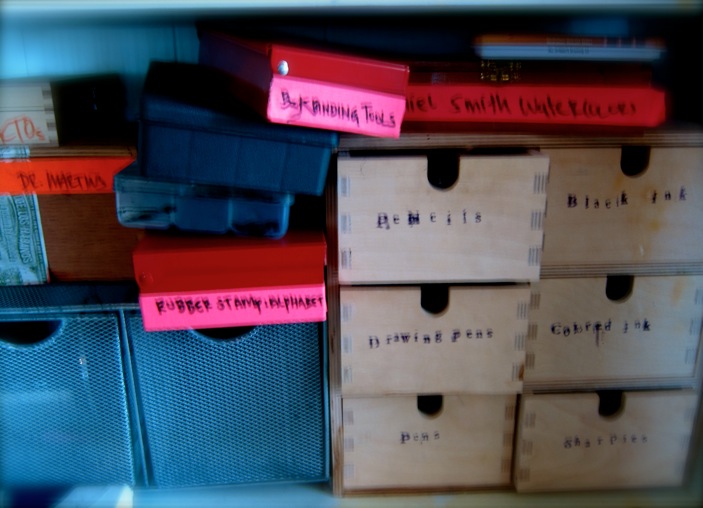
The illusion of organization. Well, that's a little unfair. I do have a pretty sweet setup in my studio though I have to remind myself to use all these supplies before they dry out.
I have a few shelves of filled-up sketchbooks. They are my favorite possessions.
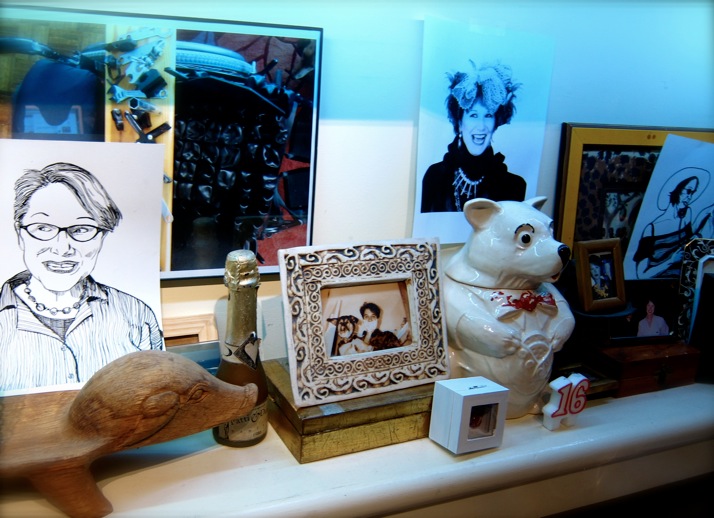
This is my Patti shrine. It's in my studio and I confer with it when I need help. She always has good advice.
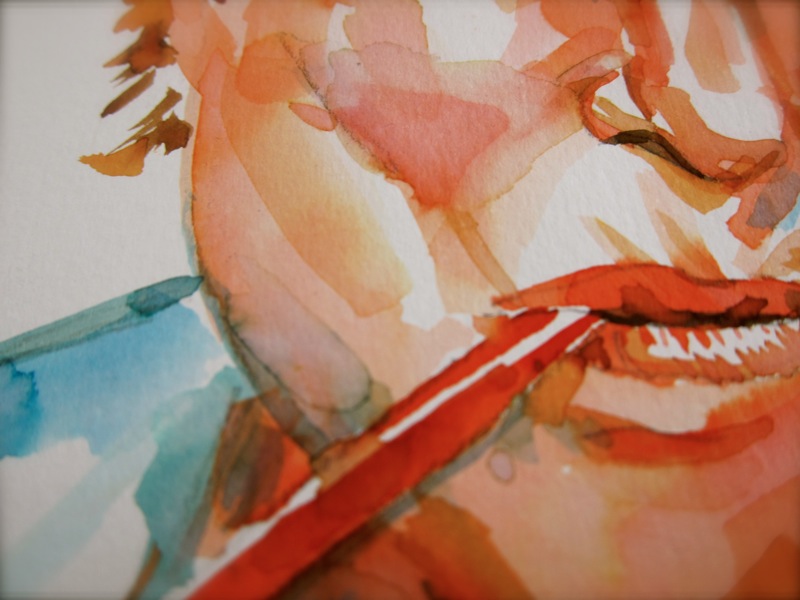
A detail from my new book. Dip pen, sum-i ink and the vaguest hint of watercolor.
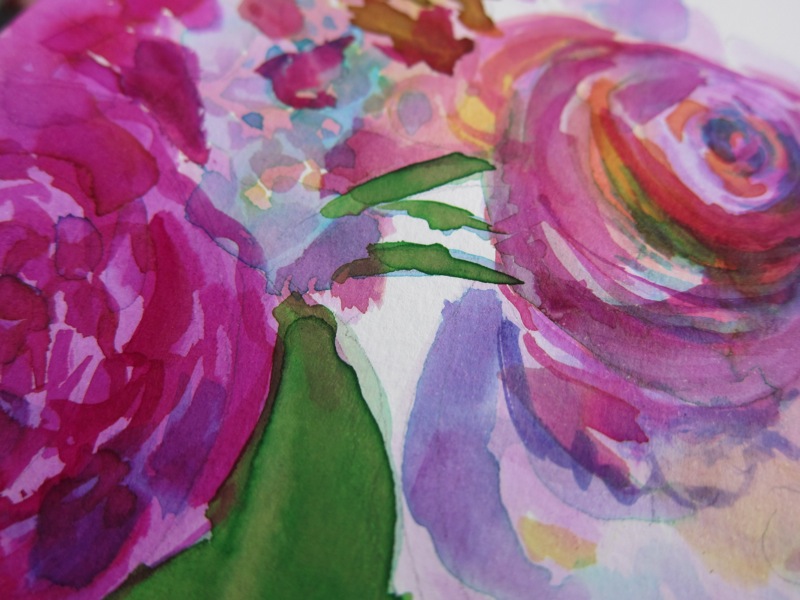
I think this flower painting is a bust. It started out trying to be super delicate, then I got frustrated and piled on too much color.
A detail from another frustrated page. Eventually I figured out how not to hate it.
Another version of the previous painting. I am starting to be okay with this one.
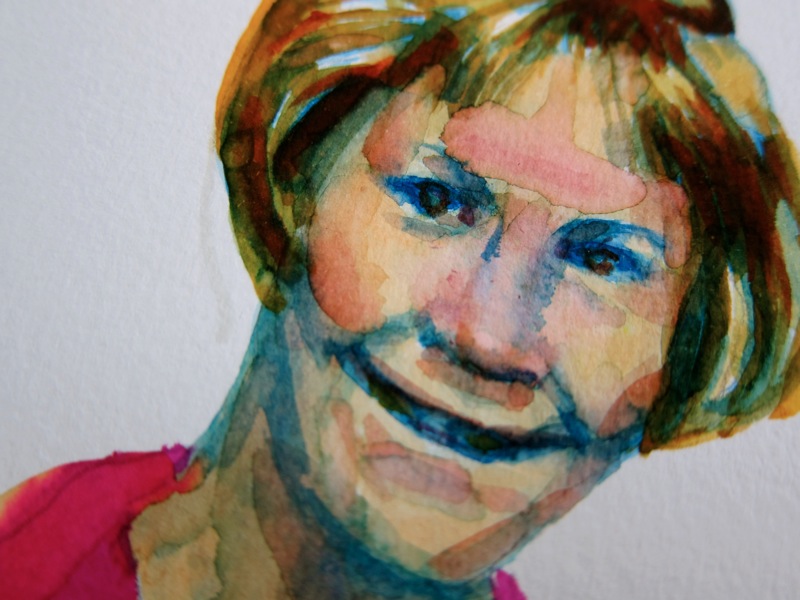
A detail of a Patti portrait from the book.
Patti as a pup. I find it hard to believe I painted this.
This is my favorite P portrait so far. It feels like her.
My old hound, Francis Albert Gregory.
I like this kind of a lot.
This is cartoony but it feels like her. She had a longer neck than she would acknowledge.
Pregnant Patti portrait.
I like the way Joe looks here, nice and sausage-y.
This is another painiting that seems to have been guided from outside me. I really like it but am not sure how I made it.
Crap in my studio. I like the colors.
A tiny detail of a big page. I made this lady I was working with far prettier than she really is. Now I remember her as the painting, not as she actually looks.
I drew this bottle and glass from memory even though the real things were sitting right on front of me. Not a good habit.
This is what it's like to hold my tiny hound, Tim.
Pink Patti, the taxidermied squirrel.
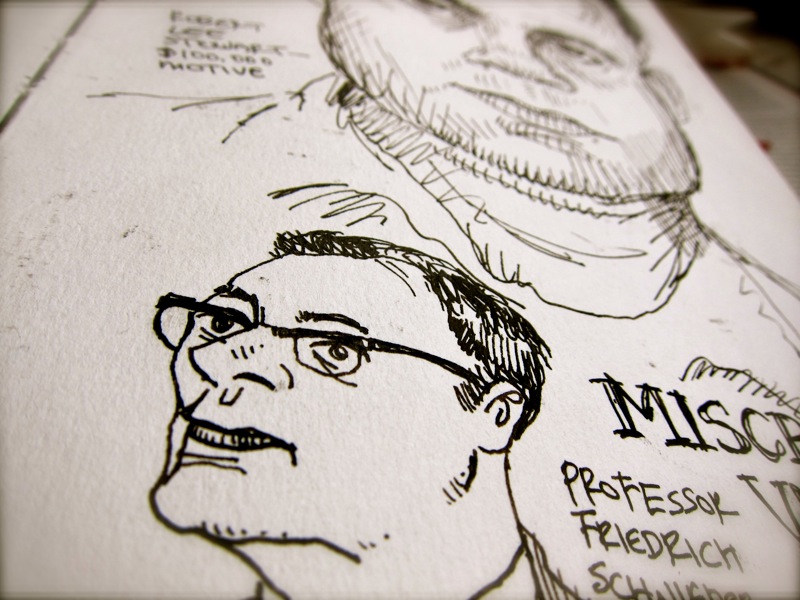
Doodly drawings of dead people.
More self-deprecation, The Critic escapes from his cell.
I like this dude's 'tude.
More dead men not walking,
Me feeling crabby and old.
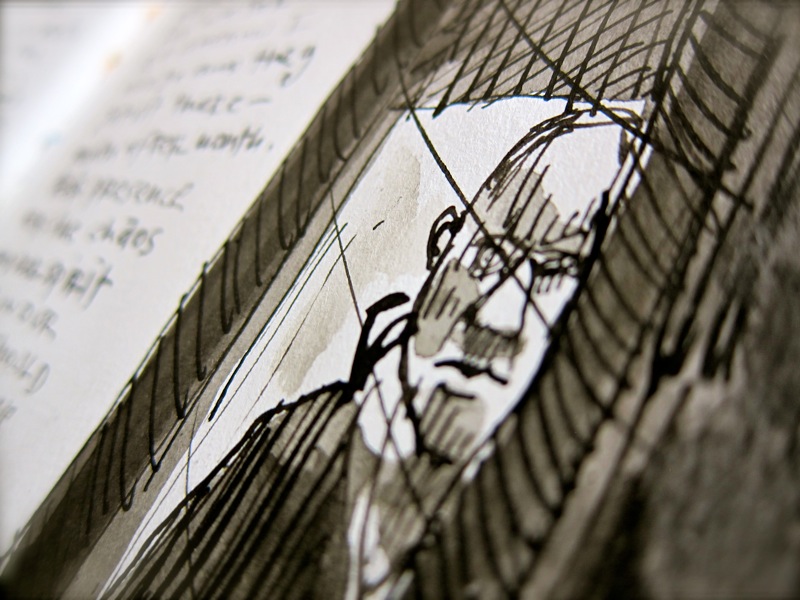
I like this gloominess. It's a tiny detail of a reflection of me in the background of a big crowded drawing,
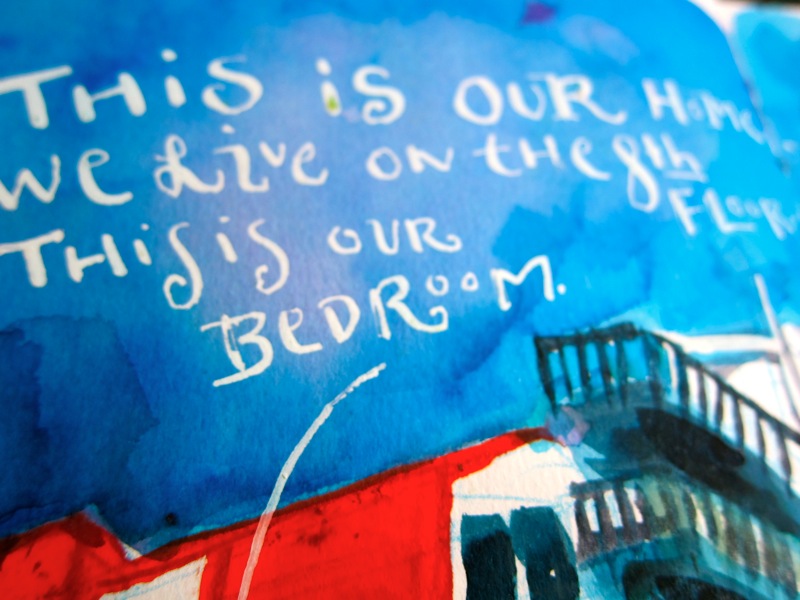
My home. Calligraphy done in thick gloppy white ink with a clogged pen.
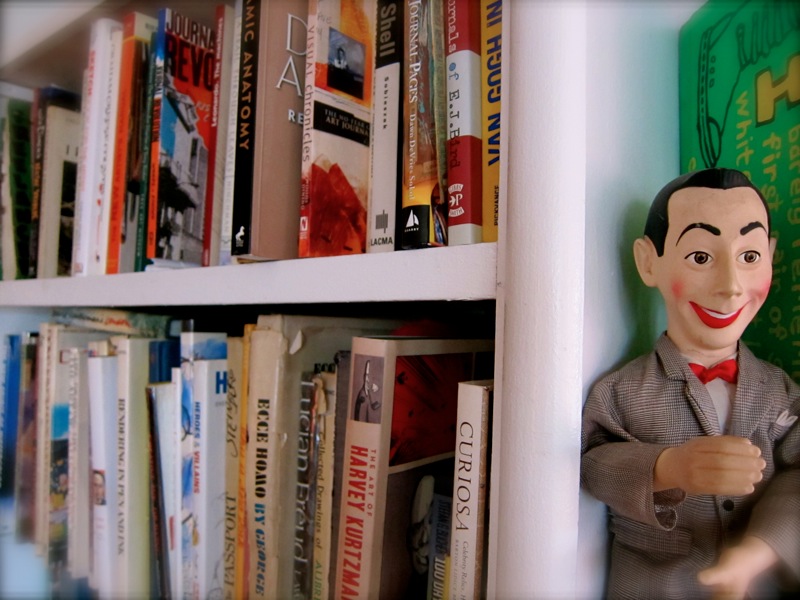
Peewee and some art inspiration.
More shelves in my biblioteque.
The top of Patti's desk including Pink Patti, the taxidermied squirrel.
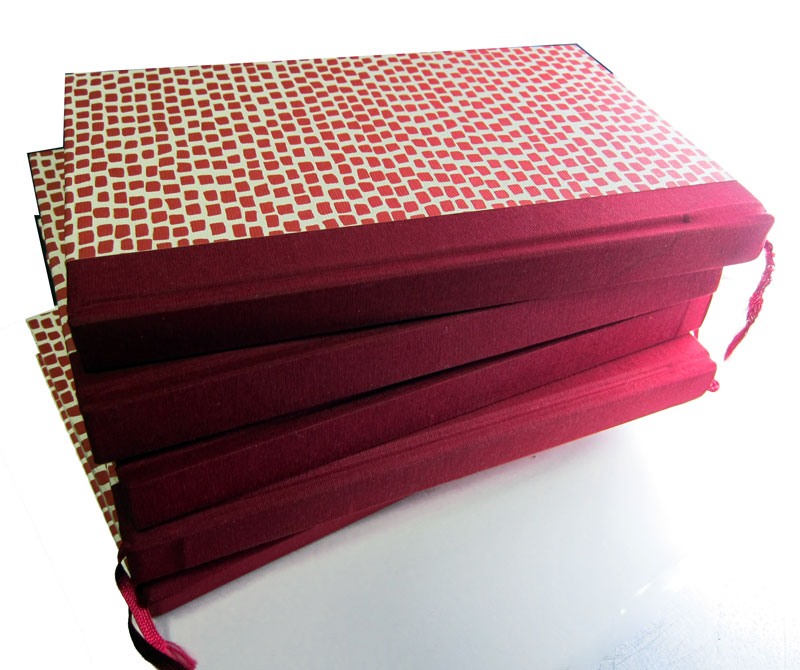
Some really ancient journals from my extensive collection of crap.

The year of magical drawing

I’ve kept an illustrated journal, fairly consistently, for the last dozen years or more. There have been times I got too involved with office work or other distractions and my entries grew more intermittent, but I’ve always come back to a pen and a book to get perspective on my life. When I published Everyday Matters and the books that followed, I made a decision to share this ongoing record of the  events of my life with people who I don’t know personally. It was never a particularly hard choice to make because I think that an essential part of art making is a desire to share one’s view of the world with others. It’s not just creation, it’s communication.

I also discovered that the actual details of my private life that I put on display were less important than the fact that I was recording my life in the way that I was. People were far more interested in this practice as an idea that they too could embrace and adopt themselves than in the revelations of the contents of my medicine cabinet or the places I walk my dogs.

The dialogue that I established between the people who viewed and commented on my work in my books and on the web, also helped to sustain my interest — like a vast, relatively quiet audience insisting that I keep up the habit. When I first began drawing in my solitary book, it was something that only I knew and cared about. All these years later, there are so many people doing the same sort of thing and sharing it with me and others, and the act of keeping an illustrated journal has become  far richer and more satisfying all around.

I went back to keeping a  journal soon after Patti was killed. In fact, I did it with a new sense of purpose because my life needed perspective and clarity more than ever. I discovered a whole new style of journaling too, far more colorful and intense than before, an approach that matched my whole take on life after facing this turn of events. My life has become quite different and so have my journals.

I also continued to share what I was doing, right here on this blog. But after a while, the well-meaning, compassionate outpouring of my readers started to weigh on me. I felt like I was making myself carry out this process in the most public way, adding all sorts of additional pressures that I  couldn’t handle at the time. But I felt I needed to carry on because there were so many people who seemed to care about us and what we were going through, who wanted to know how we were doing, and I didn’t feel I could just vanish and withdraw. But people close to me said, “All that matters right now is taking care of yourself and Jack. Take time to focus on what matters most and everything else can wait.”

So eventually, I started to fade away, blogging less and less and then not at all.

But I kept on drawing and confiding in my books, continuing to feel that what I have been going through is something I ought to capture and (eventually) examine. And I knew, from some of the most heart-wrenching emails and comments I got, that there were people out there who were going through similar trauma and transition and that eventually I might want to share what I was experiencing with them and others.

At times, I’ve felt like it might be possible to  tie this whole experience into a neat package, something with a beginning, middle and end. A story with a moral, a bunch of quippy epigrams that would pass on my lessons earned. It’s turned out to be a lot messier, as life is prone to be.

When the anniversary of Patti’s death came and went, a date I had been long anticipating as the official end of my mourning period, at first it seemed like nothing much had changed. I still felt alternately good, bad, shitty, and fine. There was no massive parting of the clouds or turning of a giant page. I was still alive, Patti was still dead. I hadn’t forgotten much; in fact, I think I now remember more about our lives than I had before. Life goes on but in lots of ways I guess I am pretty different.

As Jack and I began our second lap of the calendar, I felt a shift. We were no longer going through the first day of Spring without Patti, the first birthdays, the first Christmas. Instead, we had were firming up our own era, more clearly defining the way we live as two independent people without a wife and a mom. Sadness is no longer overwhelming and debilitating, it’s just a feeling that ‘s there, that can be summoned up and hugged or put back on the shelf for another time.

Now, when I think about Patti, I am rarely sad. And I do think about her, several times every single day. But lots of the  guilt and fear and darkness and panic that accompanied those thoughts are rarely present. Instead, I feel like she’s just by my side, accompanying me through a new set of doors, advising, encouraging, being my friend and my love.

So maybe that’s closure. I don’t really know the meaning of the word and I don’t feel like anything is closed. It’s more that I am mounting a staircase out of the darkness, seeing more and more around me, but my eyes are still sufficiently accommodated to the darkness I’ve passed through to be able to look back without fear and see what was what.

… Actually, I started writing this to tell you some news.

Those pages I’ve been filling (and a bunch more that I am making that will lend some introduction and perspective to my journal) are going to be made into a new book. It’s going to be published by a wonderful publisher in San Francisco, Chronicle Books, and they will be bringing it out sometime next year. Fortunately, I have a while to work on it and to figure out how to turn this experience into something coherent and good enough to be a tribute to Patti and her life.

A rather unpleasant book editor in New York told someone I know, “I can understand why he feels the need to write such a book but I can’t see why anyone would want to read it.” She may well turn out to be right.

But right now, I’m focussing more on how to do it well and make it true. If it turns out to be of no real use to anyone but me, I can live with that. I may regret sharing the pain and discovery of this last year with more strangers but I doubt it. I have been lucky enough to have so much encouragement in the work I have done over the years and I like to think it has been helpful to share my perspective with others.

I know it has been helpful to me.

Why Everyday Matters

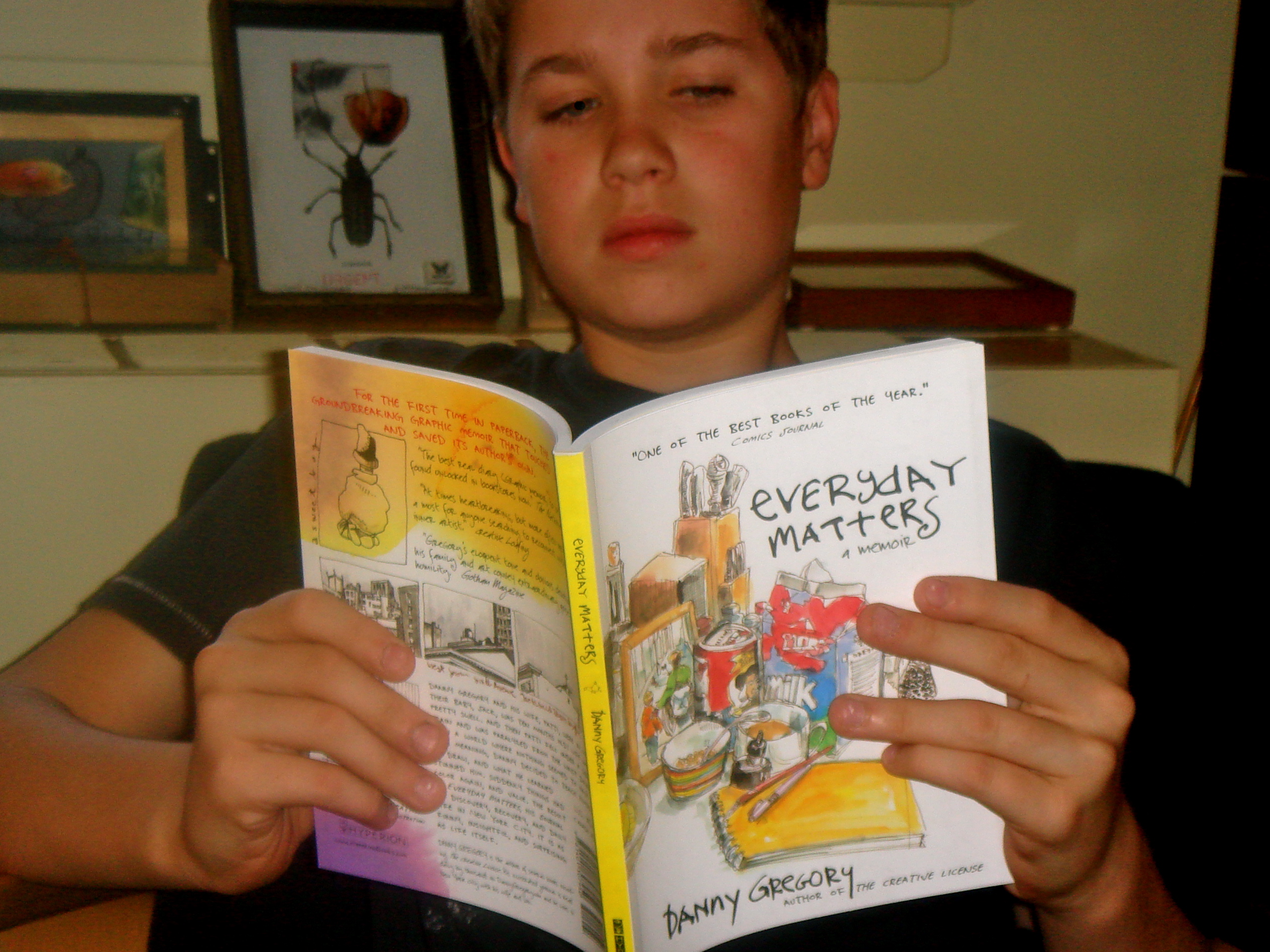
Everyday Matters” began as a simple grab bag of pages from my illustrated journals.

I’m not sure if I was lazy or clueless but I couldn’t come up with a rhyme or reason for how or why the pages were assembled. I just thought it would be cool to say, “Here are a bunch of pages that I wrote and drew over the years, — check em out.”

My editor frowned and said that wasn’t really how books worked and that I needed to come up with a theme, a story, an arc, a reason for anyone to care and keep turning the pages. After some head scratching, I decided that maybe the theme could just be “A New York diary” . Again my editor frowned. ” Just ‘New York’? What about it? What’s unique about your perspective? ‘

My next idea:  maybe it could have something to do with architecture (I had already drawn quite a lot of buildings) and she asked me from what perspective, what did I know about architecture, what was my POV on buildings and I said lamely, ” I dunno, I just draw a lot of them.”

Finally, one tense Thursday evening she said, “Look, why do you draw? Why have you always drawn?” I snapped back that I hadn’t always drawn, that I’d only started a few years before, in my mid thirties. I guess I’d never told her that. “Well, why did you start?” she asked.

I explained that the reason I’d started was private, not something I could share in a book, too personal, too private. She kept prodding me until I explained that my wife had been run over by a subway train and that in the months after I had begun to draw and to chronicle our lives and stuff I liked and places I went and thoughts I had and so on.

There was a longish silence.

In retrospect, I can see how much I’ve changed over the past decade, how much freer and more open I am with the facts of my life. But then, before I had published a word about my life, I was embarrassed, super-private, oblivious to how interested and sympathetic others might be about the changes in our lives that had occurred since Patti’s paraplegia. The fact that I hadn’t mentioned any of this to my editor up to that point is amazing to me now. As is her interest in my work, given that she knew none of the story or how it came about.

“That’s your story,” she said finally. “That’s what your book is about, about how you started to draw and what happened to your family.” I protested that I could never share that sort of stuff with strangers, that it would seem like I was exploiting our story to sell books. She explained that it would be a book that would touch a lot of people if I could write it and that she hoped I could. Otherwise there wasn’t much to discuss.

I went home and talked about the meeting with my wife. She encouraged me to do what I felt was right, that it was my story as much as hers and that if it meant something to others that maybe we should share it. I didn’t know it then but Patti was saying, “Be an artist.”

I sat down and started to write. The story poured out of me, and I saw how it gave meaning to all of the journaling I’d done, that it made it all made sense, my creative rebirth, my need to document my life, my search for meaning, and the way it had brought me to this moment, to sitting down and writing this book.

At the core of my resistance was a conviction that I was not and could not be an artist. I could draw and even publish books, but I could not delve into myself and share it with the world. I had all the capabilities but I did not have that permission. In the years since I Everyday Matters appeared, I have heard from thousands of people and I came to realize that I was not the only one with this limitation. Making art, sharing it with one’s friends and strangers is a transformative experience and I have worked ever since to encourage others to try it. I’ve written several other books exploring the ways people express their feelings and capture their lives in illustrated journaling and I hope to make more tin the future.

For me, art gives meaning to my life. Sharing it with others just makes it mean even more.

——-

Thanks to Seth Apter of The Altered Page for asking me the question that provoked this response.

Out of Time

Click image to enlarge

In the emergency room, after Miranda and I had looked at Patti’s body, a policeman handed me P’s watch in a Ziploc bag. Without thinking, I put it on. It fit perfectly. The next day I took off my watch and never wore it again. But Patti’s watch has stayed on my wrist ever since.

The watch stopped at the moment of her death, 11:20. But over the next week or so, it slowly crawled forward. Each day I would notice it was a minute or two ahead. Finally, it stopped completely, at 11:40.

Sometimes people who don’t really know me comment on it, sometimes snearingly, ‘Nice watch’.This delicate silver watch on my meaty, hairy wrist. I explain it’s my wife’s. I don’t say much more than that. I don’t really care what they think.

As far back as I can remember, I have always worn a watch, usually a waterproof one that I never need to take off, through showers and sleep. Now I ask people what time it is. Or I look around for a clock. Or I just shrug. I’m okay with being late, selfish as that can be.

I am still aware of the passage of time, but seem to be measuring it by a different rhythm. It’s less of a tick-tick-tick, time is passing relentless tattoo and more of an organic drift through the day. I look back each evening and think about what I”ve done, assess its value, wonder if this is really how I should spend what time I have left. I havent made any big decisions about that yet, but I do feel more that time is precious, that it must be savored, and that only I should decide how to mete it out.  Not even a wristwatch has that right.

Greyfriars Bobby

Our hounds were Patti’s babies. They traveled all over town with her, Tim riding in the baskey of her scooter, Joe on the platform by her feet. She would hug them close, dress them in raincoats and a little duck suit, bring them to bed, and spoil them with treats. They licked her, hugged her back and guarded her, barking whenever a stranger got too close.

People asked me if they noticed her absence.

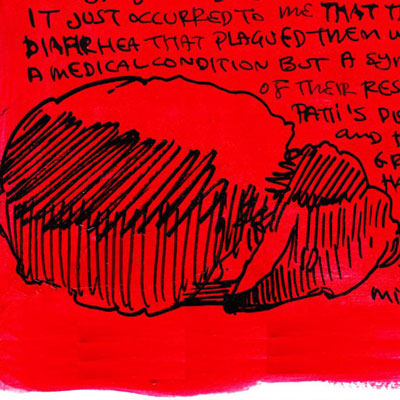
I didnt know how to tell. It’s not like they were hanging around the door waiting for her to come home,  or howling with grief. They seemed more or less the same. Except for the total breakdown in housebreaking. Horrible, squirty diarrhea. Puddles of pee all over. They were eating the same food as ever, getting lots of walks, but it was a nightmare.

I spent a few hundred dollars at the vet and put them on antibiotics. It went away, sort of but not entirely.  A dog walker suggested I try organic food. At the hippy pet store, they prescribed pumpkin and squash, cans of duck and venison. I tried it all and after four weeks or so, things calmed down. When I ran out of cans of expensive handmade food, I switched them back to dry food and they have been fine ever since. Except for when we went away overnight to my mum’s house and they stayed with strangers. Again, diahrrea.

Duh, they were stressed out and this is how it manifested. No support groups or condolence cards. They just want normalcy.

Grief is a messy business. This kind can be taken care of with a mop, hot water and Mr. Clean.

Grave concerns

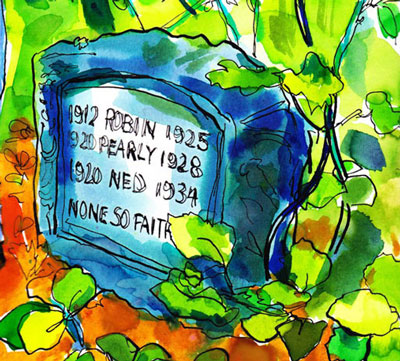
In the corner of my mum’s property, hidden behind the bracken, there’s a tiny pet cemetery from the 1930s. It only has two headstones, commemorating some dogs whose owners are by now in the ground as well. Patti and I discovered it soon after Mum moved into her house in the forest that surrounds it. We though it was the coolest thing ever.

We always romanticized death and its trappings; our morbid fascinations drew us together from the day we met. We delighted in the fact that Patti’s dad had driven a hearse and regularly played cards with morticians. We had Day of the Dead parties with a coffin full of corn chips  our house decorated with Mexican papier mache skeletons.

We would pull the car over at any graveyard we passed, then study the graves for funny names or tombstones carved with portraits of the deceased or symbols of their hobbies — guitars or classic cars. We loved Philadelphia’s Mutter Museum for its ghoulish exhibits and Pere LaChaise cemetery in Paris  where we paid our lack of respect to Oscar Wilde and Edith Piaf.

Patti gave me a lovely watercolor of a cemetery to hang in my office. We collected books of death photos, horrendous images of bloated corpses in kitchen chairs and skeletal remains in the bathtub.

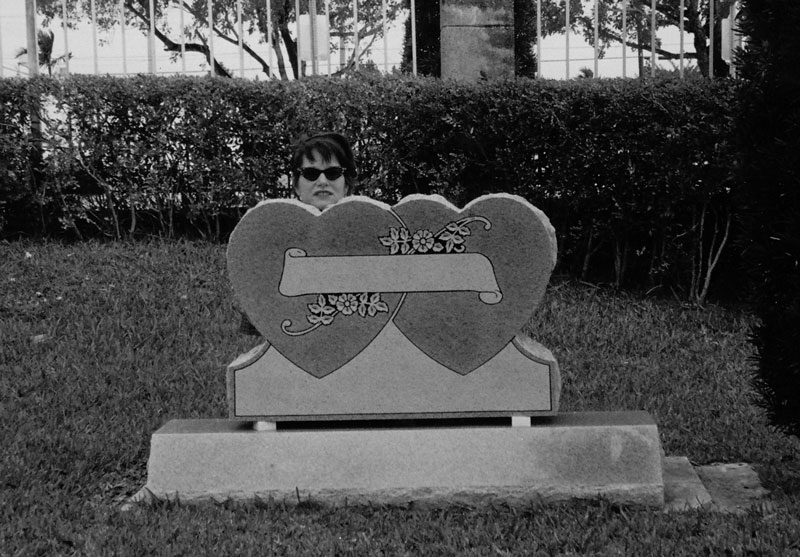
When Patti was a few months pregnant, we stumbled on a section of a graveyard in upstate New York fdedicated to still borns and infant deaths. She insisted on having her picture taken with wee Jack yet in utyero,

Disturbing, right? It all seems like foreshadowing, which of course it was. We always knew we’d die, but somehow micking and delighting in death seemd like a harmless prank. The closer one gets to death and contemplates one’s mortality, the Buddhists say, the less one will fear it.

It didn’t really work, at least not for me. I was always fairly anxious about my own death, even more so about Patti’s. When we had to put our dog Frank to sleep, we were both hit hard; we couldn’t even bring ourselves to claim his body, despite years of joking that when he’d die, we’d add him to our taxidermy collection.

When Ninny, my mother’s mother died, I took it okay initially; she’d left us long before in haze of Alzheimer’s. But I was one of her pall bearers, carrying her shrouded body on a stretcher to a hole in Jerusalem’s Mount of Olives, her bony foot thumping against my hand with each step. We slid her into the hole, in what I thought would be a gesture akin to planting one of her beloved rose bushes, but it was hollow and scary and reeked of eternal void.

When my sister lost her husband, after just a year of marriage, I tried to be the strong one. We sat with Brian’s body face down on the couch for much of the day, then through yet another Irish wake, then an unrecognizable funeral. It was unimaginable that he was gone, but my sister somehow persevered, and even blossomed in the years that followed.

When my beloved mother-in-law, Phyllis, died in her living room after an endless death match with lung cancer, Patti was in attendance, holding her hand through the last agonizing days. That memory scarred her, Death shoving its loathsome face in hers, and steeling her somehow for the inevitable. Patti knew she would die one day and never wanted to go through such hell, she told me, but now she wasn’t scared of anything. Anything.

We stopped mocking Death as we grew older. It was no longer a country on the other side of the world but slowly crept over the horizon. We could see it now, the new home of twenty or more of the people who’d attended our wedding, some old, some gay, some just unlucky. It was getting familiar, inevitable, and much less of a joke.

Today, at least, I don’t fear it, not nearly as I did just a season ago. I have less to lose here in the land of the living. I still love life, don’t get me wrong, but for today, it has less to offer.

Pennies from heaven


We had so many traditions, some stemming back to when we first met, 24 years ago, on 6.16.1986.

616 was always an important number to us. It was also the date of our wedding on 6.16.1991, in the place we’d met five years before to the day. We usually called each other every day at 6:16 PM. We marked all the times that our restaurant bill would add up to some variation of the number. It still comes up; I ordered something from Amazon last weekend. Shipping & Handling: $6.16. It was a funny thing to look for but we knew it was just a long chain of coincidences. Superstition was just a fun pattern, a way to connect, like playing I Spy.

Wednesday was 6.16 again. As I have every year, I went to 18 W. 18 Street where we met and wed. This year I went with my sister, Miranda, Patti’s maid of honor. Over the years, what was once a restaurant, then another, and another, is now a children’s books shop. Where  we stood to be joined till death did us part, there’s now a cupcake counter. The cupcakes are made by the Cupcake Café. When Patti had her subway accident, she was on her way to pick up a cake from the Cupcake Café. She never made it, ending up instead in St Vincent’s Hospital (where she was declared death 14 years later, a week before the hospital was closed down forever). Two weeks later she missed going to 18 W.18 St on 6.16 for the very first time. This year she missed it again. Coincidence upon coincidence, but sadly proof of nothing.

I am reading The Lovely Bones. It makes me sad and I don’t know why I keep turning the pages. Susie Salmon watches her family (and the man who murdered her) from the after life. She follows their actions and their thoughts, hovering over and around them. She feels their pain, wishes she could contact them, but she is just a little girl forever more, beyond their reach. She believes that she’s in Heaven but to me it often seems like Hell.
I wish I could believe in ghosts or angels or spirits. People write to me to tell me that Patti is in Heaven, or watching over us, or waiting for us, or sitting with God, or one with the Universe, or waiting to be resurrected …. It would be so nice to think that she is hanging out with her mother and my grandmother in some wonderful place, and that we will join her soon and be with her forever.

I know you may be able to believe that and, believe me, I have tried to believe it too. Tried and failed. I can’t believe it, I can’t feel it, I can’t even imagine it. There is not even a flicker of doubt in my mind that Patti is no more and exists only in our memories and thoughts and in the cookie jar in my study.

Despite that, Patti does live on.

Just like my grandmother will always exist in the way I make beds, or can’t stand seeing dirty laundry on the floor, or the way I spread cream cheese on toast, or tend my garden. So I don’t need Patti to hover around my head or wear wings and play a harp or leave me five dollar bills neatly folded in fours. I don’t need to light candles for her or say Kaddish. I just need to hold her in my mind. if not my arms, and try to enjoy each day like she did. It’s a simple goal, a little trite, but easy to believe in. Even for an old skeptic like me.

What’s past is prologue

It’s funny how decisions Patti made, sometimes long ago, impact my daily life.  Like the back-ordered blouse that was just delivered by UPS and sits on her desk unopened. Or the brand-new wheelchair she ordered to replace her 12 year-old clunker  — a beautiful titanium work of art with flowers laser-etched on the tubing. It was on the truck to be sent to her on the day she died and, amidst the funeral arrangements, I remembered it and we managed to cancel the shipment.

I like the interruption of these messages from her, her mind working in the past and appearing in the present, like the bulbs she planted last Fall that popped up in late March after she was gone, and announced the first days of Spring, her favorite season.

There remains other unfinished business to attend to. Last week, I managed to throw out ten years of old Martha Stewart magazines but I can’t yet bring myself to go through her closets and share her clothes with strangers. One day I shall, maybe soon. I know I can part with old t-shirts and stockings, tubes of moisturizer and bottles of pills, but I must hold on to the most Patti of her posessions  — I imagine giving Patti’s Chanel necklace to Jack’s wife one day or bequeathing his daughters my grandmother’s hand-painted powder box, the one that Patti kept by her sink. Things don’t really matter but the memories they contain always will.

The crying game

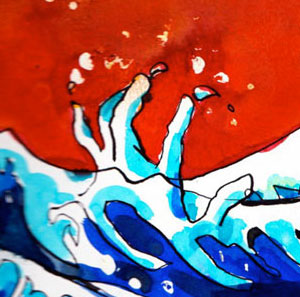
I made this Hokusai-influenced journal entry a couple of weeks ago, but the same sort of wave has hit me a couple of time since. Its clout is overwhelming and the emotion it dredges up is so non-specific, a crippling blow to the solar plexus, a kick to the scrotum. It’s not like the sort of grief that has a word or a thought or an image at its core; it’s just total and blanketing. It hits and suffocates, then recedes, then hits a second time, then mercifully passes all together.


I am so not used to crying. It’s something I was good at when I was little, like running or cartwheels or jumping off the top bunk. Now, as a grown-ass man, I am horribly out of shape as a cryer. It’s as bad as vomiting or marathon sneezing in the way it grips me and fills my head with uninvited fluids, bulging my eyes and forcing ridiculous noises out of my mouth.  What a mess.

In some ways, it’s very welcome. Because I worry about how resilient I am, how able I am to function, there is something welcoming about collapsing, knowing that I am not utterly compartmentalized and blinded by denial. These thundering paroxysms of emotion provide perspective, reminding me that I can travel forward but may have occasionally to stop and pay the piper. I can handle it.

It can be a bit scary for Jack, I think, and I try to shield it from him when I can. But he seeks me out, puts a consoling arm around my shoulder, bringes me a glass of water. Then I pull myself back together and we go out for pancakes.

Staying in touch

Sometimes when I’d wake up in the middle of the night, Patti beside me, I’d wonder if she was breathing. I’d put my ear close, hear nothing, then nudge her to see if she was still alive. She’d stir and I’d exhale. Sometimes she’d wake all the way up and we’d talk. I never felt that bad about rousing her; she had the gift of falling right back to sleep. Sometimes I’d put my arm around her, feel her by me, and wonder what it would have been like if she hadn’t stirred, if she’d gone in her sleep. I’d try on that hollow feeling. But I really had no idea.

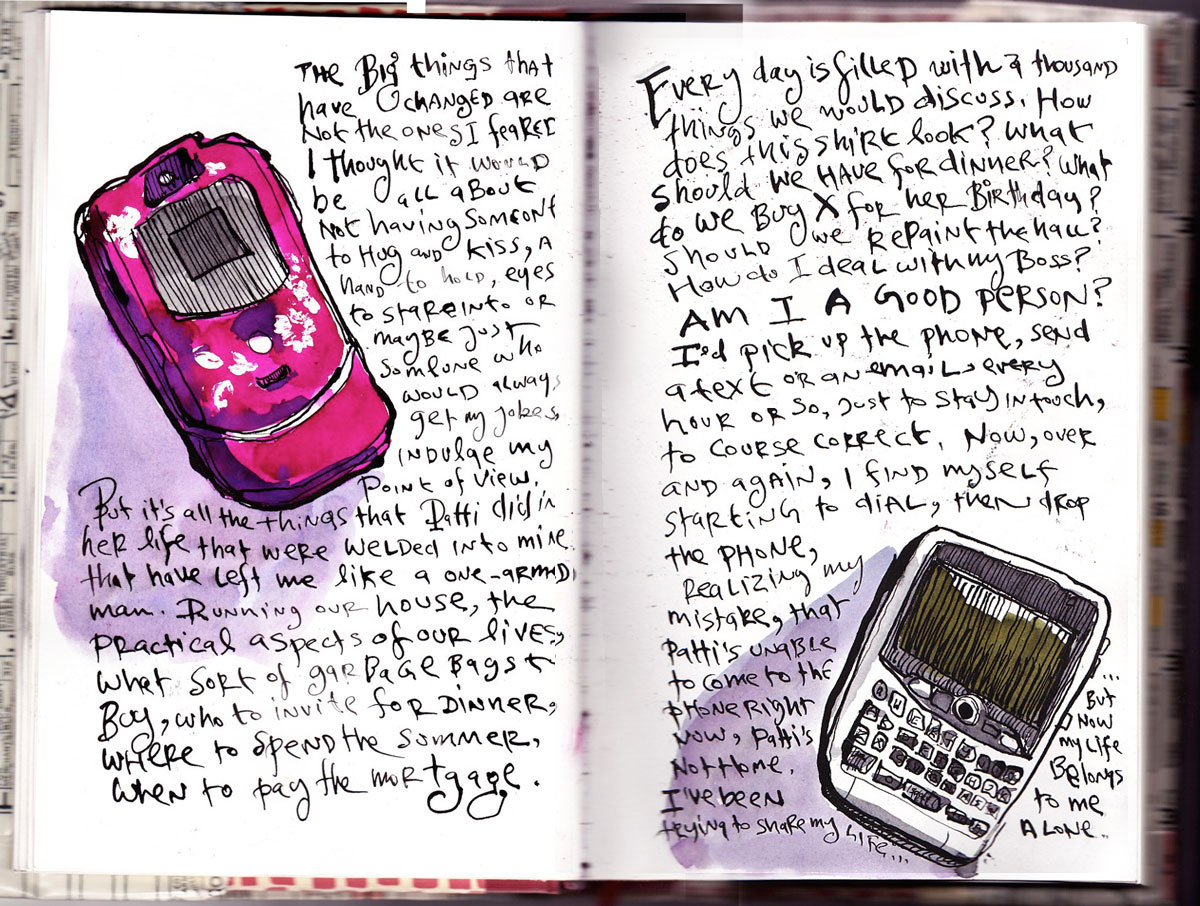
A lot of people miss Patti. They send me emails to tell me. They send her emails too. I miss her, of course I do. But I also miss my life, the way it was, so steady — built layer upon layer like a giant oak, habit wrapped around habit, assumption encircling assumption. For nearly a quarter of a century, we built this life and, when Patti’s ended, so did mine. My life was like the second twin tower. It collapsed right after the first one fell.

Now I have a different life. It’s a pretty good one, despite what I would have thought as I lay with my arm around my sleeping love. It has moments of sadness, deep holes in the road,  but it has a lot of beauty too. I love my son, my  mum, my sister, my hounds. I have so many good friends and the generous support of people I’ve never met. To a large extent, they help me fill in those moments of darkness, help me decide what garbage bags to buy or what to have for dinner. They will talk to me on the phone for hours when I need them, will indulge my nonsense, will cook me rice and beans. But they can’t fill in all the gaps.

Jack and I are resilient. We get on with it. But no one else puts notes in our pockets or brings us ice cream or keeps our every doodle in a file like PL did.

I’d love to chat on the phone with you as I walk to work, Pat, just once. I’d like you to reach out in the dark and stroke what’s left of my hair. I’d even like you to just tell me it’s okay to cry. But failing that, I will remember as well as I can what it was like to put my arm around you, even as I walk down the road alone, and I will treasure every day I have, rather than lying worried in the night.

My new life will be bright. Because you light it.