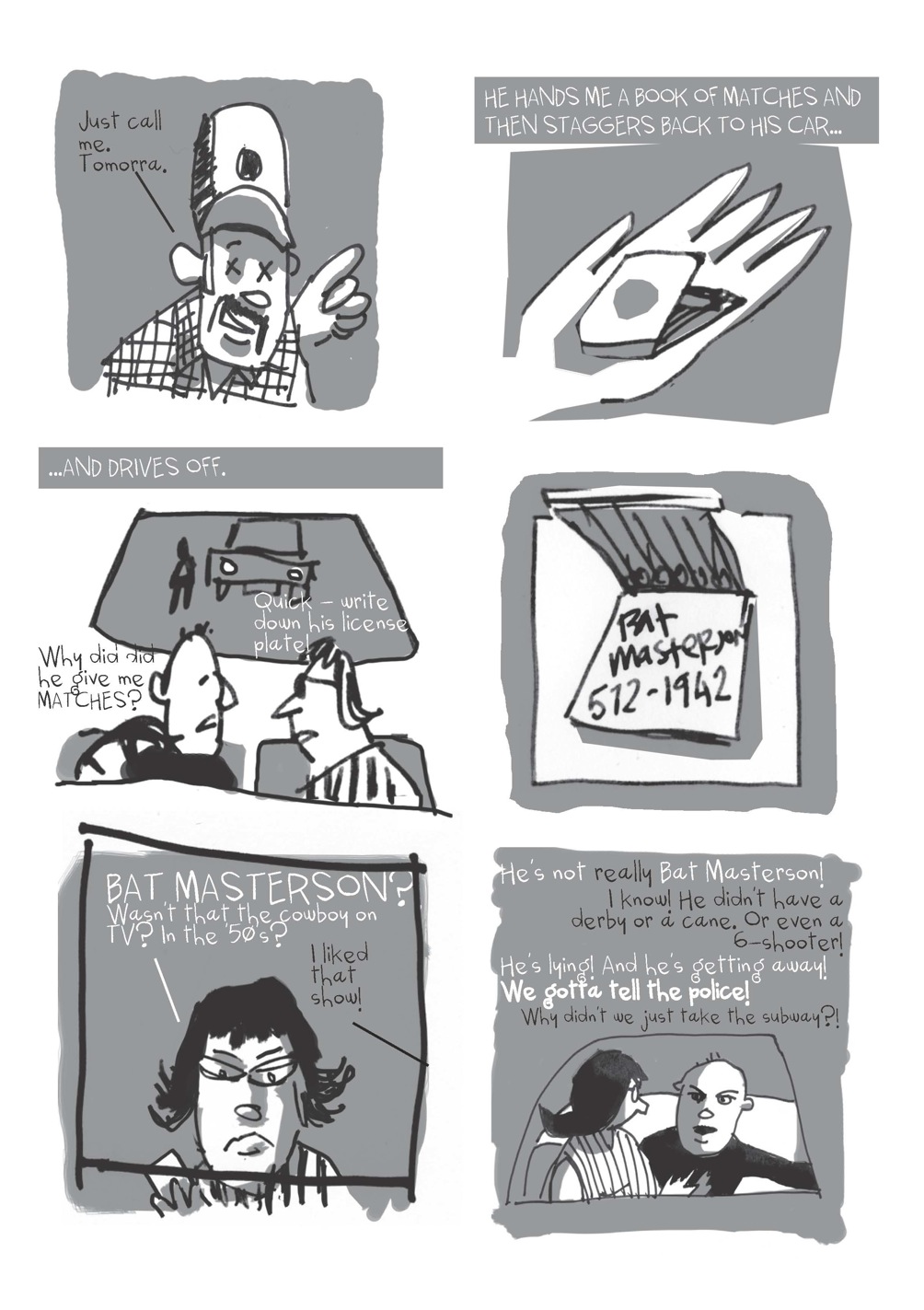
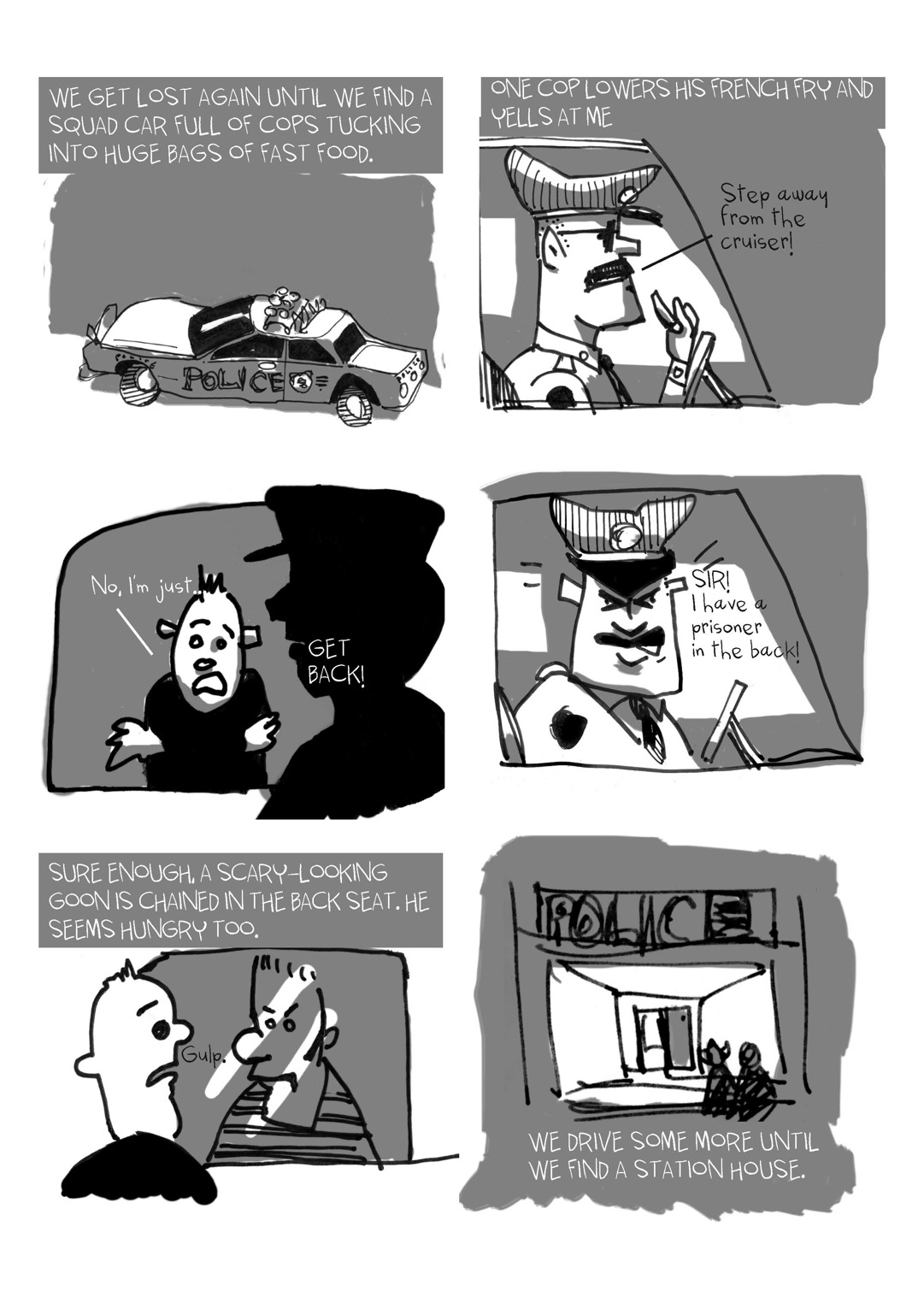
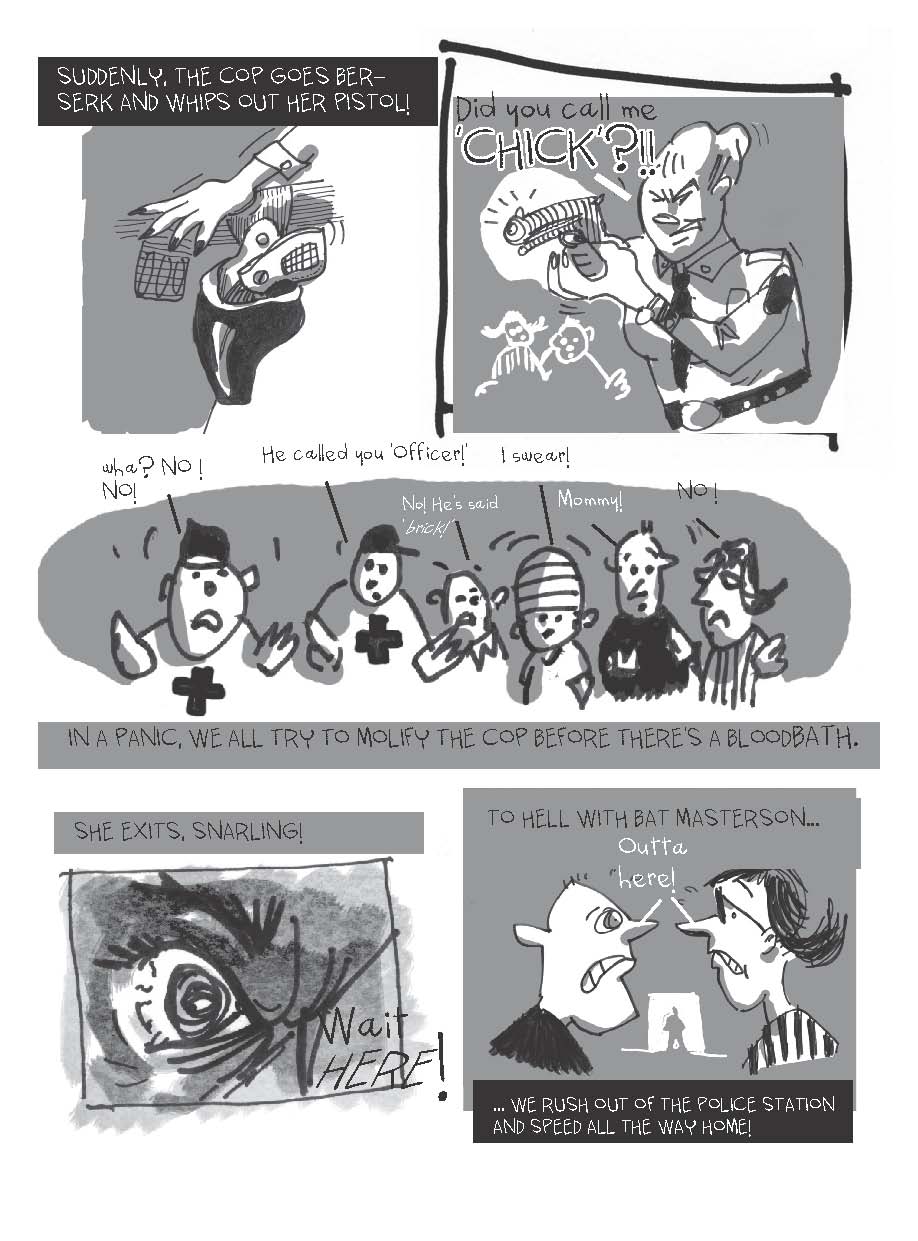
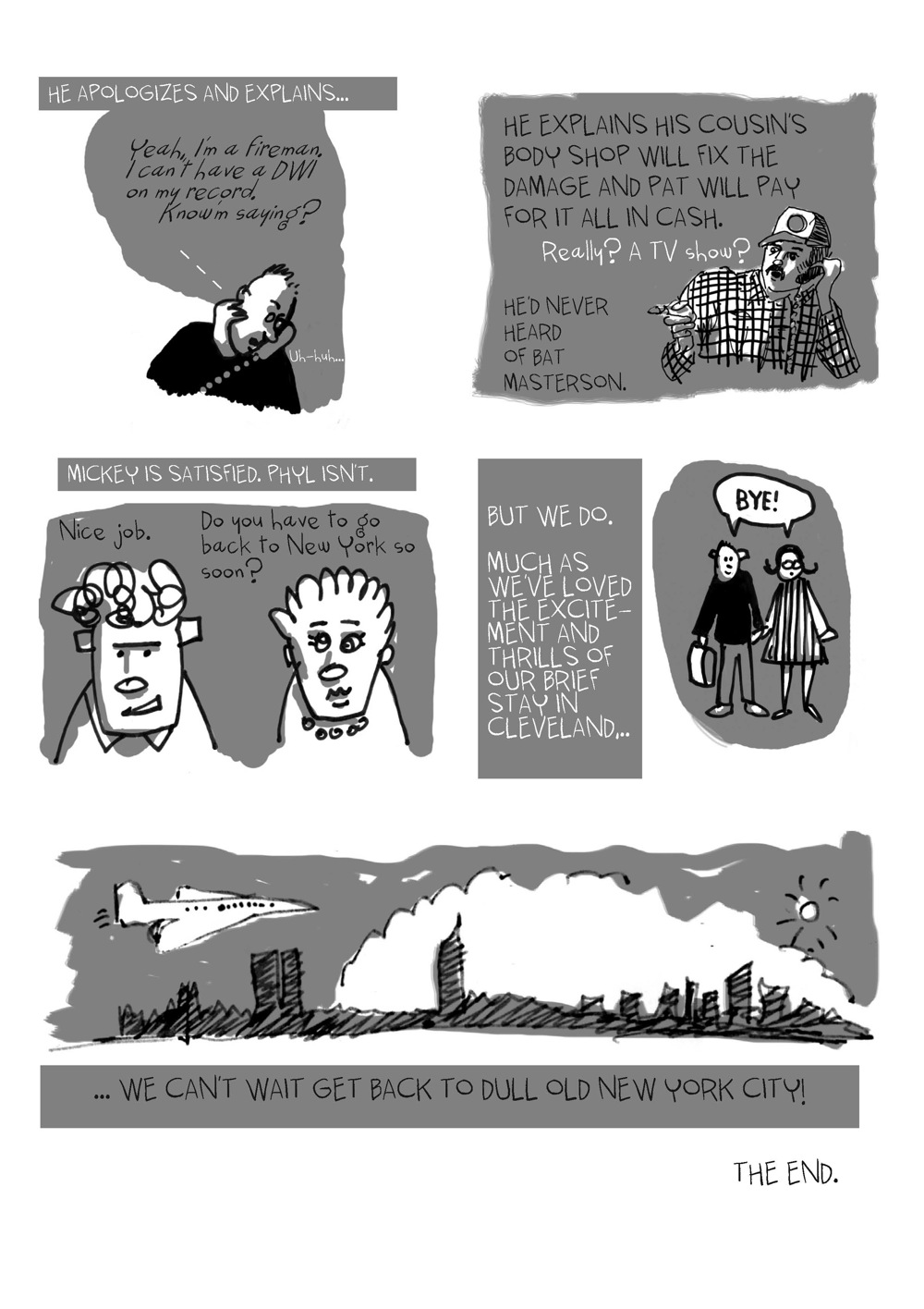
Peanut. The Graphic Novel(ish)

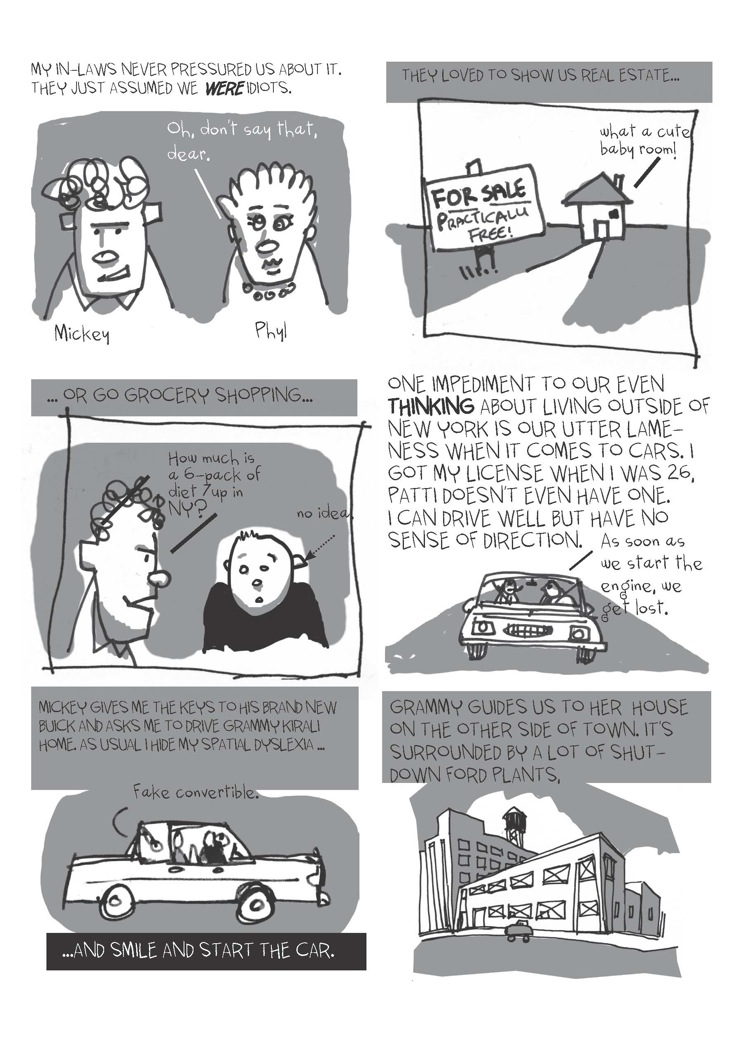
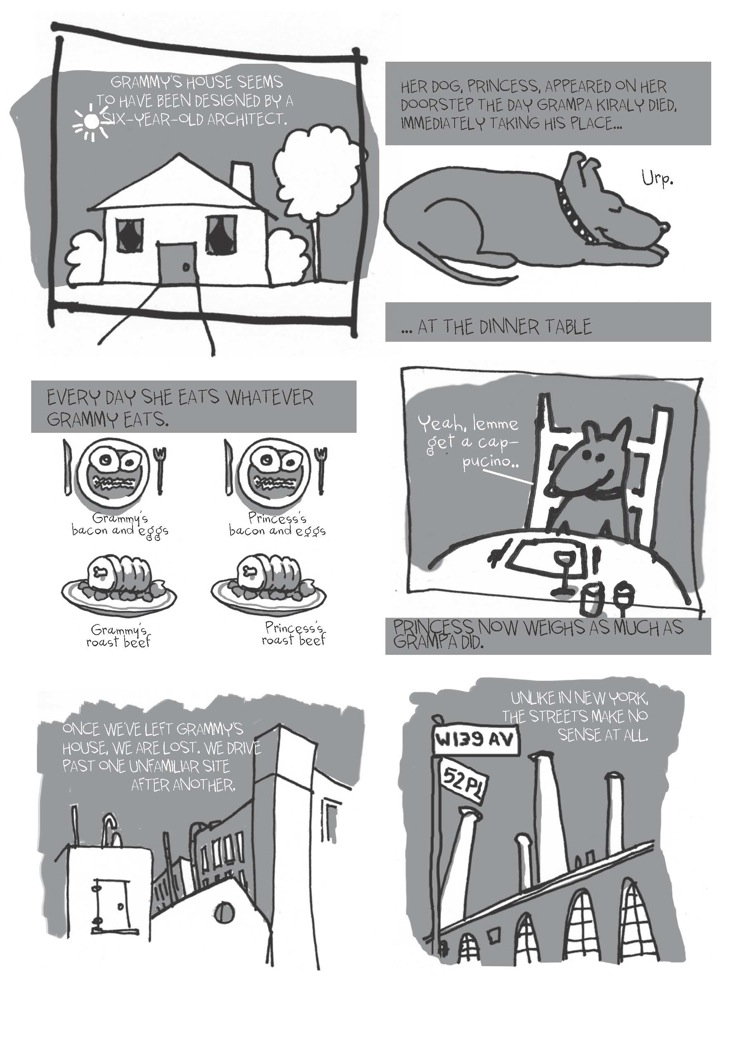
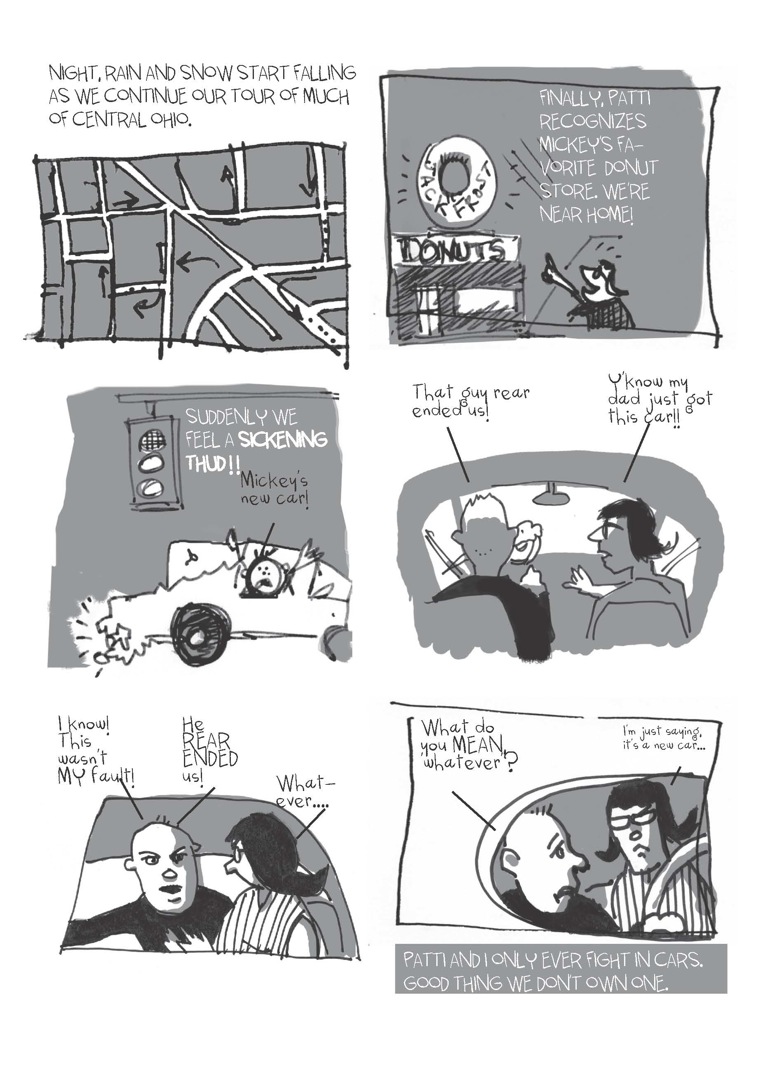
Well, for those who have yet to consume Peanut the Paperback or Peanut the e-book, here’s a sample of Peanut the Graphic Novel. I hope you enjoy it but please be content with this helping. It’s all I could be bothered to do and no more will be forthcoming.

God, Graphic novels are an insane amount of work! But fun (ish).

(Click on each page to enlarge)

Prebreakfast rant

Go on, write  another blogpost about Peanut.

But I haven’t had my damned breakfast yet.

Just do it.

Oh, fine.

Well, much as I love to draw, I also love to write. So this book, Peanut, the first one I’ve published that’s all about the writing, is like my shy bookish child who generally doesn’t come out when company’s around but is rather in a corner, nose between the pages, building up a steamy head of potential and finally stepping into the limelight to get her due. Now, you might say, if she’s so great why is she appearing on Blurb rather than on the front table of your corner Barnes & Gobble? Is she somehow lesser? Does her picturelessness make her somehow less worthy of someone’s hard-earned pennies? Seriously, there are gazillions of paperbacks clawing at the  eyeballs of readers, jockeying to be read, and here you come with some sordid little manuscript and expect people to drop their kindles and snap it up? Be real, man, your illustrated books are being sold in Chinese bookstores, this is penny ante stuff. This little amusebouche isn’t gracing the front page of the Times Book Review. It’s not being chatted about on Morning Edition. Oprah hasn’t put her imprimatur on its cover.  You dont see Jonathan Franzen uploading his books to Blur, do you?

True, true and true. The fact is the publishing world has a mighty machine built over a couple of centuries for grinding out books and profits and making sure everyone everywhere gets to read the same stuff at the  same time. And the next fact is that self-publishing or ‘vanity publishing’ is a grimy little by-way a salon de refusés, full of conspiracy theorists and weekend poets that drizzles out awkwardly typeset drivel with badly designed cover art.

But here are some more relevant and freshly made facts. Thanks to the publishing colossus, it’s impossible for 99% of writers to survive as writers. Even really good ones end up spending most of their time teaching in creative writing departments of lesser-know midwestern colleges or cranking out reams of ad-copy or making half-caff lattes or flipping burgers or just giving up altogether. Now, no one owes writers a living as writers and the prevailing ethic in our society is that if you were any good you could make a living at your craft, but a glance at the Times Bestseller list shows that to do so you have to be James Patterson or Nora Roberts to make ends meet in the publishing world and that the majority of people who get to spend their-full time live making books are editors, publishers, printers, publicists, and agents — not writers.

Now, I love all of my editors and publishers and printers and such, but not so much that they deserve to get 92% of your money whenever you buy one of my books. I mean, I put up with it, but come on. 92%?

Writers have bitched about this inequity since Dickens’ day and finally we have an alternatives. In today’s Times, you can read about Susan Orleans venture into Amazon Singles where she gets 70 cents on every dollar. (She’s a big deal writer of course and is able to get a big article in a big paper to promote her little book so she’s hardly typical). E-books give writers a slightly larger bite of the pie. We get 25% royalties on all the books that publishers don’t need to print or  warehouse or ship or even lift a finger to reproduce.  But, as has happened in the music business, the real opportunity for writers is to short the chain that connects us to our readers. To make books available without all the middle men. That means readers get books faster (it can take over a year or more for a book to go from the author through the production machine and into your local bookstore) and cheaper (seriously, $30 for a new hardcover?) and more. More because when your favorite authors can focus on making books instead of burgers, you end up with more books you love.

It’s all up to authors to take more leaps into the new order of things and try their hand at self-promotion and self-production. And that is possible and fairly simple when you make a book that’s all text. Most of my books, illustrated, four-color, beautifully printed, are partnerships between me and a group of editors and designers who really add value and earn some (if not all) of their 92%. But when it comes to a straightforward book like Peanut, well, it’s not that hard to make it available to readers in an edition that is virtually the same as they’d find  in a  bookstore,

There are still a lot of things to be worked out. publishing on demand is still a fairly expensive model. And I have no idea if most of my readers have kindles  nooks and ipads and such. If they did it would be easier to make sand distribute electronic books that include color and even video demonstrations and commentary. That may be a few years away and frankly the publishing world doesn’t have that much incentive to make it happen. Instead, we, authors and readers can make that more common and available by supporting authors who show interest in inventing new ways of distribution.

I hope I haven’t created the impression that I am begging for your money here.

Believe me, I do fine toiling in the salt mines of advertising and will hopefully do so for some time.But it would be nice to think that an author who has a base of loyal readers might be able to connect with them directly and together they could provide an atmosphere in which writers could spend more time and effort making the books we all love.

I also realize that none of this is a particularly persuasive reason to buy and read Peanut in particular*. The fact that it’s self published on Blur (like many other books I probably wouldnt read), shouldnt make it a must buy. But if you like my writing, and the idea of the book, and have looked at a few pages in the free sample preview, then don’t let the fact that it is coming to you through this more untraditional venue hold you back from buying a copy.

You will be joining me at the barricades, striking another blow for creativity liberty, and breathing heavily down the hunched backs of the  capitalist running dogs. Vive la revolution!

Alright, now can we eat breakfast?

No, first, ask them nicely to buy a copy of  PEANUT here.

I think I’ll have marmite on toast….

—-

* Il’ll try to do a better job of selling you on  Peanut, in the days ahead.

Super cool and exciting: A new book! From me!

When Patti was pregnant, so was I. Pregnant with a book that turned our endless nine months+ into 250+ pages of memoir. I have been working on Peanut in various forms ever since, if you can believe it. It’s tried being a regular book, a graphic novel, and an online serial. And now, finally, here it is a readable form you can carry around with you and read until your are fully entertained and edified.

Back then, I was terribly interested in the experience of becoming a father and I just couldn’t find much that was practical that had been written about it. After the book was written, I came to realize that it was tricky to fill this void in the bookstore in the standard way. Because books need to be shelved in particular sections at your local Barnes & Noble or even on Amazon, no one knew quite where to put my book. It was sort of  a memoir (back in the days before memoirs were routinely bestsellers) but more specific. And it wasn’t really appropriate for the pregnancy section because it was about a man’s experience. Anyway, it got kicked around by a bunch of publishers and finally got punted into the weeds.

I always felt that was  a shame as I really liked it; I think it’s by far the funniest book I’ve written and re-reading it as I have been recently, it cracked me up over and again. I think it’s also very insightful, about what it means to be  a parent and yet remain the child of one’s parents and grandparents.

It’s also a shame because it helps to explain an awful lot about me, about the family forces that shape my view of the world and the uniques experience I had as a kid. Slowly but surely, the most important events in my life, good and bad, are becoming books — Everyday Matters; my new book on Patti’s death; and this, the prequel, Peanut.

Anyway, I have had it with trying to flog the book in the traditional way. But I really do want people to read it. So I have decided to have a number of copies printed up to see if you, the people who have supported my work for years, might be interested in reading it and maybe helping me birth it in some form. It’s a little paperback, decent quality with one of my paintings on the cover. It doesn’t contain any drawings or even the word ‘drawing’ but if you like the way I write and share my perspective on the world, you might find it entertaining. And if you’ve ever been a parent or a child, I think it’ll be right up your alley.

The book is available now —and you might want to act now. This may sound like a hucksterish pitch (though it’s 100% true, I swear) but the printer just told me they will be raising the price by a dollar in the next 48 hours. I think the book is worth that additional dollar but, if that gives you pause, please order it today or tomorrow (May 18th). Or wait till the weekend and spring for the extra buck. Your call. Or, better yet, get in under the deadline and order yourself a dozen or so copies and sell them to the neighbors for an additional 50 cents and pocket the difference. I won’t tell.

Order PEANUT here

If you get it, let me know what you think. And how you think we can collectively make it into a bestseller that will transform parenting as we know it. I welcome your collaboration and critique.

Thanks to everyone who supports my book and has ordered the book so far. If this experiment is successful, I will publish more books in this sort of immediate, hand made way in the future. 

Misty watercolored memories

It’s exciting getting to work on a new book. The excitement kicks off with the first advance check, now nestled in my bank — but that’s short-lived. The real fun is figuring out all of the bits and pieces and how they fit together. I don’t have a huge amount of time to work on this book but enough so that I can go back and rewrite and redraw things until I really like them.

When my editor read my blogpost announcing my deal with Chronicle, she wrote to me to remind me that the book is not in fact scheduled for next year but the middle of 2013. Yipes. I promised I could get things done faster if she could compress the schedule on her end and we managed to swap things around so now the book will come out six months earlier in the Fall/Winter 2012. I have until October 1 to get the first draft in which should be plenty of time (famous last words).

Much of this book is drawn from the illustrated journals I’ve kept over the past 13 months but they’re all being reworked and augmented. My journal captures the here and now so vividly but a book needs to have a more lofty perspective too, a way of winding everything together into a narrative. While the book has a clear beginning, the end is fuzzier and so I have decided to bring the story to an end after a full year, the official mourning period. Mourning, of course, takes a lot longer than a year — it seems to be  a lifelong process — but the book has to stop somewhere.

Beyond my illustrated journals, I have been writing a lot, little paragraphs, captured thoughts, revelations, and I am blending them into the pages I have already drawn and painted. That means a fair amount of editing but it’s all being created with snapshots of my moods taken as they appear.

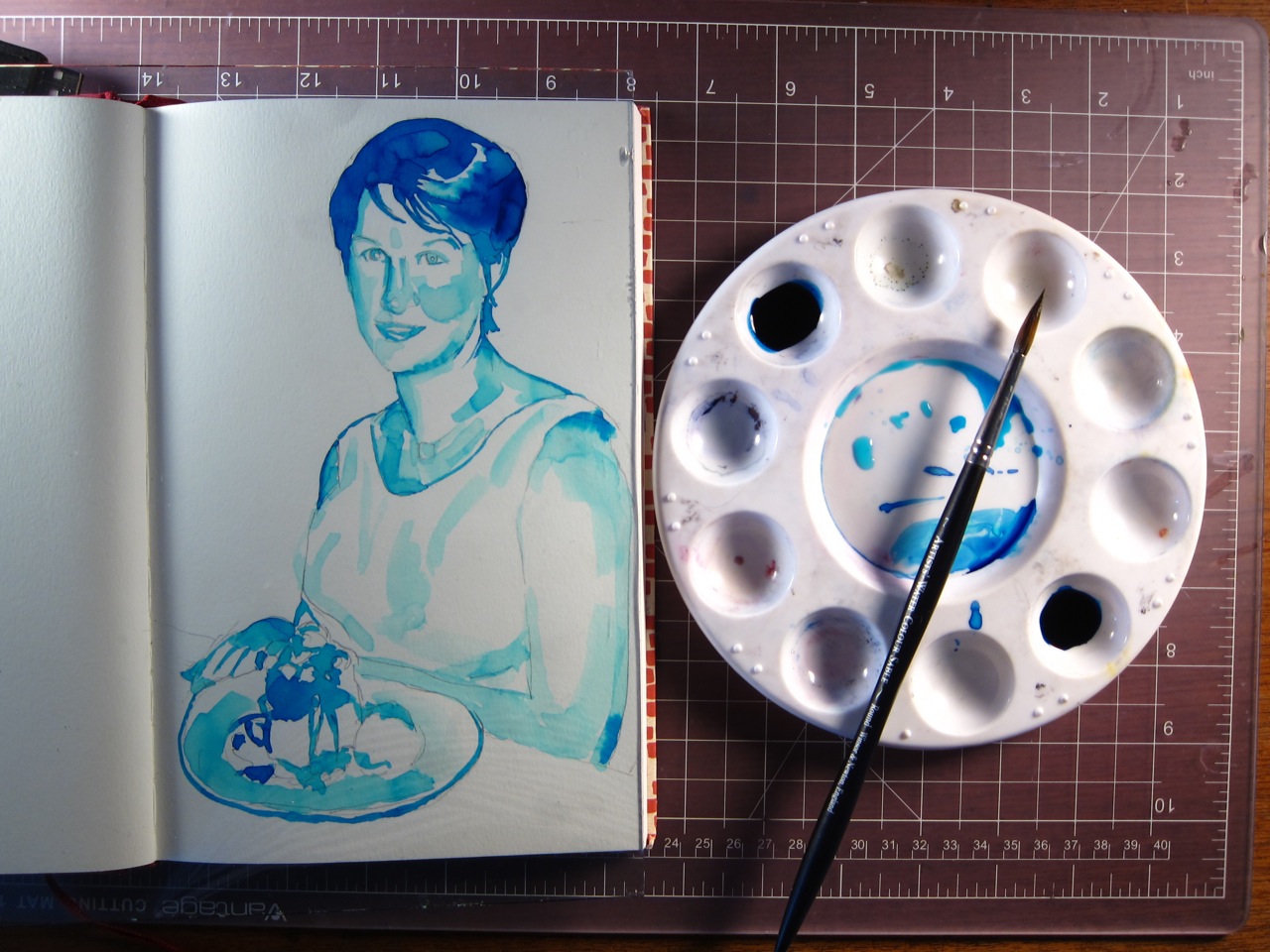
The book will open with a section focussed on Patti’s life, trying to bring her to life on the page, to tell her story before I start to hog the stage. That section of the book is going to be done in a new way, quite different from my usual style, drawings done entirely with a brush and watercolors. There’s no ink, no solid lines. And I am working from photographs, as they are all I have of her now.

I worked with this palette of eight different shades of Dr.Ph Martin watercolors. I keep them in a dark bag because they just can’t stand the sunlight. They work fine in books that remain closed most of the time.

First I drew a light contour drawing in pencil, so I would have a vague sense of where I am going.

Then I used a couple of shades of blue to do an underpainting, getting a sense of the tones. Often, this is my favorite part of a painting and I wished I’d just left it monochromatic.

I next added two dark shades of brown to build up contrast.

Next I added warm tones and started to work on the skin.

Now I added more reds and yellows.

And here’s where I left off today, with a little bit of writing in the corner. Chances are I’ll tackle this picture again after it’s been lying around for a few days.There’s still something sort of frozen and taxidermic about this, one of the reasons I ‘m not wild about working from photos, particularly contrasty ones taken with a  flash. Hopefully it will also improve once I;ve written all around it. Look for it (or some descendant) in my next book.


A Challenge for the Whole Family

[Seth Apter of The Altered Page is conducting a Buried Treasure hunt and encouraged bloggers to resurrect one of their favorite long ago posts. I like this one. I may put up a couple more golden oldies to follow. Then back to the normal sturm and drang of the present.]

It’s the 13th anniversary of Patti’s accident. Jack wrote a lovely essay about how that event has effected him since he was just a baby. Here’s a video of him reading it at his school’s literary festival.

The video is above and here’s the text:

A Challenge for the Whole Family by Jack Tea Gregory
It was June 8th of 1995 when the incident happened. It felt like a normal day, nobody expected anything out of the ordinary. My mother was waiting for the 9 train and she was in a hurry. She was rushing to a demanding photo shoot that was very important to her career. While she was standing near the tracks, peering down the tunnel, her stress and the intense heat caused her to faint. She started to fall just as the train pulled up to the platform and the wind caused from the train whizzing past pulled her into the middle of the track, allowing her to avoid any electrocution. However, she wasn’t safe, the way she fell caused her spinal cord to bend and her back twisted, just before a dangling piece of metal hanging from the train hit her. She was immediately taken to the hospital where they placed an iron rod into her back because her spinal cord had been broken. My mother had been paralyzed from the waist down. She could no longer walk and was forced to sit in a wheelchair. Ever since that day, her life and those surrounding her was instantly affected greatly. Luckily, she was able to get through the therapy and with the support of her family, a new child, and a great sense of humor she was able to push past the injury and escape the pit of despair that many fall into. Many people who are hit by trains come out the tracks in different ways; some are bruised and some are killed. Luckily she didn’t experience the latter, but still life has been a challenge. Our family has also recovered from it and is able to say that they have grown used to it.
Living in New York hasn’t been the easiest, there are a lot of places that don’t have ramps or aren’t accessible. Whenever we find a problem we try and make the best of it. For example, when Mom got her first wheelchair, instead of grimacing about not being able to walk, she would place me on her lap and we’d ride down huge ramps and hills together. The rush between fear of falling and the fun of the wind speeding past our faces created a sense that nothing else in the world existed. My old school had stairs everywhere and she often couldn’t come to school performances or celebrations. I would usually try to take pictures of what was going on so that I could bring her a substitute for not having been there. I would bring her my work if we were celebrating a finished work party.
When my mother would pick me up from school, I would look up from the monkey bars and see all the kids starting to crowd around her. They would ask her questions like, “Do you sleep in a wheelchair?” or “How do you go to the bathroom?” Being the kind woman she is, she’d simply answer them as if nothing was wrong. But I couldn’t help but feel separate from the rest of the children. They found it cool and interesting that my mom was in a wheelchair. They didn’t know how it really was though, all the things we couldn’t do anymore because of this problem. We sometimes can’t go on vacation to certain places because the hotel has a flight of stairs or its elevator has broken down. There are a lot of cars that she can’t get into because they are too high for her to transfer into. However, we find ways around this. My father or I lift her up the stairs and we use a small piece of wood that we call “the Transfer Board,” which she uses to slide across onto the car’s seating.
Taxi drivers are our next issue. Since we didn’t own a car, taxis or the bus are our main form of transportation. Unfortunately, only a small fraction of the drivers actually know how to load up a wheelchair. We have to help them to understand how the wheels come off and how to fold up the seat. This can take about 15 minutes and it becomes very annoying after the 20th time.
This incident has changed our life completely and entirely. I can’t imagine or picture how different I’d be if my mother wasn’t in a wheelchair. Most people would think that this is a near to impossible lifestyle but it’s not. We get through each challenge and we do it as family, together. We have as much fun as any other family would; we just do it in a different way.

[Originally posted June 7, 2008]

Old Mad Men

Tom Kane and I started working together in 1984 (!). We were junior ad men at a now-defunct New York  agency. Decades later, we are drawing-buddies, not colleagues; when we hang out, we occasionally reminisce about our careers and how things have changed over the years. Last weekend, we set up a couple of cameras while we sat around and recorded our chat about bygone days. If you remember stat machines or sending out for type or hand-drawn layouts  anything about design and production before everything went digital, you might enjoy this conversation. We did.

Old Mad Men. Part 1.

Old Mad Men. Part 2.

Old Mad Men. Part 3.

Drawing with Tim

Tim is three now and it’s high time he learned a trick or two. I read in an old German dog-training handbook (“Wie die Ausbildung von drei Kilo Wiener, um Ihnen eine heiß Tasse Kaffee” by Dackel J. PferdApfel) that, with the judicious application of a stout cudgel and hard taffy, one can get even the most timid long-haired miniature Dachshund to speak.

We spent a frustrating weekend working through the manual with Tim and were finally rewarded with his first few words. After a month of follow-up work, he is now entirely fluent in English, has shed most of his Dusseldorf accent (replaced for some reason with a Bensonhurst growl), and bores us with long monologues about lunch meat, cats, and the perils of thunderstorms.

Now we’re working on a much bigger challenge — getting him to draw. On Tuesday night, we began his first drawing lesson and he did a passable portrait of me, before moving on to sketch some flank steak, a barbecued chicken and a meatloaf. Fortunately, a local documentary film crew was on hand to capture his first faltering steps and they’ve been posted online.

I urge you to try to encourage your own family members to draw. It’s fun, it’s relaxing, and it’s easier than chasing your tail.

This video is also available in HD and on Youtube.

Drawing on memories

memory-media1

Patti had a birthday last month, the 22nd we’ve celebrated together. When you’ve been together as long as we have, you have to think  a little hard at birthdays and anniversaries and Christmas time to keep things fresh, to make sure that you can still express how much you love each other without falling back on the tried and trite.

Anyway, this year, I decided that one of the ways I would commemorate our history together was to take our ancient home movies and transfer them onto DVDs so we could watch them over and over. We have scads of old video tapes but the cameras that recorded and played them are long defunct. In fact, we have never looked at any of them since we initially shot them – films of our first trips together, of our wedding, of Jack’s early days and so on, all moldering in shoe boxes. Now we have a dozen gleaming DVDs, a box set of our lives up to about 1997 or so.  We have all watched them together over and again, particularly the ones when Jack first learned to use the potty and his first big argument with us on a trip  to Nova Scotia.

One of the more profound DVDs is the one I made when Patti had her accident and I was alone each night at home with the baby. For two months, I made videos of our daily life to take up to the hospital to show Patti that we were okay, that life was going on, that she had something to come back to. These are the hardest tapes to watch because I feel so sorry for the me that was, giving Jack a bath, rocking him to sleep, listening to music (Teddy Bear’s Picnic, The Ugly Bug’s Ball, Let’s Go Fly a KIte…) that was once so sweet and important to us but forevermore will signify the hollowness of those days.

Funnily, the more I got into drawing, the less video tape I shot. As the films peter out, my journals expand, so our whole life is recorded but just in very different media — and with very different effect. I read recently that when you look at old photos, they stir up old memories, facilitating recall. But when you look at old home movies, those images tend to actually replace your memories of the periods being recorded. When you think back on those times, your brain tends to pull up scenes from the films rather than organic (but not necessarily as reliable) memories. My mum had an 8 mm. movie camera when I was a baby and the images from those old reels are the only scenes I can remember from when I was two or three or four. Maybe nobody has much memory from that time, and mine are quite vivid, but I know they are all just scenes from one movie or another.

When I watch these old movies, I sort of vaguely remember the times when they were taken. When I look at these old videos, my experience is often of surprise. I think about how young well look, or weird my hair was, or how I seem to speak out of the side of my mouth. The experience is from outside — I am watching myself but not as myself. In fact I would venture that most of my experience is not radically different from what a total stranger or an acquaintance might think of the same footage.

The drawings in my journals, however, summon up a completely personal and intimate feeling. It’s more like a time machine than watching TV. I am in the moment, I am me now and also the me I was then.The act of drawing, painting and writing rather than just pushing a button on a  machine, forms completely different sorts of memories, When I look back at a page, even one that’ s more than a decade old, I remember so much about what I was doing that day, my mood, the weather, even the smells in the air. The experience itself is deeply embedded in my head and just glancing at the drawing takes me back there.

I am so glad to have both sorts of records of my past (not to mention dozens of photo albums and zillions of digital snapshots). I can travel back to any period of my life now and see my life as a continuum. There are so many lessons to be learned by looking back and seeing where one has come from, who one has known, how one made choices, how one felt.

Creating these records, particularly the ones that consists of just some feeble drawings and a few scratchy notes, is probably one of the most important things I’ve done. That sounds odd perhaps, that recording and observing one’s life could be of the most important things one can do with it, but that is the true purpose of art — at least to me. The value of taking a step back, of putting a frame around a moment so that it can stand for a thousand other moments unrecorded, to learn from one’s mistakes and to cherish one’s blessings, to hold up one’s experience so that others can share it and learn from it,  these things seem like the very purpose of art — and of life as well.

Me Time

metime

My grandfather died last winter at 98 so I’m not even half his age yet. Maybe I’m only approaching the midpoint of my life, or maybe I’ll have massive heart attack and keel over at my desk this afternoon. There’s no telling.
Regardless, I know each day and hour are precious. But it’s hard to keep the relentless tsunami of stuff, or responsibilities, of things I want to do, from swiftly wiping each day off the board before I can even wipe the sleep out of my eyes. Life moves quickly and the further along the road I get, the faster the pages fly off the calendar.
Knowing this, trying to hold it on my mind, can help me to prioritize. But it’s still tough to keep the world at bay and to decided how to spend my time well. Often I lie in bed and think, damn, when am I going to get to read all those books I want to read or spend more time drawing with Jack or more time cooking dinner with Patti. When am I going to get to live in Micronesia or the South of France or in that little house in the meadow? When will I get to spend two hours a day at the gym or four hours a day doing oil paintings or six hours a day reading Proust? When will I learn Italian? Learn to drive a motorcycle? Defend my heavyweight boxing title?
I’m not filled with regret because I somehow feel I will get to do these things. I’m just not sure how or when. Perhaps my appetite is just larger than my calendar. Fortunately I am often insomniac so I get to spend 3 to 4 a.m. thinking about stuff I didn’t fit in during the day (most of it actually just anxious nonsense).
Anyway, this consideration of my gallon of ambition and my pint glass of life set me on the way to a new project. It’s something I’ve mulled over for a while and finally out into action. It’s an effort to really think about the things I wished I could have fit into a day and then an attempt to fit one of them into the next day.
I have just completed a project called ‘Me Time’, which is an attempt to find an opportunity to pursue the many things, small and large, that my normal waking hours just don’t allow for.
I created a record of this process, in words and watercolors, had it printed up in a cute, square format, and I must say I like it a lot.
This summer, I published “Bad to the Bone“, my first book with blurb.com, and I was pretty pleased with the results. The printing quality was great and by squeezing my markup I could offer it to for a pretty reasonable price. The book itself was a collection of drawings and paintings of dogs I’d done earlier in the year, combined with some slight doggerel, a noble but ultimately experimental effort.
‘Me Time’ is pretty different. It’s also a small and affordable book,but it was conceived as much more of a book than its predecessor. It’s tightly designed, carefully written and profusely illustrated. I also think that, as a lifestyle experiment, it was illuminating. I think that it might give readers a few ideas about how to make more of their own time, and add depth and richness to their lives. If not, well, it has a few good jokes and a couple of nice paintings.

If you’d like to check out the book and maybe order yourself a copy or two (I think it might make a nice, modest year-end gift for friends, at least that’s how I plan to use it), click the preview link on the box below.

If you order a copy, I’d love to know what you think and, whether I should continue with this sort of experiment.

How I found an ext…
By Danny Gregory