98 years of change.  

Let me tell you a story. It’s about what change sounds like when it’s kicking down your door. And what you do about it when it does.

Herman was four years old when his country plunged into  the war to end all wars. World War I continued to rage on till he was nine, a boy too small to fight or even understand the causes and implications of the destruction all around him. But he soon felt the fallout.

After losing the military war, Germany was savaged by an economic one. Inflation rocketed to historic levels. It was a terrible time for even a canny entrepreneur, and Hermann’s father was born to lose, even in the best of times. He invested the family’s nest egg, the equivalent of $10,000, in a warehouse full of burlap sacks, then turned around and resold it at what would have been a handsome profit. His buyer was to pay him by day’s end, but stalled. By the time he showed up  two days later with the cash, a literal wheelbarrowful, the millions of marks would scarcely buy a loaf of day-old bread. The family was ruined.

Hermann and his siblings were sent door to door through the ghetto, hawking whatever wares their father scrounged together. When his older brother, Josef, rang an unfamiliar doorbell and discovered it was a classmate’s home, he dropped his bag of mantle clocks and ran in humiliation. No amount of beating would get him back out to sell again.

But Hermann persevered, hustling, supporting his family however he could. Knowing no one else would ever come along to bail them out.

In high school, Hermann had shown himself to be exceptional; he was clearly smarter and harder working than any of his classmates. His dream was to go to medical school, then to study with Sigmund Freud and become a psychiatrist. It was a preposterous ambition for an underfed boy from the shtetl but he stubbornly pursued it nonetheless.

By the time he completed his studies, the Nazis had decreed that a Jew could not practice medicine and he could not be receiving a doctorate. In fact, they announced, Jews should leave Germany all together. Or else.

While the getting was still good, Hermann went to a relocation office to register for exile. In a long line, he meant a lovely young woman from Koln. Kate said that she too planned to be a doctor. He told her he’d heard that Jews were still permitted to study medicine in Rome and that if she was interested, he would remain in  line and send her the necessary information and paperwork. She gave him her address, thanked him and left

Not long after, a pair of SS officers stopped Hermann on a train, demanded his papers, and said that he was under arrest. After some deliberation, they told him that red tape meant they could not arrest him on the train, but that he should continue on to his home and turn himself into the local authorities to be arrested there. Hermann got off at the next stop and secreted himself away on the next train to Italy.

In Rome, dead broke, he began studying medicine again. From the beginning. In Italian. He survived on a single herring a day and water from the Trevi fountain. One day, he met Kate again. She had made it to Rome and was still lovely. In 1936, they exchanged cheap gold wedding rings in City Hall, then exchanged them again with the authorities for steel rings enscribed “Oro Alla Patria.” The fascist government mandated that all gold items be turned in to fund the war effort.

Soon after they finished their studies (again) the Italians decided that they didn’t welcome Jews anymore and that they had to all leave the patria, pronto. Hermann and Kate looked for somewhere, anywhere, to flee. Their families had all left Germany for Palestine but Hermann was pretty sure he had a cousin who owed him money and had emigrated to India. So he booked passage on an eastbound ship, assuring Kate that he would find a haven and send for her.

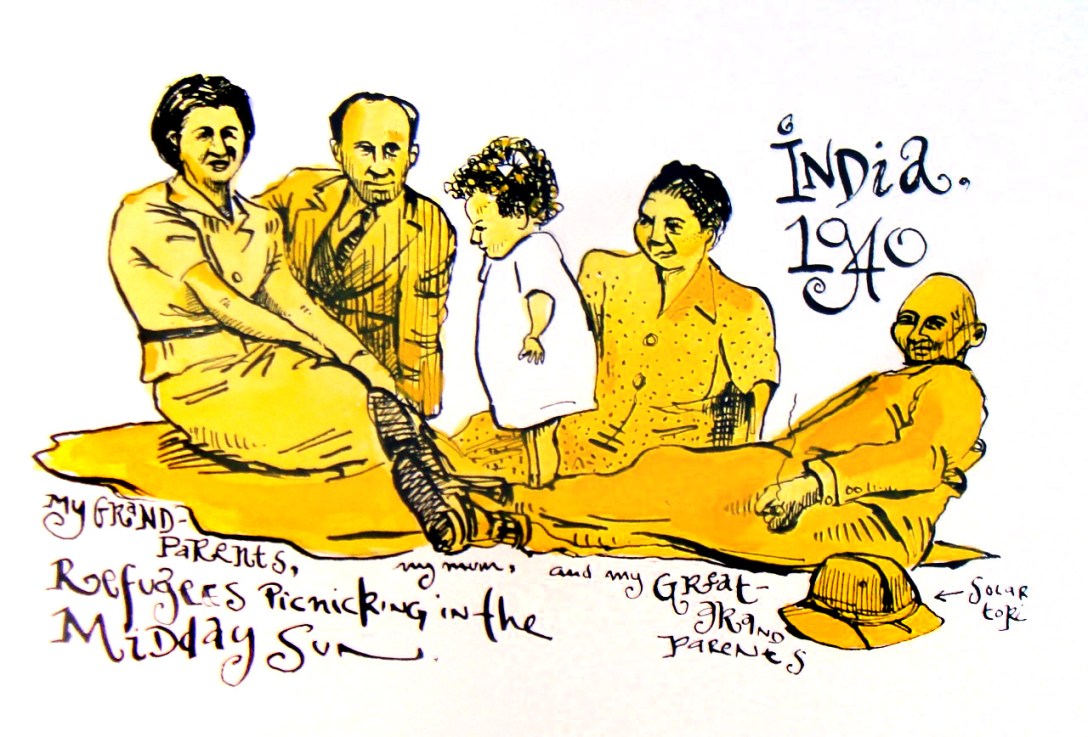
He never did track down his cousin or the money he was owed, but India seemed like a safe place for a pair of young doctors and so he sent for his wife. They set up a practice in Lahore, ministering to British expats, and gave their babies English names. Hazel was born in 1939 and the next year, Michael. A thousand miles from the chaos of the war in Europe, the little family breathed a sigh of relief.

One morning, Hermann opened the door to several armed British soldiers holding manacles. Four pairs, including two for the babies. The family was arrested for being from a hostile county, enemies of the Crown, Germans, and were transported north to a prison camp. There, Hermann and Kate were assigned to be the camp doctors and ordered to treat their fellow prisoners: German spies and Nazi sympathizers. They began frantically writing letters to anyone who might give them asylum, to Palestine, to the USA, anywhere, but to no avail. Even when the war officially ended, they and their children remained behind barbed wire for a total of seven years.

When they were finally released, stateless, with no passports, they returned to Lahore. More upheaval. A civil war between the Hindus and Muslims cracked India in two. Thousands died, millions were dislocated as Lahore became a part of a new Islamic country, Pakistan.

Hermann and Kate and their family stayed on in Lahore. They worked hard, constantly updating their lab and their surgery with the most up to date equipment shipped from the West. They became pillars of the community, treating ministers and film stars. Herman was elected president of the Rotary, then Grandmaster of all Pakistani freemasons. He wore custom suits and owned 40 pairs of hand-made shoes. Kate bought her frocks in London and wore an armful of gold bangles. They had a large medical staff, a butler, cooks, two gardeners. Their chauffeur drove them in a Mercedes-Benz and they sent their children to British boarding school.

In the 1960s, the German government reinstated their citizenship, made an official declaration of apology to them and held a ceremony in their honor in Oberhausen, the hometown Hermann had fled after his encounter with those SS officers so many years before.

Then war broke out on their doorstep again. Their home was just a dozen miles from the Indian border and, as Pakistan and India locked horns and East Pakistan became Bangladesh, Hermann and Kate felt compelled to pack up their belongings once more and depart for Israel. They bought a home in Jerusalem, among their people at last. A year later, on Yom Kippur, they heard air raids sirens and ran down to their shelter. War again.

But this time, they wouldn’t be going anywhere. Kate succumbed to dementia in her 80s and Hermann died in his favorite armchair at 98. They are still in Jerusalem, buried side by side on Mount Olive, waiting for the Messiah’s trumpet to sound.

My grandparents’ lives were rife with change, none of it their doing. But every time the deck was reshuffled, they survived and thrived. I never heard them curse their luck or complain about their lot. They weathered all types of persecution, unforeseeable calamities, and yet, they never gave up, always looking for new solutions, new ways to make the most of their changed circumstances.

But it wasn’t easy. I’m sure they must have worried terribly; of course, they did. Hermann became increasingly reactionary as he got older, suspicious of Palestinians, Soviets, liberals, intolerant of anybody who was different. He saw antisemitism all around, and who could blame him after all he’d endured?

Kate’s children ended up living on the other side of the planet, marrying gentiles, pulling away, leaving her feeling isolated. She never practiced medicine after they emigrated to Israel, but became a housewife, she who had been served by a dozen servants. Despite all her years abroad, she enjoyed pottering around in her own kitchen, nostalgic for the days when she was still a fräulein in her happy, tidy, middle-class German home.

When I lie awake at night and worry about all the things that could go wrong – medical, financial, presidential, what have you — I remember all that Hermann and Kate survived, how, even when things were scariest, they pulled through.

They lived through a century of rupturing change — lived and flourished. When I suffer some piddling setback, I think of Hermann sitting down to study medicine all over again, in a language he didn’t speak, a meager herring in his belly, fascists all around. When I worry about madmen planting bombs in dumpsters a few blocks from my home, I think of how my grandparents felt every time tanks rolled past their gates or jets flew overhead. When I get annoyed at the bank or the DMV, I think of how he felt when the SS stopped to paw through his papers. When I feel anxious about my son moving three thousand miles away to start a life in California, I think of how they felt when their families disappeared into the fog of World War II, behind the gates of Auschwitz.

Don’t get me wrong. The fact that many of their trials were greater than mine doesn’t wipe away my worries. And It doesn’t trivialize them either. But it does serve to remind me that I come from hardy, resilient stock. I am descended from survivors. And when you think about it, we all are. Whether we know it or not, the world has gone through far worse than we face today, our new fears notwithstanding. We are free from famine, plague, genocide, and, though the world remains a troubled place, it’s still a beautiful one too. We can decide how we will see things, how we will cope with change, how we will survive. We are free to choose to live each day as if we were going to make it through what ever comes up, firm in the belief that we are going to survive to die in our favorite armchairs, many years from now.
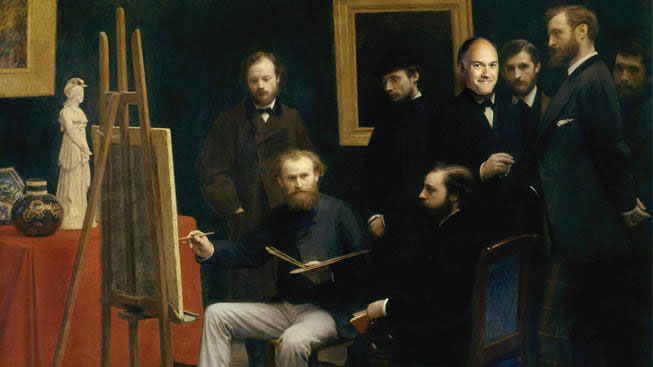
What happened in the Studio.

In New York, they say, you are never more than ten feet from another human being. If there isn’t someone next to you or behind you, then they are on the floor directly below or clomping around on the floor above. Even if you wander deep into Central Park, lost in a fantasy of woodsmanning deep in a copse surrounded it would seem only by squirrels and woodpeckers, a bunch of Italians or Koreans will inevitably blunder around the corner clutching guidebooks and ruining the calm with their foreign tongues.

No wonder we New Yorkers are so misanthropic; we can’t get away from people.

It wasn’t always so unusual to have some space to oneself. When I was an odd teenager, I used to go alone to the Brooklyn Botanical Gardens of a Sunday. In the ’70’s, most of Brooklyn was still uncool, and I could stroll my grounds for ten or fifteen minutes without seeing a single other (non-imaginary) person.
Those were the days when I read all 92 volumes of PG Wodehouse as well as Anthony Powell, R.F. Delderfield, Evelyn Waugh, and other perpetuators of the mythical British landed gentry. While my classmates were making zipguns and apple bongs, I was sewing suede patches on to the elbows of my thrift store tweed jackets and shopping for monocles.

My only companion to the Gardens was my imaginary friend, Lord Roger Watford, and we would walk through the rose garden, pretending that it was part of my vast baronial estate and that the adjacent Brooklyn Museum was in fact my manor House.

Brooklyn has changed a lot since then and so, by and large, have I. But one of the many delights of the studio Jack and I rented this summer was having access to the vacant lots, abandoned dumpsters, and empty streets of the 100+ acres of the Brooklyn Navy Yard. The Yard was once abuzz with shipbuilders preparing to conquer Japan but in the ensuing decades it became an abandoned stretch of dandelion farm along the East River. Recently it has been landmarked and revitalized and turned into a hive of artisanal activity, full of little manufacturers and artists and photographers and woodshops and film studios and even a commercial farm.

We rented a studio from two women who had been painting there for several years and were taking the summer off. It’s several hundred square feet on the third floor of a brick building, neighbored by a landscape painter, a potter, and two graphic designers. The building is all industrial utility, with painted cement floors, steel casement windows, wide staircases, no air conditioning, and a tarpaper roof that looks out at a spectacular views of the East Side of Manhattan, stretching from the Brooklyn to the Manhattan Bridges and beyond to Queens and the Bronx.

There’s a street full of crumbling rowhouses being demolished on one edge of the Yard, and wandering through the site reminds of the exhilarating freedom I felt when I was ten or eleven in Israel, sneaking into building sites to inhale the smell of fresh cement to look for abandoned porn magazines, cigarette butts, and the dregs of dusty beer bottles.

On the ground floor of our building was a photo production studio full of industrial printers that churned out materials for store windows and fashion shows. There dumpster was filled to the brim with sheets of rejected foamcore, aluminum plates, and rolls of paper and fabric. Other dumpsters in the Yard brimmed with cardboard boxes, wooden pallets, skeins of wire, plastic buckets, and dead computers and TVs.

These dumpsters became my art supply store. Each time I biked into the Yard, I would dive into one dumpster or another and pull out some interesting surface to paint on. Yards of rubber matting, an old canvas, a sheet of plaques honoring David Dinkins to be displayed at the US Open, an life-sized portrait of a blank-faced Calvin Klein model.

I’d haul my find up the three sets of stairs to the studio, turn on the fan, flick on the radio to an eclectic college station in New Jersey, fill my water jug in the janitor’ sink, and get to work.

I came with nothing. No ideas, no ambitions, maybe just a small plastic bag from Blick containing some medium I’d always wanted to try. At first, it was spray paint. A dude with too many eyebrow rings explained what the variables were that led to an entire wall of locked cages of paint. Gloss, high gloss, flat, matte, indoor, enamel, oil, acrylic, high pressure and low, and every color known to man. We flipped through a menu book full of spray caps and nozzles and I assembled a bag of twelve, different shapes and angles of spray, some slim as a pencil, others designed to cover a wall and empty a can in seconds.

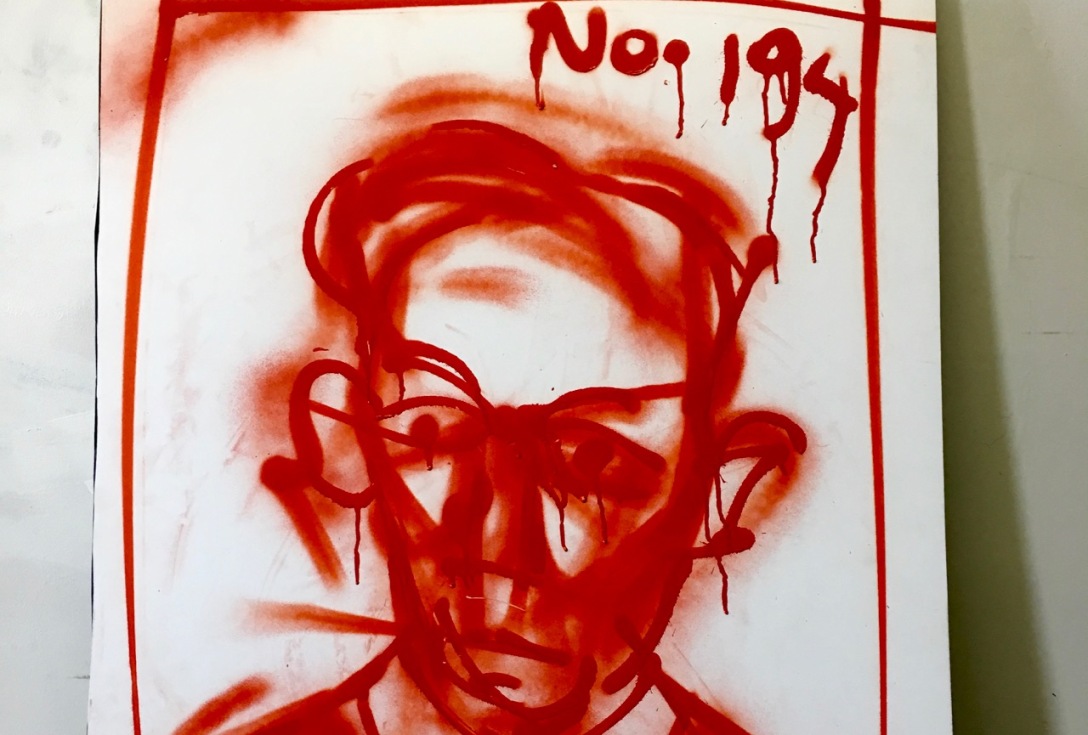
I hauled a placard announcing a diabetes fundraiser up to the roof and uncapped a can of matte black acrylic. I snapped on a medium-sized nozz and made a slow oval on the board. It was a lot less controllable than I thought. I built up faint layers to sketch out a head. Then I discovered that if the faster I moved, the sharper the stroke. I used my whole body to make the stroke, reaching up then bending down to the ground. Slowly, like layering sfumatos of watercolor, a face emerged. It wasn’t a face I’d imagined — it just appeared through the gloom.

The paint dried almost immediately in the baking July sun. I dragged the board and the cans down to the studio and squirted out a few inches of white and of black acrylic onto a folded sheet of paper. No palette for me. Jack had already explained that he and his pals at RISD didn’t go for all that jazz, no sheets of glass or wooden ovals with thumb holes. Just throw some paint down on the table and have at it.

Now, I used to fool around with acrylic paint back in high school (after I returned from surveying my property and mixing with the commoners), but I have been a watercolorman for the better part of a decade. Painting with opaque paint is so very different from watercolor. I like to layer my paint and build up glazes, slowly shaping the image over time.

But opaque paint like acrylic, oil, and gouache obscure whatever’s beneath them. You are committed to your last stroke, rather than conversing and harmonizing with all the layers before. This took some getting used to. Unwieldy as the spray paint is, it allows for that process of building. With out a medium of some kind, the acrylic just negates all that came before.

I had also forgotten how much of large-scale painting requires you to move around. Unlike working in my sketchbook, a painting that’s four or five feet tall, demands that you use your whole arm to paint. And then you need to stop and step back, often across the room, to get perspective on what you’re doing. You need to juggle and balance, moving constantly around the whole surface, darkening here, obscuring there, sharpening an edge, scraping off a mistake.

The painting is a living thing and the act of painting is all about responding to that life. Sometimes you reach perfection, then fuck it up with an an ill-conceived dollop. Then you battle back from that blunder and the painting turns a corner and brings you somewhere you’d never known could be.

This back and forth went on for a couple of hours till I reached a point where I was afraid to screw things up anymore. I’d painted a man who seemed to be going through something. Writhing, pained, pulled into himself but surrounded by turmoil. It wasn’t what I’d expected and I didn’t know if I liked it. But I was soaked in sweat, dehydrated, and happy.

On my next trip to Blick, I picked out a set of oil sticks. They are solid tubes of oil paint that work like juicy grownup crayons. Basquiat used them and I had always wanted to as well. I had no idea how or what I’d do with them but I sprayed a sketch in red and then started to draw. The juicy sticks are more like lipsticks than crayons actually, a bit out of control, very opaque and bold, but their lines are sharper and less intriguing than brushed paint. So I threw some acrylic on top, only to discover that while water-based paints dry quickly in summer studios, oil sticks take a while to dry and when you rub over them they smear.

Actually, that was good — it made the lines less boring and I started to rub them with my fingers. Soon that was a mess so I added more paint. A man emerged. He had no irises. I painted some in and he became boring so I blinded him again.

The spray paint started to scare me a bit. At first, I only used it on the roof, but then, impatient, I started to touch things up in the studio. I’d spray a layer of paint over the acrylic and the oil stick, knocking the image back a bit so I could then pull out parts of it again. But spraying paint indoors is not good. So I hauled it back to the roof where I fought the sun and the wind.

For the rest of the day, I imagined my lungs filling with paint mist and my eyes caking over with a layer of royal blue. I remembered once, in my early twenties, spray-painting a chair Chinese Red and afterwards looking in the mirror — my nostrils looked like they were leaking blood, my nose hairs struggling like overwhelmed filters.

This memory and the hypochondriacal fears of clogged lungs led me to Home Depot where I bought a spray mask and some goggles. These were really unpleasant to wear on the rooftop and my goggles quickly steamed up on the sunny roof so I was painting blind, but at least I wouldn’t end up with black lung and a ventilator.

This slideshow requires JavaScript.

One of the concerns I’d had when I first contemplated getting this studio was what I was doing it for. I knew I didn’t want or need a bunch of paintings to hang in my apartment. I wasn’t going to display the paintings in a gallery, submit them to a show, or show them to anyone at all. But I wrestled with this for a while. I didn’t want to seem pretentious, like ‘look at me, I’m a painter”. Plus, I was sharing my studio with a guy who actually is a painter — Jack, my son, the real thing, trained, newly-minted art school grad. Though I knew he would never say anything about what I was doing unless I asked, I didn’t want to have to worry about whether what I was doing was correct, was proper painting, was art. I just wanted to have fun, slop some shit around, work big, see what it was like.

And then, a few weeks into our lease, I realized I could just throw out everything I was making. Put them back in the same dumpsters I’d taken them out of when the summer was done. I’d snap some pix for a souvenir and then bu-bye. No muss, no fuss.

What a relief! I knocked out a half-dozen portraits of people who live in my skull, experimenting with different media, stumbling, recovering, going over the deep end, surprising myself, and knew all along I wasn’t handcuffed to the results. All process, no pain.

One day, I dove into a dumpster that was full of coffee urns. You know the kind they put in conference rooms, with the stack of paper cups, the pods of creamer, and the dish of wooden swizzle sticks. There were dozens of these abandoned soldiers and I hauled a bunch onto the road. Immediately I saw that they were stocky little men, like me. They had thick legs, barrel chests and protruding spigots. When I opened their lids, some screamed, some yawned, others laughed or just looked blank.

I hauled four of these guys behind the studio building and began to paint them. This was around the time of the political conventions and Donald Trump was all in my head. I found a lamp with a dangling plug and a workman’s glove and added them to the top of one urn, then painted the whole thing bright safety orange. I stood him in the corner of a brick wall and snapped his picture.
It felt a little adolescent but there was also something strangely moving and powerful about this angry little man with a stub of a penis. Later we left him by the edge of the East River, his back to Manhattan, braying with fury.

Another urn got black pants and a white shirt and tie and then I drew on some anguished arms. He opened his mouth wide to howl. Jack and I put him in a subterranean cave we found by the shoreline, then an abandoned hut, then by a smashed car. He said something different in each spot.

I gave another urn a pair of christmas ornament balls and spray painted him matte black. He looked like an ancient fertility statue, something mythical and powerful. We posed him first on a concrete block, then raised him up on a giant, black steel structure high above an intersection where he could looked down on passersby, a little god in a roadside shrine.

Another urn was all-white and we placed him far out in the river, alone on a mooring in the water where he will sit until a strong gusts knocks him into the water and sweeps him out to sea, his mouth agape.

This slideshow requires JavaScript.

On the final day, we packed all of the paintings into the car and drove back to Manhattan. It was the first day of the new term at NYU and Jack and I walked back from the garage through throngs of excited freshmen, carrying the stack of huge paintings. Outside the main dorm building, I signaled to Jack. Barely breaking stride, we leaned the paintings against a doorway and kept walking.

Maybe some weird kid took one of my portraits them to hang in his or her room, a souvenir of that first weekend in the big city. Maybe a janitor stuffed them into a dumpster later that day. I’ll never know, nor do I care. They have their life, I have mine.

I can’t be bothered to judge what I made. But I can judge the process. I enjoyed the liberation I felt in the studio this summer. I liked the risks I took, the exhilaration I felt, the battles I waged. I don’t think I’ll be a painter again for a while, but it’s great knowing that beast is in me, that I can make things without premeditation, that the process can be an adventure, that I can step away from the confines of a small page and a book and a little set of watercolors. It’ll be nice to see what effects my exploration has on the next sketchbook I fill.

Drawing without drawing.

A couple of days ago, I had a mindful moment in an unlikely place. I had to go to a government office to renew a document. It was a large room filled with rows of chairs facing a series of steel desks with computers and clerks. Not Kafkaesque, just dead boring. I wasn’t perfectly prepared for this chore — it was one of a series of appointments I had that day and I had rushed there from a completely unrelated matter.

As a result, all I had with me was a sheaf of important documents. In my hurry, I hadn’t brought anything to while away the time, no book, no sketchbook. But the Kindle app on my phone was stocked with several books if need be. I figured I’d be fine.

After much paper shuffling and stapling, the desk clerk handed me a number and pointed at the sign on the wall: “No phones, cameras or recording devices.” If I took out my phone, she said, I’d be booted and have to make a new appointment for another time.

I shuffled over to an empty seat and slumped down, feeling like a snot-nosed, scuffed-kneed nine-year-old waiting to see the principal. Rows of people surrounded me, their faces blank, their eyes glazed. On the wall, a counter displayed a four-digit number in red letters. A number significantly lower than the one on the chit in my hand. I’d be there for a while.

I spent a few minutes grumbling to myself about the archaic ban on mobile devices. What could be the stupid reason? I’d already had to empty my pockets and pass through a metal detector to get into the room. What did they think I’d do with a phone? Snap pictures of my co-victims? Of the lovely clerks? Of the tottering piles of yellowing papers? Of the warning signs, the 20th century computers, the flickering fluorescents? Grumble, groan.

I fidgeted a bit in my uncomfortable chair, then I squirmed, then I examined at the boil on the neck of the man in the seat ahead of me, then tried to calculate if the glowing number on the counter was prime. I hadn’t had lunch yet so I spent a while listening to my stomach too.

Then I noticed a spray bottle of glass cleaner on one of the metal tables. I thought, that’d actually be interesting to draw. I had a pen in my pocket to fill out forms but no sketchbook. Then I remembered the neatly paper-clipped stack of papers in my lap. I flashed forward to handing over these documents to an official, papers now covered with drawings of Windex bottles and neck boils. No, I wants things to go smoothly and handing in my VIPapers festooned with junior high marginalia wouldn’t cut it.

I went back to looking at the bottle. I liked the way the neck curved into the body, the six concentric rings that were debossed into the plastic, the soft highlight in the middle, the way one square side of the nozzle was a slightly darker red that the next.

I decided to draw the bottle with my eyes. I coursed slowly along the edge, looking deeply just as I would if I were drawing. I made a run around the edge of the label, a contoured path with one continuous line. Then I jumped to the edge of the blue trigger, cruising into the hollows that fell into shadow, peering in to see every detail I could pull out. I trekked up the side, then slowed myself, not wanting to hurry too fast even though it was an unpunctuated stretch. Move too quickly, I told myself, and you miss something. I down shifted, making myself maintain the same pace no matter how dull the landscape.
A chair squeaked. I looked up, ten numbers had flipped on the counter. Still a way to go.

I moved to the boilscape on the pale neck in front of me. I uncapped my mental pen again and started to draw each hair surrounding it, the rivulets of sweat, the fold of flesh, the soft ridge of fat. I worked my way down to the yellowing neck of the t-shirt, then across to the right shoulder, then down to the sleeve, the arm, the top of the next chair, up the leather jacket of the man in the next chair, documenting each fold in the leather, then up the neck tattoo, across the lightly freckled shaven head, then up a column, over each poster, on the bulletin board, down the clerk’s handbag, over her bottle of Jergens, around the stapler and then a loud cough brought me back. My number was up. Forty-five minutes of my life had been compressed. I gathered my papers and approached the clerk on a cloud.

This morning, I sat in my kitchen. It was six thirty and the sun washed the room. I had been asleep five minutes before but I decided not to start this day by reading the paper and scanning my email.

Instead, I went back to my moment in the temple of bureaucracy. I’d felt surprising peace there on my stiff-backed chair and it seemed it be a nice way to start my day, a little contemplation of nothing. I fixed my gaze on the top of my range, the burners and the bars that criss-cross the top, and started to trace the edges of the first one with my mind. The bars are black, so are the burner and the steel pan underneath, but the morning light made a hundred gradations of the curves and angles. The vertical bars stretch away from me, perspective forcing them into lozenge shapes The angled bars were cut by the bars in front of them so they formed jig saw shapes. I looked at each one in succession, working my way towards the back, increment by increment. The kitchen clock ticked away.

After twenty minutes, I had traversed the whole left side of the stove top. I slid my sketchbook over, uncapped my pen and spent the next twenty minutes taking the same trip, only this time I recorded the observations I made. At 7:20, Jenny came in to make coffee and the spell was broken.

I’ve never thought of myself as capable of mediation, but I think this exercise has a similar effect, slowing down and clearing my mind before the day begins and giving me a boost of creative energy that had me writing this blog post and sipping my morning tea.

I liked it. I think I’ll call it Omm-bama care.

The Louvre vs. me

According to WordPress:  “The Louvre Museum has 8.5 million visitors per year. This blog was viewed about 900,000 times in 2015. If it were an exhibit at the Louvre Museum, it would take about 39 days for that many people to see it.”

Presumably, some of those people were just here to visit the gift shop or to read my post about the Mona Lisa and comment on how it is smaller than they imagined.

WordPress might have found some better and more apt analogies to really give this crucial data relevant meaning. I’ll do it instead. A quick Google search and I discovered that the number of my blog views equaled that of :

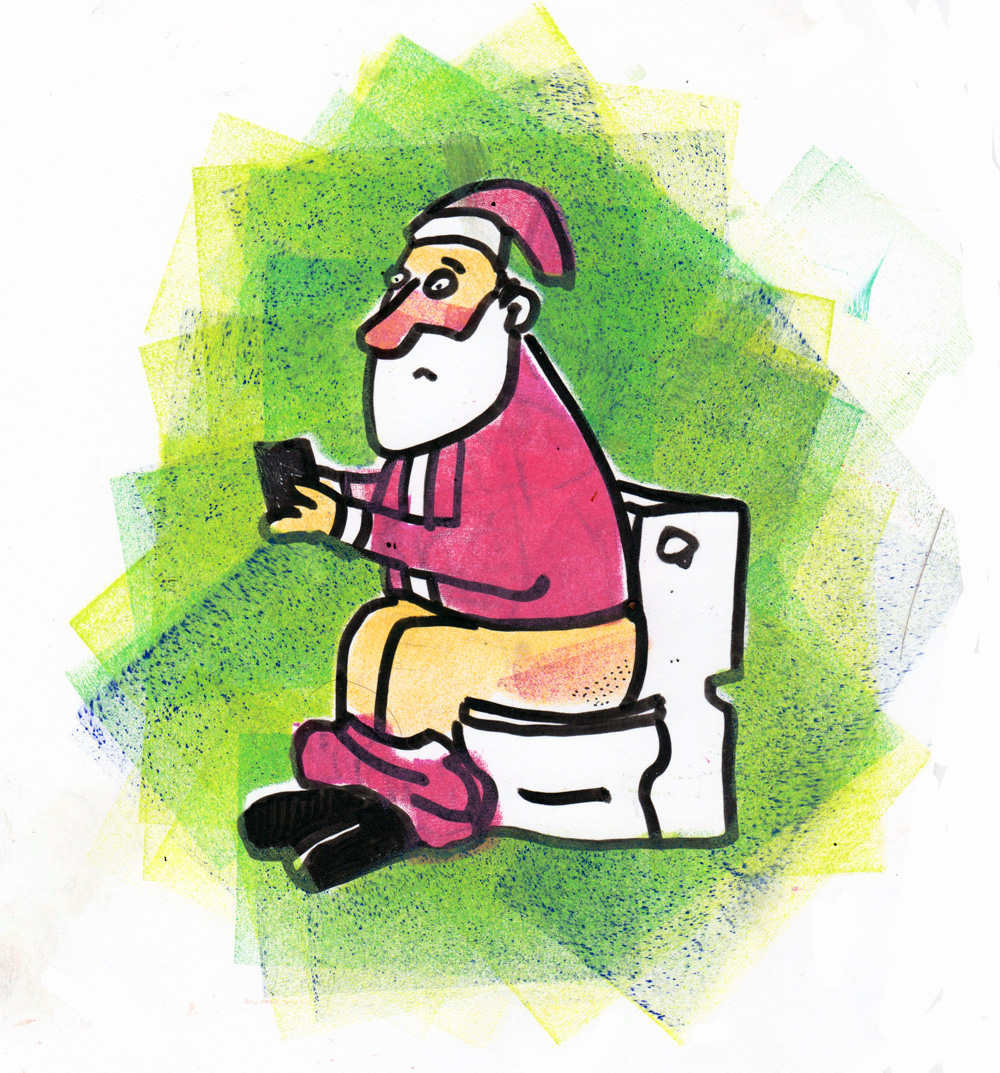
I am not sure if there is any overlap between these various populations, but I imagine there are at least a few Father Christmas impersonators with no back hair who love Khloe and Kendall but contracted the runs from eating a deep-fried corn cob and missed a few of my better posts.

If so, they can read them here.

Zork!

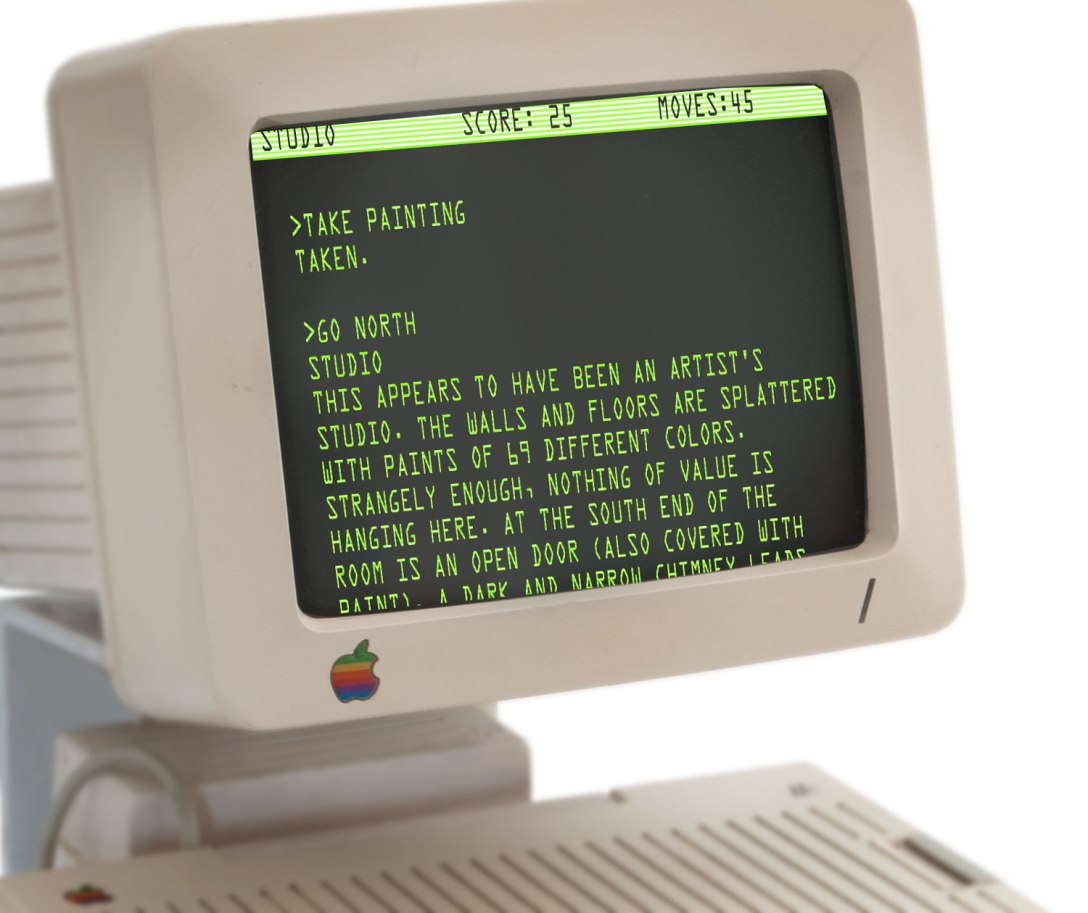
Many moons ago, my late wife Patti and I started playing a simple, text-based video game on our first generation Apple IIc. ‘Zork’ was an adventure into an underground world where we had to solve puzzles and battle evil forces in a quest for some thing or other. Imagine Lord of the Rings, only in glowing green letters on a small black screen.

We became pretty obsessed by this, our very first video game, and many a night, one of us would wake up at 2 am and say to the other, ‘What if we took the left hand tunnel, climbed the rope, and used the rusty screwdriver to open the golden cask?’ and we would pop up, throw on our dressing gowns, and scurry off to to try this new strategy — usually ending up groaning with failure and collapsing back in bed hours later.

Every night, we would try and die. Try and die. Try and…

The next year, we continued to find ourselves popping up at 2 am — but now it was because Jack had been born and he needed something in the night. What was it? A bottle? A fresh diaper? A blanket? A song? A cuddle? We would work through different combinations of strategies (first the bottle, then read ‘Goodnight Moon’, then bounce him up and down. No, try it in reverse, etc.) until we found something that worked and we all went back to bed.

Jack’s first nickname: Baby Zork.

When Jack was seven, he got his first skateboard. He would run to the park with it each morning, practicing Ollies, trying to hop up and down steps, grinding, bailing, tripping, slamming and wiping out. Day after day, he would work and work and bring home bruises and scrapes. But Jack was determined and, slowly he went from a complete lummox to a reasonably rad rider.

When Jack got new video games, he thought nothing of investing weekends, evenings, holidays, hunkered down alone or with friends, working through level after level, trying and dying. Ask him why he put so much work in to it, and he would look at you aghast. That was the point, to try and die and try and die, until eventually you mastered the game.If you didn’t die, you couldn’t fly.

Neither Patti not I were athletic in any way. And yet we had this boy who pushed to overcome his genetic disadvantage to ride a skateboard, play soccer, basketball, football, whatever his buddies were into it. He never achieved the highest heights but he never really cared. It was fun.

Similarly, despite the obvious fact that nobody in our family could even carry a tune, Jack learned to play the guitar, then the drums, played in bands, had fun making music with his pals. Did it come naturally? Not at all. Was he planning on music as profession? Fortunately, not. Did he seem in any way ‘talented’? Uh, no.

Sure, Jack had friends who went on to record albums, play in clubs, achieve the heights, but Jack was just happy for them. He felt in no way like his time behind the drum kit was wasted. Playing music was just a new set of problems to crack, another fun thing to do. As was soccer, Call of Duty, cooking lasagna, and writing computer code.

Life is Zork. Your job is Zork. Your relationship is Zork. And learning to draw is Zork. You’ll make horrible blunders, create ugly things, waste paper, take wrong turns, cringe at your mistakes. Maybe you have a ‘talent’ for it, probably you don’t. Whatevs.

What matters is the journey, exploring the wrong paths, going on misadventures, tripping upon discoveries, learning from mistakes just so you can make fresh ones. Trying and dying and flying — and dying again.

That’s the game we are all here to play. Please enjoy it.


Mortified.

Look, I’m going to tell you some thing pretty embarrassing. I need to get it off my chest so I’m just telling you, but please don’t let it get around.

A couple of weeks ago, I realized I was horribly, horribly out of shape. I’ve been pretty busy this summer and haven’t had a lot of time for much, but this is no excuse. I know better but frankly, I had just plain let myself go.

jenny-shoesOne afternoon, I sat down, brushed the dust off my sketchbook,  uncapped my pen and began to draw Jenny’s shoes.

I couldn’t believe what came out. It was awful. And even worse, the act of drawing was awkward and crabbed, like I had three left hands and they each had sprained wrists and five thumbs. I tried slathering on some gouache to cover my mistake but that just made matters worse. The prognosis was clear and so was the cause.

I had forgotten how to draw.

I felt humiliated. I mean, I have been so busy all summer writing books, giving talks, blogging, making stuff for Sketchbook Skool that I had become that archetype: he who can’t, teaches. I felt really awful. And I wasn’t sure how to fix it. Well, I sort of was but I wasn’t sure it would work.

I had three left hands and they each had sprained wrists and five thumbs.

My first impulse was to get down all my old favorite, sure-fire drawing instruction books. Sketchbook for the Artist. Work small, Learn big! Creative Ink Drawing. then all the artists who’s inspired me. Crumb. Searle. Gentleman. Hogarth. Kane. Ware. Jean. They remind me how to do it. But my mentors just made me feel more inept and hopeless and lost.

Next, I decided I’d better go to the art supply store. Maybe, I just need some thicker pens. And  a new type of sketchbook. I bought a painfully expensive one that claims that ink never bleed through its page. Cool, I could finally draw with Sharpies. I’d seen Jonny Twingley doing that to great effect. And the Basquiat notebook show at the Brooklyn Museum was full of big bold lines and flat colors that seemed just the ticket. I came home with an armful.

That was another mistake. Thinking that switching everything up would provide instantly good results. Not only had I forgotten to draw, I was now setting out to learn how to use a bunch of new materials and simultaneously ape someone else’s style and POV to boot.

The first few pages in the book continued down the disastrous path. I kept thinking and thinking about how to reduce things into shapes, struggled with how to add tone, drew far too fast, and then, to cap things off,  the cap came off one of my fat new pens while it was in my pocket, scrawling a tattoo of india ink down my leg, my pants and even my good salmon Lacoste shirt.

nude-drawing-comic
Early one sweltering morning, I sat in my boxer shorts and made a self-diagnostic comic. Time to get to work.

parkThe weekend arrived and Jenny and the dogs and I went to the park. While my family dozed on a picnic blanket, I drew people. Fat, tall, crazy, slow-moving, sleeping, texting, skateboarding people filled my pages. Even the slowest were too unpredictable for me to do a lot of strategizing. I just drew and, if they got up off the bench, I started drawing the next person who sat down. The shadows grew longer, people got sweatier, Jenny and the dogs when back to the air-conditioning, while I kept going.

fightThe next day, I started my morning in the window of the Lafayette bakery, drawing a couple seated at a sidewalk table and having a long argument. Over and over I drew them both, as they gesticulated, accused, sobbed, then paused to shovel down almond croissants. Then I went to church and drew the choir and the congregants, page after page of earnest reverent faces.

tennisI spent the rest of the day watching the U.S. Open on TV. I drew the players, the  commentators, the actors in the commercials. Occasionally, I would hit the pause button and to freeze and study a gesture.

As Federer rejected half the balls the linesmen lobbed him, squeezing, bouncing, assessing, until he found the right one to serve, I grabbed new pens from the pile, testing out different weights until I found my way back to an old favorite, a Stabilo pigment liner, but a fatter one than I’d ever used before, a 0.7.  I was feeling my old line start to flow again and it had picked up a bit of weight from the influence of Jonny and Jean-Michel.

walter
“I am the one who knocks!”

Monday, Jenny went to work and I began to binge. Summer rains had rolled in, and I started to rewatch Breaking Bad on Netflix. Episode after episode, season after season, I drew bald heads and grimaces and dramatic lighting.

I didn’t try to draw accurate portraits, I just let my pen slide over their heads to take me to new inventions. I didn’t write clever quips, didn’t compose my page, didn’t add color, didn’t judge. I didn’t think. Just drew the scene, turned the page, and moved on.

Fortunately there are five seasons of Breaking Bad and there are still some empty pages left in my expensive sketchbook. After a week of intensive workout, drawing has started to become second nature again. The lines flow. I’m  still not thinking but I can just plunk down the pen on the page and it starts to move. And generally in the right direction. For better or worse, the drawings look like mine. And best of all, I love it again. I can’t wait to keep going.

I’m back.

Greasing the daily grind.


I’ve always found it exciting and a bit chilling to read about the typical day on the life of an artist I admire. They invariably go something like this:

“I spring out of bed at 5 a.m., throw some Ethiopian into the french press, and swim in the Atlantic for 45 minutes with my Rhodesian Ridgeback, Horace. Then, still wet, I sit down at my 1928 Smith Corona and write for four hours or 4,000 words, whichever comes first. I pause to eat 200 ml. of fresh sheep yogurt, steel-cut oats and Lebanese dates. Then, 100 push ups.

“Next, I allocate 43 minutes to email  my editor, manager, publicist, agent, mistresses, and fans. When the tibetan sand clock that the Dalai Lama gave me gongs at noon, I walk down to an exclusive boîte on the main street of my quaint, artisanal town to eat lunch at my regular table with one or two of my equally famous artist friends.

Then I stroll home and have a two-hour nap, a massage, a high colonic, sex, two Bolivian chocolates, and return to my studio…

“Then I stroll home and have a two-hour nap, a massage, a high colonic, sex, two Bolivian chocolates, and return to my studio where I write until my housekeeper serves dinner which I eat with twenty of my closest friends and several cases of wine bottled by some aristocratic boyhood pal, then a few lashings of espresso and off to bed where I read some Keats, wash down a handful of Lunesta, adjust my satin eye shade, and dream about tomorrow’s work.”

Making art takes work. For some of us, it is our work. Work without a boss, or a quota, or a time clock. And that kind of job can be very hard to keep up. That’s why artists establish routines, to get them off their duffs and into the studio. We need to be motivated by something to put down the remote or the opium pipe and saddle up.

The only one who will make us do what we do — is us.  Sure, editors can give us deadlines in return for advances and gallerists can schedule gallery openings but we know deep down that we can always buy more time if we whine. No one can fire us.

For the last few months, I have pledged to myself that I would post something here three times every week, on Tuesday, Thursday and Saturday at 7 am. I have written several zillion posts here over the years but this is a bit more structured. I made this pledge because a deadline of some kind would keep me more productive than just waiting for inspiration, desire, and schedule to converge. I haven’t been utterly slavish about this pledge as you may have noticed but it has kept me reasonably committed.

The key has been to establish a proper routine about it, besides this slightly guilty feeling in the back of my head that I should sit down and write something. I like to do it early, before the press of the day has begun, when the streets are quiet, Jenny and the hounds are still in bed, and I have yet to read any emails or NY Times editorials  that could clutter or influence the flow. I awake with a vague notion, then make a few false starts, and soon the mechanism clicks in and the sentences spool out.

If you stay up until all hours kicking the gong and chasing chorus girls around Montparnasse, it’s a lot harder to rise with the dawn…

Starting one’s days productively takes structure. If you stay up until all hours kicking the gong and chasing chorus girls around Montparnasse, it’s a lot harder to rise with the dawn, so it’s helpful to be a little disciplined about what you do all day long, even when you aren’t creating. Eat protein, read actual books, don’t watch the Tonight Show. Repeat.

And just because my body is sleeping, my brain doesn’t get to punch out. If I mull for a minute or two about what I want to write in those minutes before sleep, it’s much more likely that I will wake up with the first sentence sticking out of my brain like the beginning of a roll of Scotch tape.

The art-making process can be mysterious but it can also be somewhat controlled. You can set a wakeup call for the muse if you give yourself a predictable program, an armature to build your work on.

I’ll write more about this next time. Which reminds me of another tip: never leave your work 100% completed at the end of the day. Park on the top of the hill, leaving half a sentence or a partially drawn face, so the You of Tomorrow can pick up the work in progress rather than wrestling with a cold start.

To wit: I will always remember what Andy Warhol said to me one evening in The Odeon, “Danny, old boy, never mix chickens, ball bearings, and…”


I’ll show you mine if you show me yours.

Don’t embrace the myth of the lone genius, toiling in solitude in his garret, undiscovered. Don’t turn “I’ll show you when it’s good enough” into a day that never comes. Don’t dismiss the contributions of other people to making your art better.

Art, like all living things, doesn’t thrive in a vacuum. It needs something to push against, something to react to, the grain of sand in the oyster.

It could be a community of people with whom you collaborate. It could be an audience who shares your work and reflects new perspectives and energy. It could be colleagues who help you polish your creations and see it anew. It could be the long procession of great artists who preceded you and whose work can inspire yours in a thousand ways.

Be brave. Step out. Invite response. Share your gifts.

Art is a conversation. Make sure you’re not just talking to yourself.

Off-Roading

Almost exactly a year ago, Jenny and I drove from Los Angeles to New York City. In the months before, we talked a lot about where we might go and drew up lists of places to stop en route. We weighed the pros and cons of going north and driving the length of the Canadian border, of drawing a straight line from LA to NY and beelining across the Midwest, of meandering through the heat of Texas and the Deep South. I consulted web sites about cross-country drives, downloaded a half-dozen apps, and reread On the Road.

A couple of days before we left, we had a big yard sale and emptied the cottage we’d occupied for a year. Then we hit the road with 666 dollar bills in the glovebox.

Despite all our discussion and planning, we ultimately committed to just one decision: that each day we would  decide where to sleep that night and that decision could be postponed until the sun was setting. Sometimes we booked our hotel while sitting in its parking lot. This was pretty atypical behavior for Jenny and me — she’s a producer and I’m a Virgo, organized and methodical people who like a sense of control. But this trip was to be different. We intended to get New York in roughly two weeks — and that was all we knew for sure.

It was a risky and brilliant strategy. We meandered all over the map and saw things we had no idea even existed. We made monumental plans while driving, then scuttled them over dinner. We acted impulsively and took many roads less traveled. When we pulled onto our street in Greenwich Village, we knew we’d had an adventure that we would always remember. It was epic.

The core of my brain (and yours, hopefully) is the limbic system, the ancient part that sits under my cortex, deep in the most protected part of my skull. It manages my emotional reactions, its gnarled, primitive fingers fidgeting on the buttons that trigger my reactions and form my most salient memories. It is primitive and essential, making me happy, angry, hungry, horny or terrified. This part of my head is me at my most impulsive.

Sitting astride is my modern brain, the source of higher function, the part that cracks the bullwhip, straightens the cutlery, talks to my accountant, and imagines itself superior. I have relied too heavily on this ultra-rational part of my brain for most of my life. It has helped me think my way out of feeling too intensely, providing Mr. Spockian rationales for my baser yearnings, keeping me in check. It has helped me succeed — but I wonder how many roses it has kept me from smelling.

I have published a dozen or so books by now, and each one has started with a road map. Sometimes my editor has asked for it, an outline to include with the proposal she submits to her editorial board. But always my frontal lobes have insisted on it, wanting some clarity about the mission ahead. Believing that I can’t build a building without a scaffold or a monument without an armature, I have arranged bullet points and sub-points into neat staircases with sturdy handrails to lead me to the summit and safely back down again.

And then I have sat down at this machine and kicked the blueprints under my desk.

Outlines and bullet points are one thing but writing or painting something that lives and breathes are something quite other. No one wants to dance in the moonlight with a sturdy skeleton. Flesh and blood are lissome, moving under your finger tips, breathing and changing shape. And so it is with art. A sketch is meant to be done in pencil so it can be erased as better choices emerge.

All this preemptive planning just gives me the courage to turn the key in my driveway, the balls to say, let’s drive three thousand miles and trust that we’ll eventually get where we’re going. Even if I draw the route in the thickest Sharpie, I still plan to listen to my gut, to my amygdala, to the songbird at the crossroads who says, hey, let’s take a left here and see what lies around the bend.

We have GPS and we are safe to wander.

El niño dibuja cada día

My French, Latin, Urdu and Hebrew are rusty and dim but I kinda have an itch to learn a new language. So I downloaded a free app called Duolingo.

Each day it emails me to remind me to do my lesson. The email has a picture of a little green owl who says, “Hi Danny, keep the owl happy! Learning a language requires practice every day.”

I diligently open my app and spend a few minutes going through my lessons. I might be waiting for the kettle to boil, waiting for the F train, waiting for the elevator, and I fill the pause by repeating “naranja, naranja“. When I am done, the app goes bing-bong and rewards me with some pointless points. It’s painless and fun and soon I am sure I will be able to order a burrito from the food truck on the corner.

Now we just need a genius to come up with a drawing app that’ll do the same thing. Bing-bong! Time to draw a bagel. Ding-dong! Sketch your shoe. Ting-tong! Get out your gouache. Five or ten minutes a day of gentle prodding to keep me in tiptop drawing shape.

Any coders out there?¡vámonos!