What happened in the Studio.

In New York, they say, you are never more than ten feet from another human being. If there isn’t someone next to you or behind you, then they are on the floor directly below or clomping around on the floor above. Even if you wander deep into Central Park, lost in a fantasy of woodsmanning deep in a copse surrounded it would seem only by squirrels and woodpeckers, a bunch of Italians or Koreans will inevitably blunder around the corner clutching guidebooks and ruining the calm with their foreign tongues.

No wonder we New Yorkers are so misanthropic; we can’t get away from people.

It wasn’t always so unusual to have some space to oneself. When I was an odd teenager, I used to go alone to the Brooklyn Botanical Gardens of a Sunday. In the ’70’s, most of Brooklyn was still uncool, and I could stroll my grounds for ten or fifteen minutes without seeing a single other (non-imaginary) person.
Those were the days when I read all 92 volumes of PG Wodehouse as well as Anthony Powell, R.F. Delderfield, Evelyn Waugh, and other perpetuators of the mythical British landed gentry. While my classmates were making zipguns and apple bongs, I was sewing suede patches on to the elbows of my thrift store tweed jackets and shopping for monocles.

My only companion to the Gardens was my imaginary friend, Lord Roger Watford, and we would walk through the rose garden, pretending that it was part of my vast baronial estate and that the adjacent Brooklyn Museum was in fact my manor House.

Brooklyn has changed a lot since then and so, by and large, have I. But one of the many delights of the studio Jack and I rented this summer was having access to the vacant lots, abandoned dumpsters, and empty streets of the 100+ acres of the Brooklyn Navy Yard. The Yard was once abuzz with shipbuilders preparing to conquer Japan but in the ensuing decades it became an abandoned stretch of dandelion farm along the East River. Recently it has been landmarked and revitalized and turned into a hive of artisanal activity, full of little manufacturers and artists and photographers and woodshops and film studios and even a commercial farm.

We rented a studio from two women who had been painting there for several years and were taking the summer off. It’s several hundred square feet on the third floor of a brick building, neighbored by a landscape painter, a potter, and two graphic designers. The building is all industrial utility, with painted cement floors, steel casement windows, wide staircases, no air conditioning, and a tarpaper roof that looks out at a spectacular views of the East Side of Manhattan, stretching from the Brooklyn to the Manhattan Bridges and beyond to Queens and the Bronx.

There’s a street full of crumbling rowhouses being demolished on one edge of the Yard, and wandering through the site reminds of the exhilarating freedom I felt when I was ten or eleven in Israel, sneaking into building sites to inhale the smell of fresh cement to look for abandoned porn magazines, cigarette butts, and the dregs of dusty beer bottles.

On the ground floor of our building was a photo production studio full of industrial printers that churned out materials for store windows and fashion shows. There dumpster was filled to the brim with sheets of rejected foamcore, aluminum plates, and rolls of paper and fabric. Other dumpsters in the Yard brimmed with cardboard boxes, wooden pallets, skeins of wire, plastic buckets, and dead computers and TVs.

These dumpsters became my art supply store. Each time I biked into the Yard, I would dive into one dumpster or another and pull out some interesting surface to paint on. Yards of rubber matting, an old canvas, a sheet of plaques honoring David Dinkins to be displayed at the US Open, an life-sized portrait of a blank-faced Calvin Klein model.

I’d haul my find up the three sets of stairs to the studio, turn on the fan, flick on the radio to an eclectic college station in New Jersey, fill my water jug in the janitor’ sink, and get to work.

I came with nothing. No ideas, no ambitions, maybe just a small plastic bag from Blick containing some medium I’d always wanted to try. At first, it was spray paint. A dude with too many eyebrow rings explained what the variables were that led to an entire wall of locked cages of paint. Gloss, high gloss, flat, matte, indoor, enamel, oil, acrylic, high pressure and low, and every color known to man. We flipped through a menu book full of spray caps and nozzles and I assembled a bag of twelve, different shapes and angles of spray, some slim as a pencil, others designed to cover a wall and empty a can in seconds.

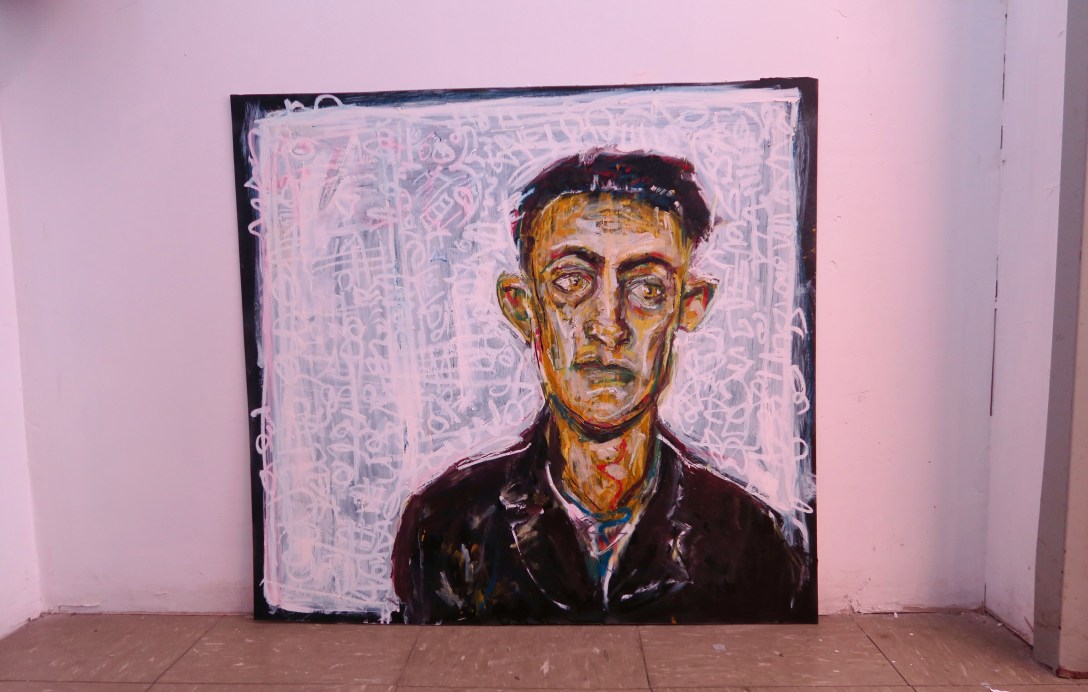
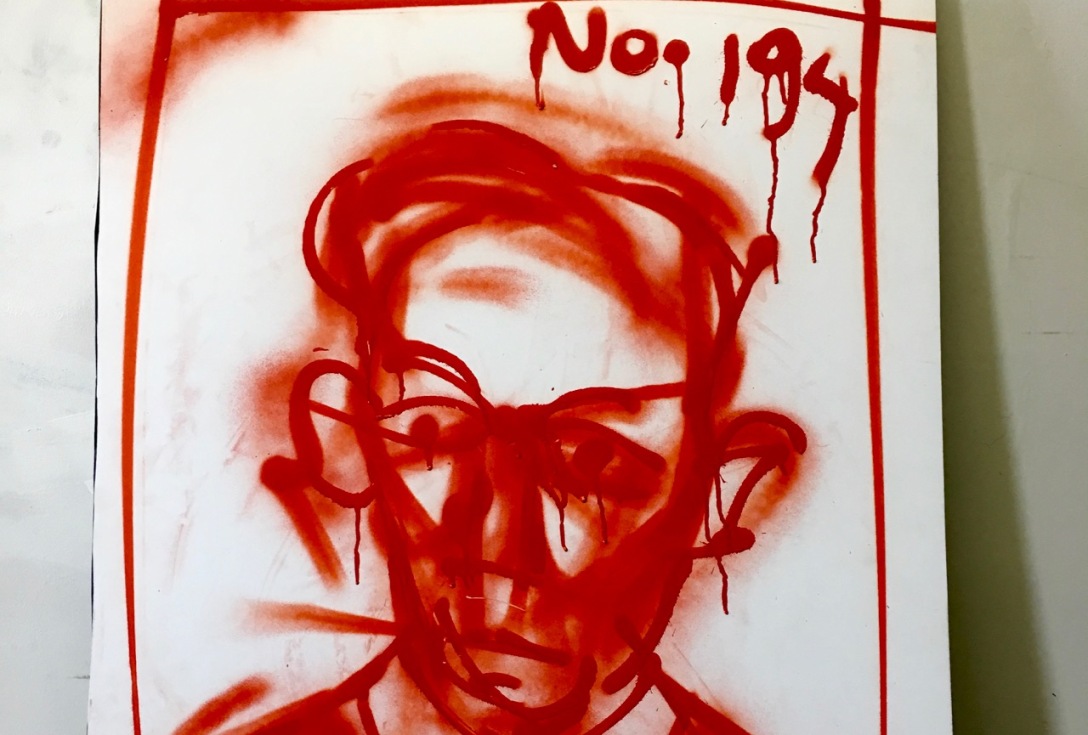
I hauled a placard announcing a diabetes fundraiser up to the roof and uncapped a can of matte black acrylic. I snapped on a medium-sized nozz and made a slow oval on the board. It was a lot less controllable than I thought. I built up faint layers to sketch out a head. Then I discovered that if the faster I moved, the sharper the stroke. I used my whole body to make the stroke, reaching up then bending down to the ground. Slowly, like layering sfumatos of watercolor, a face emerged. It wasn’t a face I’d imagined — it just appeared through the gloom.

The paint dried almost immediately in the baking July sun. I dragged the board and the cans down to the studio and squirted out a few inches of white and of black acrylic onto a folded sheet of paper. No palette for me. Jack had already explained that he and his pals at RISD didn’t go for all that jazz, no sheets of glass or wooden ovals with thumb holes. Just throw some paint down on the table and have at it.

Now, I used to fool around with acrylic paint back in high school (after I returned from surveying my property and mixing with the commoners), but I have been a watercolorman for the better part of a decade. Painting with opaque paint is so very different from watercolor. I like to layer my paint and build up glazes, slowly shaping the image over time.

But opaque paint like acrylic, oil, and gouache obscure whatever’s beneath them. You are committed to your last stroke, rather than conversing and harmonizing with all the layers before. This took some getting used to. Unwieldy as the spray paint is, it allows for that process of building. With out a medium of some kind, the acrylic just negates all that came before.

I had also forgotten how much of large-scale painting requires you to move around. Unlike working in my sketchbook, a painting that’s four or five feet tall, demands that you use your whole arm to paint. And then you need to stop and step back, often across the room, to get perspective on what you’re doing. You need to juggle and balance, moving constantly around the whole surface, darkening here, obscuring there, sharpening an edge, scraping off a mistake.

The painting is a living thing and the act of painting is all about responding to that life. Sometimes you reach perfection, then fuck it up with an an ill-conceived dollop. Then you battle back from that blunder and the painting turns a corner and brings you somewhere you’d never known could be.

This back and forth went on for a couple of hours till I reached a point where I was afraid to screw things up anymore. I’d painted a man who seemed to be going through something. Writhing, pained, pulled into himself but surrounded by turmoil. It wasn’t what I’d expected and I didn’t know if I liked it. But I was soaked in sweat, dehydrated, and happy.

On my next trip to Blick, I picked out a set of oil sticks. They are solid tubes of oil paint that work like juicy grownup crayons. Basquiat used them and I had always wanted to as well. I had no idea how or what I’d do with them but I sprayed a sketch in red and then started to draw. The juicy sticks are more like lipsticks than crayons actually, a bit out of control, very opaque and bold, but their lines are sharper and less intriguing than brushed paint. So I threw some acrylic on top, only to discover that while water-based paints dry quickly in summer studios, oil sticks take a while to dry and when you rub over them they smear.

Actually, that was good — it made the lines less boring and I started to rub them with my fingers. Soon that was a mess so I added more paint. A man emerged. He had no irises. I painted some in and he became boring so I blinded him again.

The spray paint started to scare me a bit. At first, I only used it on the roof, but then, impatient, I started to touch things up in the studio. I’d spray a layer of paint over the acrylic and the oil stick, knocking the image back a bit so I could then pull out parts of it again. But spraying paint indoors is not good. So I hauled it back to the roof where I fought the sun and the wind.

For the rest of the day, I imagined my lungs filling with paint mist and my eyes caking over with a layer of royal blue. I remembered once, in my early twenties, spray-painting a chair Chinese Red and afterwards looking in the mirror — my nostrils looked like they were leaking blood, my nose hairs struggling like overwhelmed filters.

This memory and the hypochondriacal fears of clogged lungs led me to Home Depot where I bought a spray mask and some goggles. These were really unpleasant to wear on the rooftop and my goggles quickly steamed up on the sunny roof so I was painting blind, but at least I wouldn’t end up with black lung and a ventilator.

This slideshow requires JavaScript.

One of the concerns I’d had when I first contemplated getting this studio was what I was doing it for. I knew I didn’t want or need a bunch of paintings to hang in my apartment. I wasn’t going to display the paintings in a gallery, submit them to a show, or show them to anyone at all. But I wrestled with this for a while. I didn’t want to seem pretentious, like ‘look at me, I’m a painter”. Plus, I was sharing my studio with a guy who actually is a painter — Jack, my son, the real thing, trained, newly-minted art school grad. Though I knew he would never say anything about what I was doing unless I asked, I didn’t want to have to worry about whether what I was doing was correct, was proper painting, was art. I just wanted to have fun, slop some shit around, work big, see what it was like.

And then, a few weeks into our lease, I realized I could just throw out everything I was making. Put them back in the same dumpsters I’d taken them out of when the summer was done. I’d snap some pix for a souvenir and then bu-bye. No muss, no fuss.

What a relief! I knocked out a half-dozen portraits of people who live in my skull, experimenting with different media, stumbling, recovering, going over the deep end, surprising myself, and knew all along I wasn’t handcuffed to the results. All process, no pain.

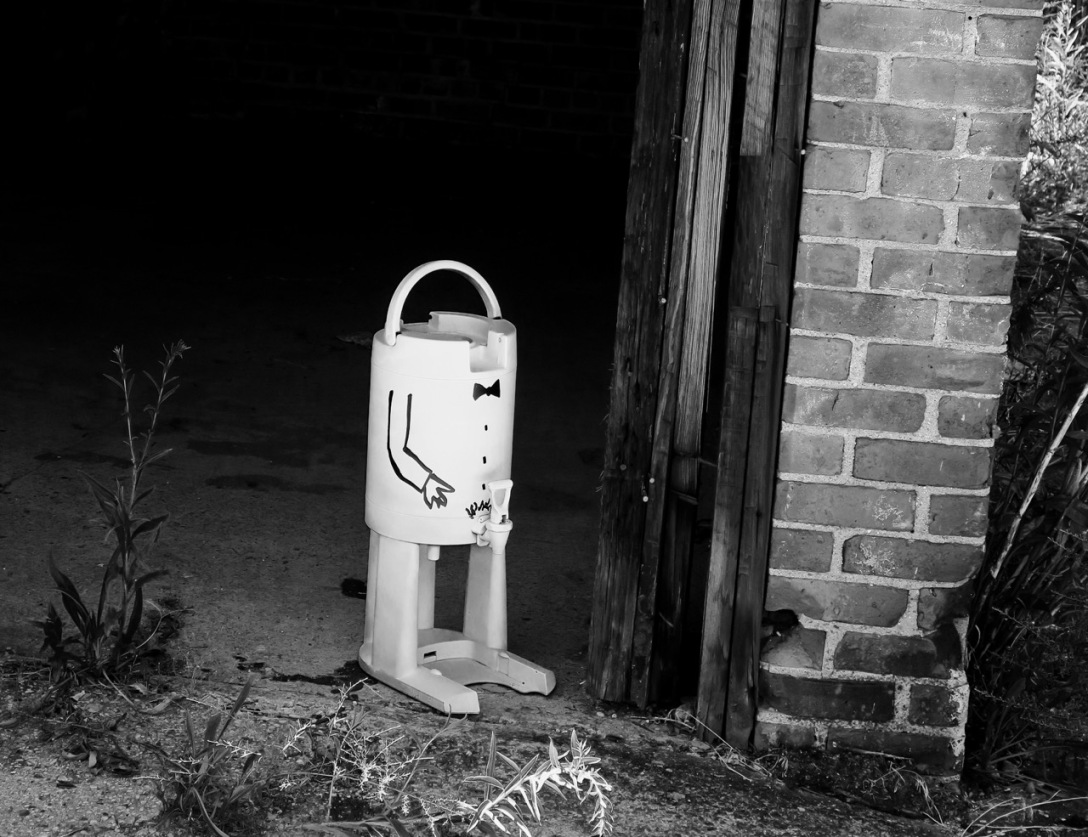
One day, I dove into a dumpster that was full of coffee urns. You know the kind they put in conference rooms, with the stack of paper cups, the pods of creamer, and the dish of wooden swizzle sticks. There were dozens of these abandoned soldiers and I hauled a bunch onto the road. Immediately I saw that they were stocky little men, like me. They had thick legs, barrel chests and protruding spigots. When I opened their lids, some screamed, some yawned, others laughed or just looked blank.

I hauled four of these guys behind the studio building and began to paint them. This was around the time of the political conventions and Donald Trump was all in my head. I found a lamp with a dangling plug and a workman’s glove and added them to the top of one urn, then painted the whole thing bright safety orange. I stood him in the corner of a brick wall and snapped his picture.
It felt a little adolescent but there was also something strangely moving and powerful about this angry little man with a stub of a penis. Later we left him by the edge of the East River, his back to Manhattan, braying with fury.

Another urn got black pants and a white shirt and tie and then I drew on some anguished arms. He opened his mouth wide to howl. Jack and I put him in a subterranean cave we found by the shoreline, then an abandoned hut, then by a smashed car. He said something different in each spot.

I gave another urn a pair of christmas ornament balls and spray painted him matte black. He looked like an ancient fertility statue, something mythical and powerful. We posed him first on a concrete block, then raised him up on a giant, black steel structure high above an intersection where he could looked down on passersby, a little god in a roadside shrine.

Another urn was all-white and we placed him far out in the river, alone on a mooring in the water where he will sit until a strong gusts knocks him into the water and sweeps him out to sea, his mouth agape.

This slideshow requires JavaScript.

On the final day, we packed all of the paintings into the car and drove back to Manhattan. It was the first day of the new term at NYU and Jack and I walked back from the garage through throngs of excited freshmen, carrying the stack of huge paintings. Outside the main dorm building, I signaled to Jack. Barely breaking stride, we leaned the paintings against a doorway and kept walking.

Maybe some weird kid took one of my portraits them to hang in his or her room, a souvenir of that first weekend in the big city. Maybe a janitor stuffed them into a dumpster later that day. I’ll never know, nor do I care. They have their life, I have mine.

I can’t be bothered to judge what I made. But I can judge the process. I enjoyed the liberation I felt in the studio this summer. I liked the risks I took, the exhilaration I felt, the battles I waged. I don’t think I’ll be a painter again for a while, but it’s great knowing that beast is in me, that I can make things without premeditation, that the process can be an adventure, that I can step away from the confines of a small page and a book and a little set of watercolors. It’ll be nice to see what effects my exploration has on the next sketchbook I fill.
Dear You:

Wow. That was unexpected. And extraordinary. And a bit, um,  embarrassing.

My recent post on how I walked away from this blog and other Internatterings provoked loads of readers to write long and beautiful encouragements in the comments section. I am really touched that you took the trouble.

Thank you.

I feel a little Sally Fieldian that I provoked this outpouring but what the hell. It’s nice to hear from you.

Writing is a funny business. When you read, it feels like the author is talking to you, sitting in your head, sharing the most intimate dialogue. But if the voice coming off the page seems to be talking to someone else or is barking into a megaphone or is distracted or dishonest, it’s a turn-off. So when you write, you have to be appropriate in your tone, pitching your words to a reader you understand. After all, you’ve been together for many pages, you are old friends, and the reader expects and deserves a connection and an understanding.

Sometimes I forget who I am talking to.

Maybe that comes from my years in advertising, when my writing process had to slalom through market research, through layers of agency bureaucracy, through strata of client approvals, through the limitations of the form, character counts and such.  And when you write an ad, you aren’t meant to be expressing your point of view (though I was a good copywriter because I usually was trying to express my self from behind the golden microphone I’d been handed). You are there to speak on behalf of something inanimate, a corporation or a product, and not only speak on its behalf but sell it, and often to a reader who was indifferent at best. It’s a weird way to write, especially when you strive for authenticity, which is the core of decent writing.

I forget also because I don’t actually know you. Many of the commenters point out that we are strangers and, technically, we are. I have a sense of you, of your median age, background, various demographic info. But none of that’s really the point. I think I do know you and you me because we are drawn together by a certain point of view and interest. Like me, you are creative, you are thoughtful, you are curious, and that’s what matters, this nexis.

When I think of the writers that have meant the most to me over the years, from Gerald Durrell to Karl Ove Knaussgard, they are voices that reflect honestly and amusingly on their lives and give me heart. They let me know I am not alone in being who I am. They tell me new things but also remind me of old ones. Their voices sound like better, wiser versions of my own.

When I read your comments, I was reminded again that you are not Other. You come here to share what we have in common. And I come here to express that same thing in me so that I can share it with you and know that you share it too. A blog is a web log, a journal, a diary. It’s not a soapbox or a stage or a commercial break. It’s a place for self-reflection, for honesty, for trust.

There are people out there who are Other. Loads of them. But the miracle of the Internet is that we can each sieve ourselves from the undifferentiated mass and find a community of people who are not Other. And that’s what we have done when we come here or go to a klass at Sketchbook Skool. We have found each other. We may not look like each other, we may not come from the same background or education or families, but we are connected by our creative urges and all the joys and tolls that come with these urges.

… alone in a windswept wasteland clutching a single, dog-eared, remaindered copy of the book I toiled over for years, alone but for the monkey toldyousoing in my ear. Not pretty.

I sometimes forget that. When I come here, launch my blog dashboard and start to write, I may have different motivations for doing that. I may feel like I need to be an ad guy and sell the market a book. That’s a shitty place to start a conversation with you and I apologize. I needn’t hawk stuff at you, belabor you with hyperbole, threaten and cajole you. That would be horrifyingly inappropriate if we were having lunch together, so I shouldn’t do it here.

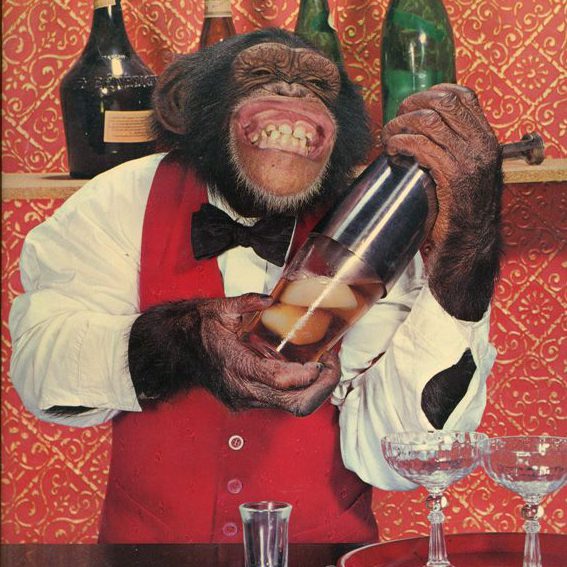
Why do I? Because, to some degree, it is dyed into me, it is my scorpion nature. I am a recovering copywriter and the anxieties and arrogance of my trade are hard to shake. And also because I am prone to anxiety and abandonment issues, to a fear that if I don’t sell my books or kourses, no one will help or care, my dreams will wither, and I will be left alone in a windswept wasteland clutching a single, dog-eared, remaindered copy of the book I toiled over for years, alone but for the monkey toldyousoing in my ear. Not pretty.

I also forget who you are because you don’t tell me. Studies show (that’s a copywriter’s favorite term) that 99% of readers never post comments on the Internet (I am certainly in that silent lurking majority too). But when you do, it is so interesting and helpful because it stops me from blathering like a boring narcissist and instead focus on you as a person.

But I don’t want to lay this at your feet. That’s bullshit. Please don’t feel obliged to comment. That’s not why I lose my way as a writer. If I’m honest with myself, I already know (and well) what you expect from reading my words. It’s what I expect too. Something interesting. Something true. Something funny. Something odd. I get it.

And if I do have something new to tell you about — a book I’ve written, a kourse I’m teaching, a six volume album of my accordion playing — I’ll just tell you. Not sell you. If you want it, you’ll buy it. If not, we’ll get back to our conversation.

Thanks as always for setting me straight, for caring enough to bother, for sharing my life. I have the feeling that what I did and didn’t do this summer will carry me far over the next year and beyond. Thanks for being part of it.

Your pal,

Danny


What I didn’t do this Summer

When I sit down to draw something, I often start by looking at the negative space, the parts of the picture that aren’t the subject. I draw the sky behind the building, the floor under the chair, the wall behind the person. It’s a way of overcoming assumptions and getting a fresh perspective on what’s right under my beak.

Let me tell you about the negative space that defines the past few months of my life. The things I stopped doing — so I could do what I did instead.

Blogging.

The most obvious decision is that I stopped writing posts here. I had been writing pretty regularly on and off since 2003 and it has been a really valuable part of my process. This blog has given me a place to try out ideas, to get perspective in what I’m doing, to scratch my writing itch, to make jokes, and to talk to you. But.

When I went to summer camp in my tweens, we had to write a letter home twice a week. It wasn’t a suggestion. It was a rule. In fact, these letters home were called “Meal Tickets” because if you didn’t have a letter in a stamped, addressed envelope clutched in your grubby hand, you couldn’t have dinner that day. No one vetted the contents of the letter itself, it could say anything, but you had to show up with it or starve.

Of course, being a snotty pubescent, the letters I wrote grew more and more perfunctory, a simple “how are you? I am fine” and my parents would probably have preferred I saved the stamp money.

When I started to blog, back in the days of coal-powered laptops, I was really only writing for Richard Bell and Roz and a few other pals, and this was just a place to play, to experiment, to record ideas and muck about. I’d write thoughtful things, silly things, fantasies, pseudo-academic theories, advice, and what have you.

But in the ensuing years, while I was playing, blogging became a science, a marketing platform, a job, and I became “a blogger” and felt I had to follow the emerging code.

Earlier in the year, a well-meaning friend told me I must blog consistently and regularly to be taken seriously. She told me I should have a theme for each day so people knew what to expect on Tuesdays, say, and every other Friday.

For a whole I tried this, diligently churning out themed pieces, ripe for sharing. Not sure if you noticed.

Then another friend said I should make quotes in sharable visual form and put those out there. “I tried that too.”—Danny Gregory

Someone else said my blog posts needed to be shorter and pithier for busy people. So I cut back on my verbosity and shelved my thesaurus.

Then I worried I was blogging too much and wouldn’t have anything left to put in my next book.

Then I went through a dark and insecure time of not feeling I had anything useful to say at all but had to write anyway.

Oy.

I know that you, dear reader, are saying ‘what a lot of poppycock and hornswoggle’, but such is the predicament of an aging hipster in skinny jeans trying to remain current. Like it or not, in an age of diminishing marketing support from publishers, blogs and the attendant audience-building have become an essential part of an author’s job. You and I are just working for the Man, making up for the publishing industry’s declining fortunes, by developing a strong bond into which books can be inserted and credit card charges extracted.

I hate to think that this was the purpose of all these posts, to sell stacks of paper and feather executive nests, but such is the reality of life in the trenches.

A friend told me last week that her agent said that thanks to her Facebook following (built on pithy illustrated quotes) she could expect a seven-figure advance for any books she chose to write. What should it be about, she asked? Doesn’t matter, he replied, just see what you can do to get your numbers even higher, then you have carte blanche.

Ugh.

Now, I don’t want you to think that I went on blog strike or anything. My days at the barricades are long gone.

But I did decide that I am going to blog just because I want to and if that means that a lot of casual first-time readers looking for quotes to jazz up their Pintrest boards miss out on a few of my pithier jpegs, so be it. If the sales of Art Before Breakfast–the Workbook are less than stellar because of my principled stand and shirked responsibilities, I will gladly resort to eating day-old bread, shaving with dull blades, and selling one of my dogs. Sorry, Tim.

And if the head counselor has to call my parents again because I have refused to hand in any more meal tickets and my ribs are sticking painfully through my delicate birdcage of a chest, I will hang my head and take the tongue lashing.

By the by, I expected that suddenly vanishing from the scene would cause some sort of ripple, that people used to getting a regular 7 a.m. email of my latest musing would notice the void, but that didn’t happen. Not by a long stretch.

In the two months I stopped blogging, I got a single plaintive message asking if I was okay. Otherwise, radio silence from my myriad ‘fans’. The hordes I imagined waiting with bated breath for every pearl of wisdom that dripped from my keyboard were evidently all out playing Pokemon Go. My moment appeared to have passed.

Tweeting.

Blogging was the one thing on the Internet I occasionally missed. I didn’t feel that way at all about Twitter, which I similarly vacated. I have always found the limitations of 140 characters to be a pointless ball and chain on my verbosity. I realize this platform is an essential one of our age, propelling some even to the gates of Pennsylvania Avenue, but if you want me to write punchy headlines and short body copy, you’ll have to pay my day rate. I wrote thousands of 30-second TV scripts that had to be 72 words or less and I’ll chafe at the limitation no more.

I find reading Twitter posts to be mindless gum-chewing, looking for meaningful insights in fortune cookies. I like language and can take it undiluted. And I don’t care what you think of what someone else said about something else somewhere else all telegrammed in cryptic #s, contractions and acronyms. If you have some thing to say, just say it. At length. Thoughtfully.

Increasingly, brevity is the essence of the halfwitted.

Podcasting.

This spring, I launched a podcast. It was based on my most recent book, Shut Your Monkey. Podcasting has become quite the thing these days, I like to talk, and I have a lot of interesting friends so I thought I’d give it a go.

I intended the podcast to be an ongoing discussion about the inner critic and I brought in a fairly impressive group of experts to discuss with me.
I asked listeners to help turn it into a dialogue, a forum on this all-important subject, an opportunity to swap ideas and experiences. I set up a system for people to record their own ‘monkey tales’ so I could put them on the air. I invited questions and thoughts via email too.

The dialogue part of the effort didn’t pan out. Two listeners recorded messages and one of them was mainly of a dog barking.

Nonetheless, I got quite a lot out of the experience and the discussions and enjoyed much of it.

But over time and as my plate got filled with lots of other things, the podcast became a bit of a Meal Ticket too. Each week I was writing a show, lining up an interview, recording and mixing it, then writing a newsletter and a blog post on dog.com and monkeypodcast.com to explain my experience of the discussion and share other bits and bobs to flesh things out. That in addition to the Skool, my blog, my books, drawing, other projects, navel-gazing and haircuts.

I came to realize that a) the expectations of recording quality in a podcast have gone way up since I had my first go at it ten years or so ago (most of the emails I did get were to complain about my sound mix) and b) that all the podcasts I admired were actually produced by a whole team of dedicated, qualified people doing what I was trying to do alone.

Without explanation, I suspended the podcast and again, heard from no one wondering why. That meant I could chill, not feel guilty at my latest abrogation of duty, and think about other things.

I have material for another half-dozen episodes and when I get around to it, maybe when the evenings grow long and cold, I’ll cobble them together, at least for my own benefit. I have learned so much from all my wise guests and I look forward to listening to all these interviews again.

Another thing I got out of my monkeypodcast experience was the fun of writing a newsletter. It’s quite different from blogging. It feels more one-to-one and more disposable and I found myself writing in a nuttier, more provocative way, tossing off jokes and asides.

What with all the obituaries being written for blogs, I have been thinking replacing (or maaaaybe, augmenting) this blog with a weekly newsletter.
Would you like that?

I’d make it fairly weekly (but not in a meal ticket way), and it would be delivered right to you, in full.

It would mean you would no longer be in the position of saying “Whatever happened to Gregory?” or “I wonder what he’s griping about now.” Instead, you’d know, because it was all there — in your spam folder.

“Newsletter” is such a dreadful term, though. It smacks of Rotary Clubs and dentists and earnest Methodists. And now of “Growth hackers” those horrible, young hard-salespeople who churn out clickbait headlines like “10 ways to immediately transform your sales funnel/diet/credit rating — just sign up for our free newsletter/ebook/infographic…” (I should probably shut up about this. At Sketchbook Skool we sometime resort to this sort of thing and it works embarrassingly well. I’m an old-school brand marketing guy and all this sort of DM, John Caples stuff makes me cringe.)

Anyway, if you think I should do this, I probably won’t call it a newsletter. Maybe , I dunno, a love letter?

What else?

Oh, yeah, Instagram. Most of my artists pals love it and boast of their zillions of followers and likes. It leaves me cold. I’m not into mindlessly thumbing through hundreds of drawings representing thousands of hours of work. It’s too much like Tinder for my liking. And besides I’m married.

Pintrest.

Same thing. Been there, done that, don’t care. Maybe if I was going to reredo my kitchen or pick out a bridal gown, but it feels like too much of a mindless mind-suck for me. One clueless grouch’s opinion.

Facebook.

It’s nice, it’s friendly, but I do not miss it. This summer, Facebook felt like standing on the bank of a broad, fast-moving, and very shallow river. Like wandering through a work Christmas party at a huge company, full of people I sorta know, gussied up, sharing banalities, till occasionally someone has one drink too many and says something honest and embarrassing.

It’s an important place, Facebook, the gathering spot for today’s community, but there’s too much din for me, too much chaff, and I figure if anything important goes on, someone I know in the real world will tell me about it, probably in person.

The exception: the Sketchbook Skool group. I love feeling the creative energy there, a community of people who have gotten to know each other over a long time and through a shared passion and that feels like a real family. So I hung out there some this summer, but even that less often.

Authoring.

I was thinking I’d write a new book this summer. I had two (!) out this year but the wheels of the publishing industry turn slow and today’s notion is 2018’s publication.

I started off with two ideas. One was to write a memoir of my family, an unusual bunch. I’d delve into why my grandparents went from Germany to Italy to India in the ’30s, why my mother got married three times before I was ten, why I went to 18 schools on four continents, why my uncle’s estrangement from the family was on the front page of the NY Times, and other questions.

I also thought about writing some sort of more definitive book about creativity, to go beyond drawing to everything I have experienced and researched about how we do and don’t make things, where ideas come from, how to get better at it, why we fear it, how to encourage a new generation of creators, why society is so ambivalent toward creative people, why there’s so much myth around the whole thing, and why and how the role of creativity in our culture is changing so much right now, from the disintegration for publishing and music to the explosion of startups and technology.

I couldn’t commit to either project yet. The first felt too personal and limited in its appeal. The latter too well trammelled.

I also hesitated because I am unsure about the form. Do I need to write another book? I’ve written ten or so already — what would an eleventh accomplish?

I am resigned to the fact that I will never be Elizabeth Gilbert or Austin Kleon or Julia Cameron or Betty Edwards or SARK or Bob Ross. With no false humility, I know I occupy a narrower orbit. Maybe I lack bravura. Or hair. Maybe I am too prone to beard stroking and muttering into my teacup to be in the pantheon of creative diagnosticians.

So that’s one thing. But also, whither publishing? I had a fairly disastrous experience with the publisher of Shut Your Monkey, a book I expected to be of much broader interest than they were able to drum up. What am I getting for the 93% of my book sales they keep? I conceive, write, illustrate, design and market my books. They print and ship ’em. My editor at Chronicle is lovely but she costs me a lot.

So, should I make more books? Should I just publish them myself? Should they just be digital? How will I sell them?

Or should I put my energy into making courses instead? I have lots of ideas for things that I could teach and talk about in videos and that seems to touch people in a more direct way than books people read once (hopefully) and put on the shelf.

Or should I just blog? Write everything I am thinking here (or in my hypothetical news/loveletter, remember?)and find some other way to buy dog food?

I dunno.

This summer, I had a lot to think about in the negative space. Positive stuff that will help make me more balanced, creative, and happy.
I also realized I do too much. I go in too many directions and not far enough. If I can decided to focus on one thing rather than all the many directions I pull myself, maybe I will discover a new sense of being.

I have lots of plans, lots of dreams, but I have newfound respect and understanding for the importance of empty space, to set priorities among those many ambitions to do the things that I truly care about and enjoy the most.

Life is short, I only have about fifty years to go, so I better get to it. By next summer, things will be pretty different.

Let me know what you think about all this. I really appreciate your feedback.

Meanwhile, my meal ticket is done and I’m going in to lunch.

Hi ho, it’s off to the Workbook we go!

My new book is out! It’s succinctly titled: Art Before Breakfast – the workbook: How (and why) to develop a creative habit, no matter how busy you are.

It’s all about how to get a creative habit, so you will make art every day. It’ll teach you to draw, to create, to stay committed, no matter what your level.
It’s printed on lovely chunky paper. It’s a big but not too big. It’s full of ideas. And some jokes. It’s my new BFF and will go with me most everywhere.

Based upon my bestselling book (six foreign-language editions and counting!), this encouraging, guided journal is packed with short exercises designed to help shape a life-enriching artistic habit. Open-ended prompts, visual examples, and lots of blank space for drawing make this workbook a fun, accessible entry to artmaking for anyone looking to carve out time for creativity.

No matter your age or drawing ability, this workbook will become your constant, creative companion.

Click to get yours now!

What I did this Summer

It’s been a while. The last you heard from me, I was whining about my extraordinary good fortune, that I had rented a painting studio for the summer to share with my son and how challenged I felt by this enormous hot fudge sundae.

And, while it may have appeared on this blog that I had disappeared into that studio and locked the door behind me for two months, I actually was absent because I gave myself an even bigger gift.

A summer off.

It wasn’t a deliberate plan at first. But despite my industrious and responsible nature, I decided to shirk more and more habits and rutware and see what grew in their place. And to see how much trouble I’d get in to for not showing up.

Studio.

I made a bunch of paintings and some sculptures. Despite my initial trepidation, I let myself go fairly wild with how I made them, experimenting with new media and working much bigger than usual. Most of the paintings were fairly large and the sculptures were all knee high but were installed in various sites as if they were monumental. In a few days, I’ll write a detailed post about what specifically I did and what I learned by doing it, but suffice it to say for now that going to the studio was a refreshing departure that helped me examine and combat a lot of those fears I had expressed to you a few months ago. I drew some but less than normal and didn’t keep any sort of illustrated journal at all.

Reading.

Usually, the summer is a great time to go to the movies. But over the past few years, the cinema has lost its appeal for me. I find most of the films really forgettable. I can think of two I have seen this year that I liked (Hunt for the Wilderpeople and The Lobster) and, because so many of my friends don’t seem to go the movies any more either, even they haven’t been good fodder for dinner party conversation.

Instead, I have watched TV and read books.

I made time to read a lot. I’d get up early and read before breakfast and go to be early and read for an hour every day. I read a fair amount of escapist crap as one should in the summer. I also read some fantastic books, many of them new. Many of these are memoirs and others are novels that feel like memoirs. Here are the ones that have really stuck with me, creating moods and insights that I keep coming back to as the best books do.

Americanah by Chimanda Ngozi Adichie, Lab Girl by Hope Jahren, Vol.4 of Karl Ove Knaussgard’s My Struggle, The Underground Railroad by Colson Whitehead, Hillbilly Elegy by J.D.Vance, Sapiens by Yuval Noah Harari, The Sellout by Paul Beatty, The Nix by Nathan Hill, and How to Get Filthy Rich in Rising Asia by Mohsin Ahmad.

I read some books about business and about creativity. The better ones include How to Fly a Horse by Kevin Ashton, Makers and Free, both by Chris Anderson, The Prize by Daniel Yergin, Let the Elephants Run by David Usher, Choose Yourself by James Altucher,  and Elon Musk by Ashlee Vance

Watching.

We watched a fair amount of TV when staying in the air-conditioned living room seemed the sanest plan. We watched the ABC series Lost on Netflix, a strange and endless tease which I hadn’t watched when it was first broadcast. It took the better part of the summer.

We watched the Olympics, although our initial enthusiasm waned over the two weeks of breathless coverage. Partly because living with a millennial for the summer who doesn’t get the Olympic quadrennial ritual and wonders why we need to watch hours of gymnastics and swimming when there 700 other things on to watch instead. And partly because I started to wonder the same thing.

The Election.

(Note: One thing that I have learned in a dozen years of blogging: avoid talking about religion or politics; it just ruins the party. But I’ll break that rule today to share how I have felt watching the election this summer.)

Since high school, I have always been a deeply committed election follower. I was a political science major at Princeton, a White House intern, and devoured all the classic books about campaigns like Fear and Loathing on the Campaign Trail by Hunter Thompson, The Boys on the Bus by Timothy Crouse, The Selling of the President by Joe McGinnis, and the various edition  The Making of the President by Theodore H. White.

I like following the campaign strategies, the unfolding dramas, the twists and turns. And, in at least four elections in my adult life, I have felt pretty passionate about one of the candidates running for office.

This election has been a gobsmacking, rubbernecking train wreck but it lacks the usual pleasures. There’ve been no real discussion of solutions, no traditional campaign strategy, and the result, despite the media’s shrill thrashings, has been forgone for some time. It’s like the 1972 Olympics in Munich — instead of watching a match of amazing accomplished competitors, we are watching a highjacking. It’s disturbing that at a time of such change in the world, this important opportunity for discussion has become just a referendum on two individuals. Like a lot of people in this country, I don’t feel much enthusiasm for either candidate, and I am just waiting for it to be over. Nonetheless, it’s hard to tear one’s self away from the spectacle. I just hope I can get back to enjoying the race next time.

Okay, back to more important things we can all agree on, like Sketchbook Skool.

Sketchbook Skool.

We are entering a new phase in the Skool’s development. It may not always be apparent from outside, but we do a lot of thinking and planning and replanning and rethinking about what the future of the Skool should be and if it should even continue at all. What began as an experiment almost three years ago grew into a business. And a passion project became a job. There are times it has been the best job I could imagine. At times, I have felt like I work for the worst boss ever: me.

This year, we had lots of ambitions, tried lots of experiments, and finally came to a maturing in the early summer that has made us all feel both excited and in balance.

We have created a number of new kourses this summer. We released Andrea Joseph’s Creative Lettering klass, one of our biggest launches
ever and people really love it.

We filmed another intensive kourse with Veronica Lawlor that we will be launching later this year. I am in the midst of creating a kourse called “How to Draw Without Talent” that I am having loads of fun with. And we have several new teachers segments in the can for another 6 week kourse to launch in the winter.

Jack and I even made a film (to be released soon) called “How to Draw Your Dog” featuring our two favorite canine mascots, Tim and Joe. We’ll share that soon.

We are also advertising on Facebook for the first time which has been a great way to welcome new people and has made us completely rethink how we present ourselves and what our Skool can be. It has also been fascinating, as a person who created advertising for thirty years, to be marketing my own business, and to be using new tools and technologies that work in such amazing ways. I can’t say I ever knew exactly how any ad I ever write really worked. Now I know on an hourly basis.

This summer we also committed to doing a Study Hall video for every single week of every kourse, a daily blog post that’s useful and inspiring, a weekly newsletter, a weekly video roundup of everything that’s going on in the community and to our first wave of Teaching Assistants, recruited from our alumni.

Our growth has had some pains. We have come to terms with the fact that our platform may not be right going forward and in the next few weeks, we will begin to transition in a hopefully seamless way to a new technology that is faster, more secure, and has lots of new features that will improve the Skool. It’s one of the most essential and most disruptive things we have to do (we changed platforms last year and it was like moving to a new country) and it’s taken many months to finalize the decision but it’s gotta be done.

We are also getting better at doing our jobs. For the first time, we are regularly getting planning and things done long before they are due, sticking to proper production and marketing schedules. And we are being realistic and focused in what we take on so we can get things done, and grow in the way we want to, to accomplish our personal and business goals.

Sketchbook Skool is a great part of my life and the lives of lots of other people, my colleagues, fakulty, and students. Keeping it viable and thriving is challenging but rewarding and this summer has been one of our most important chapters, even though much of that work has gone on behind the scenes.

Advertising.

I signed on to do a three-month project for a former client which will take me through early October. I can’t discuss the deets but it involves a sizable budget and a fair amount of autonomy.

It has been interesting to fire up those sections of my brain that have been under a tarp for three years and see if they still work. They do.

It has also been interesting to see how I have changed in the past three years, how differently I work, how differently I view the processes of big corporations and of the advertising business. I must say I much prefer how we do things at SBS. So much less bureaucratic, more decisive, more flexible — but so it goes. I don’t miss working full-time for the Man but an occasional visit is fine.

Jack.

My boy graduated this summer and has spent a couple of months working to save up for his move to Los Angeles in the fall. It has been great to have him here with Jenny and me but bittersweet because we all know it’s the last time he’ll really be living here. Soon he’ll start his new life, far away, and I am savoring every one of the moments we have left.

At the end of September, I plan to drive with him from New York to Los Angeles to help him get setup in his new apartment and to leave him the family car. Then I’ll fly home and he will begin his next chapter. Gulp.

Cooking.

We spent last Spring having our kitchen renovated and we love the results. Jenny and I have a beautiful, sunswept place to cook now and we are making the most of it, visiting the farmer’s market, ordering mystery boxes of artisanal veggies from Fresh Direct, and having an excuse to buy even more cookbooks. Our kitchen is so big and well designed that all three of us can work in it together, without knife fights or saucepan jousts.

Exercise.

Maybe it’s my demographic, but more and more of my friends and relatives are getting decrepit. They’re spending time in the hospital, struggling to reach their shoe laces, filling drawers with pill bottles. I want to avoid that. My shingles experience last Spring really brought that home. I have been ever more dedicated to working out with my trainer Keith, to avoiding french fries, double dip cones, and the sun’s rays. I am also realizing that I am not meant to be thin but that doesn’t mean I am meant to be fat. I am, however, meant to be baldish, it would seem.

Ideas.

This summer I began a new habit: I start each morning by writing down a bunch of ideas. Each day I concoct a different assignment and write down whatever occurs to me. It pumps my brain with blood, clears the cobwebs, and is a nice habit. Most of the ideas are worthless but the occasional one is worth developing and that’s what I’ll be doing. I’ll share some of those lists with you here, in time.

Workbook.

I have a new book. It just came out at the end of August. It’s called Art Before Breakfast – the Workbook. It is designed to help you develop a creative habit, of drawing and seeing the world around you every day. If you have read Art Before Breakfast, you will recognize some of the content but it has been redesigned and expanded and printed on high quality sketchbook paper so you can not only carry it around with your for inspiration but also draw and write and even paint right in its pages. I hope you like it.

And if you prefer Frühstück to Breakfast, you will be glad to know that the original Art Before Breakfast is soon to come out in German. That will be the sixth edition foreign language, including Spanish, Russian, Korean, Mandarin and I forget the other one. Aussie?

The fall.

Well, I hope you had a great summer too. Do tell me about it.

School’s back in session, I have my new shoes, fresh haircut and sharpened pencils and will be at my workstation, posting semiregularly again. So get used to coming back to this same batchannel in future for more ruminations on all things creative.

56

Today I am 56.
That probably seems old, if you’re forty. Really old, if you’re twenty. Ancient, if you’re ten. Young, if you’re seventy. A mere kid, if you’re ninety.
Hitler killed himself at 56.
Lincoln was assassinated at 56.
Steve Jobs died at 56.
Beethoven too.
They’d all done more than me by now. But that’s okay.
When I was five, my grandfather turned 56. To me, he seemed oldish, grandfatherly, white-haired, bearded, but then he went on and on living for another forty-two years.
56 feels more or less the right age for me to me. I’ve done a bunch of stuff in these years. Got scars, wrinkles. Lost some hairs, no teeth. Lived. But I’m not done yet. Not by a long stretch.
Happy 56th to me. I’ve had three slices of birthday cake already today. I plan to have some more.

My morning at SFMoMA

This San Francisco jewel just reopened and it’s one of the best museum experiences I’ve ever had. 460,000 square feet that’s chock-a-block.

I am madly inspired to paint but, alas, my studio is 3,000 miles away.

New Podcast: Intoxicated

Ever since Baudelaire and his pals started wolfing down hashish, absinthe and laudanum, we’ve been stuck with this lie that creativity is best fueled by getting wasted.

Have you heard of the 27 Club? Jimi Hendrix, Janis Joplin, Jim Morrison, Jean-Michel Basquiat, Kurt Cobain, Amy Winehouse … they are just a few members of this mythical group of creative people who died at 27, thanks to drugs, booze or suicide. Romantic, but stupid.

In fact this is just another monkey con to distract us from what we are supposed to be doing, creating intoxicating ideas, rather than firing up the bong or draining the keg.

The Monkey of the Week is the Enabler. It’s that voice that says: Have a drink, you deserve it. Get high, it’ll make you more creative. Act like a prima donna, you’re a star. I’ll give you some thoughts about why that’s uncool and how to cut it off pronto.

This week, I am joined by Victor Yocco, author and psychologist, who shares how he wasted a fair amount of his life by pounding drinks instead of the keyboard. When he finally sought help and turned his life around, Victor was able to write the book he and the monkey had been putting off for years.

Click here to find out more about Victor’s new book,  Design for the Mind – Seven Psychological Principles of Persuasive Design.  Use the discount code: yoccomupad to get 39% off the book if you order through the publisher.

Listen to the new episode here:

Or better yet, subscribe to the whole series on iTunes (and leave a nice review).

Or you can visit monkeypodcast.com and listen to the episodes right in your browser.

What’s your experience with your monkey? How has it affected you, and how have you overcome it? Record your Monkey Tale at dannygregory.com/monkey.

New Podcast: Jennifer Louden

I felt a little shitty and inadequate last week for giving the podcast a bit of short shrift. So I decided to compensate for it this week.

First step: be a day late releasing the podcast and the newsletter. Check.

With that bit of self-flagellation out of the way, I do think this is a great episode. First there’s some very important stuff from the Book (note, capital B), all about how the monkey tries to nail labels on to us, categoricals that distort who we really are and limit our futures.

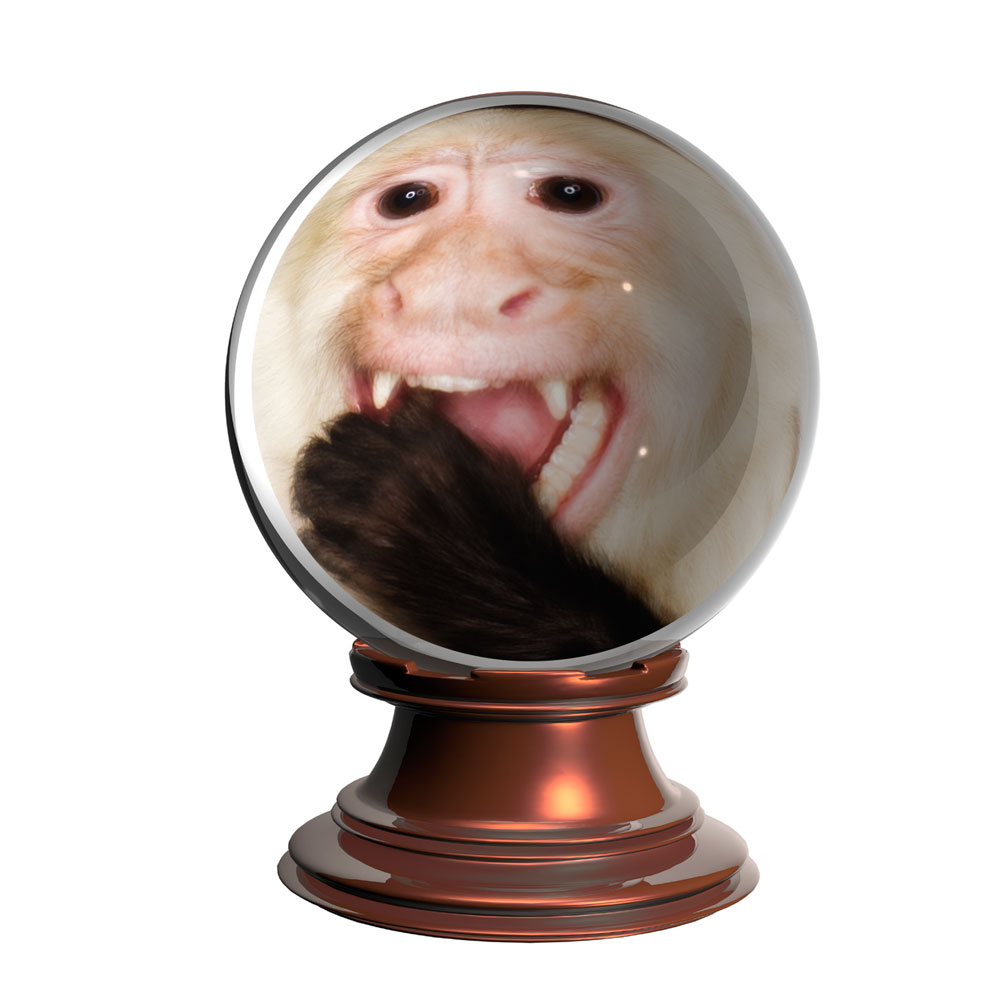
Then a profile of a vile and insidious monkey subspecies: the Utopian. You know that little crystal-ball-gazing bastard. It’s the one that says, “Your life could be so perfect, so much better than this if only you would listen to me. Instead, it sucks and so do you.” Don’t worry, I put that Monkey of the Week squarely in its place.

Next up, a Monkey Tale from Susanna. it’s a return visit for her— she was also my first guest, way back in Episode 2.

And finally, a longish a chat with a very special guest: Jennifer Louden. Jen is a personal growth pioneer who helped launch the self-care movement with her first book, The Woman’s Comfort Book. She has gone on to write 6 more books on wellbeing and whole living which have sold over million copies in 9 languages. She’s been invited to speak around the world, has been on hundreds of TV and radio shows, wrote a national magazine column for Martha Stewart, and has led retreats and workshops and online communities for the last 25 years.

Click to get yours — free!

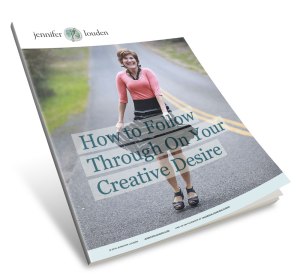
Jen has just come out with an invaluable new book called How to Follow Through on Your Creative Desire.

This book is a serious first aid kit for your creativity. Full of salves to heal the inevitable setbacks of making stuff and different-shaped Band Aids for every type of wound. Every creative person should keep it handy and you can get your copy for free.
Just click here and it’s yours. FUH-ree.

Thanks again for tuning in. But please, give me some feedback, yo.

It makes a difference. F’r instance, I heard there were a few people grumbling that my first episodes were a little hard to hear and that may well have been the case, I don’t know, I don’t listen to podcasts myself.

I have given a severe talking to my audio engineering team here at Gregory® International, Inc. and even raised my voice a little to show how miffed I was and it would seem the problem has been helped, at least so my VP of Audio Tech claimed at our last offsite on the corporate yacht. Honestly, it seems that no matter how many PhDs and Grammies and nose rings people have, they still can’t be counted on to mix a decent sounding podcast. Sigh. You have no idea how hard it is being me.
So don’t just write to complain.

Anyway, I really must insist that you make this whole thing a 2-way road. I give you blood and sweat and, in return, I just want you to buy hundreds of copies of my books, to book me to speak at your local prison, to send me home-baked lo-carb desserts, to subscribe to the podcast on iTunes and leave glowing 6-star reviews, to leave recordings of your monkey tales at dannygregory.com/monkey and to, once and for all, shut your monkey! Do it!

Or better yet, subscribe to the whole series on iTunes (and leave a nice review).

Or you can visit monkeypodcast.com and listen to the episodes right in your browser.

What’s your experience with your monkey? How has it affected you, and how have you overcome it? Record your Monkey Tale at dannygregory.com/monkey.