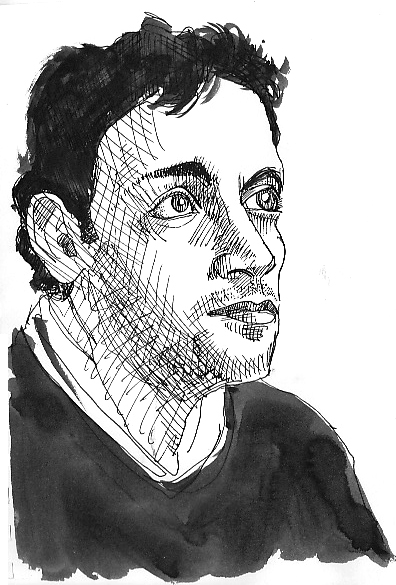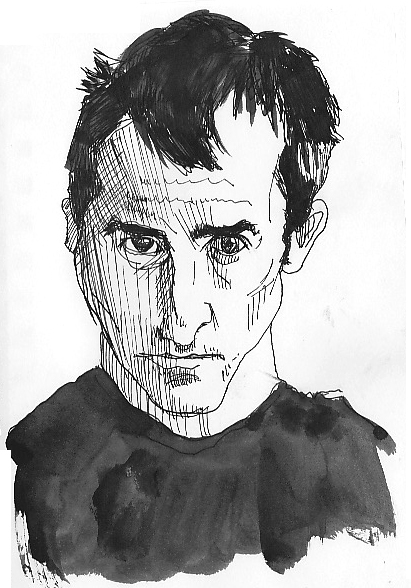
How to Be Evil.

I love to write; I have since I was wee. Every so often, an idea will just appear in my skull, asking to be born, to occupy some part of my mind for a while so it can curl up nice and toastily and slowly germinate into bookhood. It’s very pleasant and slightly itchy.

The first time I can remember it happening, I was eight and was visited by a pea-sized idea about a knight who traveled the countryside accompanied by a dachshund. I spend a fair amount of time filling a spiral bound book with that tale, each page taken up with a little text and a lot of drawings of the knight and the dog and some dragon or damsel or crumbling castle.

I loved making the book but I also loved having made it.

There was always something so appealing to me about the idea of having a shelf of books each with my name on their spines, books that were oh so familiar and yet complete and independent and living lives of their own. That book about Sir Roger Watford and Nicky the Long gave me just such a thrill for the first time.

Now I’m a grown up writer and I do have a shelf of books with my name tattooed on their vertebra. It’s as nice as I imagined it would be.

Anyway, a couple of summers ago, I was visited by an idea on Fifth Avenue, near Madison Square, and by the time I reached my house, I was excitedly unwrapping it. It was a novel, it seemed, a novel for young adolescents, and frankly nothing to do with anything I had ever published. At that point, neither the idea nor I cared much about the fact that it was a red-headed stepchild — we loved each other and hung out every morning for months. The story unfurled like a bolt of silk. I just had to provide two fingers to do the typing and chapter after chapter rolled onto my screen. It inspired drawings too, just like the ones that opened each chapter f my favorite boyhood books. Then Patti read it and Jack read it and we all thought it time well spent.
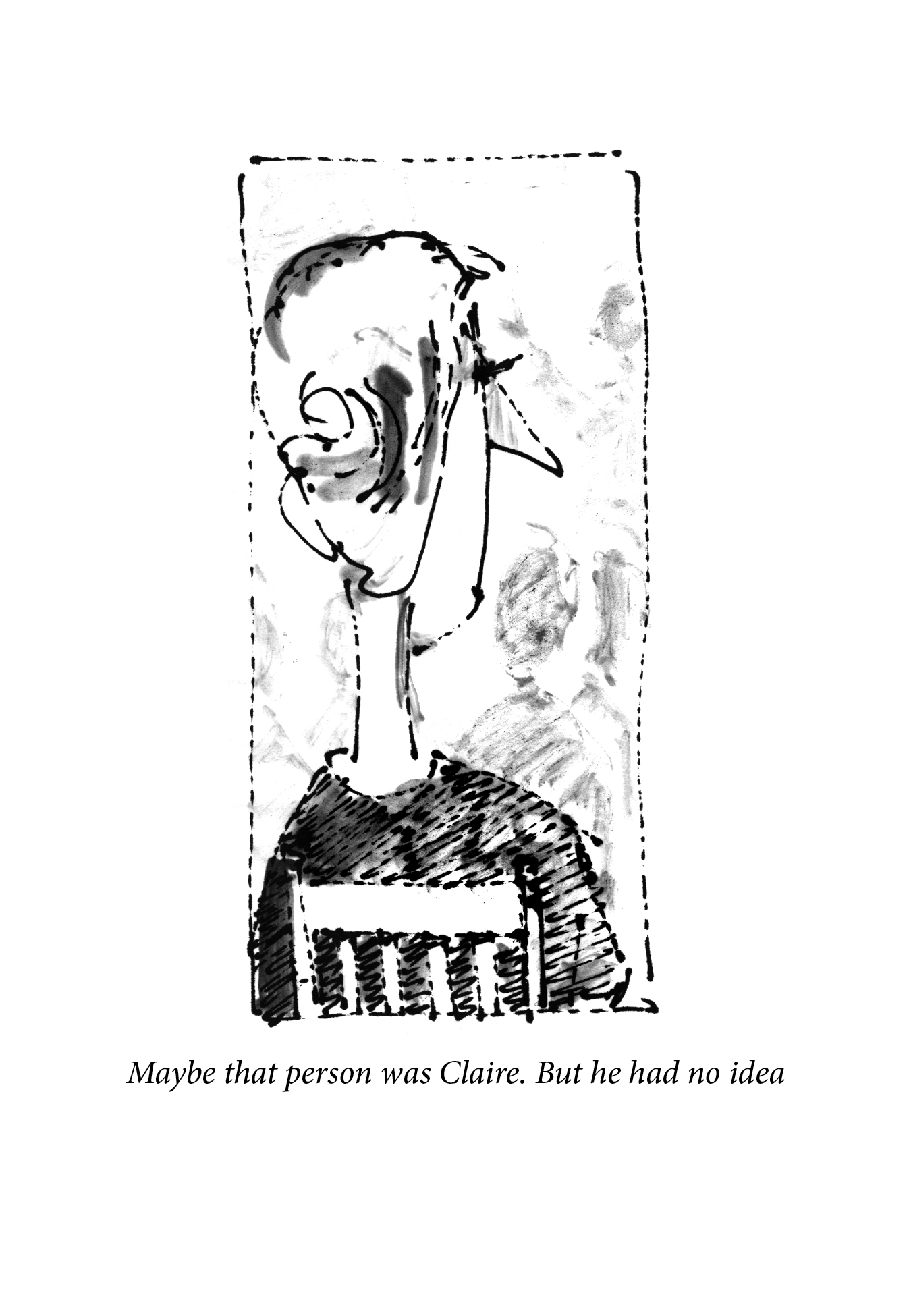
My (then-) agent loved the writing too. She just didn’t think anyone in their right mind would buy it.

First of all, she said, it is clearly not about drawing or creativity or any of the subjects I have built my so-called career upon. And secondly, it’s a children’s novel about evil — exaggerated, funny, hard to put down— but still evil.

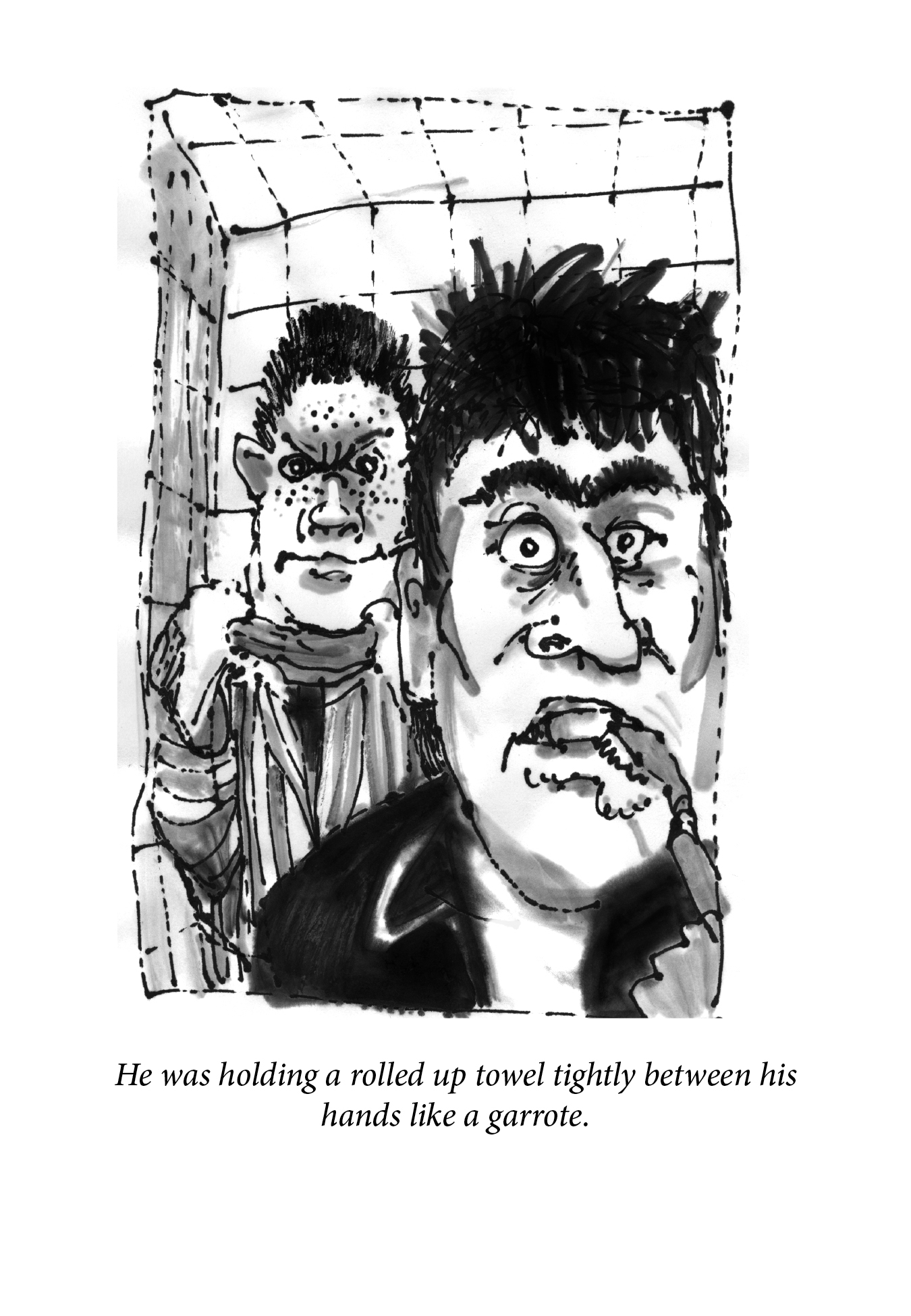
I disagreed with my agent. The novel is not especially grisly or likely to inspire nightmares but it certainly is casual about things like murder for hire and con games and the best way to debone a corpse. I mean, it’s about evil. But in the nicest possible way.

I wrote it after spending a number of years living with a child who seemed quite interested in evil things, in bad guys, monsters, killers, etc. And I, as a former child, remember being equally intrigued by sick and disturbing things. In fact, both Jack and I found that most children’s literature was just too moralizing and coddling about such matters, while there seemed to be no end to mayhem in the adult world that was easy for a child of any age to slip under the velvet rope and wade their way into — so what harm could there be in one more slab of unrepentant horrorshow that at least like, totally, used tween vocabulary?
Despite my defense of the book, my agent has the Rolodex and wouldn’t show it to any publishers. Nope, no way.

So the book went into a virtual drawer on my laptop until last year when I decided I really wanted to see that book’s spine on my shelf, by hook or crook. So, poor judgment notwithstanding, I had it printed and bound up and got the first glossy paperbacks into my collection at last. It looks awesome and is hi-larious and I just didn’t care what the stupid ladies in the publishing world said. It’s evil, it’s twisted, and it’s mine. Mwaaaahhhhhaha.

Which brings me to to today.

In 2012, I have become more and more devoted to my Kindle, packing huge stacks of books into its tiny frame and devouring them wherever I go.  I love paper and ink and the feel of a real book in my hands but let’s be real — ebooks are clealry the way things are going. I know many of you may not yet have converted and that assumption has been holding me back a bit, frankly. I have so many little book ideas in my head that I’d love to write and illustrate and share with you right from my website, books that interest me and probably you, but don’t fit into the big publishing machine’s view of marketing. Unless we agree to go virtual, they will just remain ideas.

So I have decided, as a sort of initial salvo, to turn School for Evil into an ebook (e for evil) version on Amazon. And here’s the amazing bit: While my paperback is lovely and pocket-sized and as cheap as I can make it (I make, literally, one penny in profit — I think I have earned that), you will still have to spend a couple of bucks having it shipped.
But the ebook version is as dirt cheap as I could make it. Just 99 paltry cents. That’s £0.75. A measly €0.86. What a steal! 

If you would like to see what all the fuss isn’t about, you can buy yourself (and any children you don’t care about) a few copies of “School for Evil” for an unlimited time only in either form. Both are ludicrously priced for an illustrated masterpiece and all proceeds will go to supporting my special brand of evil. Check it out and, please, read it with at least one light on.

Buy “School for Evil” in paperback here. Criminally affordable. Do it now!

Or buy it the ebook version for your Kindle. Equally evil, less attractive on the bookshelf. So cheap it’s just wrong.

Oh, and if you buy it and love it and want to help propel it to to the top of the Amazon charts (even though it’s not erotica or written by a drug-addled radio host or a pregnant celebrity who lost huge amounts of weight overnight while being attacked by zombies), tell your friends (particularly those in publishing)  and me how much you loved it.

—- But, wait, there’s more:  Now my memoir of becoming a dad is also an ebook on Amazon for the same dangerously low price. Put “Peanut” on your kindle right now.

Further Providence

Jack and I are just back from our first post-acceptance trip to the Rhode Island School of Design (RISD) where Jack will be spending the next four years. We ate in the dining hall, prowled the dorms and had in-depth tours of the department Jack and another prospective freshman are considering.

First of all, I am consumed with jealousy. I want to spend ten hours a day in drawing class, I want to build furniture prototypes, I want to work in the lithography studio, I want to learn to set type and study art history and read novels. I want to be eighteen again!

Instead, I’ll have to be happy with the fact that my boy will get to do all those things and more.

I was impressed by the dynamic between teachers and students. We sat in on several classes and they weren’t big droning lectures or didactic prescriptions. The teachers seemed genuinely interested in working with each creative person, discussing their work one-on-one, giving specific pointers and encouragement, bringing in other opinions from the class, cajoling, inspiring, illuminating.

One of the teachers in the furniture design department took us on a tour of the work that the graduate students are doing — so imaginative and gorgeously crafted. Then we talked about the overall perspective of the school and what it hopes to accomplish for the people who graduate from RISD. Of course, the type of focus of the students and the school on professionalism and post-graduate career opportunities varies with the economic cycle, but he said that the goal is not on getting graduates a job but making sure that they can earn a living doing the things they love. That takes many forms, many directions. Sure, some may end up as baristas but most have creatively constructed creative careers, solving problems, making things.

Our day at RISD opened my eyes to the  real purpose of a great art school and of pursuing life as an artist. I guess I hadn’t thought about it enough or in my most cynical moments had settled on a vague and not very convinced view of the purpose of art school: a sort of self-indulgent playground, filing students with jargon, pomposity, and convoluted rationales for abstract art forms, a mill for perpetuating the institution of the gallery establishment and validating the views of artists who couldn’t make it as such and so had become art teachers.*

Here’s the revelation I had: RISD’s purpose is to give students the skills to discover and distill their creative viewpoint, to give them the confidence and ability to communicate it clearly to others, to develop their creative problem-solving skills, to find where they fit in the world and how to apply their skills to be useful.

That’s true whether you are a painting major or a printmaker, photographer or industrial designer. In fact, by declaring a major you are not just embarking on the road to developing the skills that will make you a better designer or sculptor. No, you are picking a passion. When you are passionate about drawing or painting or carving, you will hang in there to develop the commitment, focus, and perseverance  to learn the larger life lessons about how to be a fully-formed creative person. They take lots of time and hard work and tough setbacks to acquire and you will only stick to it through this discomfort if you are in love with what you are doing. You will learn how to take criticism and use it to make your art better, or stay up all night to polish your idea, or scrape your canvas after weeks of work and start again, because you passionately want to make great furniture or fashion or photography. Passion +  perseverance = greatness. As Milton Glaser says, “Art is Work”.

All RISD freshmen spend their first year doing the same thing: Foundation studies. Each week they spend a full day each (from 8 a.m. till 6 p.m. plus a night’s worth of homework) on drawing, 2D design and 3D design. They also get a taste of all the other disciplines so by sophomore year they are ready to choose a direction to specialize built on this solid layer of disciplined hard work.

Our visit confirmed what I have learned over the past decade and a half of illustrated journaling.  From the get-go, I chose to draw things that interested me, not just bowls of fruit and naked strangers. This subject kept me engaged so I could develop the skills of drawing. I didn’t get bored before I established the habit because I wanted to record the things of my life and everydays. Nothing is more interesting to me than me and so I could carry on past all the lousy drawings and ink blots until I achieved facility. This is the principle behind a great art education; I’m fortunate to have stumbled upon it on my own.

Jack already knows it — witness the dozens and dozens of sketchbooks he’s already filled. But now he will learn to make art as if it mattered, to fall in love with it on a professional level, and  to reach amazing new heights. I’m so proud of him and lucky I get  a front row seat to what he does next.


Cover story

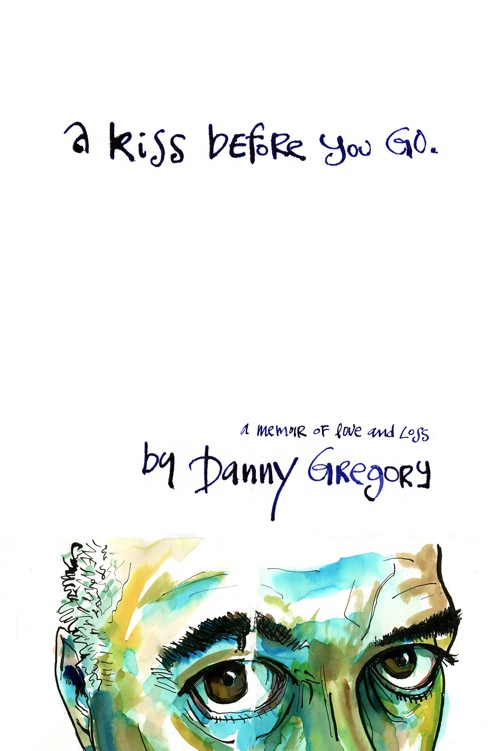
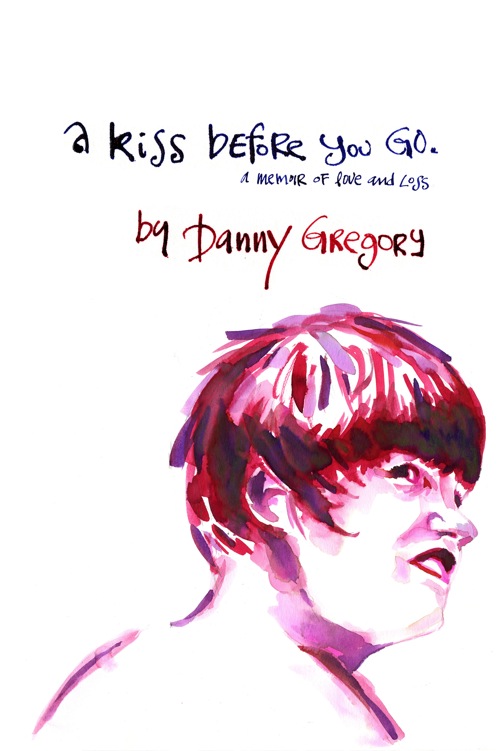
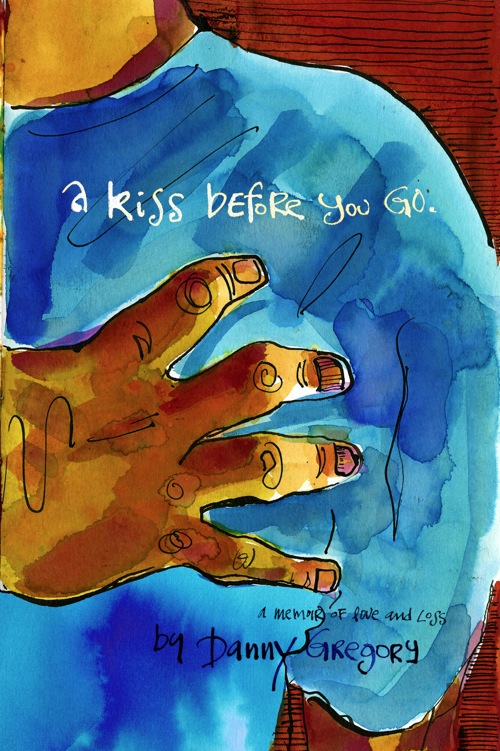
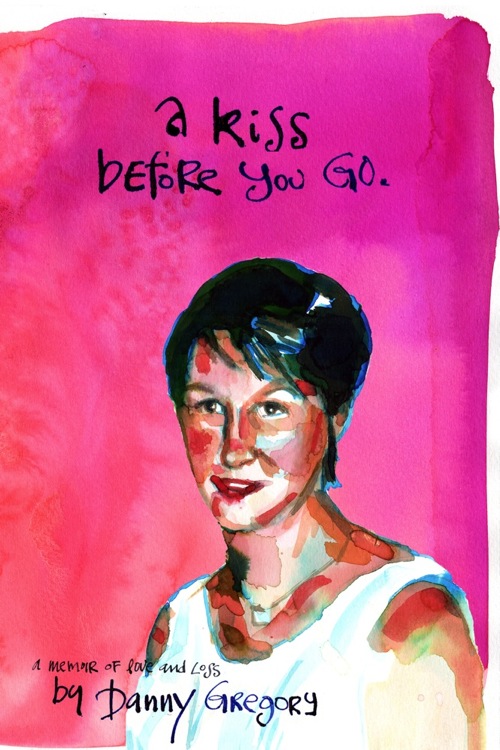
While I try to do my best making every book I’ve published, my next book, A Kiss Before You Go, is the most important one I’ve written — to me. It’s a recollection of the lovely years I spent with Patti and a journal of the months after she died, how Jack and I coped, how it changed and sharpened my view of the world. Because the subject is so dear to my heart, I have worked very hard to make every inch of it as perfect as I can, to fill it with the bright colors Patti loved, to be as scrupulously honest as I can be, to craft it to the highest standards I can muster and to drive my editor a little nuts by insisting on all sorts of things to make it perfect, from the exact dimensions of the book to the bleed trim on the inside of the cover.

The book itself has been in production for months and I am so happy with it; I have okayed the proofs of the pages and have now only to be patient until the first bound copy arrives in my hands. The part that is always the toughest on every book I’ve done — the cover – took months of experimentation and discussion. How to encapsulate this book in a single visual statement that would attract a casual browser and still evoke all of the richness within? And how to make the most of the fact that this is my first book with a dust jacket, making it feel even more real and special.  I made almost thirty different designs; I even dragged in Patti’s old friend Mick Haggerty, one of the great album cover designers of all times, to lob in his ideas.

Simultaneously, I worried over who would be the best person to write the cover blurb, the first review. I finally decided to ask our old pal Moby who loved Patti and who is the sort of sensitive artist whose endorsement would mean so much. He got the book and wrote, “I loved Danny’s wife Patti. And I love this honest, beautiful book.” That’s so simple and nice.

Last weekend, after I dismounted from my horse, I opened a FedEx package and out fell the first proof of the dust jacket. I wrapped it around a book and, for a minute, pretended I had just come across it in my local independent bookstore. One of my favorite features works perfectly —the dustjacket contains a lovely surprise that will only be experienced by people who buy the book. I do hope you like it.

The book will be out this winter — I’ll be talking about it a lot more in the interim. Meanwhile, here is a peek at some of the designs I considered for the cover.

Yipee-ki-yay

I‘ve just returned from a ranch in Patagonia, a few miles from the Mexican border. While I was there, I didn’t do any drawing. But I did some things that reminded me of drawing and how it makes me feel.

I haven’t ridden on a horse since I was three and the ghora-wallah brought a pony to our house in Lahore and led me around the garden on its back. Last week, I clambered onto the back of Joe, a huge chestnut quarter horse with enormous patience for novice riders. The experience was so new, so strange, that I couldn’t stifle girlish giggles. The strangeness increased when a half-dozen of us, most outfitted in boot, ten gallon hats, gingham shirts and jeans, galumphed out of the corral and rode off in a cloud of dust like every posse I’ve ever seen in a John Ford movie. Only this time, rather than watching from the couch, I was in the middle of the herd. This thing that I have always seen and wanted and now here I was doing it. It was new and a little tricky but nothing like as scary as I’d imagined. My fears of immediately being unseated by a balky stallion and dumped unceremoniously on my head or in the Christopher Reeves Memorial Quadriplegic Ward, were replaced by exhilaration and power. One is never too old to learn something new and to marvel at how much more one’s body can do than one gives it credit for being capable of.

By Day Two, I graduated to loping which is sort of like galloping. Att first I couldn’t get the hang of it for the simple reason that I couldn’t see it in my mind’s eye. Then it came to me: that ‘hee-yah’ moment when a cowboy puts his spurs to his steed and gallops off after the injuns or the stage-coach or the escaping dogie. And now, I, bouncing up and down like a lunatic yoyo, was doing the same. Granted I was snickering like a jackass and clutching my saddle horn but I was doing it nonetheless and remained astride my mount.

Each day, we spend four or five hours thundering around the 6,000 acres of the ranch, up mountains, through ravines, and across gulches. My wrangler counseled me in horse psychology, warning me to never let my horse get the upper hoof, that I had to always remind Joe, with a kick to the ribs and a tug on the reins, that I was the one on top. Joe had spent his whole life running around these peaks and valleys and obviously knew what he was doing, but I tried valiantly to steer him and appear in control. I’d urged him up each hillside, and he’d scramble across loose chunks of rock, harumphing and snorting out great lungfuls of dust.

While Joe was doing most of the work, I’d try to do my share. I’d keep my eyes peeled wide as we slowly inched our way down really steep inclines, pulling on the reins and muttering ‘whoa’. Rock would crumble and shift, Joe’s hooves would clatter and I would hang on for dear life.

As the hours elapsed, my brain began to shift into a new state, one that felt really familiar. I was in charge — but also letting go, alive and awake — but also zenned and blissed out. I felt on edge and alert — yet safe and calm. New York and my office and all my cares felt thousands of miles away (2,454.7 miles, to be precise). The rocking motion, the spectacular countryside, the newness of it all, combined to wring out my head like an old washcloth. When I finally staggered out of the saddle, bowlegged with locked hips and dry as a saltine, I felt empty and peaceful — much like I always have after an hour with my pen in my hand and my sketchbook on my lap.

Patagonia is one of the world’s best bird-watching spots. I haven’t really paid that much attention to my fine feathered friends until this winter when I participated in the annual Central park bird count. I was amazed to discover so many species I’d never noticed, to be heeding bird calls and then tracing them to their sources, lurking in a bush or on a windowsill. Now we sat having breakfast in the garden and saw cardinals, woodpeckers, and five different species of hummingbirds. I felt my predator instincts emerging, noticing each little change in the landscape, the slightest shift in the leaves, a shadow in the grass. It was wild to feel so a part of nature rather than just tramping through it with my iPod on. And again, this started to feel like drawing to me, like the sharpened awareness that comes when you really see something clearly, studying every detail, overcoming preconceptions to be in the moment, fully present.

Drawing is a state of mind more than a way of putting ink on paper or filling a picture frame. My days in Arizona brought that home in a whole new way.

Event this weekend

This Saturday at 10 a.m., I will be participating in a panel assembled by Seth Apter and sponsored by The Ink Pad. It features some of the many artists who are featured in Seth’s new Book, The Pulse of Mixed Media.

If you’d like to come, please call the Ink Pad by tomorrow, March 29th to reserve a spot: 212.463.9876.

The event takes place at Westbeth at 55 Bethune Street, corner of Washington Street, in Greenwich Village, New York.  Here is the link to Westbeth where you will find directions.

I hope to see you there.

Cross training

20120319-213019.jpg

My drawing muscles are out of shape after a few months of underuse. As I get back to the habit of journaling again, I am taking my tools out one at a time to see how I want to work, how to express myself, how to become fluid and unconscious once again.

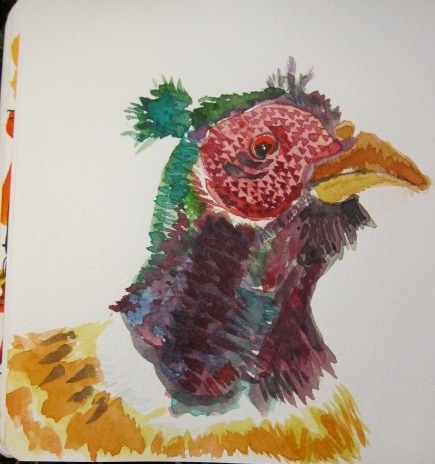
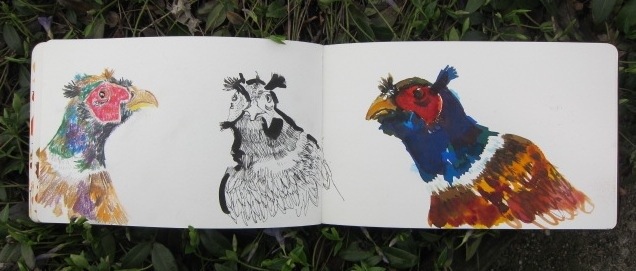
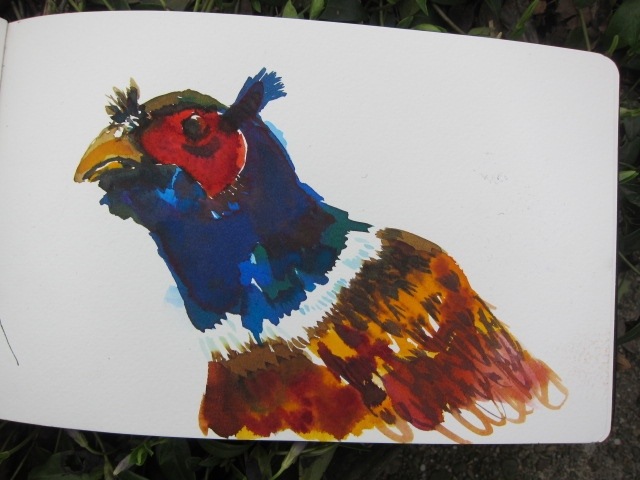
My first drawings felt scratchy and inept to me, so I put down the pen and picked up the brush, wanting to work in color and built up layers of perception. I drew my stuffed pheasant with my little winsor newton paint set and a sable brush.

My first attempt felt too stylized in the face and I didn’t capture the iridescence of the neck feathers.

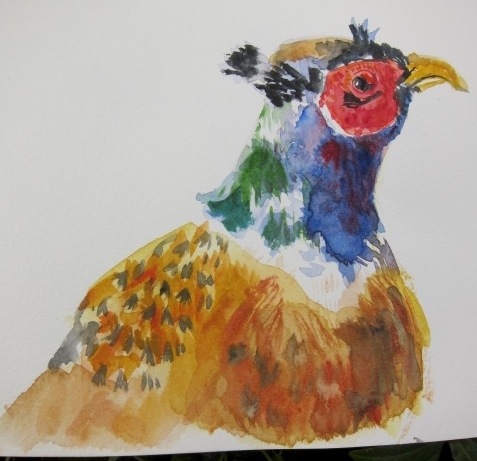
This is more like it. He has a chckeny expression in his eye which is right. My brush also feels good in my hand and I can make all sorts of marks with it in a controlled fashion. Let’s have one more go.

My colors are nice and bright here. My little watercolor set, while filled with high quality paints, can sometime lead me to make murky and muddy paintings as I over mix.

I turn the page and the pheasant and get out some other media.

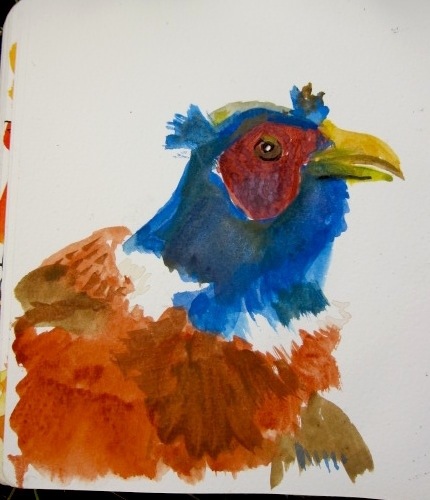
Roz had been extolling the virtues of gouache lately so I dust of my set of opaque watercolors and give it a whirl. It’s so different to work with colors that aren’t translucent; I’m used to layering and layering until things come into focus. These paints force me to commit much earlier to my tones. I also have to work from dark  to light, I think. Or maybe it’s the other way round. II dunno, I just can’t get the hang of it and cant be bothered to figure it out. Lots of other tricks in my bag to play with.

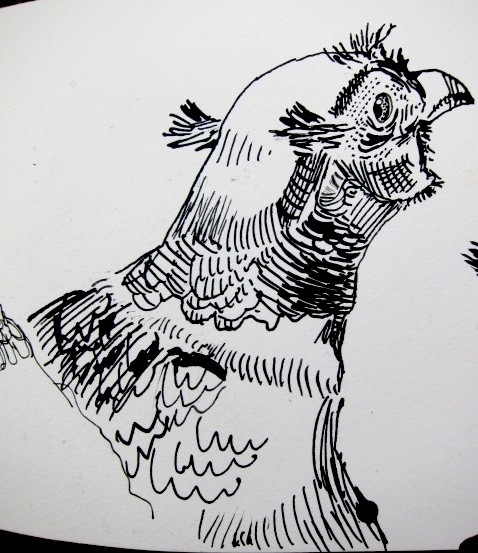
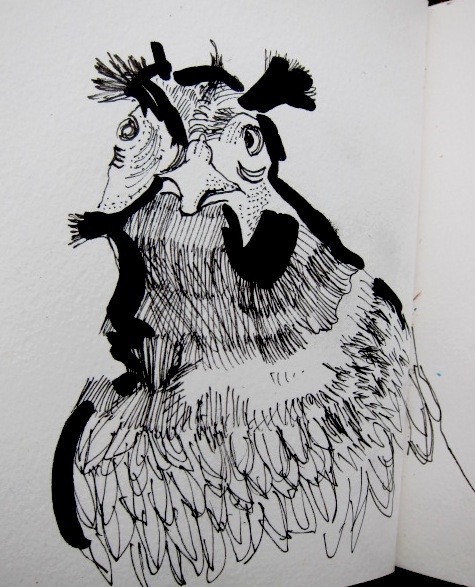
I have been using my Lamy Safari fountain pen for most of my drawings over the past year. I like the feel of the pen’s flow and the blackness of its line. It’s mildly flexible but I wish it was even springier. Drawing with a pen forces me to pay far more attention than does the brush; I am committed to every mark and I can draw much more specifically. My crosshatching is a little less even than I’d like it to be but I quite like this drawing.
I liked drawing this one more. It’s done with a dip pen and a steel nib (no idea which one — I have a big box of randomly collected one and I know by feel which ones I like best). This pen gives me much more variation in my lines and it’s more interesting to draw with. It’s trickier to control too. My lines are a less regular and perfect and I never know exactly how the nib will behave. The springiness also means it can spring back and attack the wielder, spraying splotches and drips or suddenly scarring the page with a dark irregular line. It’s an adventure.

I pick up my sable brush again and dip it into my India ink. It’s a feeing experience, like drawing with a super liquidy marker and also has a fair degree of unpredictability (Or is that just a function of the fact that I don’t really know what I’m doing?) I make a specific kind of graphic image with this brush, almost comic booky, and unlikely to become my everyday way of capturing the world around me. A fun detour nonetheless.

Colored pencils are just too much work. I don’t like swapping pencil after pencil to find the right color and then being limited to the hues I have ( and I have a huge collection of pencils, none of which are exactly right). I cross hatch and layer them to reproduce the colors I see but I don’t like the process or the results, I don’t like seeing white paper showing between the lines either. I am trying to approximate what I do with water colors and I may well be doing it wrong. Pencils do give one a fair amount of control and the colors are fairly bright but they are also smudgy and fiddly.

My love for Lucinda Rogers‘ work inspired me to combine a sper fat (B) Faber Castell PITT pen  with a super fine one (XS).  I’ve done a few drawings like this but I have  a lot to learn about this technique. I dont fully understand when to use the fat one and the XS doesn’t glide on the rough watercolor paper of my Moleskine.Still, it has a nutty quality that I like.Finally, I unpack my huge collection of Doc Martin’s super electric translucent water colors. I just love these colors, so bright and bold, but they need to be handled with care. Like colored pencils, they come in zillions of hues (I have over a hundred little eyedropper bottlesfull) but they can be mixed. They tend to be much more fluid that pan watercolors so it;s easy to overload the brush and make things gloppy. This isn’t the best example, but generally I love the ways paintings come out when I use this stuff.

This was a liberating experience and gave me lots to think about. I also got to know my pheasant roommate better, always a smart idea.

Two Years

It’s much sunnier on March 18th than it was two years ago. And the sadness and loss I felt then have become memories. Now, when I think about Patti, I don’t feel overwhelming emptiness, just sweet thoughts and warmth. Despite the enormity of her death, Jack and I have continued to find our way and to find things to like about life. Surviving is no longer a guilty feeling; it’s what Patti would have wanted for us.

I have learned so much from her since she left. As the clouds parted, I saw how wise she had been about so many things and somehow, with her gone, I am able to better heed her advice and perspective. I have let many things go that I used to cling to, worries, fears, woeful imaginings. Why? I guess because I have to rely on myself, to be strong, to take on all aspects of myself and my life. I no longer have my love to lean on, to make up for my shortcomings, to protect me from the things I fear.

And being a single parent is much more than double being one of two. Without another person to balance my mistakes, I have to be more careful and also bolder when I help steer Jack to the next stage of his life. Would I have been as supportive of his decision to go to RISD if Patti were alive? Would I have been okay with so many of the choices he makes? Would I be as close to him as I am now? Would I have become calmer, more supportive, less judgmental? Probably not, honestly.

My life will change radically again in six months. Jack will be off to Providence and I’ll have my apartment, evenings, weekends and grocery lists to myself. I look forward to it with a mixture of excitement and dread. For the first time, except for a six month period when I first graduated from college, I will be living alone. I have no idea how I’ll take to it. Will I be lonely? Will I be free? Will I try to end my isolation by living with someone else as soon as possible? WIll I thrive? We’ll see.

I think of Patti at least once every day. I have pictures of her throughout our house and office but they have blended into the background. Instead, the way I come to think of her is because I keep encountering the parts of my life that she was  a part of — how I put the laundry away, the sheets she bought, the desk she sat at, the places she walked the dogs.  So many parts of everything. Some of those routines change, new sheets, new shopping lists, new situations with Jack she never dealt with. But she remains at the core of who I am in so many ways. After all, we grew up together and were molded by the same events, huge and minor and she was my best friend for  a quarter of  a century.

I worry sometimes that Patti’s memory will fade bit by bit until no one but her closest friends and relatives remember what she was like. That no one will know any more what a nut she was, how sweet she was, what a good friend and an inspiration. But I don’t think that’ll really ever be true. Her light burned too bright.

I wrote a book about her life and its aftermath and it’s at the publisher now. I worked on it harder and more carefully than anything I have ever done because I want the world to know about her, to fall in love with Patti Lynn like I did. In less than a year, it’ll be out there, making ripples, and creating new fans for her. I hope she would have liked it.
I miss you, Pat. I always will. I know you wouldn’t want any of us to be sad today or any day. I will always remember you and think of how you would have wanted things to be. Thanks you for being my friend and my love.

Senioritis

A tentative first step back into my illustrated journal. Drawn while sitting, overtired, in bed.

Jack was eager to settle his college plans early and so was I. His acceptance to RISD was a huge relief for both of us. The stress and uncertainty of the college process was over and now we can both relax until September.
But doing next to nothing turns out to be a lot less fun than he thought it would be. Fall is a long way away and Jack still has to get up at 7:00 each morning and sit in classes all day, listening to droning teachers, half-heartedly writing homework assignments in the period before they’re due, doing the bare minimum to keep his grades above water so his acceptance isn’t rescinded.
I say to him, well, you’re still being taught useful and interesting things, even if your grades really don’t mean as much. Can’t you just learn … for the fun of it? What’s the point, he groans. Who cares? I’ll study when I get to college… Etc.
Senioritis isn’t confined to teenagers. At every point in life, it’s easy to be so focused on goals that one can’t see the value in anything that doesn’t pertain directly to them. All around are books and classes and conversations and experiences that would enrich us greatly but it’s easier to just do the same-old and not expend the effort for something that doesn’t same to have a direct benefit or relevance to one’s occupation or obligations. What’s the point in learning to draw or reading about ancient history or trying sushi or visiting China? We think we know it better, so despite the richness of the world around you, if your mindset is wrong you won’t absorb or even register it. You screen it out.
When we’re toddlers, we are constantly exploring and asking questions about everything we encounter. That impulse diminishes when we get older because our pre-frontal cortex develops and filters out the firehouse of information that is constantly streaming in. Most of the time, we certainly need that filter so we can be focused and goal oriented — it would be impossible to get anything done if we were always walking around in slack-jawed amazement. So we increasingly notice only those things that we have decided are related to our preconceived goals and orientations.
That means it takes an extreme form of novelty or trauma to snap us out of this narrow tunnel we have burrowed into. Something like 9/11, a death, an accident, can force us into a reassessment and new orientation. Our eyes are opened, we say, and suddenly we see things we’d never seen before.
We use this metaphoric language to describe this epiphany but what if we take this notion literally and force ourselves to actually see things anew. We can reorient our perception and put on a wider lens. Of course, we don’t want to eliminate this screening function altogether or else we might wander off the road and spend all day picking wild flowers, but we can pick moments to relax our pre-frontal cortex, return to a more childlike state, rebuild our muscles of perception, and restock our cache of creative stimulation.
When you draw something you see it in a new way. A good drawing is a fresh perspective on an object you may have seen a thousand times before: a building, a body, a bowl of fruit, your breakfast dishes. But by paying deliberate and careful attention to every nook and cranny, you flood your mind and your page with new information about what you are seeing — the texture of a banana skin, the way light hits a brick, how the knee connects to the shin bone, the exact curve of a cup handle. You are suspending the critical function of your pre-frontal cortex, refusing to decide whether there’s importance to each individual line and aspect; you just record them all. This information isn’t actually that important to you beyond the act of drawing, you don’t need to retain the visual data about that banana skin, it may have no further utility to you. But it is expanding your awareness of the world around you, strengthening for observation muscles — it has as much purpose as lifting the same weight over and over at the gym.
When your mind’s eye is open and your screens and filters are down, you get more and more useful information, and that information and experience are the raw fodder for creativity. Forming associations between apparently disparate things to create a new idea is what creativity is all about. And the more open your mind is, the more you are open to experiencing things are interesting but may not have immediate and obvious relevance to your current endeavors. By exposing yourself to art, to novelty, to new ideas, facts and experiments, you stretch your mind so that it is pliable and elastic, so that it doesn’t seize up when you have to move in a new direction. Your reservoirs of references are loaded and you have oodles of bits and bobs to build new ideas with.
Senioritis hits senior citizens too. It’s easy, as you become middle aged and older, to think you know it all, that you have discovered what matters, that you know what you like to eat and like to vote for and where you like to visit and what you like to read and that experimentation and exploration are things of the past. But if you can loosen up your built-in filters, if you can slow down and draw every petal of a flower or the hairs on a dog’s muzzle, you’ll soon see that you don’t know everything, far from it, and in fact you never will. And that realization, that the more we know the less we know, will set you free to devote the rest of your days to exploring the depth of your ignorance, to gathering sticks and shells and tastes and smells, and weaving them together in to combinations you and no one else have ever seen before.
Jack can afford to suspend learning until September. But I can’t.

Now, watch this:

Getting back in shape

The last year has not been a great one for drawing. At least not for me. After being a dad and an employee and a housekeeper, the little spare time I have had left has been consumed with the two books I have been putting together. I’ve had to do a lot of drawing to get those books done, of course, but it’s certainly not been the sort of art that fills my dozens of old sketchbooks. It’s not really a record of my daily life.

A few weeks ago, once the last of my book files was picked up by the FedEx man,I had to admit that I had pretty much lost the habit of drawing and I’d better do something about it. I just kinda didn’t wanna.

Even though it’s been a mild winter, it’s not been conducive to drawing outside so I sat for in the kitchen for a while and looked at the odds and ends on the counter and tried to psych myself up. Instead, I sighed. I just can’t draw my pepper mill again, nor a box of raisins or my knife block. I have a new, great-sounding but boring-looking radio — its a black rectangle with a small monitor and two knobs. Most of the view out my window has been blocked by two newish NYU buildings. They are as dull looking as my new radio and, in any case I’ve drawn them over and again over the years. My mind whined: there’s nothing to draw. But really, beneath my feigned boredom, lurked fear. An anxiety that maybe I had lost my ability to draw. Look at Tiger Woods — even great talent can slip away in the night and leave you swatting the air.

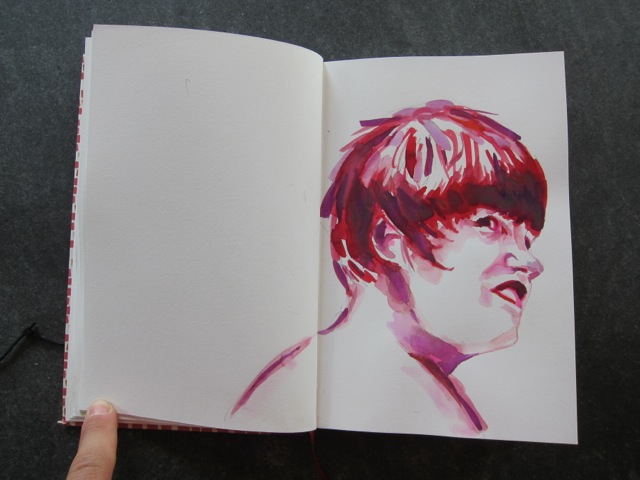
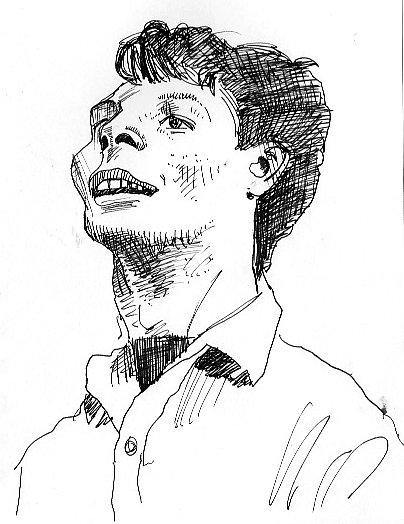
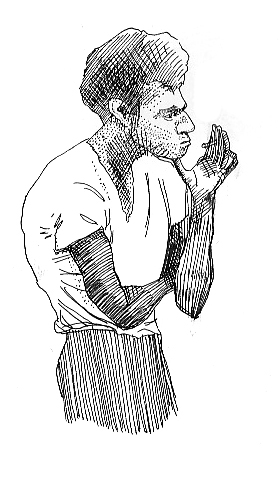
I had to find a way to ease back into the water without scaring the muse away. I didn’t want the pressure of making great journal pages or writing witty marginalia. I just wanted the visceral pleasure of making lines and slowly and carefully studying something, anything. I unearthed an empty, spiral-bound journal with not terribly nice paper and filled my fountain pen. Then I picked up the dogeared copy of last week NY Times Magazine and let it fall open to a random photo. Then I began to copy the picture into the book, focussing on cross hatching, spiraling lines in neat rows, lining up a smooth gradation of micro dots, making ribbons of greys and undulations of silky blacks.

The old pen was a little rusty but not nearly as bad as I feared. And soon the sweet flood of neurotransmitters swept over me, like emptying a too full bladder, and I entered the zone.

So I made a small deal with me. Each morning after my breakfast was chewed and the French press was still half full, I would do one drawing from the morning paper on one page in the book. At least one. If the urge was there and the coffee held out, maybe I’d make a second.

Most mornings I fill a page (and I don’t beat myself up about it if I miss a day to give the dogs some extra time in the park or to make an early meeting). And the fun is back.

Granted, I’m making drawings of unknown faces from news photos, not the sort of things I want to fill books with, but I figure, what the hey, it’s spring training, and the season will eventually  start for real. Meanwhile, just keep loosening up the shoulders, stretching the hamstrings, and shagging those flies.