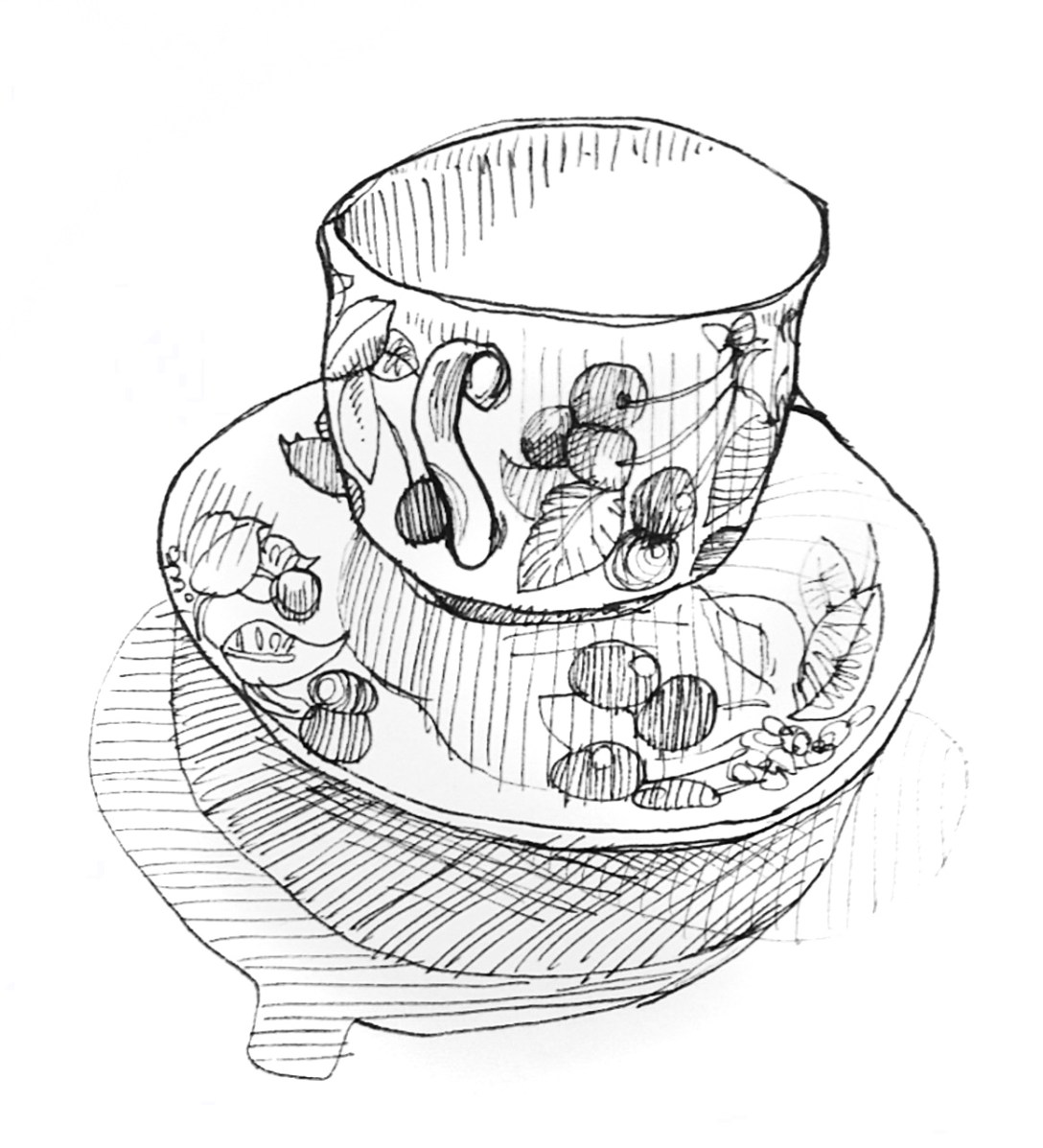
Library love fest

Jenny and I are spending the weekend in the country, enjoying the peace and quiet of a borrowed house surrounded by bare trees, piles of crunchy snow and the hoarse caws of ravens. We spend the evening listening to records on a turntable, playing casino, and reading books.

Jenny and I are both big readers; books are the shared love that first drew us together. I’m reading Michael Lewis’s new book on my Kindle, absorbed in a perspective on the birth of Israel that has overnight transformed my own (maybe I’ll write about that sometime). I have a half-finished paperback, A Short History of the United States in my backpack as well as a library book , Nutshell by Ian McEwan. I tend to travel with multiple books in multiple forms so I can shift gears with my moods. Even my favorite genre can become sticky and claustrophobic, like too many chocolates in a box.

Jenny’s reading several library books too and dipping into our absent host’s collection of cook books. She has always been a glutton for cookbooks. We have shelves of them at home and, on our weekly trip to the library, she inevitably hauls back more armfuls of heavily illustrated tomes from celebrity chefs. For me, cookbooks are a means to an end, cooking, but Jenny enjoys them for the vicarious pleasure, content to just rattle the pots in her mental kitchen.

We spent this Saturday morning on the Long Island Expressway instead of the library. That’s not the norm. Usually, we have a bagel from the baker on University Place, read the paper, then head to one of four public libraries in the ten-block radius of our house.

There’s the large Jefferson Market library with its stained glass windows and spiral staircase, a repurposed court-house with a red-brick tower. Or the compact Mulberry St. branch tucked into an alley by the Puck building. Chalky perfumes waft in from the Santa Maria Novella store next door, mingling with the excited murmurs of the kids from Chinatown playing computer games in the mezzanine and the exotic fragrances of the homeless men reading magazines. To the West, there’s the Hudson Park branch — we stop to read the chalkboard by the entrance. Some anonymous librarian always adds a witty welcome message: the first one we noticed was a celebration of grilled cheese and Lionel Richie, our favorites too. If we head East on our Saturday morning stroll, we end up at the Ottendorfer branch, formerly a 19th century clinic for German immigrants, its facade festooned with busts of Bavarian doctors. This branch is the smallest one, which shortens our visit but also produces the most book picks. I don’t know if it’s just especially well-curated, but we always come back with the biggest haul from the Ottendorfer.

We generally bring home 4-8 library books each week and stack them on a table at the end of the couch. Within a day or two, most of them have been thumbed and rejected. This culling is just the final pleasure of library gleaning, which begins with a visit to the new arrivals section of the library shelves. Jenny and I stand and browse side by side, reading spines, then examining covers and flyleaves, quietly passing good finds back and forth (“This looks like your sort of thing” “Read it last year”), amassing a stack on one of the library tables for further study. Then we read a page or two from each candidate, until we have separated the rejects from the chosen few. We check out the winners and stack them in our Trader Joe tote bags then head home to plunk down on the couch and further refine our search.

For the next few days, we dig deeper into each book, only occasionally making it to the very end. If dialogue sounds wooden, plotting forced, vocabulary opaque, then the book gets banished back to the TJ bag sitting beneath the end table. On rare occasion, one of us loves a book so much, we must go online to renew it so the other can get his/her fill of it too.

We can afford to be picky. New books are being published every day, the library shelves are groaning, and we have many pages to turn before we sleep.

Speaking of, I’m heading to the couch to read. And snooze.

Necktop.

I traveled back and forth across America in the last few days so I was pretty tired this weekend. Being tired tends to make me irritated, whiny and slow-witted. My superego has no problem needling me, my id just wants to eat ice cream and drink beer, and my hapless ego shuffles around with its hands in its pockets. But I don’t want to talk Freud right now (I bring him up because I spent a vegetative hour watching James Fox’s show on Vienna, 1908. You might like to, too. Brilliant Lights Brilliant Minds on Netflix). Instead let’s discuss two recent scientific projects on the physiology of the brain.

The Times reported on a couple of articles published last week in the journal Science about inquiries into the purpose of sleep. They focussed on a new explanation: that we sleep to forget.

Here’s how it works. Our brains are made up of 100 billion neurons and each one is networked into many others. We have some seven hundred trillion synaptic connections that allow signals to pass back and forth. Every day, we are bombarded with information and experiences, all of which rewire our brains. Literally. Every experience causes these synapses to grow like topsy and, this new synaptic homeostasis hypothesis says, when we sleep, our brains prune those connections to preserve important memories and lessons and ditch the rest. It’s vital — wIthout enough sleep, our memories get inundated and fuzzy.

This certainly makes sense to my bleary brain.

I have also been perusing a book by Sebastian Seung, a professor at MIT, who believes that this immense thicket of connections is the source of our identity, that we are who we are because of how we are wired. He’s part of a project to map these connections (sort of like the human genome project) to create a “connectome” and show that we are shaped by the brain structure we inherit and by the transformations the world make on it — nature plus nurture.

I’ve been looking at neural maps like the one above and I’m struck by how beautiful, delicate and deeply complex they are. We are each the sum of these deep networks and each one is unique. Sure, we come out of the box with certain structures set up, but every minute our brains are sprouting new filaments and plugs, then reorienting them, pruning and shaping ourselves. Every brain is constantly changing in special ways that make us each who we are.

It’s a powerful endorsement of the importance of authenticity, that we can’t and shouldn’t aspire to sameness. Mass culture and capitalism want to move us in that direction, to make us cogs in the machine, but our brains will never be happy trying to fit in. Instead, we need to understand, embrace and express our individuality.

That’s a key purpose of art, to show how we are similar and different, that we process the common experience through unique neural networks, that we are each the sum of inevitably different experiences. Sharing our perceptions allows us to be confident in the uniqueness of our selves and yet secure in our connections to all those other connectomes out there, all sharing our common experience of being different.

Chew on that. Meanwhile, I’ll be taking a nap.

Being other.

When I was in college, I landed a summer internship at the White House. It was a weird time to be there; the Iranian hostage crisis was in full swing, the economy was dicey, there were gas lines and Carter was clearly going to lose the presidency. My bosses at the Old Executive Building were too busy typing their resumés to bother with me and, after a month or so, I quit to work in a sandwich shop in Georgetown.

I didn’t have much connection with Jimmy Carter as a man. He was from Georgia, a born-again Christian, and he tended to the preachy, telling people to save energy by wearing cardigans and the like. He was a decent guy but I couldn’t have told you a single thing he accomplished or wanted to accomplish in the White House. I didn’t feel him, as they say.

I didn’t feel Reagan much. Or Bush Sr. There were times Bill Clinton thrilled me but I doubt I could have just hung out with him. We were too different. George W. was also quite alien to me, born of privilege and Texas football, despite his aw, shucksness. (Ironically, his recent reincarnation as a painter has made me think again).

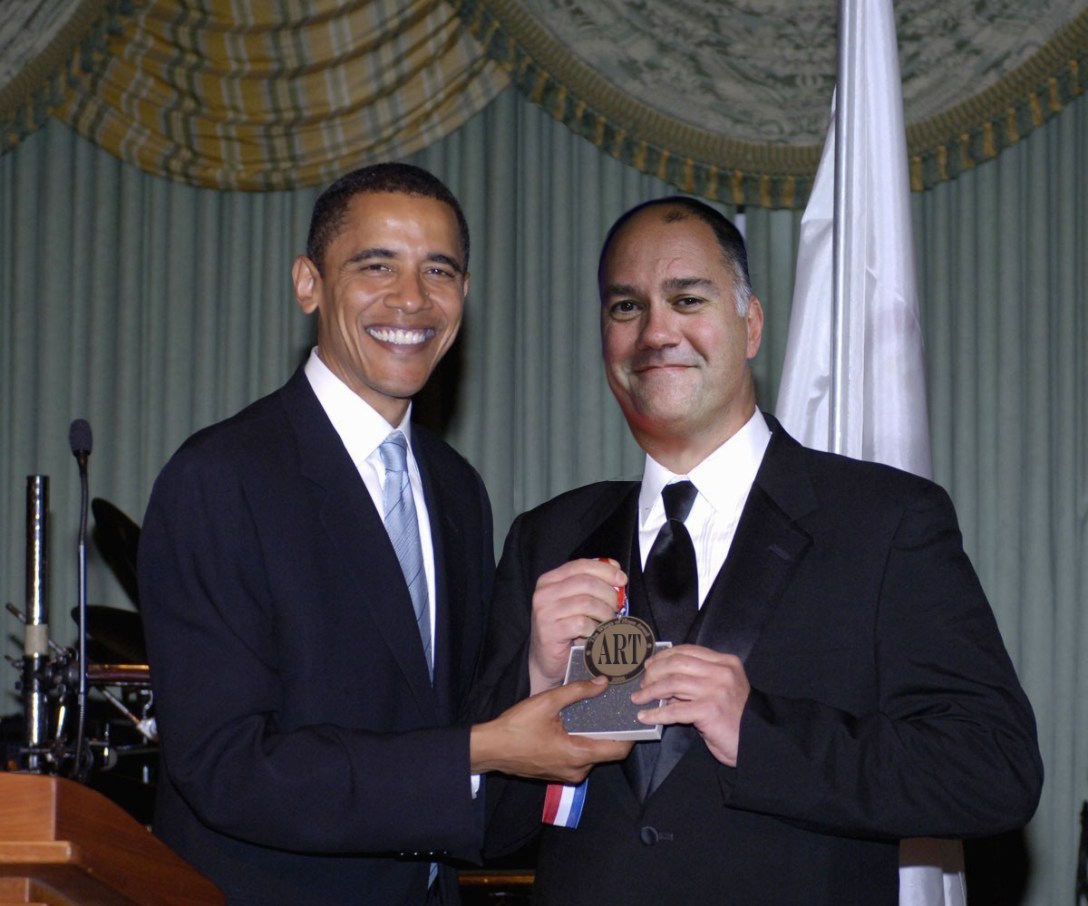
But Barack Obama was a man I know. Not in the way you might think, or even know him yourself. My connection with him is personal and deep.  It wasn’t just because he spoke so eloquently. Or that we are just about the same age. Or that I liked his policies (I actually didn’t like a lot of them and wish he’d been more effectual in so many ways).

It was because I saw many things in his biography that I see in my own, things I have rarely seen in anyone else, especially in American public life. And those things helped to make him who he is and make me who I am. A person who is outside of the norm but has always wanted to be in the middle of it, and who, in his outsiderness understood the idea of the center better than those who were born to it.

Let me explain.

Obama, like me, was born of two very different parents who, like mine, separated when he was a toddler. His father, like mine, was always an abstraction to him, a distant figure whom he only vaguely ever understood. A father who left to start another family in another country and to which Obama, like me, was only an occasional adjunct.

Obama, like me, was raised by his mother, a headstrong and free-spirited woman of the ’60’s, who took him to the other side of the world when he was young and dropped him into an alien culture. In Obama’s case, it was Indonesia.  In mine, it was Pakistan (and Australia and Israel).

Obama, like me, was half one race, half another. He is not entirely black, not entirely white. I am not entirely a Jew, nor entirely a Christian. My paternal grandfather was an anti-Semite. My maternal grandfather feared and suspected Christians.

Obama, like me, was raised by his grandparents. His were white midwesterners. Mine were German Jewish refugees living in Pakistan. Theirs’ was his true childhood home. Like mine was.

Obama, like me, grew up feeling like an outsider who wanted to be in. I was always the new kid, who didn’t know the language, the sports, the culture, but desperately wanted to be in the know. We were both ‘third culture kids’ growing up in cultures to which we weren’t born (I mean Indonesia, not the US. I’m no birther!), with mothers who were also alien. My mother was also a third-culture kid herself, so my feelings of dislocation were squared.

Obama, like me, retreated to books for perspective. When you spend your childhood reading to learn about the world, you are often wise beyond your years but also disconnected from the norms of childhood. You are more likely to relate to adults, making you even more alienated from other children. You also tend to think in abstractions, to loftier but more otherworldly thoughts. Books are great but they are not life or people. Books encourage you to dream, to relate to people far away, from distant times, better even than to those who surround you.

Obama, like me, always related to people who were pretty different from the norm. It’s easier to understand people who are also alien when you are raised as we were. When I was in college, my friends were Pakistani, Swiss, Greek, gay, Muslim.  In fact, one of my best friends, Binoo Mahmood, was also Obama’s roommate when they were at Columbia.  Small world.

When Obama was actually elected President, I was as delighted and surprised as many people. But not because he was black man. Because he was like me, an outsider who was now in the very center of it all.  It seemed unimaginable that one could go from pressing one’s nose against the window to being the leader of all these people who I (and I’m sure he) had envied for their normalcy.

When you are an outsider, yearning to get in, you spend a lot of time studying how normal people behave and seem to think and feel. And the more you observe, the better you get at seeing what makes them tick, and you can reflect that normalcy back at them, showing them what it is that makes them who they are. It is not second-nature, it is a studied effort. It’s also not acting or pretend. It is a genuine attempt to blend in, and to do so, you have to study every nuance of what means.

Obama, like me, did a good job of it. (He actually and obviously did a much better job than me. He made it to the White House, a place which has always been a shrine of normalcy even though inhabited by very unusual people. I made it to this blog. )

That’s not a given. Because one could take the opposite tack and embrace one’s otherness altogether, be obviously different, a freak, who’s differences encourage the unity of others, a jester, a scapegoat.  Neither of us could have borne that additional rejection.

Obama, like me, hasn’t convinced everyone. Sure, his approval ratings are in the mid 50s but 29% of Americans still strongly disapprove of the job he is doing. And who knows what percentage just disapprove of him, of the idea that an outsider got that far in. They do not accept his apparent normalcy. I know how that feels too. One misstep, one oddly pronounced word, and you can feel the mood shift, the air chill, hackles rise, low throaty growls reverberate.

Obama and I are not the only outsiders in this country or this world.  Billions of people feel some measure of this separation. And many of them are artists. Because being an artist always means being other, seeing  human experience from a slight remove, a distance that could have its origins in accidents of birth, gender, history, psychology or just chance. Artists see clearly because we have stepped back. And we have the need to express ourselves because our jigsaw piece doesn’t fit quite so neatly into the lovely picture arrayed before us. Our edges are rough or misshapen so we cannot take life quite so for granted. We balk at it, we question it, we make things in response.

Obama, like me, channels his creativity into words. His speeches are lofty but always with one foot in shared experience. He has always been able to take us from where we are to where we could be.  But in those words he has also betrayed his otherness and his tendency to abstract what people take for granted. Many are suspicious of this. They see his words as a coverup. They feel his difference in the way he speaks. He seems to think he is better. He may be but more importantly he is other. And in his otherness he has always showed me, at least, that one can strive to be better. One may not succeed but if we always just settle for what is, we will never achieve could be.

Our leaders are not us. They may not be better than us. And in many cases, they are nothing like us at all. But that doesn’t preclude them from knowing what want and need. Otherness makes the best of them see us more sharply and offer clearer direction.

Great leaders articulate the us that we could be. They may not complete the task of getting us there but they can shine a mighty light to guide our way. And it can take time for that articulation to sink in, to convince us that we can be better. One of the great outsiders once said, “I may not get there with you. But I want you to know tonight, that we, as a people, will get to the Promised Land.”

Obama, like me, has always hoped we will all still get there someday.

Ten things I like about me but….

  1. I am productive. Not always efficient, not always producing the things perhaps I should, but I am always busy.
  2. I am resilient. Shit happens, I survive. But it leaves marks and now I am finally focusing on the repercussions and how to heal, rather than just carry on.
  3. I work to get better. I spend a lot of energy on self-analysis and on seeking ways to improve myself. I worry that’s because I think deep down I am very flawed rather than because there is some idealized version of me I’d like to get to be.
  4. I am a good mate. I grew up in a home repeatedly divided by divorce, but I take my marriage vows seriously and literally, having, holding, through good times and bad, till death us did part. My wives have both been my best friends. I am lucky to have married amazing and beautiful women.
  5. I am a decent dad. My son is a good person with drive, a desire to create, better ethics than mine, and he has weathered the worst thing that can happen to a kid, losing his mother. Still, I have yet to figure out how to help him without prescribing and meddling, and how to let him succeed at being himself, rather than a version of me.
  6. I have changed my life.  I have stepped off the train I was on for thirty years and found a new love, a new career, and many new attitudes. I am getting older, but more flexible. And happier.
  7. I am creative. I make something or other every day. But I would like to push myself further, to make some things that are real departures, to take more risks than I have.
  8. I am curious. Insatiably so. I read in many directions, I inquire, I dabble. One day I study screen printing, then I learn to code CSS, then I study Cro Magnons, then I interview a musician, then I contemplate moving to Greece.  I don’t know where all this intellectual dilettantism gets me, but it’s my nature. Does it make me broad but shallow?
  9. I am healthy. I have not had any major problems, besides the ongoing scourge of shingles. Increasingly, I see from those around me, how neglected health can destroy one’s plans.  I try to eat well, to sleep enough, to exercise regularly. I am not fiendish about it, but I try. Fortunately, I am blessed with pretty good genes.
  10. I am an author. It’s a dream I’ve had since childhood, to have a shelf of books with my name on their spines. But I still wonder if I have written anything important enough. Yet.

Ten ways to help kids be even more creative

  1. Make Creativity an official course kids take at least once in Elementary, Middle and High School to learn the principles, tools and masters of creativity.
  2. Have solution-finding tournaments to cool problems. Most and best win prizes.
  3. Creativity telephone game. A kid comes up with an idea, passes it to the next who turns it into something else, and passes it to a third and so on.
  4. Product development project. Find a need. Come up with fifty solutions. Refine to one. Research how to get it produced.
  5. Team vs. One. Each kid individually comes up with as many solutions to a set challenge as possible in ten minutes. Then divide kids into group of four. Generate new ideas for another ten minutes.  Do they come up with more than four times as many?
  6. Make it better. Learn how to critique others’ ideas to improve rather than destroy.
  7. Hive mind. Each week, a team of three presents an idea to their entire grade. Group works that week to improve or actualize it.
  8. Everyday ideas. Study how people do a simple thing, like carry groceries or brush their teeth. Break it into the smallest possible steps. Come up with many solutions to improve one or more of these steps.
  9. Better sports. Each athletic team gets a creative support team to help them improve strategy, performance, teamwork, uniforms, fund raising, community support, etc.
  10. Human video game. Recreate a favorite problem-solving, role playing video game in real space, create new challenges, solutions, etc.
  11. Recreate a favorite movie, shot by shot, creating costumes, shots etc. Break whole film down into small enough pieces that small teams can create just a handful, then cut them all together to make the whole film.
  12. Turn back time. Study a turning point in history. Brainstorm as many possible alternatives to the one that was taken. Discuss consequences, then develop ideas to address them.

Ten early New Years’ resolutions

  1. Read poetry.
  2. Have more dinner parties
  3. Delete Twitter.
  4. Delete Facebook.
  5. Buy more flowers.
  6. Meditate.
  7. Self-flagellate less.
  8. Leave New York.
  9. Do more for less.
  10. Fuggedaboutit

Ten living people I’d like to have dinner with

  1. Malcolm Gladwell. There are times when he can seem a little glib and clever clever but nonetheless I have always loved his mind and read all his books and articles hungrily.  I am really enjoying his new podcast, Revisionist History. I think it would be really interesting to have conversation with him , and to get his take on things I am also thinking about.
  2. David Hockney. He’s getting old, he’s pretty deaf, and probably curmudgeonly but I would love to talk to him about painting, technology, and what he thinks about about the new discovery of Rembrandt’s use of optics. And I would just love to watch him draw.
  3. The African dancing woman in the park. Every single morning a youngish woman sets up a table and some buckets and spend about an hour dancing and twirling, playing bongos, tambourines and doing , elaborate graceful African tribal looking dances. Most passersby ignore her but occasionally people stop shout with joy and hug her. I don’t know what that’s about.  She doesn’t seem to be crazy or homeless and but it seems she’s engaged in some long-standing creative ritual and I’m curious about why she does it and what she gets out of it
  4. Hope Jahren. I just read her book, Lab Girl. Slowly, savoring every word of it. She is the Stephen Jay Gould of geobiology, the Oliver Sacks of botany, and makes science  into a wild creative adventure.  I have learned so much about the trees and plants around me through her lucid and compelling words. She leads an eccentric and self possessed life, and writes so beautiful it would be illuminating and fascinating to have dinner with her.  Maybe in a  forest.
  5. Karl Ove Knaussgard. I am obsessed by everything he writes  his memoirs are so ordinary and extraordinary at the same. He both understands and is perplexed by himself and everything around him.
  6. Don Knies. He was my English teacher in 11th and 12th grade. I don’t know if he would remember me but he had a strong and formative effect on me.  I would love to revisit the time we had together to get some clarity on what those years were like from his perspective and learn about what it’s like to inspire writers for decades.
  7. Keri Smith.  I love her books that inspire people to explore and have a creative adventures. We used to be Email penpals but then she became super successful and sort of dropped off the map. She has a new book. Maybe that’s an excuse to try to renew our connection
  8. Mick Jagger. Because he is my spirit animal.
  9. Steven Soderburgh. He is creative and in so many interesting directions. Filmmaking, television, writing, even liquor marketing. He is honest about when he’s bored with something and moves on   And he seems to have integrity and a willingness to tell the monied interests to fuck off. . And his website is hilarious.
  10. Zefrank.  He is funny, insightful, creative, and mysterious. His daily videos were incredibly inspiring. He went off on i all sorts of tangents that I could relate to. He developed a unique ways to talk to a camera. He had a fantastic and supportive community. And then he basically walked away from it. He went into corporate America, working for Buzz Feed, and disappeared off the radar.  I wonder what he’s up to now. And how he continues to  nourish his creative soul.
  11. Banksy. Not just because he’s anonymous. But because he’s brilliant. And relentless. And principled.  And no doubt hilarious.
  12. Mike Pesca.  I listen to his podcast, The Gistm every day. As he explores culture, politics, bullshit, bad jokes, hits of the. 80s.   He makes me think every day.   Even when I think he’s an idiot.
  13. Barack Obama.  Because I already miss him so much.

Ten books I could write next

I published two book this year.  In total, I’ve put out more than a dozen. Is that enough? Have I killed enough trees? Maybe this is the end of my run. Unless I come up with something new to say….

  1. An illustrated history of my family
  2. Everything I know about creativity that would apply to practically any discipline
  3. An illustrated record of a long, dramatic  journey, like walking across America, or traveling by train from London to Mumbai
  4. A Maira Kalman sort of investigation of some historic crime, like Starr Faithfull
  5. A painted record of the dogs of New York City
  6. A graphic novel about a dog’s day and its hidden dramas
  7. 100 Facts about love. Biological, spiritual, perplexing, fabricated,
  8. How to draw. Without talent.
  9. How to come up with book ideas.
  10. Damn. The well is dry.

The fact that this list was the hardest yet suggests that maybe I don’t need to write another book. At least not for a while.

Ten classes I wish I had paid more attention to in school

I was a fairly good student in high school but much of it was a blur and very little stuck to my brain.

  1. Calculus and Algebra. I think math is probably very interesting but besides  the calculator app on my phone doesn’t play much of a role in my life. I wish it did. I still can’t quite figure out how to do percentages.
  2. French. I took it for five years. I can barely order a croissant in a Parisian café.
  3. English literature. Hawthorne. Faulkner. McCullers. Joyce. Emerson. They were a drag and a grind when I was a teenager. Now I read them for fun but would love to have Mr. Knies to help parse them.
  4. Sophomore year Shakespeare. My professor at Princeton was D.W. Robertson one of the world’s leading experts on the bard.  Now all I remember is that he made us memorize the beginning of Chaucer’s Canterbury Tales and read Boethius’ Consolation of Philosophy. I don’t remember what they were about or why we read them.
  5. 10th grade Latin. I vaguely remember terms like ‘ablative’ and ‘declension’ but, besides memorizing the Lords Prayer in Latin (which I still know by heart), it’s all pretty much a tabula rasa.
  6. 10th grade American History. We had to memorize so many dates. Their significance is long lost on me but I suspect I never knew them. Just the numbers.
  7. Junior year oceanography. I think tides have something to do with the moon but the rest is pretty fuzzy
  8. 10th grade Biology. As my own biology plays more and more of a role in my life it would be great if this science was less of a mystery. What does my pancreas do again?
  9. 11th grade chemistry: a complete blank.
  10. Physics: Did I even take it?
Lesson learned: Education is wasted on the young

Ten ways I could help a stranger

I have so much to be thankful for.  I should use some of my many blessings to help others more than I do.

  1. Teach illustrated journaling in prison
  2. Volunteer at the senior center in Chelsea
  3. Put the contents of my change jar in the Washington Square fountain
  4. Volunteer help to everyone I see holding a map or a guidebook
  5. Buy all the candy from those kids on the subway pretending to raise money for their basketball team
  6. Habitat for Humanity. I like building stuff. Even if it’s wonky.
  7. Give SBS classes for free to any library that requests it.
  8. Volunteer to speak about creativity at NY public schools.
  9. Start the cross-country Sketchbook Skool bus tour with inspiration films, workshops and free supplies
  10. Draw portraits of shooting victims on spent bullet casing
  11. Give away all but one of my winter coats
  12. Donate to and volunteer for Planned Parenthood, the ADL, the NAACP Legal Defense Fund, The Trevor Project for LGBTQ youth, and the Mexican-American Legal Defense and Education Fund.

Who can you help?