Nagging.

Big and small.
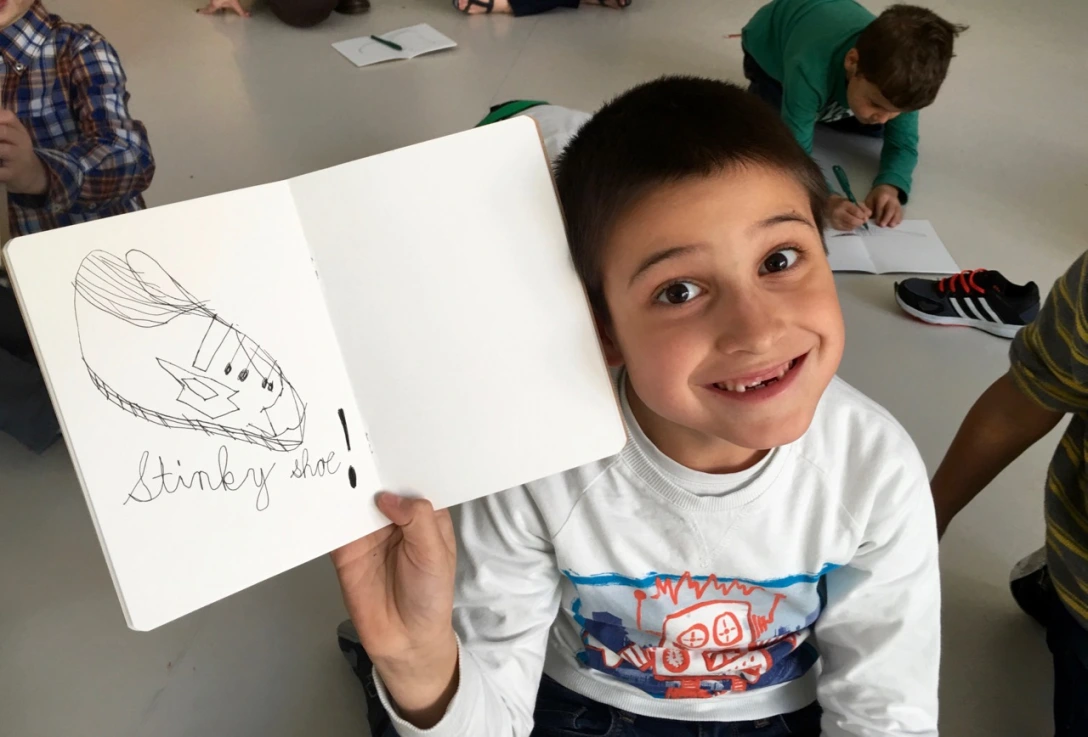
Art, they say, is great for kids. Art and music programs help keep them in school, make them more committed, enhance collaboration, strengthen ties to the community and to peers, improve motor and spatial and language skills. A study by the College Board showed that students who took four years of art scored 91 points better on the SAT exams. At-risk students who take art are significantly more likely to stay in school and ultimately to get college degrees.
Awesome.
Nonetheless, arts education has been gutted in American public schools. A decade ago, the No Child Left Behind and Common Core programs prioritized science and math over other subjects. In LA County alone, 1/3 of the arts teachers were let go between 2008 and 2012 and, for half of K-5 students, art was cut all together.
After the recession of 2008, 80% of schools had their budget cut further. Arts programs were the first victims. And, predictably, lower income and minority students were the most likely to lose their art programs. Only 26.2% of African-American students have access to art classes. As the economy has improved, there is some discussion about reversing some of these cuts. But it is not enough.
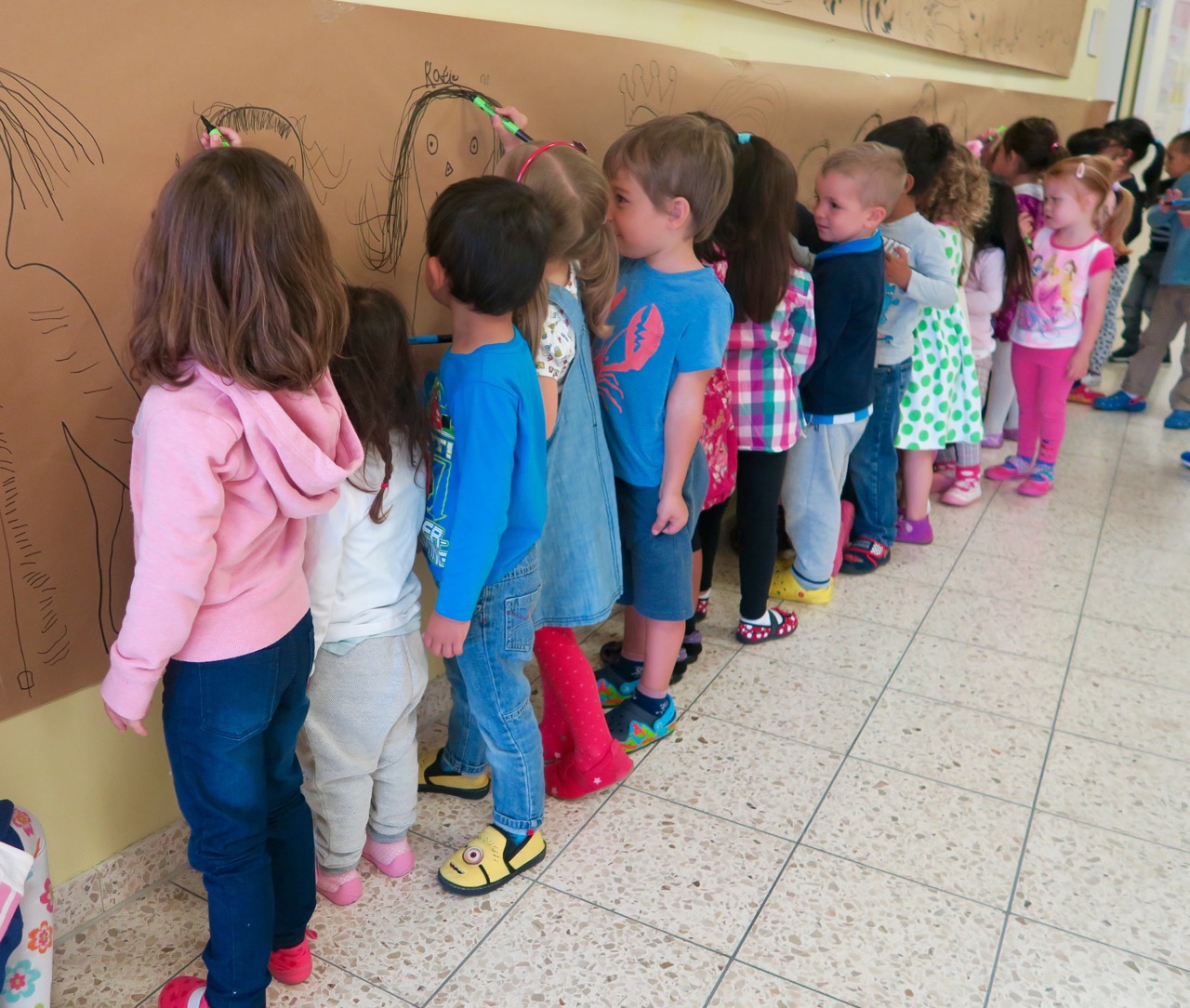 They don’t need to be taught to be creative!
I’m no expert on education but I have spent a lot of time in school art programs over the past year.
In the lower grades, kids just have fun drawing and painting. They don’t really need much encouragement or instruction. In middle school, the majority start to lose their passion for making stuff and instead learn the price of making mistakes. Art class is all too often a gut, an opportunity for adolescents to screw around. By high school, they have been divided into a handful who are ‘artsy’ and may go onto art school and a vast majority who have no interest in art at all.
In short, every child starts out with a natural interest in art which is slowly drained — until all that’s left is a handful of teens in eyeliner and black clothing whose parents worry they’ll never move out of the basement.
Here’s a modest proposal: Let’s take the “art” out of “art education.”
“Art” is not respected in this country. It’s seen as frivolity, an indulgence, a way to keep kids busy with scissors and paste. “Art” is an elitist luxury that hard-nosed bureaucrats know they can cut with impunity. And so they do, making math and science the priority to fill the ranks of future bean-counters and pencil pushers.
So I propose we get rid of art education and replace it with something that is crucial to the future of our world: creativity.
We need to all be creative in ways that we never could be before. We have so many wonderful tools that put the power of creation in our hands and we use them every day. Solving problems, using tools, collaborating, expressing our ideas clearly, being entrepreneurial and resourceful, these are the skills that will mattering the 21-century, post-corporate, labor market. Instead of being defensive about art, instead of talking about culture and self-expression, we have to focus on the power of creativity and the skills required to develop it. A great artist is also a problem solver, a presenter, an entrepreneur, a fabricator, and more.
Imagine if Creativity became a part of our core education…
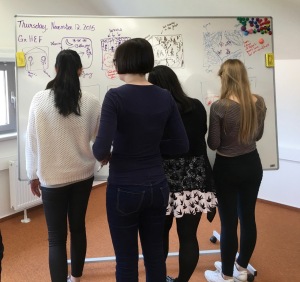
Instead of teaching kids to paint bowls of fruit with tempera, we’d show them how to communicate a concept through a sketch, how to explore the world in a sketchbook, how to generate ideas, how to solve real problems. Theatre would be all about collaboration, presentation and problem solving. Music classes would emphasize creative habit, teamwork, honing skills, composition, improvisation.
We’d teach creative process, how to come up with ideas, how to find inspiration, how to steal from the greats. We’d teach kids to work effectively with others to improve and test their ideas. We’d teach them how to realize their ideas, get them executed through a supply chain, how to present and market and share them.
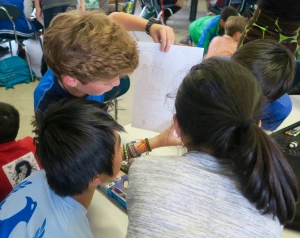
We’d also emphasize digital creativity, focussing on cutting edge (and cheap) technology, removing the artificial divide between arts and science, showing how engineering and sculpture are related, how drawing and User Experience (UX) Design are facets of the same sort of skills, how music and math mirror each other. We’d teach kids how to use Photoshop to communicate concepts, to shoot and cut videos, to design presentations, to use social media intelligently, to write clearly because it is key to survival. We’d give kids destined for minimum wage jobs a chance to be entrepreneurial, to create true economic power for themselves, by developing their creativity and seeing opportunity in a whole new way.
 Here’s what 100 8th graders collaborating looks like.
Yes, I know that there are high-school video classes and art computer labs, but they need to be turned into engines for creativity and usefulness, not abstract, high falutin’ artsiness based on some 1970s concepts of self-expression. Don’t make black and white films about leaves reflected in puddles, make a video to promote adoption at the local animal shelter. Don’t do laborious charcoal drawings of pop stars, generate ideas on paper. Fill 100 post-its with 100 doodles of ways to raise consciousness about the environment or income inequality or saving water. Stop making pinch pots and build a 3-D printer and turn out artificial hands for homeless amputees.
(And, by the way, if we teach kids loads of math and science but don’t encourage their creativity, they aren’t going to grow up to be great engineers and scientists and inventors and discoverers — just drones and dorks.)
Creativity is not a ghetto, not a clique, not something to be exercised alone in a garret. It’s also not a freakshow of self-indulgent divas and losers.
Creativity is about helping to solve the world’s many problems. We need to make sure that the kids of today (who will need to be the creative problem solvers of tomorrow) realize their creative potential and have the tools to use them. That matters far more than football team and standardized test scores.
What do you think?
Related Post: How to make anything

For a while, I have been wondering why the art conferences at which I speak are filled with women. Why most of the commenters on this blog are women. Why Jack’s class at RISD is predominantly female. Why the students of Sketchbook Skool are about 85% women.
Where are the men?
Certainly men seem to like to make art as much as women do. Half of the SBS fakulty are male. The museums and galleries I visit are full of work by men. In fact, women have long complained that the art world seems biased against them.
So what is it about art education that seems more interesting to women than men?I searched the web for answers. There weren’t many categorical ones but here are some of the clues I picked up.
In 2007, the NY Times had an article about why adult classes of all sorts seem much more popular with women. Tennis classes. Writer’s classes. Triathlon classes. All were 65-95% women. Here’s what a man who teaches wine tasting said of his students: “It’s argued that women are better tasters of wine than men. A higher percentage of women have more taste-bud receptors.” So maybe they are getting more out of the class. But, echoing others who lead classes, he added: “It may also come down to the fact that men think they know more about wine anyway, so they don’t need to learn more about it.”
In other words, men know more. Or think they do. No need to take classes. Why admit you are ignorant?
Is it that simple? Men go to golf pros. They read business books. They take coding classes. Maybe art classes teach skills that don’t seem concrete or finite enough for men? Do men just need more goal- rather than process- oriented activities?
I have also been following a heated debate on Reddit (where all debates are heated) about why there are so many more successful male artists than females. Here’s are some highlights.
One theory is about marketing, that male artists are more into promoting themselves than women.
“In my experience the successful artists are the ones who concentrate their time about half on the art and half on the selling of the art. …That is selling paintings, building relationships with patrons of the arts, raising money for their dance/theater/etc. company, writing grant proposals to non-profits etc.
“…perhaps men are more drawn to the concrete and the rational and less to the expressive and emotional. This keeps them away from art statistically but those who do get into art spend more of their time with the rational part of marketing art and less with the expressive side or art. This may actually be the more important part of becoming a successful artist.”
And self-promotion is not encouraged in women:
“When you look at hugely successful female artists they are generally the ones that market themselves well and are obsessive about selling their art. However, women who promote themselves and their work intensely are often seen as ruthless social climbers.”
Another argument: Art is less practical so women can afford to indulge in it more than men.
“At the university level, women are more free to pursue educational interests without as much criticism. When a guy takes an art class, he’s usually expected to come up with a practical application of it as a justification. Anytime a show wants to make a joke about a father worried about a grown son’s directionlessness, they’ll say the son is studying some art/humanities degree, like dance, or theater, or English.
(But as you can see in the chart above, there are loads of men in ‘impractical’ fields like philosophy and classics too).
“when a woman cooks, it is her duty. When a man cooks, he is an artist.”
Or is it just that women aren’t valued for what they do — and so neither is their art? In fact, as Richard Florida’s research on creative professionals has shown, women earn about 40% less than men do in creative class employment. I’m not sure if the situation is as imbalanced in all skill professions.
A poster on Reddit says: “Women’s work isn’t valued on a ‘profound’ level in the same way that men’s is. The perfect example is cooking. Cooking is seen as a woman’s task, but the vast majority of celebrity chefs are men. Of the female celebrity chefs, how many are really valued for their ‘greatness’ vs. how many are famous for showing you quick and convenient ways to cook at home? In other words, how often do we talk about women’s Michelin stars?”
“….I always think of the quote, “when a woman cooks, it is her duty. When a man cooks, he is an artist.”
Another says that women’s art tends to be ghettoized:
“I don’t know enough about the art or cooking world to judge whether it’s because the stuff that women are creating doesn’t push creative limits enough to warrant that kind of recognition. What I do know is that in the fiction and poetry industries, women are expected to write in certain niches. Maybe a small portion of their work will transcend those niches, but they are rarely able to make an entire career out of writing the same stuff men write about, even if the quality is comparable. ….”
What do you think is behind the disparity? Why don’t men take art classes? And why, despite all those workshops and classes and conferences, aren’t women equally represented in the contemporary art world?
Update: it’s not just America.

What with this, that, and lots of the other, I haven’t gotten around to telling you about a brand new klass I am teaching in the new Kourse at Sketchbook Skool. So I shall. But first, let me show you a little film about the kourse and its fakulty.
I also wanted to tell you what I was thinking in putting it together. This has actually been harder to do than I thought (the telling, not the putting together). In fact, this is the third film I’ve made on the subject this week and I hated the first two. So this time I shall just turn on the camera and see what comes out. If it’s boring, don’t worry. Polishing, I assure you, is not.
I hope to see you in klass. It begins on April 15th and you can learn more about it here.
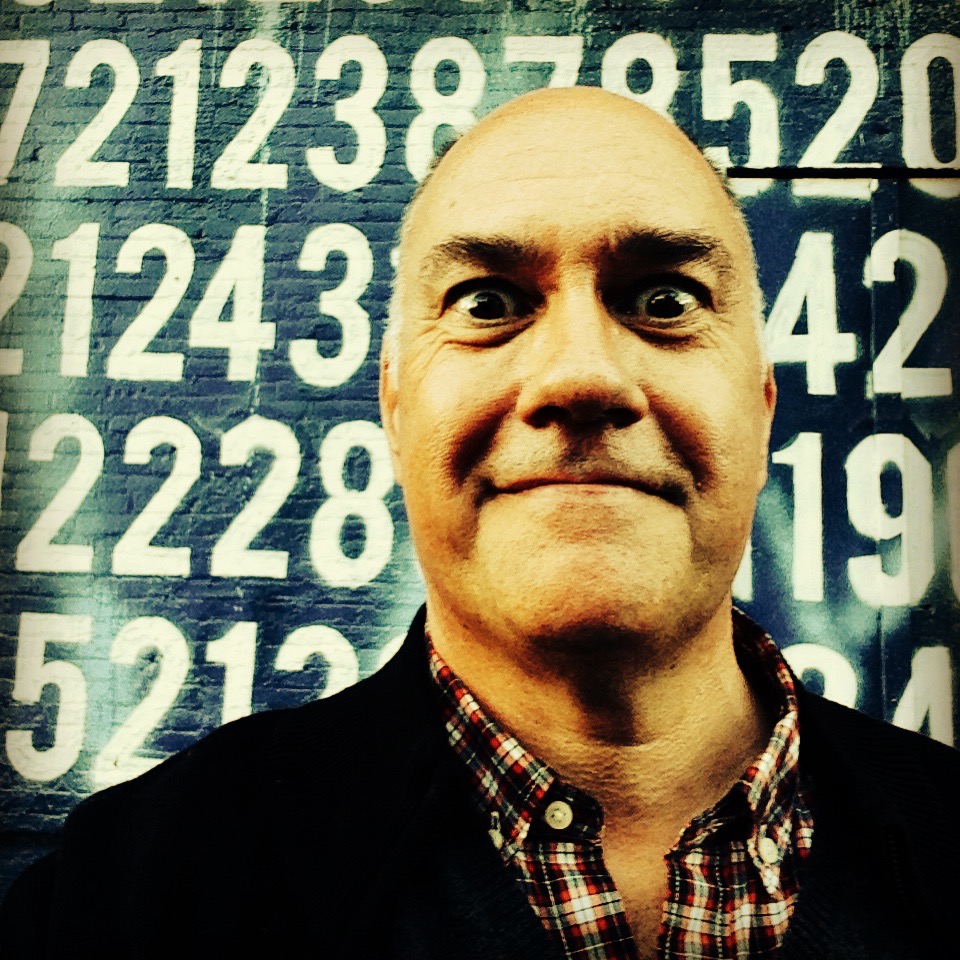
Increasingly, life throws digits at us to evaluate our worth. Your watch can tell you how many steps you took today. Facebook tells you how many friends you have. Your ATM tells you how much money you have. What’s your credit score?
And social media has put us all on some endless celebrity list with Kim Kardashian and Justin Bieber at the top and each of us somewhere far, far below. How many likes did your Instagram get? How many comments did your post get? How many views did you get on YouTube? How many followers do you have on Twitter?
It’s as if we are all on the ballot, stalked by monkey pollsters projecting our fates, tabulating our votes, handing out our final grades.
Because we are all online, we are all in a line.
This is what technology and the media have wrought. Because things can be quantified, they can be ranked. Because we are all online, we are all in a line. And those digits seem to indicate our place, our worth.
And of course, it’s all bullshit. Just because the world holds up so many measuring sticks, doesn’t mean we have to step up to them. We still have the power to decide what matters. People are not numbers. Art is not worth what Sotheby’s or Google or Billboard deems its rank.
What matters when you make something, even when you share it, is what it means to you. How deeply does it touch you? Does it feel authentic? Does it speak to you? Did you work hard enough on it to make it clear and resonant? If you must have a numerical scale, count how it makes your pulse accelerate, how broad your smile is, how many tears rise to your eyes. Those are the only digits that count.
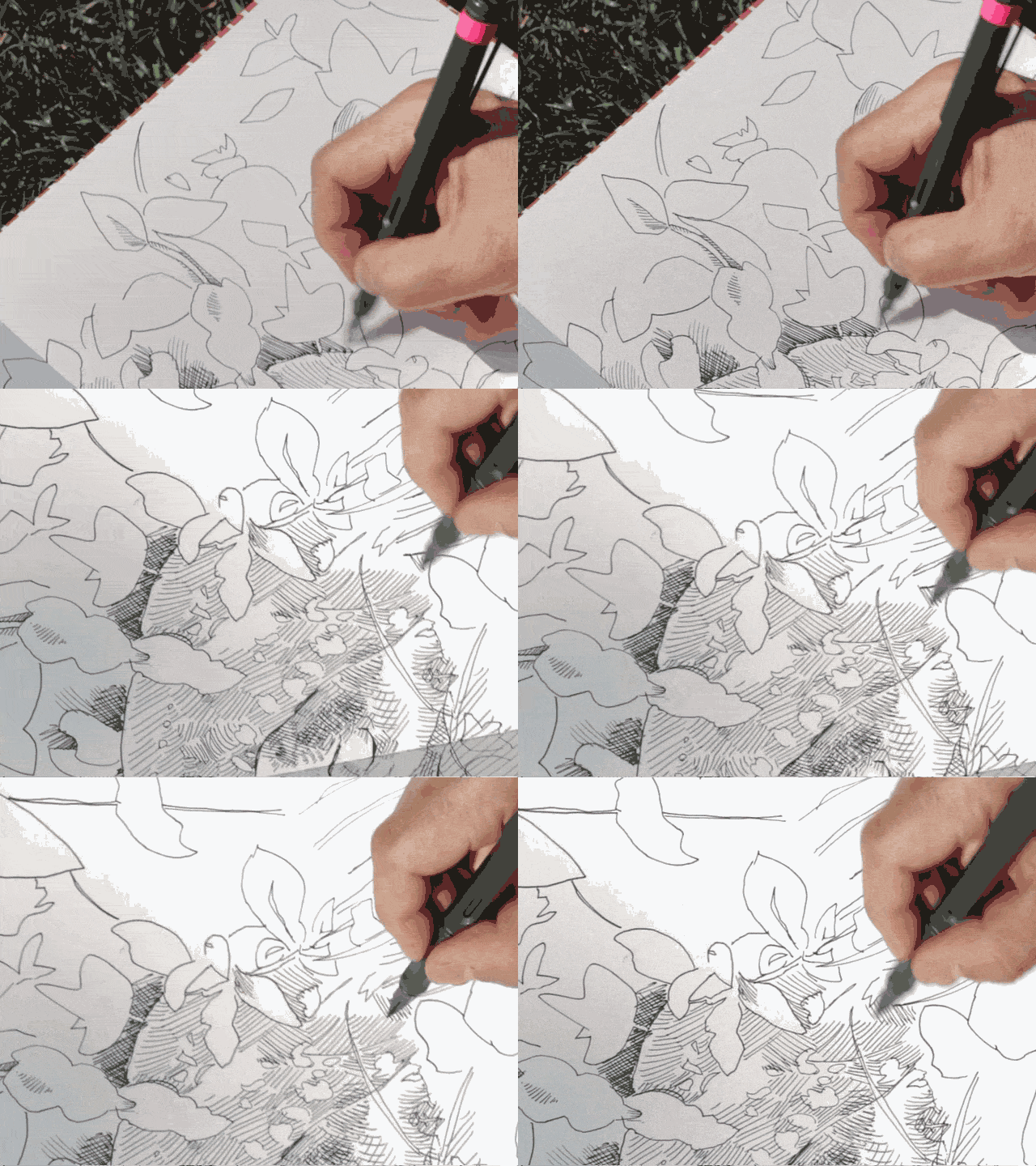
I think about art a lot. I look at it, I read about it, I make it. But why? What purpose does it actually play in my life? Why not focus on the Yankees or bow hunting or philately instead? These are reasonable questions so I decided to sit down and think of a few answers.
Pretty pictures. It’s common to downplay or dismiss beauty as a criterion for great art. We live in dark times, the critic says, and pretty pictures like Monet’s waterlilies and van Gogh’s sunflowers and Koon’s puppies aren’t relevant to our grim reality. Beauty is kitsch escapism and no challenge to the modern intellect. But that curt dismissal is ugly and wrong. We need beauty because, even in the grimmest times, it keeps us hopeful. Beauty gives us pleasure and we must always make room for happiness. Even through depression, wars, and tragedies, it’s still okay to respond to a beautiful face, a perfect rose, a catchy tune, a gorgeous sunset, a silly joke. More than okay, it’s human.
Art is real. And that’s more essential than ever. Because we suppress and distort so much in our culture. We fear death but can’t discuss it. We self-medicate rather than allow ourselves to feel sad or afraid. We bastardize nature. We celebrate fame and wealth and youth and ignore the wisdom of age. Art tells us it’s okay to let the mask slip. It’s okay to feel lonely. It’s okay to feel pain. It’s okay to feel impermanent. We all do. Art is not afraid to show the face of reality. And to say, “Everyone feels this way and has since the dawn of time”. That’s why the Egyptians made art about death and fear and loneliness and so did Rembrandt and Mozart and Hopper and Hemingway. Art says, “Pain exists. But we all get through it.”
Balance. We want our work, leisure, relationships, past and future, all in equilibrium. But that’s an illusion. None of us is sufficiently poised to maintain that balance for long, if at all. We are all distorted in one way or another, all imperfect, all human. Our lives are out of balance and so are our feelings. We may feel too serious, too trivial, too stressed, too controlled, too afraid, too old, too narrow-minded, too left, too right… Art lets us let it out. To cry in the movies where no one can see us. To be filled with heroic pride as the orchestra soars. To be soaked in adrenaline. To find a moment of calm. Art injects us with pure emotions we may never otherwise encounter on the bus or in the supermarket. It gives yin to our yang, Kirk to our Spock.
We are all freaks. The more normal we appear, the deeper we have hidden our truth. When David Bowie died, everyone stepped out of their personal closets to embrace him. Because art lets us all know it’s okay to be different. And besides, you’ve got no choice. We all harbor secret thoughts and fantasies and fears. Art hangs them soon the wall for all to see. And embrace.
Everyday matters. Our society celebrates money and fame. But the rich are no better than the other 99%. And the famous are by and large not role models, just cracked egos standing on a tattered strip of red carpet. But beauty is everywhere and art points it out for us. van Gogh paints his shoes and his postman, Warhol a soup can and a car crash. Pollack splatters house paint to show us the beauty of chaos. Rembrandt shows us the loveliness of his lumpy nose. Bacon immortalizes a side of beef. Artists show us the eternal majesty of trees and waterfalls, sagging breasts and smelting plants. While pop culture snatches back its fickle crown every news cycle, art shows us the eternal value of a simple lemon on a sunny kitchen table. Now, go, it says, look at your life and the riches it contains.
Valuable. I don’t go to church, mosque or synagogue. I don’t read Plato or the Tao. But art teaches me the things that matter. Explore the values that endure. Remind me of the legends that have passed down through time. These are crucial truths to guide me as I travel through my ordinary life, riding the subway, sipping my tea. Vital lessons that never go out of style like: Nature is to be revered. Humble pleasures are the sweetest. Everyone is significant. We are all connected. Hope is eternal. Bad things happen. The road bends. Life should be enjoyed.
Where else can I get these reminders? In fortune cookies and this month’s self-help bestsellers? Or in masterpieces that have endured because they embody and transmit our collective wisdom.
The history of art is the history of what’s important to us as civilization and as a species. That’s why we erect huge buildings to house and display these old pieces of cloth daubed with paint, why they are among the first things we must visit when we come to a new city. They contain the truths that we, as a civilization and as a species, know are to be treasured.
I believe in my marrow that art is not a luxury. It has been a crucial part of humanity since we told stories around the campfire and painted the ceilings of caves. Art is not just for intellectuals. Art is not just for museums or public television or vacations in Paris. Art is here to make us feel better and be better. To remind us of our humanity and our connectedness. To unearth and share our feelings. To remind us we are not alone. Art is forever and for everyday.

It’s the middle of the week and it’s January and it’s ludicrously cold in New York, so I need to comfort myself with a new pen or three. Know the feeling?
I am an unapologetic LAMY enthusiast. I have several different Safaris and I recommend them highly for anyone who wants an inexpensive fountain pen with a nice springy nib. I have a couple of charcoal ones, a blue one, even one in hot pink all outfitted with converters so I can use my own ink, ideally waterproof. They’re the bomb. Now it’s time to try out some other family members.
 This is a LAMY Balloon. My first love in pens was the Uniball Vision which is also a rollerball like the Balloon, though a lot more utilitarian in appearance. The Uniball is a little scratchy and dresses in drab grey whereas the Balloon wears a transparent lime sheath that feels child-like and has a cartoony pocket clip. It makes a slightly thicker line than the Uni but there’s variability; I can pull back on it to make a lighter and narrower line or bear down for a thick and somehow softer mark. It’s not a ballpoint feeling but much smoother and glidier. I am using a blue refill in mine and the color is at the green end of blue. At this point, I doubt I’ll use the Ballon for serious drawing. It feels more of a pen for writing (it’s lovely for jotting notes) or for doodling — the gliding line makes me just want to fill my margins with monsters — but it’s not either controlled enough or interesting enough to make me inspired to draw.

This is a LAMY nexx M. It is a lovely, modern looking fountain pen. It’s available in five different nib types, from extra-fine to broad and there’s a left-handed nib too. My nib is fine — which is fine. A tad scratchy but flexible enough to take me from a delicate line almost to a medium. The pen is light (pseudo metal with a stainless steel nib) and quite thick-barreled but the best feature is the soft, non-slip rubber grip so you can keep going and going — without getting that dreaded fountain pen claw cramp that narrower, harder pens can cause. It is intelligently designed so you can easily know which way is up. (Nothing worse than a fountain pen that somehow resolves so the nib is upside down when you bear down and it jitters across the page). The Safari has a similar contour design but I like the rubber cover of the nexx M. It’s not as functional- and tough-looking as the Safari, a bit more junior executive, but a good pen for about $25 and fun to draw with.

This is the Lamy Joy. It’s my favorite of the new recruits. First off, it’s a calligraphy pen which may seem a weird choice for drawing but I like the expressive quality italic nibs make. Pull down and they’re broad, slide and they’re thin. And curved lines swoop from fat to thin and everything in between. My Joy came in a sleek metal box with three different nibs (1.1.,1.5 and 1.9) in it so there’s lot of room for experimentation. I also love its shape. The end of the pen is long and narrow, almost like a dip pen. I had a Rotring Art Pen that had a similar shaft — but the cap would just fall off the narrow end so I was always losing it. The Joy has a tough clip just like the Safari and the cap snaps tightly right on the end of the pen. It was made by designers who really think about how people use pens. It might even improve my handwriting. Oh, joy.
Did you see the LAMY pen giveaway on the Sketchbook Skool blog? Check it out.
I feel guilty that I haven’t written a decent blog post in a while.
I feel guilty that I haven’t drawn anything just for pleasure in, well, too long.
I feel guilty that I haven’t emailed several people I hope are still my friends (yes, Mum, you too).
I feel guilty because I have no interest in being vegan.
Because I don’t exercise often enough.
Or floss.
Or actually care what anyone else posts on Facebook.
Aren’t I supposed to feel guilty for things I have done?
Murder, shoplifting, scofflawing, taking the Lord’s name in vain, kicking beagles?
Not that I’ve gotten around to doing most of those things.
Yet.
I feel guilty for not having done more things to feel guilty about.
According to WordPress: “The Louvre Museum has 8.5 million visitors per year. This blog was viewed about 900,000 times in 2015. If it were an exhibit at the Louvre Museum, it would take about 39 days for that many people to see it.”
Presumably, some of those people were just here to visit the gift shop or to read my post about the Mona Lisa and comment on how it is smaller than they imagined.
WordPress might have found some better and more apt analogies to really give this crucial data relevant meaning. I’ll do it instead. A quick Google search and I discovered that the number of my blog views equaled that of :
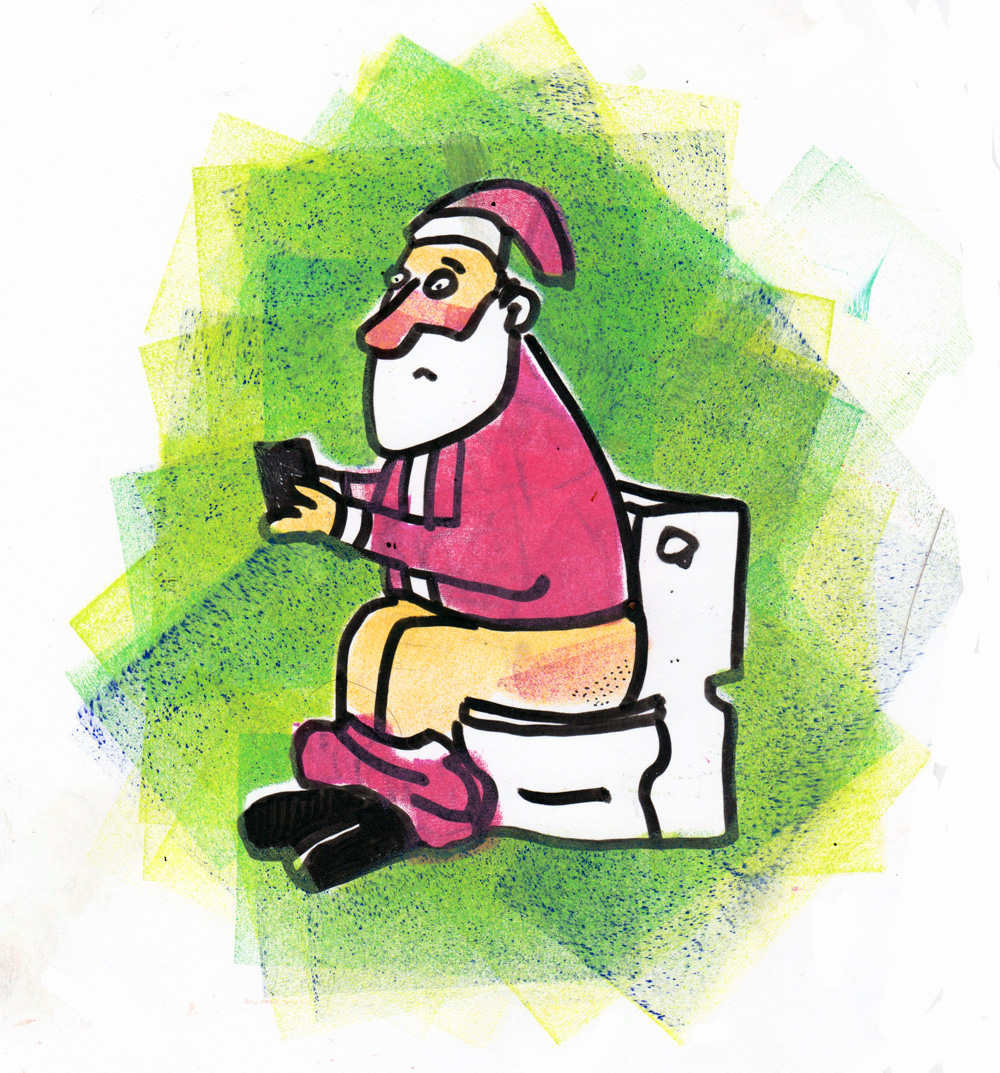
I am not sure if there is any overlap between these various populations, but I imagine there are at least a few Father Christmas impersonators with no back hair who love Khloe and Kendall but contracted the runs from eating a deep-fried corn cob and missed a few of my better posts.
If so, they can read them here.

As the last pages are plucked off the calendar, it’s time to feel the pleasure of accomplishment and the pressure of regret. Regret at the things one intended to do over the year past but lacked the stick-to-it-iveness to, well, stick to it.
The waning days of December are a time of familiar patterns. Chestnuts, figgy pudding, wrapping paper cuts, family squabbles, and vows to launch the New Year with fresh and transforming habits. Gym owners rub their hands with glee at all the self-deceivers stuffed with goose fat renewing their dusty memberships, full of the great and ephemeral intentions. Would-be artists line up at the art supply store, baskets loaded with sketchbooks and palettes and workshop catalogs. Blog keepers vow, once again, to truly stick to their publicly announced pledges to post five times weekly.
Let’s zoom down from the heights of generalization to survey this particular oath breaker. Why is it so hard for me to adhere to my own intentions? Why do I still steal the occasional late-night tablespoon of Ben and Jerry’s? Why do days, weeks even, pass without my cracking the cover of my sketchbook? Why do I still gnaw my cuticles in the darkness of the movie theatre?
Let’s get more specific still. Rather than a blanket condemnation of my many shortcomings, let’s focus on my blog keeping and try to extract some lessons from its intermittence that might apply to other habit breaking.
Structure. I have a loose agenda for each weeks’ post. On Monday I write about things that have inspired me from the previous week, Tuesday and Thursday I freeform things like this, Wednesday I find or make a video, Friday is some sort of instruction. It’s not a rigid structure but it gives my ideas a trellis.
Temperance. Certainly not drinking too much is a good idea, but what I mean here is that if I temper my ambitions, I am more likely to keep producing. For instance, I had a vague notion about what to write here today, but soon my ambitions swelled and I imagined writing a really long posts with scores of ideas, research, quotes… and the thought of all that work made me want to just crawl back in bed. Instead I said to myself, just write a paragraph or two and try to encapsulate the idea. Even though now it appears I am writing much more than that, I couldn’t have started with such a hike in mind. Just planning a slow jog to the curb to pick up the paper is a more fruitful place to start. Underpromise, overdeliver.
(Incidentally, long bits of writing are not an indication of industry. I find it a lot easier to go on and on than take the time to go back and prune. By now, you’re probably feeling the consequences of my editorial laziness.)
Before I commit myself to any new regimes in early 2016, I will think about how to help myself stay true.
What sort of preparation can I make to make the new pattern easier to adhere to? If I want to avoid eating carbs, maybe I should start by clearing the pantry of cookies and the freezer of Chunky Monkey.
What sort of structure can I give my habit so it isn’t just open-ended? If I want to go to the gym several times weekly, I can put a recurring appointment in my calendar and make sure nothing else gets booked at that time. And I can add details to those appointments, thinking through what sorts of exercises I want to do on any given day.
How can I set realistic expectations? I can come up with reasonable goals that won’t be a barrier to my getting going — like drawing for ten minutes or walking for twenty minutes or not drinking caffeine after ten a.m. — goals that can then be inched forward over time as I adjust to the idea of the privation or activity.
In sum, I can be like a good parent. I can provide reasonable goals, set myself up with clear and achievable markers of success, be supportive and understanding without being either a wimp or a tyrant, and remind myself that failure is not catastrophic but just a detour from a path one I still return to.
Let’s do great things in 2016 but in a reasonable, supportive, human way. And let’s start by giving up regret.
 Danny Gregory