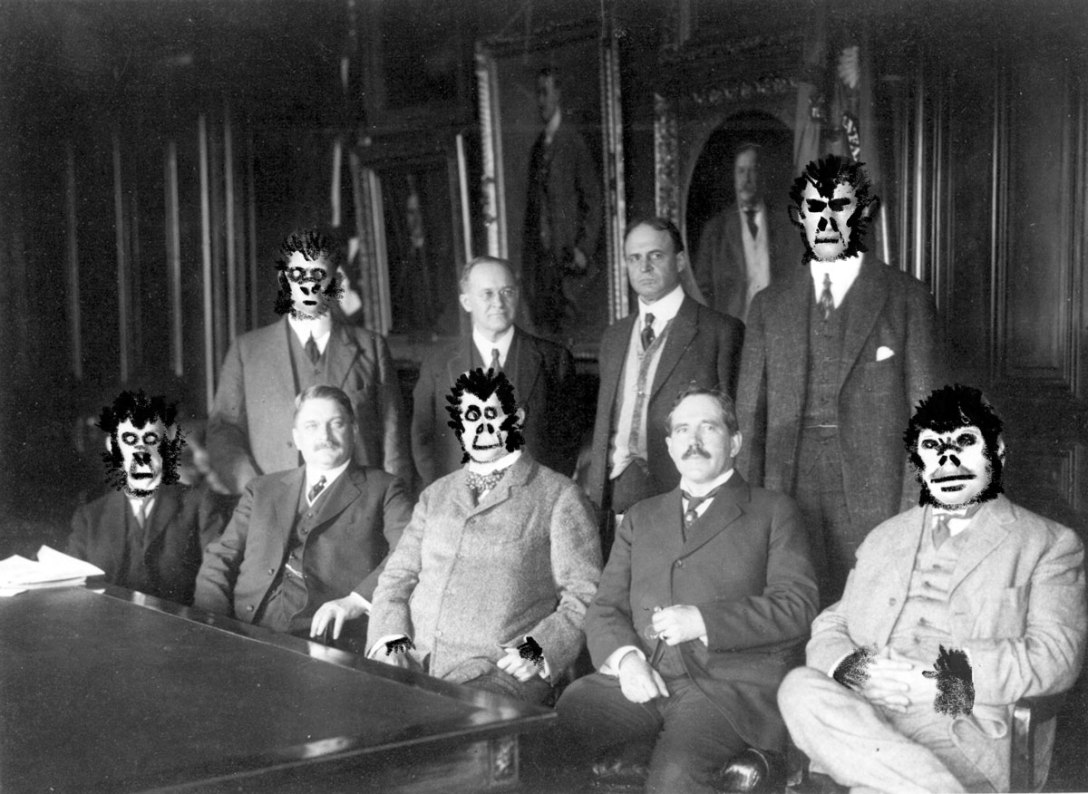
Jack hits the road.

Yesterday my son left home.

He forgot his comb.

Jack flew to Rome

in a tube of chrome

To drink cappuccino with foam

And grow his beard like a gnome.

Across Europe he’ll roam.

He’ll visit Place Vendome

And read the Mysterium Magnum of Jacob Boehm.

(Quite a tome.)

He’ll hike across Italian loam

To draw a thicket of ancient brome

Then pause to chant Om

on some verdant Tuscan holm.

And then he’ll return from St. Peter’s dome

to New York, cold as Nome,

and say, “Hey, Papa, Shalom!

What’s for dinner?”

I’ll show you mine if you show me yours.

Don’t embrace the myth of the lone genius, toiling in solitude in his garret, undiscovered. Don’t turn “I’ll show you when it’s good enough” into a day that never comes. Don’t dismiss the contributions of other people to making your art better.

Art, like all living things, doesn’t thrive in a vacuum. It needs something to push against, something to react to, the grain of sand in the oyster.

It could be a community of people with whom you collaborate. It could be an audience who shares your work and reflects new perspectives and energy. It could be colleagues who help you polish your creations and see it anew. It could be the long procession of great artists who preceded you and whose work can inspire yours in a thousand ways.

Be brave. Step out. Invite response. Share your gifts.

Art is a conversation. Make sure you’re not just talking to yourself.

My heroin addiction.

When I was thirteen, they showed a movie in morning assembly that fucked me up. We had moved to America less than a year before and I was clueless about virtually everything that wasn’t to be found on the shelves of my grandfather’s library in Lahore. I knew about hunting ocelots, excising neck tumors, and the pretenders to the Romanian throne, but nothing about rock ‘n’ roll, heroin or afro picks. This movie taught me about all three.

It was a black and white 16 mm, faux documentary about a young Puerto Rican boy’s short and tragic life. The movie opened in an alley as Chico and his homies squatted on an abandoned car, passing a joint. In the next scene, this gateway led Chico to a party where he and older pals sniffed white powder while a portable record player blasted a screeching guitar solo. Soon Chico was snorting, skin popping, then mainlining junk, dope, smack, skag, and horse. Various other madcap adventures ensued, leading to the final scene in which Chico ODs in a shower. The film closed with a slow iris down centering on Chico’s lifeless eyeball.

“What?!” he said and pushed me up against the wall. “Where are you getting the stuff? Give me names!”

That night I knocked on the door of my mother’s bedroom. My second stepfather opened it, looking bleary and irritated. I told him I couldn’t sleep because I was afraid I was a heroin addict.

junky1
Before.

“What?!” he said and pushed me up against the wall. “Where are you getting the stuff? Give me names!” My mother joined us and my stepfather told her I was a dope fiend. “Names!” he hissed again. “Who’s your dealer?!”

“I don’t know,” I whined. “I don’t know where I get it. I don’t remember anything.” I told them about the movie and how insidious heroin addiction could be. “I think I’m such a junky I can’t remember anything about it. It’s like I must be leading a parallel life or something. Seriously.”

They looked at each other, eyes rolling. “Jesus! Go back to bed,” my stepfather groaned and turned on his heel. The door slammed.

The film had a long-term effect on me. A) It was very effective in deterring me from being a heroin addict. Forty years later, I am still clean.

B) It also left me with a life-time aversion to wailing guitar solos. Unlike all my normal friends who would air guitar to Zeppelin, who loved heavy metal, hair metal, death metal, Metallica, Megadeath, Motorhead, Maiden, Sabbath and Priest — metal freaks me out. That first whining shriek still seizes my bowels like Malcolm McDowell, making me anxious and tense and waiting for hell to break loose. It’s the thin edge of the wedge, man — a couple of Motley Crue tracks and next thing ya know, it’s mainlining and toe-injecting and selling my butt in the street.

junky2
After.

I have no particular aesthetic reason not to like heavy metal. I love punk, after all, which is far more nihilistic and loud. I like abstraction. I like the blues. I even like spandex on men.

I can only attribute this aversion to a Pavlovian response wired into me back in the dark of the assembly hall in ’73, a reprogramming of my limbic system that still holds sway.

I have other long-seated childhood aversions that I still trip over. Sweet and sour pork. Shredded wet paper towels. Bitter-sweet chocolate. Trigonometry. Cilantro.

In my never-ending quest for mild self-improvement, I have begun to question these knee-jerk repulsions and am working on reprogramming myself. I refuse any longer to be haunted by these ancient specters, especially the one whose origins I know, origins that are absurd to be enslaved by when you are a man of my age and dwindling hair. So I am watching Dianne Wiest movies, eating Filets-o-Fish, even drawing with a soft pencil. And blasting Metallica’s “Master of Puppets” ’round the clock.

I am stronger than my weaknesses — and I shall prevail.


Covering the monkey

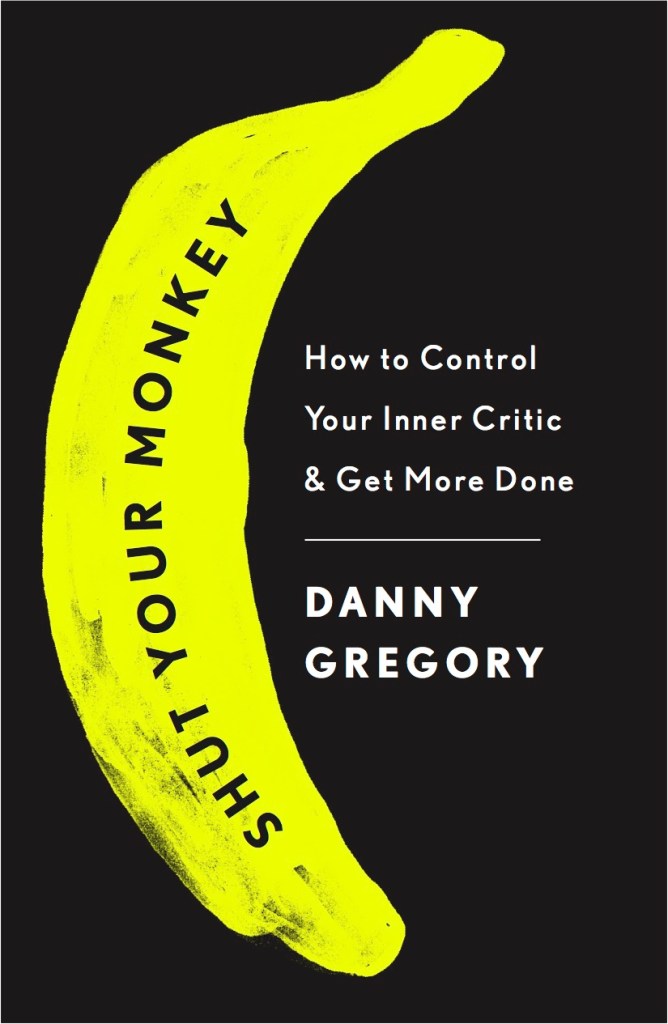
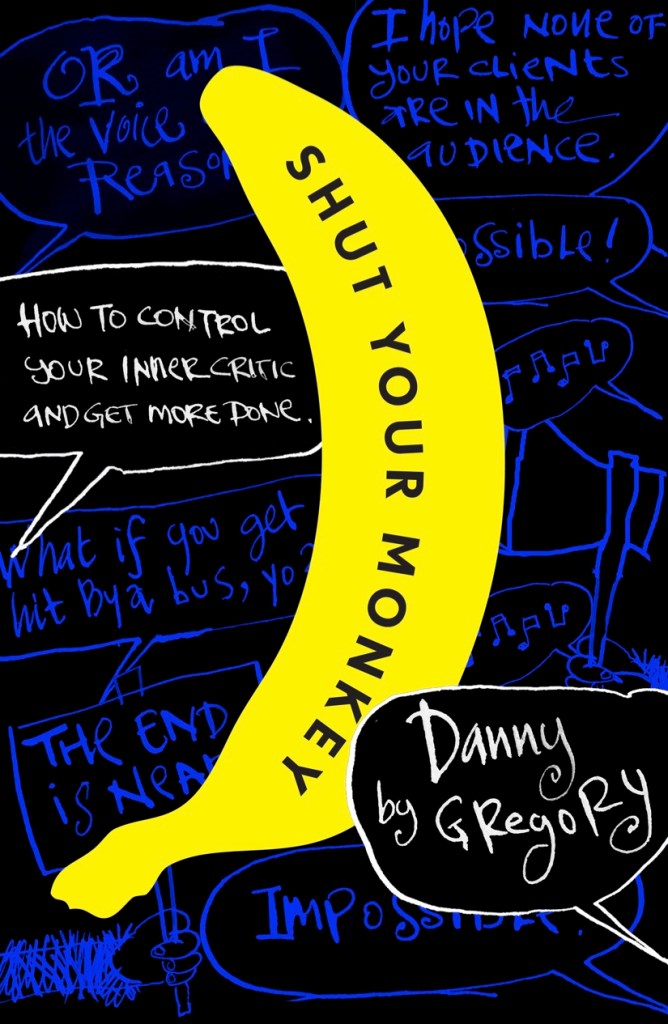
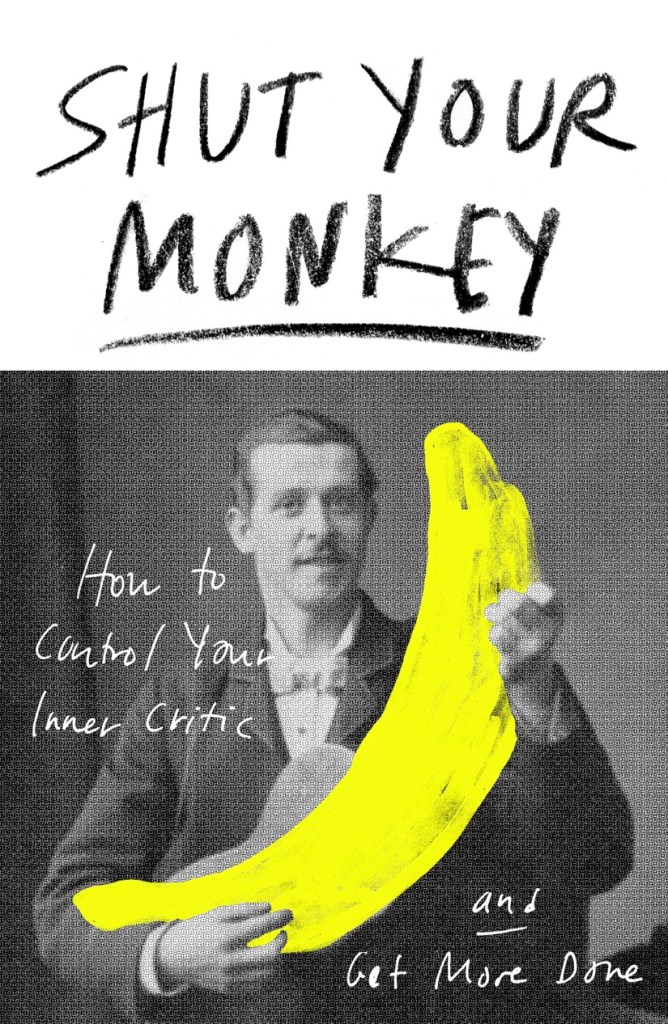
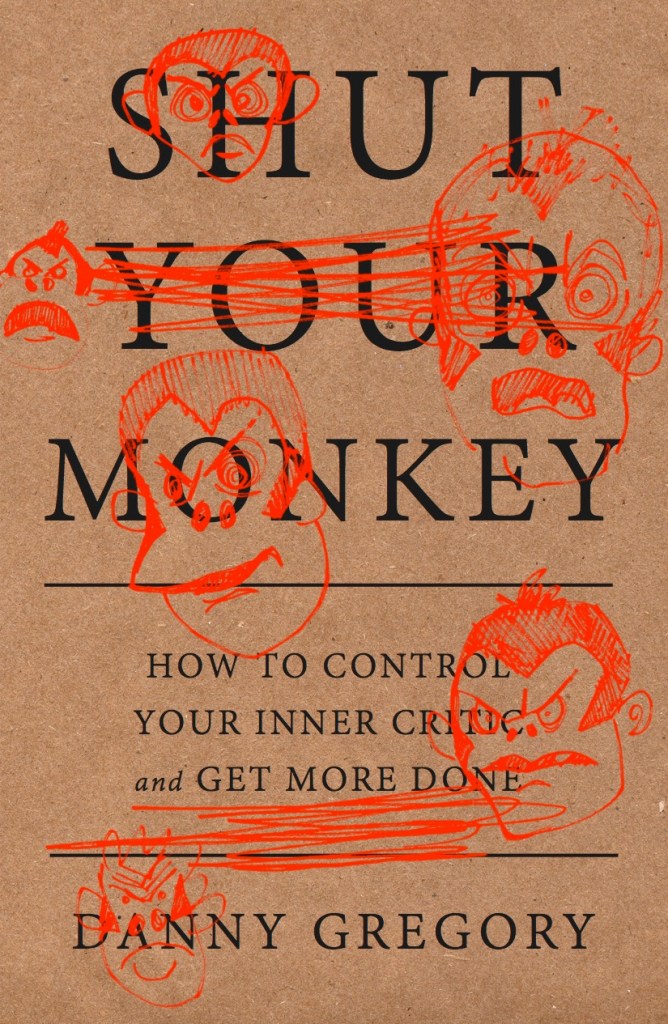
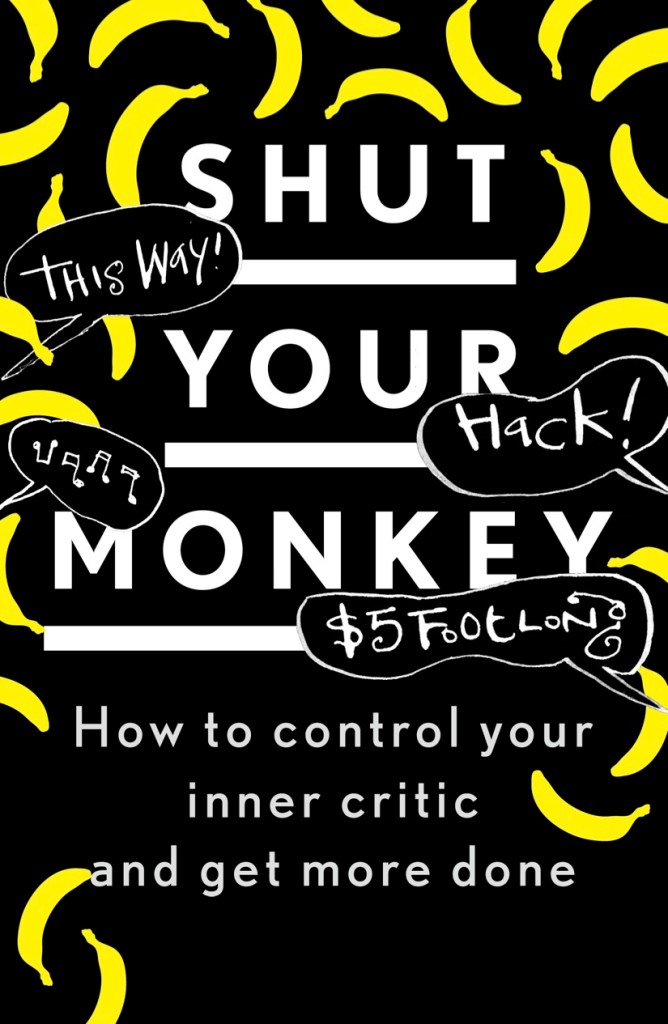
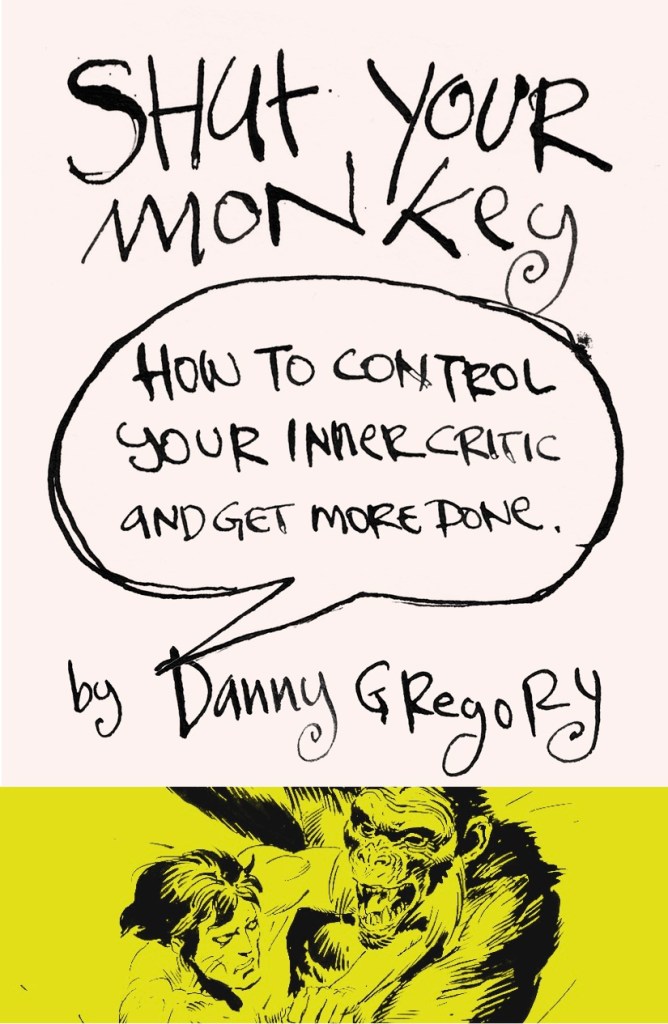
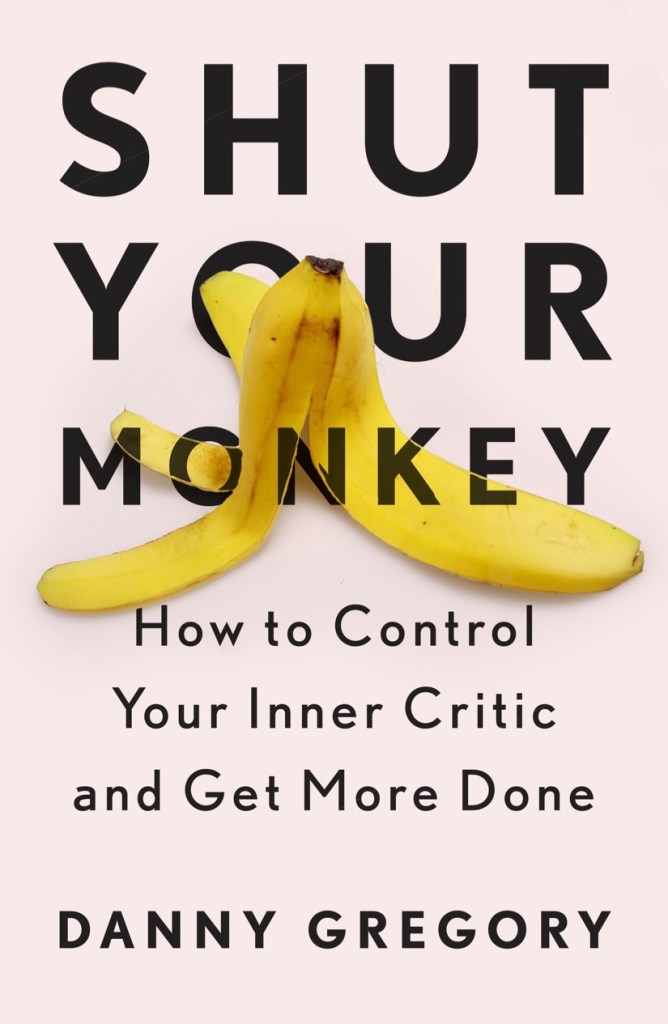
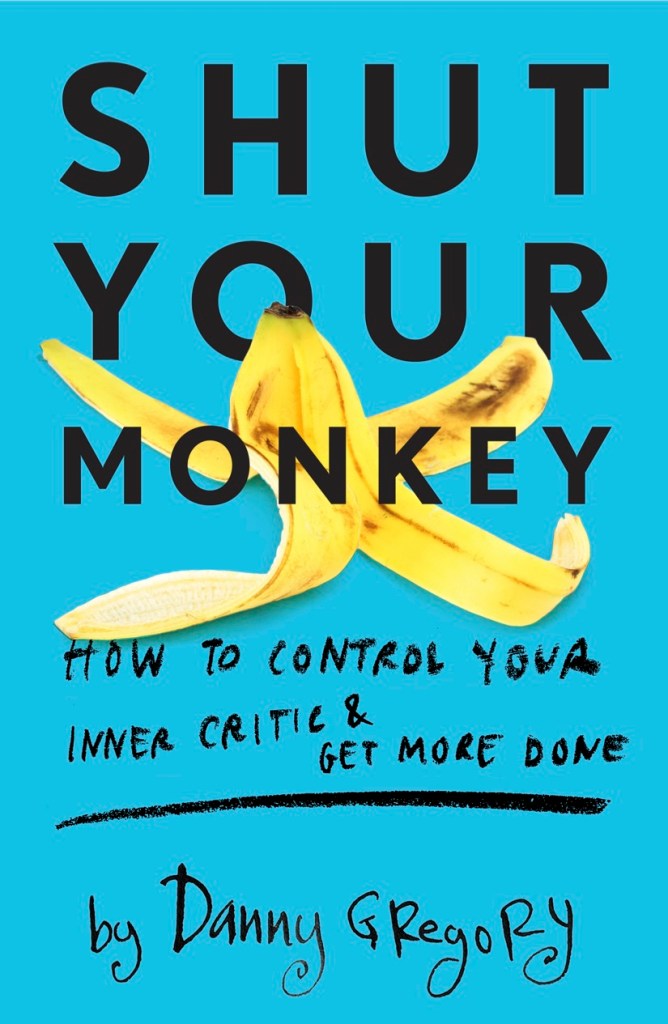
After three years of thinking and writing, Shut Your Monkey is finally complete. The words are written, the illustrations are completed and the layout is stunning. We just sent the final files to my editors this week and the book will soon head to the printer and be in your hands before Thanksgiving.

The hardest part of creating a new book is working out the cover design.  No matter how many fancy adjectives I’ve used, no matter how many revisions I’ve written, in the end, we know the book will be judged by the cover.

While I have designed most of my books, I wanted to make sure that we pulled out all the stops for Shut Your Monkey. I was lucky enough to enlist the help of one of the top book designers in New York.  Rachel Willey and I batted ideas around for most of the spring and summer and she produced through dozens and dozens of designs. Finally, we and my publishers agreed on a winner. It is fantastic and if you’d like to have a copy of your own, you can preorder it (and the book inside it) right now.

Here is a small selection from the design process.

A lovely evening

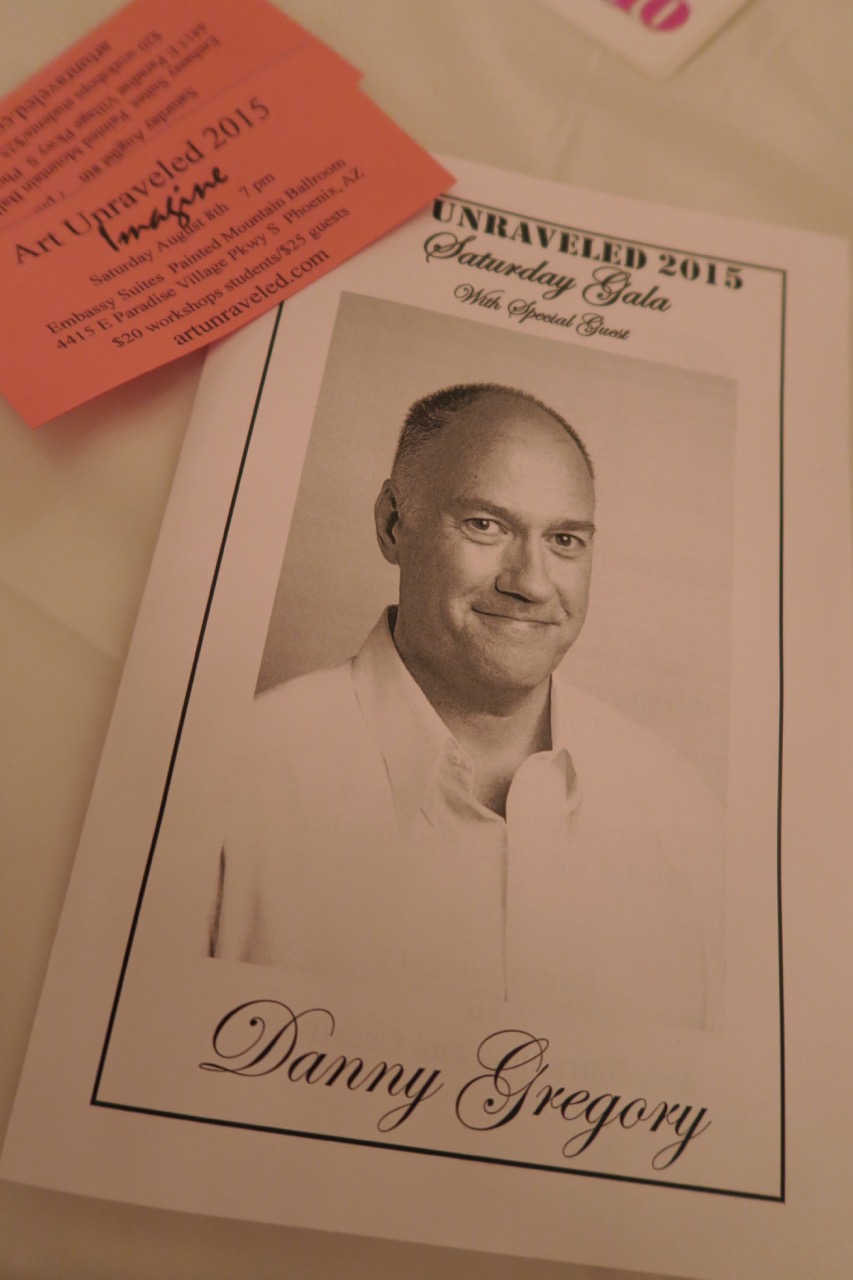
Last night I had the honor of talking to a couple of hundred artists at the Art Unravelled conference in Phoenix, AZ.  It was a great evening and a chance to meet lots of wonderful creative people.

I hope you had a chance to be there!

This slideshow requires JavaScript.

(Thanks to Jane LaFazio for the pictures).

The best drawing teacher.

A couple of days ago, I filled out the Sketchbook Skool survey we placed at the end of our most recent course, Playing. I shared it on Facebook but because FB is such a temporary place to store important thoughts, I am reproducing it here.


| Please fill your details below

What’s your name?
Danny Gregory

How did you find out about Sketchbook Skool?
My friend Koosje told me about it.

‘Playing’ | Your Experiences

Why did you sign up for this Kourse?
I have been worrying so much about perfection, about ‘getting better,’ about ‘making art’ that I was losing the pure joy of making. The idea of playing for a few weeks seemed like it would be fun. I didn’t want to just learn more new techniques, I wanted to reconnect with the spirit of creativity I had when I was six, a spirit that burned the hottest I’ve ever experienced and that made Picasso great.

Was the kourse what you expected?
Yes

What did you expect?
I expected some people to like it and some to be disappointed. I expected some people to let loose and dance the hootchy-kootchy and some to complain it was for kids and grumble that they had paid $69. I expected some people to grumble right off and then do one assignment that opened their eyes wide and they would go back and look back at the assignments they had just skimmed and suddenly find delight. I expected some adults to share their new found creative energy with kids, making sure that those kids never forgot how much fun art can be. I expected to be inspired by the enthusiasm and freshness I saw in the galleries.

Do you prefer the more shorter lessons, which is the style of Playing? Do you like more emphasis on projects than on lectures?
I thought the change was good. I’d heard a lot of people say they didn’t have time to do the more complex assignments they got in ‘Stretching’ and ‘Storytelling’ so I thought just screwing around with crayons would be a nice break.

If you’ve taken a Sketchbook Skool Kourse before, was ‘Playing’ a welcome change?
I loved learning from the great artists who teach at SBS. But the parts of the klasses that stretch me the most are the homework assignments. I learn a lot from doing them and from seeing what others do. I thought a kourse that was all about making stuff would be a cool change.

I have been drawing for twenty years and this is how I learned. I believe that it is the only way — to be inspired and to take my lit fuse and blast off in my own personal direction.

Sketchbook Skool | How do you feel about it?

At Sketchbook Skool we believe that the best way for you to learn is to be inspired, rather than giving you a lot of step-by-step instructions. How do you feel about that?
I have been drawing for twenty years and this is how I learned. I believe that it is the only way — to be inspired and to take my lit fuse and blast off in my own personal direction.

How do you experience Sketchbook Skool: Is it about exploring yourself or about community?
SBS inspires me to start and the community keeps me going.
The lessons make me challenge my assumptions, make me marvel at what is possible with just a pen and a book, and make me accept responsibility for my own creations and education — I am my own best teacher.
The community stretches me further, shows me more of what is possible, supports me when my monkey gets me down, pushes me to keep getting better and insists I stick to my creative habits.
I could draw alone. I could learn alone. I could evaluate my work alone.
But passion is so much better when it’s shared.


If you want to continue this face-to-face, come meet me in Phoenix.   I’m heading there now.

Can’t get into it.

As I brush my teeth, while I eat my cereal, on the train, as I walk down the street, before I turn the light out — one of my chief pleasures has always been burying my nose in a book a few times a day.

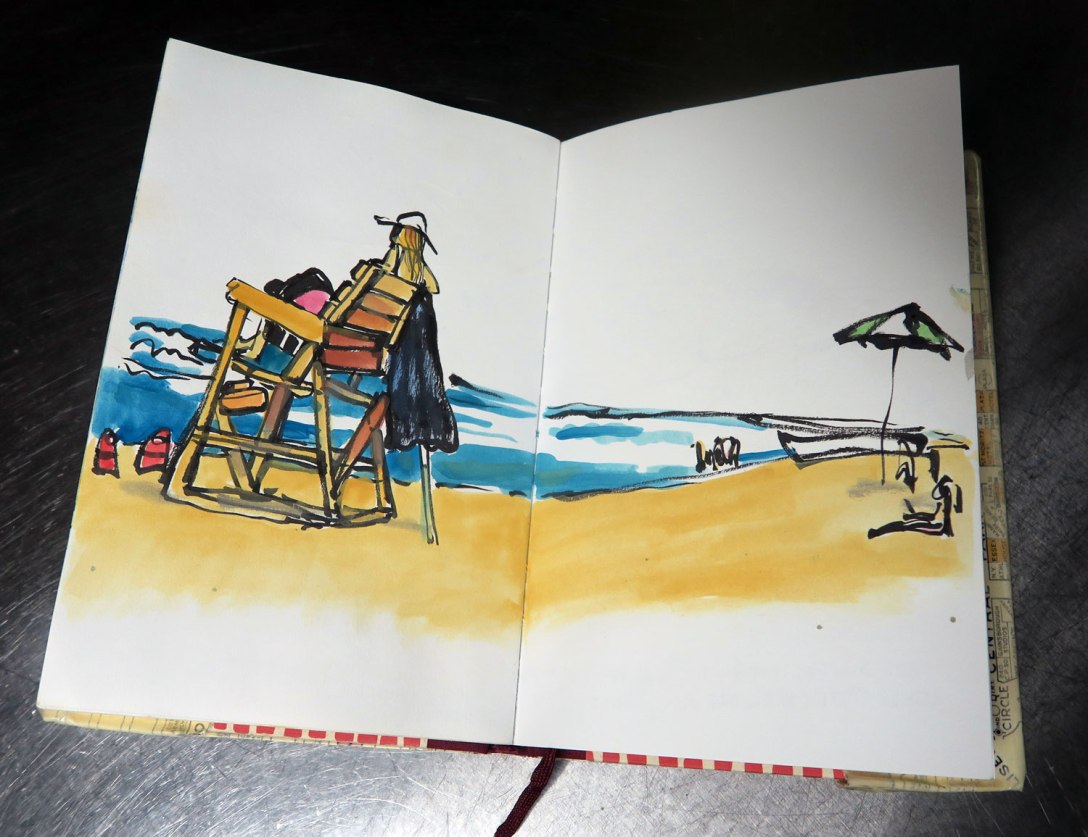
I just spent a few days on the beach with my pal Tommy Kane, parked side-by-side in deck chairs, drawing and reading and napping. I read a handful of books, dipping back and forth, as I often seem to do these days.

The hard part was really losing myself in a book. It wasn’t a matter of being distracted by people in thongs wandering by or the caws of seagulls. It was my brain —which increasingly finds it harder to stay connected with long passages, especially ones that aren’t moving the plot ahead but are lyrical or descriptive and celebrate the joy of language.

I don’t have ADHD. I have an iPhone.

These days I seem to read all day long. Emails, texts, blog posts, news, it’s just an endless stream of words. Every type of communication is written. I never speak on the phone anymore, I just type on the keyboard and read responses.

And all these words demand that I read them differently than I did Chaucer or Proust or Tom Wolfe. I skim, I scan, I browse for the gist. I exercise my eyeballs and flitter my fingertips. There is so much to wade through, I have to retrain my brain to suck down words like an endless skein of overcooked pasta.

This is called a pull quote.

It’s here to attract your attention and make you want to read my post. Hope it works!

And as a writer, I have to adapt to this pell-mell, distracted world. Instead of long, meandering blog posts, I should be writing listicles and giving people ten actionable tips they can tweet and share.  My paragraphs should never be more than three active sentences. My titles should be pithy yet info-packed. I should avoid arcane references and worry about search engine optimization. And what is all this doing to my brain? Will I ever again be able to sink into a long novel like a warm bath and bask until my fingers pucker? Oy.

I recently heard a neurologist say that keeping up with all these Facebook posts and tweets is rewiring our brains so we struggle to delve deep when we read, and that we are in danger of losing the rich beauty and dense wisdom of great literature. And we stand in danger of becoming superficial thinkers, trite and incapable of going beyond the obvious, ping-ponging between stimuli, unsatisfiable.

Whatevs. I’m going in for a dip.


Off-Roading

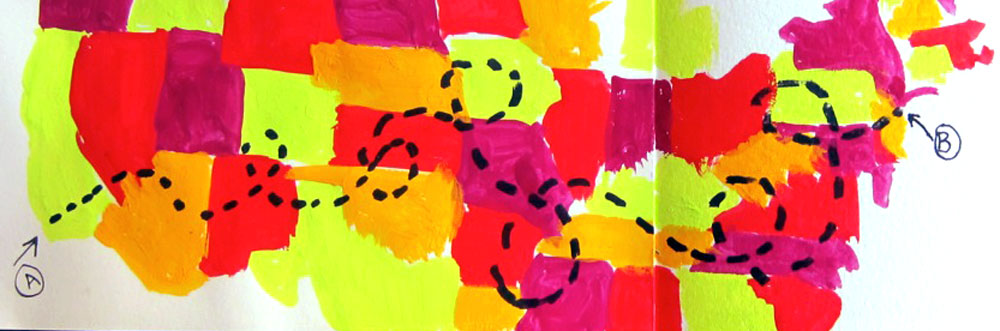
Almost exactly a year ago, Jenny and I drove from Los Angeles to New York City. In the months before, we talked a lot about where we might go and drew up lists of places to stop en route. We weighed the pros and cons of going north and driving the length of the Canadian border, of drawing a straight line from LA to NY and beelining across the Midwest, of meandering through the heat of Texas and the Deep South. I consulted web sites about cross-country drives, downloaded a half-dozen apps, and reread On the Road.

A couple of days before we left, we had a big yard sale and emptied the cottage we’d occupied for a year. Then we hit the road with 666 dollar bills in the glovebox.

Despite all our discussion and planning, we ultimately committed to just one decision: that each day we would  decide where to sleep that night and that decision could be postponed until the sun was setting. Sometimes we booked our hotel while sitting in its parking lot. This was pretty atypical behavior for Jenny and me — she’s a producer and I’m a Virgo, organized and methodical people who like a sense of control. But this trip was to be different. We intended to get New York in roughly two weeks — and that was all we knew for sure.

It was a risky and brilliant strategy. We meandered all over the map and saw things we had no idea even existed. We made monumental plans while driving, then scuttled them over dinner. We acted impulsively and took many roads less traveled. When we pulled onto our street in Greenwich Village, we knew we’d had an adventure that we would always remember. It was epic.

The core of my brain (and yours, hopefully) is the limbic system, the ancient part that sits under my cortex, deep in the most protected part of my skull. It manages my emotional reactions, its gnarled, primitive fingers fidgeting on the buttons that trigger my reactions and form my most salient memories. It is primitive and essential, making me happy, angry, hungry, horny or terrified. This part of my head is me at my most impulsive.

Sitting astride is my modern brain, the source of higher function, the part that cracks the bullwhip, straightens the cutlery, talks to my accountant, and imagines itself superior. I have relied too heavily on this ultra-rational part of my brain for most of my life. It has helped me think my way out of feeling too intensely, providing Mr. Spockian rationales for my baser yearnings, keeping me in check. It has helped me succeed — but I wonder how many roses it has kept me from smelling.

I have published a dozen or so books by now, and each one has started with a road map. Sometimes my editor has asked for it, an outline to include with the proposal she submits to her editorial board. But always my frontal lobes have insisted on it, wanting some clarity about the mission ahead. Believing that I can’t build a building without a scaffold or a monument without an armature, I have arranged bullet points and sub-points into neat staircases with sturdy handrails to lead me to the summit and safely back down again.

And then I have sat down at this machine and kicked the blueprints under my desk.

Outlines and bullet points are one thing but writing or painting something that lives and breathes are something quite other. No one wants to dance in the moonlight with a sturdy skeleton. Flesh and blood are lissome, moving under your finger tips, breathing and changing shape. And so it is with art. A sketch is meant to be done in pencil so it can be erased as better choices emerge.

All this preemptive planning just gives me the courage to turn the key in my driveway, the balls to say, let’s drive three thousand miles and trust that we’ll eventually get where we’re going. Even if I draw the route in the thickest Sharpie, I still plan to listen to my gut, to my amygdala, to the songbird at the crossroads who says, hey, let’s take a left here and see what lies around the bend.

We have GPS and we are safe to wander.

Friend of a friend

So, recently, a business associate told me I should further develop my network on LinkedIn. I know that’s sort of a horrible sentence but there you have it. I have business associates and they advise me to do things that probably have some purpose beyond my understanding. Generally I am okay with following their directives so long as they don’t involve public nudity or large amounts of money. They know more than me about some stuff.

The way LinkedIn works is by burrowing into your address book and your resume and your underwear drawer and pulling up long lists of names and smiling portraits and you are supposed to click on people who you know and want to link to. When you do, each person’s links are then joined to yours in an ever-expanding gyre of connections until every man, woman and Chihuahua on the planet is arrayed in concentric circles around you.

Let me now confess something else to you. Despite how garrulous I may appear within the confines of dannygregorysblog.com, I am not an especially outgoing person. For much of my career, I was the person standing in the dimly lit corner of the office party, gnawing carrot sticks and clutching a bottom-shelf gin and tonic. I was not glad-handing, back-slapping or table-hopping. Over time, as I grew older and slunk up the ladder, I knew more and more people who didn’t seem to despise me so I would allow myself to slink out of the safe zone and talk to people. But I was never and never will be a ‘networker.’ Fortunately for me, I have been in love with two women who were quite the opposite and dragged me into various social circles where I could mumble and make self-deprecating remarks to ever-increasing numbers of people.

When Linked In began to present me with long lists of smiling faces, I swallowed hard. Some faces looked familiar, some names looked familiar, and I began to click on the faces and request to be connected. Some people were easy, the ones who I knew well and who were outgoing. Some were harder, people I knew well but who I was embarrassed to be asking, who I assumed would scoff at such a fawning request, surprised that I was not, like them, too cool for school to network.

My associate prodded me to further expand my timid circle and so I delved deeper. I began to click on the faces of those I had not shot the breeze with in their cubicle and not invited to lunch, but had sat with in endless meetings, sometimes with dozens of others, people in other departments, of other ages and ranks, like soldiers in adjoining platoons, veterans of the same wars but not aways the same battles. People who I might nod to as we motored past each other in the hall, who I might have had that one long talk with as we waited for a flight to Columbus or Wichita for another regional committee meeting, people who I might have even had one drink too many within a Holiday Inn Express lobby on the eighth night of a shoot that seemed it would never end and shared opinions and revelations that I woke up the next day to regret.

And then there were those faces who I knew and who I knew knew me but who I thought hated me for one slight or another — a layout I hadn’t approved, a suggestion I had dismissed, an opinion I had contradicted. I winced reflexively thinking about what they might think years later when I appear on their virtual doorsteps, hat in hand. I assume these requests would be junked, that I would never hear from the person whose meeting I had twice arrived ten minutes late for, the person who scowled that one time when I interrupted in a briefing, the person whose coffee mug I had taken by accident.

But masochistically, I clicked their faces nonetheless.

In the next few hours, I received emails, confirming that even these outliers were willing to open their chains and link to mine. I reached out to a few with InMail™ messages, tail between my legs, wishing them well in their new endeavors. And they responded, tails aloft and wagging hard, sometimes with their paws stretched out, ready to play.

I’m perplexed and dismayed that someone who spends so much effort thinking about and writing about and drawing himself can be so self-unaware, that I often have no idea how I appear to others. I can think I have offended someone and they have no idea what I mean. I can think I have been a pal to someone and they will reveal a long-held grudge. I can pour over a blog post and get a stinging response from some reader, dash off another one unthinking and hear it has helped someone else a lot.

Despite my quest for seeing myself objectively, I have come to terms with the fact that it is pretty much impossible. In part, because no one else sees me objectively. In part because there may not be any absolute truth there. In part, because my monkey still lurks back in that dark hole. But most of all because I am a work in progress.

I try to do my best most of time, to avoid being a selfish dick, to contribute where I can and to take others’ feelings into consideration. But beyond that, I have to stick to my own knitting, to be true to what I know of myself, and to hope that those who are in my newly expanded network of links will see and value those things that I am.

It’s important to connect with others, to engage, to be of service, and not spend ones’s days crouched in a shadowy hermitage. But it’s just as important to link in with oneself.