I had a great time appearing on The Busy Creator. The host, Prescott Perez-Fox, is a designer and a creative coach with lots of experience and insights into the process. The episode I was on just posted. The accompanying page has loads of interesting quotes and links too. Subscribe to his podcast. I do.
“This interview is one of those that gave me many chunky nuggets to take and put in my pocket.
As much as I love creating art my head often swims with the many reasons why I love it, why we keep creating. Danny Gregory’s fresh perspective seems to have been knocked into place by the tragic events in his life. This breath of fresh air is the sort of thing that happens when someone is frank, honest and open.”
Listen to it yourself and enjoy the chunkiness. It’s here.
Art, they say, is great for kids. Art and music programs help keep them in school, make them more committed, enhance collaboration, strengthen ties to the community and to peers, improve motor and spatial and language skills. A study by the College Board showed that students who took four years of art scored 91 points better on the SAT exams. At-risk students who take art are significantly more likely to stay in school and ultimately to get college degrees.
Awesome.
Nonetheless, arts education has been gutted in American public schools. A decade ago, the No Child Left Behind and Common Core programs prioritized science and math over other subjects. In LA County alone, 1/3 of the arts teachers were let go between 2008 and 2012 and, for half of K-5 students, art was cut all together.
After the recession of 2008, 80% of schools had their budget cut further. Arts programs were the first victims. And, predictably, lower income and minority students were the most likely to lose their art programs. Only 26.2% of African-American students have access to art classes. As the economy has improved, there is some discussion about reversing some of these cuts. But it is not enough.
They don’t need to be taught to be creative!
I’m no expert on education but I have spent a lot of time in school art programs over the past year.
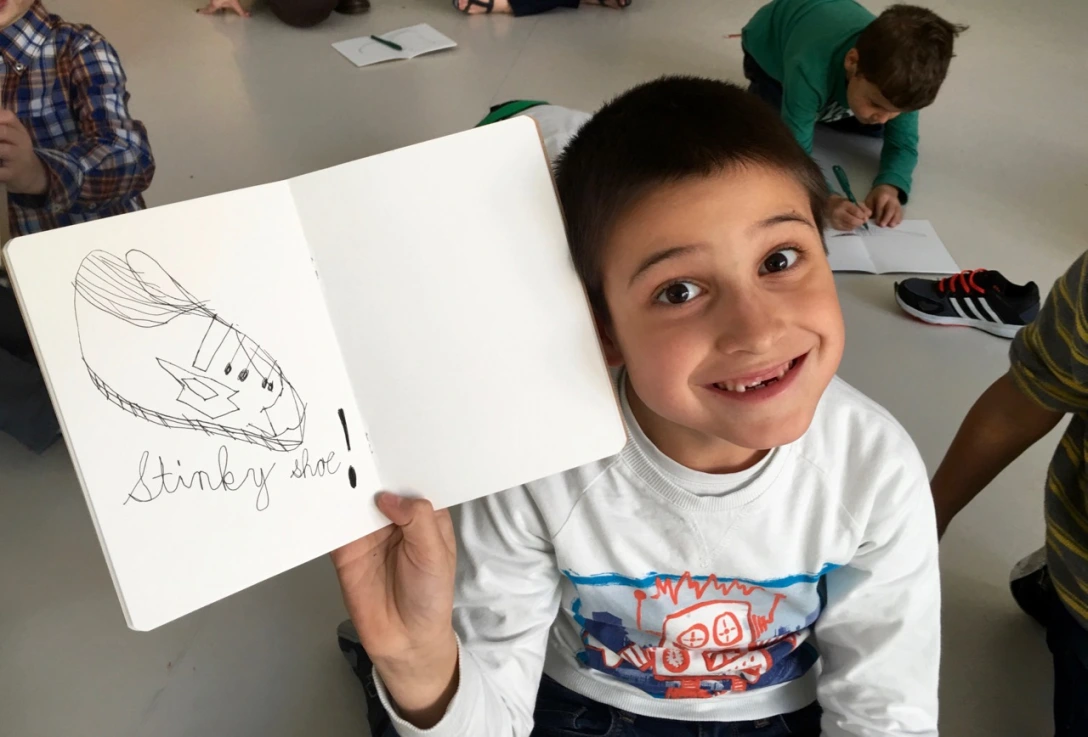
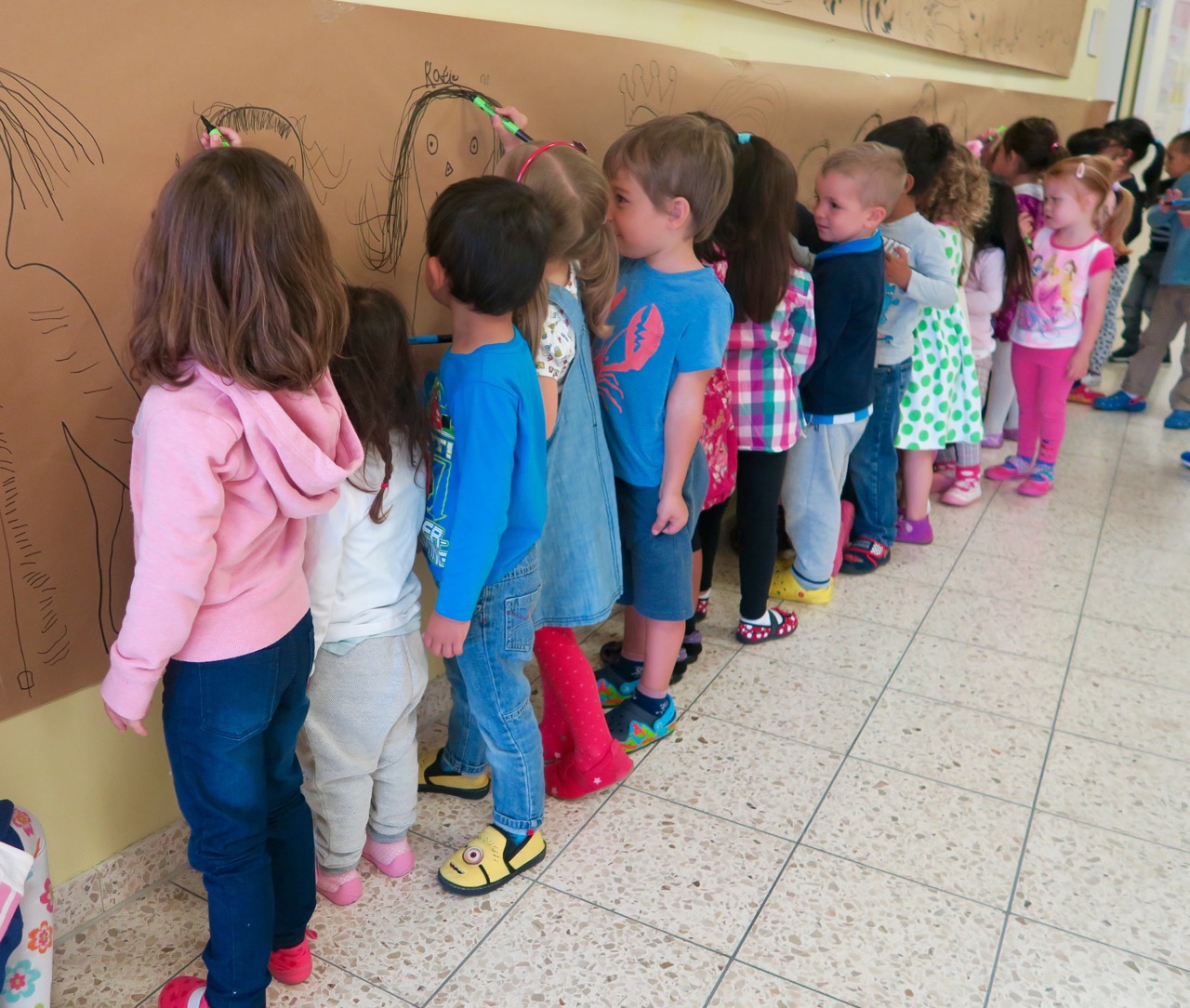
In the lower grades, kids just have fun drawing and painting. They don’t really need much encouragement or instruction. In middle school, the majority start to lose their passion for making stuff and instead learn the price of making mistakes. Art class is all too often a gut, an opportunity for adolescents to screw around. By high school, they have been divided into a handful who are ‘artsy’ and may go onto art school and a vast majority who have no interest in art at all.
In short, every child starts out with a natural interest in art which is slowly drained — until all that’s left is a handful of teens in eyeliner and black clothing whose parents worry they’ll never move out of the basement.
Here’s a modest proposal: Let’s take the “art” out of “art education.”
“Art” is not respected in this country. It’s seen as frivolity, an indulgence, a way to keep kids busy with scissors and paste. “Art” is an elitist luxury that hard-nosed bureaucrats know they can cut with impunity. And so they do, making math and science the priority to fill the ranks of future bean-counters and pencil pushers.
So I propose we get rid of art education and replace it with something that is crucial to the future of our world: creativity.
We need to all be creative in ways that we never could be before. We have so many wonderful tools that put the power of creation in our hands and we use them every day. Solving problems, using tools, collaborating, expressing our ideas clearly, being entrepreneurial and resourceful, these are the skills that will mattering the 21-century, post-corporate, labor market. Instead of being defensive about art, instead of talking about culture and self-expression, we have to focus on the power of creativity and the skills required to develop it. A great artist is also a problem solver, a presenter, an entrepreneur, a fabricator, and more.
Imagine if Creativity became a part of our core education…
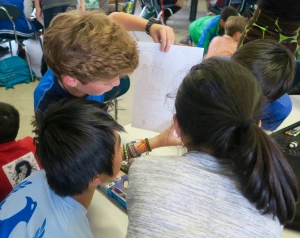
High schoolers develop a creative solution together.
Instead of teaching kids to paint bowls of fruit with tempera, we’d show them how to communicate a concept through a sketch, how to explore the world in a sketchbook, how to generate ideas, how to solve real problems. Theatre would be all about collaboration, presentation and problem solving. Music classes would emphasize creative habit, teamwork, honing skills, composition, improvisation.
We’d teach creative process, how to come up with ideas, how to find inspiration, how to steal from the greats. We’d teach kids to work effectively with others to improve and test their ideas. We’d teach them how to realize their ideas, get them executed through a supply chain, how to present and market and share them.
Middle schoolers discussing a story through sketches.
We’d also emphasize digital creativity, focussing on cutting edge (and cheap) technology, removing the artificial divide between arts and science, showing how engineering and sculpture are related, how drawing and User Experience (UX) Design are facets of the same sort of skills, how music and math mirror each other. We’d teach kids how to use Photoshop to communicate concepts, to shoot and cut videos, to design presentations, to use social media intelligently, to write clearly because it is key to survival. We’d give kids destined for minimum wage jobs a chance to be entrepreneurial, to create true economic power for themselves, by developing their creativity and seeing opportunity in a whole new way.
Here’s what 100 8th graders collaborating looks like.
Yes, I know that there are high-school video classes and art computer labs, but they need to be turned into engines for creativity and usefulness, not abstract, high falutin’ artsiness based on some 1970s concepts of self-expression. Don’t make black and white films about leaves reflected in puddles, make a video to promote adoption at the local animal shelter. Don’t do laborious charcoal drawings of pop stars, generate ideas on paper. Fill 100 post-its with 100 doodles of ways to raise consciousness about the environment or income inequality or saving water. Stop making pinch pots and build a 3-D printer and turn out artificial hands for homeless amputees.
(And, by the way, if we teach kids loads of math and science but don’t encourage their creativity, they aren’t going to grow up to be great engineers and scientists and inventors and discoverers — just drones and dorks.)
Creativity is not a ghetto, not a clique, not something to be exercised alone in a garret. It’s also not a freakshow of self-indulgent divas and losers.
Creativity is about helping to solve the world’s many problems. We need to make sure that the kids of today (who will need to be the creative problem solvers of tomorrow) realize their creative potential and have the tools to use them. That matters far more than football team and standardized test scores.
Here’s a nice new interview I just did with Ilise Benun for the HOW Design Live podcast in anticipation of my talk about monkeys in Atlanta next month. I sound more calm and coherent than usual.
For a while, I have been wondering why the art conferences at which I speak are filled with women. Why most of the commenters on this blog are women. Why Jack’s class at RISD is predominantly female. Why the students of Sketchbook Skool are about 85% women.
Where are the men?
Certainly men seem to like to make art as much as women do. Half of the SBS fakulty are male. The museums and galleries I visit are full of work by men. In fact, women have long complained that the art world seems biased against them.
So what is it about art education that seems more interesting to women than men?I searched the web for answers. There weren’t many categorical ones but here are some of the clues I picked up.
In 2007, the NY Times had an article about why adult classes of all sorts seem much more popular with women. Tennis classes. Writer’s classes. Triathlon classes. All were 65-95% women. Here’s what a man who teaches wine tasting said of his students: “It’s argued that women are better tasters of wine than men. A higher percentage of women have more taste-bud receptors.” So maybe they are getting more out of the class. But, echoing others who lead classes, he added: “It may also come down to the fact that men think they know more about wine anyway, so they don’t need to learn more about it.”
In other words, men know more. Or think they do. No need to take classes. Why admit you are ignorant?
Is it that simple? Men go to golf pros. They read business books. They take coding classes. Maybe art classes teach skills that don’t seem concrete or finite enough for men? Do men just need more goal- rather than process- oriented activities?
I have also been following a heated debate on Reddit (where all debates are heated) about why there are so many more successful male artists than females. Here’s are some highlights.
One theory is about marketing, that male artists are more into promoting themselves than women.
“In my experience the successful artists are the ones who concentrate their time about half on the art and half on the selling of the art. …That is selling paintings, building relationships with patrons of the arts, raising money for their dance/theater/etc. company, writing grant proposals to non-profits etc.
“…perhaps men are more drawn to the concrete and the rational and less to the expressive and emotional. This keeps them away from art statistically but those who do get into art spend more of their time with the rational part of marketing art and less with the expressive side or art. This may actually be the more important part of becoming a successful artist.”
And self-promotion is not encouraged in women:
“When you look at hugely successful female artists they are generally the ones that market themselves well and are obsessive about selling their art. However, women who promote themselves and their work intensely are often seen as ruthless social climbers.”
Another argument: Art is less practical so women can afford to indulge in it more than men.
“At the university level, women are more free to pursue educational interests without as much criticism. When a guy takes an art class, he’s usually expected to come up with a practical application of it as a justification. Anytime a show wants to make a joke about a father worried about a grown son’s directionlessness, they’ll say the son is studying some art/humanities degree, like dance, or theater, or English.
(But as you can see in the chart above, there are loads of men in ‘impractical’ fields like philosophy and classics too).
“when a woman cooks, it is her duty. When a man cooks, he is an artist.”
Or is it just that women aren’t valued for what they do — and so neither is their art? In fact, as Richard Florida’s research on creative professionals has shown, women earn about 40% less than men do in creative class employment. I’m not sure if the situation is as imbalanced in all skill professions.
A poster on Reddit says: “Women’s work isn’t valued on a ‘profound’ level in the same way that men’s is. The perfect example is cooking. Cooking is seen as a woman’s task, but the vast majority of celebrity chefs are men. Of the female celebrity chefs, how many are really valued for their ‘greatness’ vs. how many are famous for showing you quick and convenient ways to cook at home? In other words, how often do we talk about women’s Michelin stars?”
“….I always think of the quote, “when a woman cooks, it is her duty. When a man cooks, he is an artist.”
Another says that women’s art tends to be ghettoized:
“I don’t know enough about the art or cooking world to judge whether it’s because the stuff that women are creating doesn’t push creative limits enough to warrant that kind of recognition. What I do know is that in the fiction and poetry industries, women are expected to write in certain niches. Maybe a small portion of their work will transcend those niches, but they are rarely able to make an entire career out of writing the same stuff men write about, even if the quality is comparable. ….”
What do you think is behind the disparity? Why don’t men take art classes? And why, despite all those workshops and classes and conferences, aren’t women equally represented in the contemporary art world?
I’m gonna be in ABQ on Wednesday and would love to say howdy. If you’d like to come, hang out, get your book signed, or sketch the view — meet me on the rooftop Apothecary Lounge of the Hotel Parq Central. I’ll be there at 5:30.
I am going to be doing an experiment on Facebook next Tuesday and I’d love you to join me. It will be my first Live! event in which I answer your questions, on camera, and it is broadcast on the Sketchbook Skool LLC page at noon EST (NY time).
You can post your questions anytime and anywhere on Facebook. Just add#sbsaskdanny to your question so we can find it.
Then drop by the Sketchbook Skool LLC page at noon. If you miss it, no sweat, I think the video will be available later.
I like to make stuff. Probably too much. I can sit at my tiny desk in the corner of Jack’s old room, oblivious to the workmen ripping our kitchen apart, wiener dogs napping on my feet, frittering away hours on an edit or a paragraph until Jenny pounds on the door and tells me I absolutely have to take a break or I will be crippled by sciatica. Sitting, she yells through the door crack, is the new smoking.
I’m not always efficient. I can piss away time looking for a new plugin for an app or watching YouTube how-to videos or reading a whole book which I just wanted to consult for a quote. But I like to think that all this meandering is filling my well and making sure that the lion that brings me great ideas will eventually yawn, stretch, see me with my head down and drop some inspiration in my lap. Usually works.
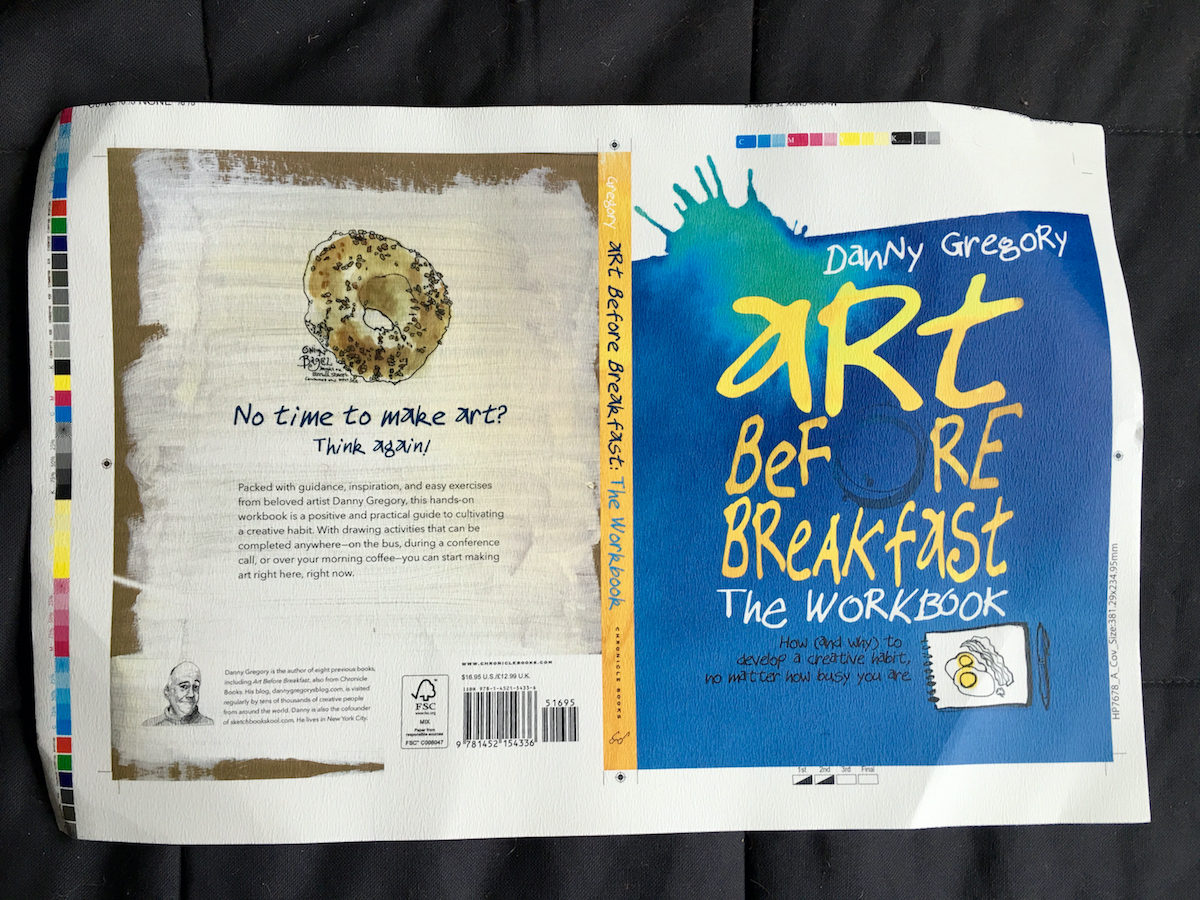
Over the last month and a half though I have felt distracted. Still about 80% productive, but distracted. We got married and that took up some time. We are doing our kitchen which requite a ridiculous number of decisions and visits to Home Depot. We are just about to launch a new kourse at SBS which takes a lot more work than you probably think it does. Shut Your Monkey is out and about. And I just got the cover proof for my next book which will be coming out before you know it.
But this number of balls in the air is pretty normal for me. The only problem is that one of those balls is on fire (which sounds like an ad for Cruex).
It all began half way through my visit to Vietnam when I began to feel a tenderness in my ribs. I thought it came from leaning too hard against the edge of my desk but it persevered. Then, on one of the last days I was there, I woke up with a Braille-like rash splayed across my chest. We were having a sketchcrawl that morning and one of the sketchers was the school nurse. She looked at the rash and diagnosed it immediately: shingles. She got me some ointment at the pharmacy, and we went off to draw.
The next day the rash was worse and the ointment didn’t seem to being helping. To make things more interesting, I had to spend 24 hours at the back of a plane flying home to New York. I saw my NY doctor first thing the next day but he said it was too late to do much about it. The antiviral pill I should have taken when I got the first symptoms wouldn’t help at this point and I’d just have to ride it out.
It’s been a long ride. Tomorrow it’ll be five weeks since that day in Hanoi. I spent a few days in bed because if I am run down the symptoms are worse. My rash turned into blisters that eventually drained and left me without a few layers of skin and my nerves in a jangle. On my wedding day, my heart was full but my chest was sizzling. Each day it gets better but there have been a lot of days and there are probably a few score to go.
Shingles do lots of things. Sometimes they feel like someone has belted a bunch of Brillo pads to my chest. Other times they ache or tickle or go numb. I can have sensation in one place that moves to another. It’s totally unpredictable. Basically they get on my nerves which are like a bunch of rogue electrical cables flailing and sending sparks through my rib cage. Oddly, when I just lay my hand on my skin, it reorients them and they simmer down, at least for a while.
I’ve had acupuncture, taken Vitamin B complex, rubbed on tubs of cocoa butter — but it seems that time is the best medicine. And I have to use my time wisely, not overdoing things, and being patient. Of course, taking it easy isn’t me, but Jenny’s at the door. I gotta take a break.
I have refrained from sharing this with you for a while because I think there’s nothing more boring than talking about your health. But I did want you to know that I have lots of ideas for what I want to write about here, more than just ads for books and kourses — but for now, they’ll have to just keep simmering in the old brain pan.
What with this, that, and lots of the other, I haven’t gotten around to telling you about a brand new klass I am teaching in the new Kourse at Sketchbook Skool. So I shall. But first, let me show you a little film about the kourse and its fakulty.
I also wanted to tell you what I was thinking in putting it together. This has actually been harder to do than I thought (the telling, not the putting together). In fact, this is the third film I’ve made on the subject this week and I hated the first two. So this time I shall just turn on the camera and see what comes out. If it’s boring, don’t worry. Polishing, I assure you, is not.
I hope to see you in klass. It begins on April 15th and you can learn more about it here.









 Danny Gregory