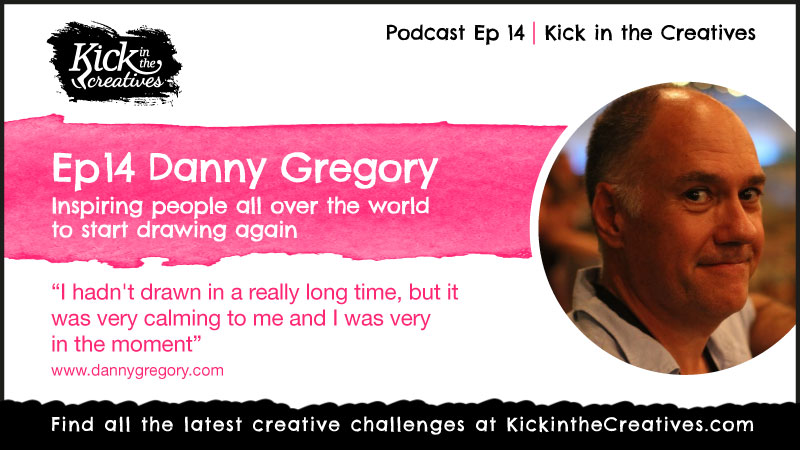
I had lovely chat recently with the hosts of the podcast, Kick in the Creatives. I thought you might enjoy it too.
And on iTunes

I had lovely chat recently with the hosts of the podcast, Kick in the Creatives. I thought you might enjoy it too.
And on iTunes
Inspired by the genius of Mike Lowery and The Whimsical Sketchbook, I do my homework and draw some delicious beverages.

I am on the newest episode of Youngman Brown’s wonderful podcast, Your Creative Push.
In this episode, I discuss:
Creative postpartum depression that often occurs when we are finished with a project.
Why I left the advertising industry.
Meeting Koosje Koene and how Sketchbook Skool started.
The value in seeing how many different artists make art as well as seeing where they make it.
The role that community plays in developing as an artist.
The difference in motivation when you are paying for something as opposed to getting it for free.
Going to clown school.
Giving yourself constraints or challenges.
What it means to clear space in order to start new things (or finish old things).
How I got past imposter syndrome (and my advice for Youngman in getting past his).
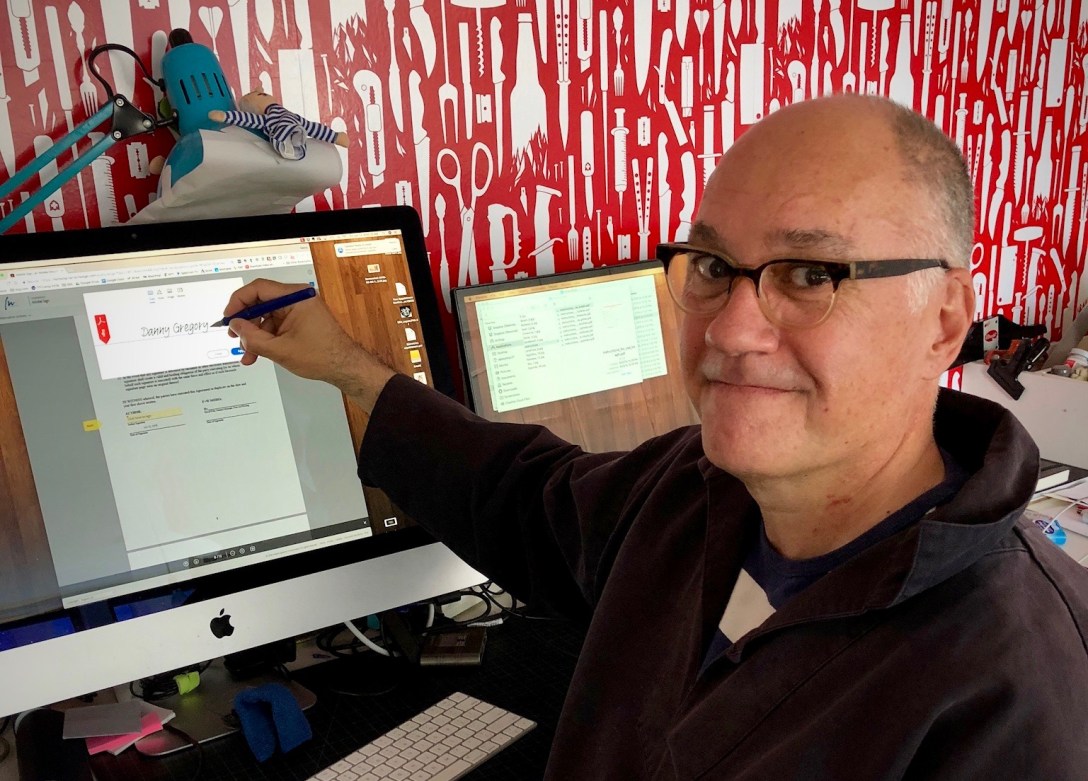
Just signed the contract for my next book! Now I just need to write it….
Listen to me discuss creative genius (not that I’m an expert!), sketchbook keeping, creative habits, SketchKon, and much more on Art Opening(s), a wonderful podcast, from the Artists Network. Listen here.
Also:
Sorry to have been absent for a while. I’ve been working on this. I hope you’ll join me in Pasadena! Learn more at Sketchkon.com
You need to go way out to a cabin in the woods to write a great novel. You must move up to a garret on the top of floor of a tenement to paint masterpieces. Do not disturb. Genius at work. The myth of the solitary artist, toiling alone, far from the madding crowd. We’ve all heard it. And yet I wonder, is solitude really the key to creativity?
Case in point.
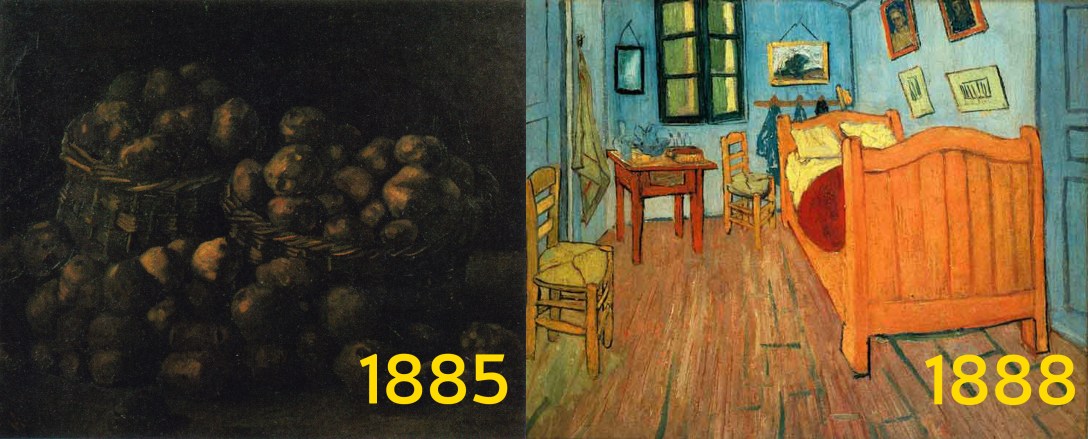
In 1866, Vincent van Gogh left the Netherlands. For three years, he had been trying to teach himself to paint, essentially on his own. He briefly had a mentor who then grew tired and rejected him. He enrolled in an art school but clashed with his teacher for his unorthodox style of painting. Two months later, he quit to move to Paris.
Within 18 months, Van Gogh went from dreary, ham-fisted brown paintings to bright, lively, emotional masterworks that are some of the greatest paintings ever made. What made the difference?
Paris. Or more specifically the community of artists he found in Paris.
For the first time Vincent was exposed to Impressionism, Symbolism, Pointillism, and Japanese woodblock prints. He befriended Pissarro, Signac, Bernard, Seurat, Cézanne, Toulouse-Lautrec, and Gauguin. His palette changed. His painting technique changed. His line quality changed. His sense of himself as an artist changed.
When Van Gogh finally found himself in the company of artists, he discovered what being an artist truly meant. He borrowed ideas and discoveries from them. He modified pointillism, he painted with complementary color, he discovered light, and in two years, he made over 200 new, fresh paintings.
Marinating in all those influences, helped him discover a unique and utterly personal approach to painting. By associating with great and generous artists, Van Gogh found himself.
Many of our teachers tell me they love being a part of Sketchbook Skool, because they usually spend so much time working alone. They love to commune with other creative minds, to share ideas, to talk shop, to find new solutions to common problems. Some of them set up shared studios. Others travel to conferences and conventions. Others use social media to share their works in progress and find input and support.
For many beginners, sharing art can seem like a scary business. We fear being judged or seeming to be presumptuous by donning the artist’s mantle. But remember the explosive effect of creative community on Van Gogh. Nothing he’d made before 1886 deserved to end up in a museum. He couldn’t find a single customer for his flat, amber landscapes and dimly-lit, mawkish still lives. But by stepping out, by daring to expose himself and ask to learn from other artists, he was transformed.
You may think you are not a Van Gogh. But have you gone to Paris? Have you taken advantage of the impact a creative community can make?
Speaking of creative communities, this piece was originally written for the Sketchbook Skool Zine. Didn’t see it in your inbox this morning? Sign up now.

A question from a new artist: When I was young I used to draw all the time. Now , thanks to Sketchbook Skool and all the amazing work in our Facebook group, I really want to start drawing again — but fear is holding me back. I’m afraid I’ll never be able to draw decently, even with practise. So I just don’t start. I’ve signed up for multiple Sketchbook Skool classes but never finished more than a few lessons because I see how bad my drawings are and feel very disappointed. People told me to just start and not care about the results, however that doesn’t seem to be working. I still hate the few drawings I made and don’t want to look at them. I hope that you don’t mind me asking for some advice on how to deal with this. I really want to be able to enjoy drawing again. — Suzanne
Suzanne, I hear you. I make so many awful drawings. I have for twenty years now. It’s most disheartening after I have stopped drawing for a period and decide to start again. I buy a fresh sketchbook, turn to the first page, and make something so ugly I just want to put it away and give up altogether.
Here’s what I do instead.
I get some scrap paper and a big fat marker and I just draw something with big and fat lines. I do that a bunch of times. Something about those big fat lines loosens me up. My drawing feels bolder and more confident and has a personality to it that I find appealing. The drawings that disappoint me are overly ambitious, they have crabbed and shaggy lines. I am hesitant and unsure of myself and it shows in the drawing. But somehow drawing with the big fat marker or a crayon gives me faith in what I’m doing and I believe once again that I can get to a better place.
These big fat drawings are just fun and have style and look like something appealing. I keep doing this for a few days and then I start to add a bit more detail with a slightly smaller pen to one of these big fatties. This helps me transition to drawing with more control and assurance.
It’s tempting, when you get back into drawing to put a lot of stock in every drawing you make and to come back to them again and again for proof of ones ability. They actually contain no evidence of that at ll. If you look at early Van Gogh drawings you see how ugly and crude they are. But when he pushed past those overworked disasters and kept going, he got looser and more confident and eventually became the master we revere. That took him a few painful years.
I know that “keep practicing” is not what you want to hear. Instead I suggest you keep playing. Play with fat lines. Play on scrap paper. Throw away ten drawings a day. Literally toss them in the bin. Commit to playing for a month and then see how you feel about drawing.
We call it “drawing” not “having drawn.” So enjoy the process and worry less about the results.
If you’d like to see the suggestions others made for Suzanne, here’s the post in the Sketchbook Skool group on Facebook.

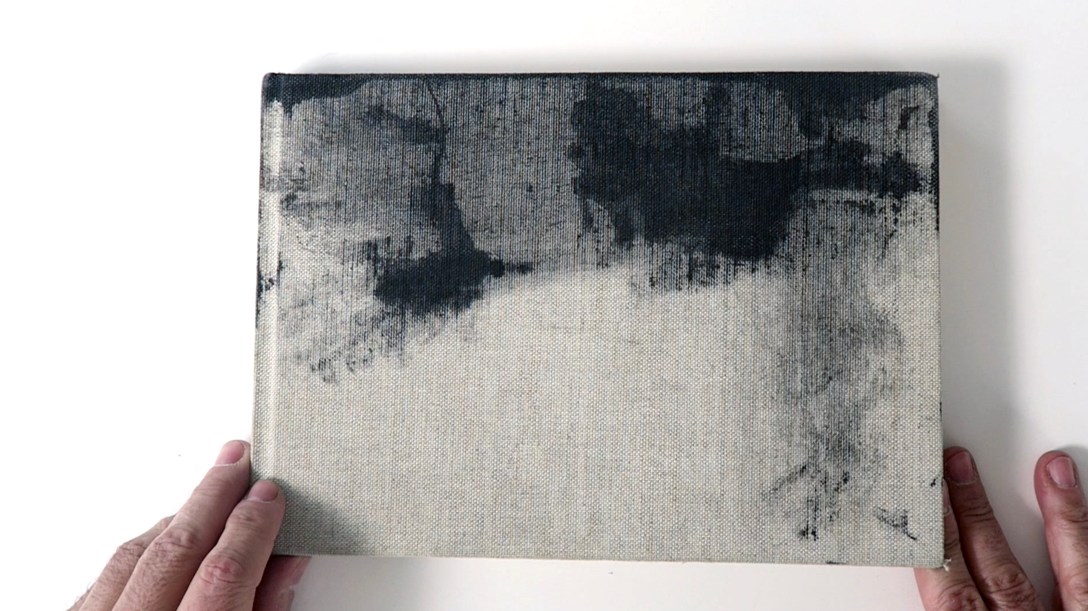
I just uploaded a zillion sketchbook tours from various random points in my library. They’re all on my YouTube channel now and now magically embedded here too.
It’s to celebrate the launch of our new kourse, A Zillion Ways To Fill Your Sketchbook. This kourse is pretty amazing, if I do say so myself. It’s basically an encyclopedic review of what is so freaking amazing about sketchbook art. Trust me, my feeble tours are a mere blip in the firmament of this vast masterwork. Hope you’ll join us.
Meanwhile, here’re the trailer and a dozen tours.
You’re welcome!
 Danny Gregory