Top 16 moments of 2014

This has been a wild and unpredictable year that has taken me around the world and home again.   I sat down this morning with my calendar and recalled the best moments.

  1. Jan 4, Manhattan.  I screened footage I’d shot with my old pal, Tommy Kane. The week before, I’d slogged over to Tommy’s house in Brooklyn to shoot his klass videos for Sketchbook Skool.  It was a long and wonderful day, marred only by the rain hammering on the windows.  Filming this klass was the culmination of the years of videos I’d made with Tommy and Jack.  And the idea that I was working on this huge new project with old friends like Tom, Roz and Prashant, made me really happy, working with family on something I really loved.
  2. Jan 10, Downtown LA. In a moment of wonderful recklessness, I signed up for Clown School and spent several days with a group of complete strangers, revealing myself to them and to me.  It was an intense and transformative experience, breaking down my barriers and showing me I was capable of surprising things.
  3. Jan 15, San Francisco. I hopped on a plane north for the day to see David Hockney’s A Bigger Exhibition. Room after room of huge works by the master, colors, and risk taking that left me humbled.  I never tire of Hockney and he teaches me so much each time. I hope I am a quarter as creative and energetic at 80.
  4. Jan 19, Scottsdale. Jenny and I drove down to stay at the Arizona Biltmore to visit her family and give a talk at a conference.  That night we sat by a fire pit, sipped a beer, and watched the skies and I thought — how lucky I am. Being in this warm and wonderful place with my girl, getting new  people excited about drawing, this is what I want to be doing with my days.
  5. March 5, Los Angeles. I unfolded the boxes we had uses to ship our stuff from New York, set up a chair on the sidewalk, and drew the street I now live, whipping a big black Sharpie across the giant, battered sheets of cardboard.  Then I went back to my garage/studio and started an eleven-foot painting of my neighborhood, the first piece I’d ever done outside of my sketchbook since I’d started drawing again, many years ago.  I felt a new freedom and energy, using bright colors, big shapes, moving my brush with my whole painting.  Later that painting would decorate the walls of Jenny’s Venice office, and for the first time I felt like an artist,  expressing how I felt about my life for the world to see.
  6. April 4, the World. The first klass of Sketchbook Skool opened to maximum capacity. Two thousand students from around the world watched our first videos and started to upload their drawings. This was it!
  7. April 5, New York City. I taught a drawing workshop at the Open Center. It was sold out and many of the attendees had also just started at Sketchbook Skool the day before.  I hadn’t led the sort of workshop since the summer before in Rowe, Massachusetts, and it was so nice to be with people who wanted to learn, to create together, and to show them what I had learned. The cumulative affect of all these folks starting at SBS plus these great students here in person in the classroom was almost disorientingly wonderful.
  8. May 8, Fullerton, CA.  Tommy Kane was staying with us in LA and joined me for trip down to a college near San Diego. The school had a surprisingly great illustration program and loads of enthusiastic students and they asked me to come down and talk about my work. In the audience I also discovered a bunch of my other friends, Jane LaFazio and Brenda Swenson and many students from SBS.  Once again, I had this great cocktail of friends all together, real and virtual, old and new, all celebrating drawing together.
  9. May 12, Boston. Despite feeling like a fraud and an imposter, I gave two back-to-back presentations to thousands of people at the HOW Design conference about my ideas about the Inner critic. Amazingly, Shut Your Monkey was a hit and, immediately after, my editor came up to tell me we just have to turn the Monkey into book. I had a great time at the conference once the ordeal of the presentation was over, hanging with Stefan Sagmeister, and meeting Seth Godin and Malcolm Gladwell. The monkey’s fond of name dropping.
  10. Aug 4, Marfa, TX. Jenny and I realized a long-held dream, driving cross-country from LA to NYC. We stopped midway in this little farm town, which Donald Judd has turned into an art mecca. Sipping long-neck beers, watching the mysterious lights of Marfa, meeting new friends and listening to the train’s whistle, we made memories of a place I’d never known existed two days and at thousand miles before.
  11. Aug 24, NYC.  To celebrate the end of the official three-day Jenny’s Birthday weekend, Jack and I took her on a sunset cruise down the East River on a floating restaurant called the Water Table. As we ate lobster and watch the sunset over Manhattan, I felt a great wave of relief. Despite the wonderful adventures we’d had on the West Coast, it was so calming to be home again with my favorite girl and my tall boy floating past the greatest city of earth,
  12. Sep 21, Bejing.  There were so many wonderful and memorable days during my weeks in China, amazing meals, incredible art, and wild adventures.  I’ll pick one: drawing with a roomful of 8th graders, many mawkish and giggling, sweeping me back to my own days in junior high school when I started to lose my love of art-making for the first time,  as I  began to submerge under the pressure of adolescence. To revive the fun of drawing in these Chinese kids made me feel like my life had a real purpose and I felt incredibly fulfilled, so far from home.
  13. Oct 25, NYC. My partner Koosje and our dean of students, Morgan, came to stay with us in NY to talk about all things SBS.  We ended the visit with a massive drawing meet-up with students followed by a fakulty dinner at our house.  Once again I was struck by all we have done this year, the changes we’ve made to our lives, and the power of art to make us wiser and happier. It might have been the free-flowing bottles of of wine but I welled up at with awe and love for this community and my enormous good fortune at being a party of it.
  14. October 29, NYC. The first advance copies of my new book, Art Before Breakfast, arrives in the mail.  It looks amazing and more than I’d hoped.  It’s filled with art I’ve made over the past year in LA so for me it will always be a powerful memento of a wonderful time of change in my life.
  15. Nov 24, NYC. We asked the students of SBS to make videos describing their experience at the Skool.  I sat down to edit them together and was just so excited by what they’d made and said.That people would take the time and express such honest enthusiasm is more than I’d dreamt would happen when Koosje and I first talked about the Skool a year ago.  There have been ups and downs and loads of work and sacrifice  in this process but seeing these videos brought home to me why leaving my last job to focus on drawing and talking about art was probably not such a bad idea.
  16. Dec 4, Kutztown PA.  I have given lot of presentations about my work over the years but this time was really special.  We’d been invited by our old friend Ann who teaches at Kutztown and it was a crisp autumn day in a lovely town. Ann had put us up in a cozy B&B  and, after the long drive and lulled by the roaring fire place in our bedroom Jenny and I napped for an hour.  Then we popped up, headed to the campus, gave the talk to an enthusiastic room full of folks and went out to dinner. I felt loose, personable, myself — everything flowed. Maybe it was the lingering effects of clown school, or the kid energy in Beijing, or the expanding impact of the Grand Canyon or a sense of well-being that came from having a new book out and another on the way, or maybe it was being in a big room with friends and the girl I love, but it all came together and as I stoodd by the podium, I felt free and strong and right. And a strange feeling I realized was happiness.

Another nice article and video about my visit to China.

Danny Gregory draws artistic creativity from ISB

By Tom Fearon

Artist and author Danny Gregory has led a life as colorful as many of his paintings. Formerly creative director at a multinational advertising agency, his journey from “ad man” to “art man” began in his mid-30s when he started sketching the urban surrounds of his native New York.

Since then he has written and illustrated nearly a dozen books about his life experiences and drawing. Now solely focused on art, Mr. Gregory travels the world sharing his expertise about harnessing creative potential through art and other means.
ISB hosted Mr. Gregory as the school’s artist in residence from September 15 to 26. He interacted with students from all grades throughout his two weeks at ISB, from leading sketching workshops in the lower elementary school to giving seniors advice on what to expect at art school or university.
“I’ve been trying to encourage kids at all ages to feel good about being creative. Little kids are naturally creative and don’t really need a lot of help, but when kids reach late middle school they can start to get anxious about their creativity and feel judgmental about the things they are making,” he noted.
at isb
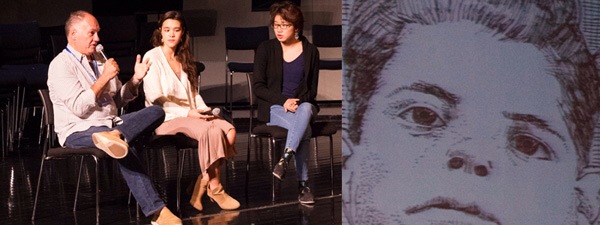
One of his first engagements was participating in a student-led dialogue during a high school assembly on September 17. During the Q&A session, Mr. Gregory spoke about how he used his artistic talent in the corporate world and revealed what inspires him each time he picks up his pencil and sketchbook.
Yasmine R and Rachel W, from years 11 and 12 respectively, led the assembly dialogue and another in the MS/HS Cafeteria on the eve of Mr. Gregory’s final day at ISB. Both said ISB’s external partnerships that bring experts from all fields to the school benefit students of all ages.
“The fact ISB has so many opportunities to invite these speakers and give students a chance to go out and explore what they want to do is fantastic,” said Rachel.
“It’s a great opportunity to engage with really creative artists. We also get new ideas and advice that we can inspire our own creativity as well,” Yasmine said of ISB’s artist-in-residence program.
Mr. Gregory’s visit didn’t only inspire students’ artistic creativity. Li Keqing, a MS/HS Cafeteria server and ISB bus monitor, was chosen by the American artist to pose in one of his paintings that featured her and two of her co-workers.
The following day Ms. Li presented Mr. Gregory with her own artistic creation: a portrait she had sketched based on his photo.
“I was born with a love for drawing. My favorite subjects to draw are people’s faces, so every day at my previous work unit I would find someone seated to draw,” explained Ms. Li, who was forced to abandon her artistic dream in her youth to study machinery manufacturing.
Mr. Gregory said his time at ISB had also inspired a personal artistic evolution driven by tapping “kid energy.”
“It’s been great to be around this many people of so many ages. They inspire me and fill me with their energy as well. I found a lot of the drawing and painting I was doing was changing; I was using different kinds of colors and drawing in a looser style,” he said.

A hundred feet of eighth graders

(A somewhat funky video I made in my hotel room in China)

Learning to draw is not like learning to drive.  You don’t have to master the fundamentals, take courses, pass tests, put thousands of dollars of equipment at risk.  You just have to start.

Drawing isn’t a learned skill so much as it’s a process of discovery that starts with skills you have had since you were a toddler. And that process requires a willingness to stretch and practice, things that can be scary or boring if you approach them with the wrong set of expectations.

One thing that has been reinforced with me over the past few weeks that I have spent drawing with kids is that the most crucial thing is to have fun. If you are all enjoying yourself and slopping ink and paint around, well, you want to keep it doing it. As as you do it, you encounter new situations, you have questions, you want to stretch. And that’s where a decent teacher can step in and show you how to make progress. You also start to feel more comfortable with what you are doing so you are willing to make mistakes and take new risks, and that’s how your adventures to new places begin.

We all need to accept that creativity is not about immediately achieving some sort of awesome finished piece; it’s an exploration of discovery, not a straight-line commute to Perfection.

Of course, this insight isn’t just for junior high. It’s the core idea behind Sketchbook Skool: having new experiences, having fun, exploring with friends, and having opportunities to grow. Speaking of which, the new semester is about to begin. I assume you have already signed up, but if not, get over to our site and enroll.

Some stuff I learned in China that could help you too

dragon

  • 3-year-olds have a lot to teach me about drawing.
  • Chinese people rarely eat rice.  Or dog.
  • Digitizing your entire life is efficient and modern and smart. Until you can’t get online.
  • 10-year-olds can draw with a dip pen and a fountain pen.
  • Strangers are almost always helpful and friendly, especially if they have no idea what you are saying.
  • You can live happily without seat belts, helmets, or walk signs.
  • When you’re four, you’ll draw anything fearlessly. When you’re nine, you’d like to learn to draw real things but deep down would just as soon draw stick figure armies.  At thirteen, all that matters is what others think. At seventeen, you are obsessed with technique and your imagination is a liability.
  • Committing to eating new things doesn’t have to extend to donkey meat, bullfrog, or turtle.

If you’d like to learn even more stuff about all sorts of things, hurry and enroll for the best semester yet of Sketchbook Skool.  See you in klass!

Kitchen Confidential

Remember the cafeteria ladies who worked in your high school? Their last serving of chipped beef may still be lurking in your colon but your probably never knew much about the ladies themselves, not even their names.

I decided to do portrait of some of these hard working people when I was in Beijing, to learn a bit about them and share it with the students who are coming by my studio. I’d been looking at a lot of posters of proud workers from the Cultural Revolution and this take on Soviet realism inspired me. I thought about drawing them on location but I would have just gotten in the way of the preparation of the dozens of dishes they make for thousands of hungry kids. The head of catering took me behind the scenes and we got three women to agree to pose for my camera. Those photos became the basis for a cardboard painting in shades of yellow, red and gold.

When I had completed my painting and had written down what I knew about them in English and Chinese, we invited the models to see what I’d made of them. They were flattered and pleased.

The next day, one of the cooks (the one behind the safety mask) returned — with an amazing drawing she had done of me. Our studio assistant explained that the cook had always wanted to be an artist, and when she was young she had applied to the main art school in Beijing. There was just one remaining place in the class and it was given to a man. So she gave up her dreams and went to work in the kitchen — but she still kept drawing. Now she’s a grandmother but her skills are still exceptional.

Over the next few days, we saw more and more of her art and the school began to celebrate her. Soon there will be articles and videos about her story and hopefully she will be able to live her dream and share her at with the world.

What a strange serendipity. And a wonderful one.

BTW, you’ll find lots of people who are looking to get their art making back on track at SketchBook Skool, those whose skills are rusty as an old barn hinge and those who have been let their love of drawing stay buried beneath a distant failure.
Ready to get out of the kitchen and join us? Come over and enroll.

Meanwhile…

I am enjoying my (hopefully) last day in Beijing.  I’ve been using the time to writing about the lessons I learned here and make a little film or two will be sharing them here over the next few days.

Meanwhile, here are two nice pieces on my visit to Beijing by Rena Tang, a lovely person who I met there:


My glass is half full. But can I drink the water?

So much contemporary fiction these days, especially the stuff for kids and YAs, is dystopian — people trying to survive in a post-apocalyptic world in which electricity and information technology have disappeared. I think that’s because we all know deep down that we are relying on this stuff too much.

That’s been brought home to me over the past couple of weeks here in China.  A hundred times  away I reach for my phone or pull up Google on my laptop … and am stymied in some way (FYI, Google, Facebook, YouTube, and lots of innocuous websites are all blocked here. You need a VPN to get access to them and that is far from reliable. And the powers-that-be are supposedly just randomly choking the life out of people’s bandwidth too).

Under certain circumstances that can be a relief, a way of getting off the maddening treadmill of emails and texts, and I am all for it — when it is self-imposed.  But it can be a real drag when you are lost in a hou-tong (a labyrinthine Beijing neighborhood of twisting lanes and dead ends), Google maps is blocked, and have no way to ask anyone for directions because you can barely say ‘hi’ in Chinese.

And it actually becomes a little scary when you spend two hours sitting on a United plane on a Beijing runway only to be told that your flight has been cancelled and you need to get off the plane, get your bags and find yourself a new flight. Which is what happened to me last night. The flight attendant muttered a phone number over the PA which I scrambled to write down — but my phone (not really working here to make calls, get texts or get data — thanks, Verizon) only reached some incomprehensible Chinese message. 

Eventually another passenger helped me connect but the only flight I could get on would be in forty eight hours, i.e. tomorrow. I made my way to a hotel, tried to make some calls to get an earlier flight, reached lots of dead ends and people who don’t speak any English, and then finally resolved to just chill out here, a dozen thousand miles from home and twenty miles from anything but the airport. 

I left my phone charger in my other hotel, the wifi is spotty (in fact, I’m not sure if I’ll be able to upload this post), a volcano blew up in Japan, there are demonstrations in Hong Kong, a madman apparently burnt down the control tower in Chicago, and my throat is raw from two weeks of Beijing smog.

However, I have a bagful of pens, ten blank pages left in my journal, a really good breakfast buffet, the Discovery Channel, a decent charge on this laptop and there are no zombies or vampires or nuclear plumes out my hotel window. 

It’s all good.

Oh, and I’ll also be polishing my best-ever klass for Sketchbook Skool. It’s all about how to make art when you travel, even just on a trip to the grocery store.  Join me and enroll at Sketchbook Skool.com

Recent Chinese adventures

Internet is kinda tough out here so I am posting my experiences and drawings on Instagram while I travel in China.
 Follow me to stay updated.
Here are a few recent ones.

This place is crawling with dragons!


Mao is still around, a benevolent but irrelevant icon, kinda like George Washington.

Drawing fast and slow with middle schoolers.

My first cardboard painting in Beijing:

My 2nd cardboard painting.

I convinced 150 8th graders to draw each other.

3rd cardboard painting in Beijing.

Artist Danny Gregory inspires during ISB visit

By Tom Fearon

IMG_0691.JPG

New York author and illustrator Danny Gregory began his two-week visit to ISB with a Q&A session at a high school assembly on Wednesday, September 17. Encouraging students to be flexible to change and seek inspiration in their surroundings, Gregory stressed the importance of discovering their creative potential and never losing sight of their passion.

The London-born artist has authored and illustrated more than half a dozen books during a career that has seen him work in the US, Australia, Pakistan and Israel. During his Q&A session, he spoke about how he combined his work as the creative director of an international advertising agency with his artistic talent, and revealed what inspires him each time he picks up his pencil and sketchbook.

Do you have to be an artist to express your creativity?

Everybody has the ability to be an “artist” in some way. You don’t have to create paintings exhibited in a gallery or museum; we all have the potential to express ourselves creatively. Being creative means solving problems and coming up with new ideas. Everything is changing, especially in Beijing.

To think like an artist doesn’t mean you must have that title on your business card, if you even have one. But you have to be prepared to investigate and take risks. You all have the opportunity to be creative in everything you do in school and in life.

It’s less work to do what has already been done, but to be creative you have to always have inspiration and an active mind. Think about how what other people in other fields are doing could influence you; how a director creates a film could be relevant to how you want to create an app. If you want to start a business, look at how people are operating businesses in completely different fields and see how you can apply that.

For me, drawing has always been a useful tool for focusing my mind and seeing the world in a different way. Think of some other form of creative expression, be it creating music or writing poems, and use that to tap into your creativity, keep ideas flowing and make new connections.

What life lessons can you learn through being creative?

Being creative allows you to avoid boxing yourself in. It’s tempting in life to look for a label for yourself, but a more creative approach to life is allowing yourself to expand and take any opportunity that comes your way. This approach can open all kinds of doors for you. I’ve reinvented my life in different ways because I was open to do that, but there have also been times in my life where I felt I needed to be in a “box.” When you do so, you feel safe and can say, “This is where I live and this is where I work.”

But it’s a dangerous thing to do in a way, particularly when you consider the pace our world is changing. If you put yourself in a “box,” you’ll find the world has changed and left you behind because you haven’t been able to adapt.

It’s also tempting to think if you work really hard and develop certain skills, you’ll be set for life. But everything is changing all the time and if you narrowly define yourself, you may end of underprepared.

Be curious by making connections with your surroundings, meeting different people and taking risks is how you will thrive in the future.

How do you manage your responsibilities and cope with stress?

I live in New York City, which is a very busy place, and I was a major executive at an international company that involved a lot of responsibility. But I found that you need to make a commitment to use time to explore. It might be a matter of setting your alarm half an hour earlier to have some time to yourself that you might use by reading something new or creating art. It’s easy to feel overwhelmed by your responsibilities by thinking about how busy you are; try and stay relaxed, and have faith in yourself by remembering you’re a smart, hardworking person. If you check all the boxes by engaging in every curricular activity, applying to all the right colleges and performing really well in your tests it’s easy to believe life will be fine, but life isn’t really that simple.

Considering yourself and what really interests you is more important than following a checklist and doing all the things you feel you have to do. Be true to yourself.

What influenced your decision to switch from advertising to art?

I was a copywriter and wrote lots of commercials before I became chief creative director. I published half a dozen books while working in advertising and also taught workshops.

When I was in my mid-30s I started to draw and keep a record of my life in drawings, but being creative and artistic were things I did all the time. I eventually realized I could decide to do what I wanted to do all the time, which is what I do now. It was tempting for me to think for a long time that I had to be within the corporate structure, but I learned to trust myself and do what was important to me. If they carve anything on my tombstone, it probably won’t be the titles I earned in the corporate world. Hopefully, it will be something a bit more poetic.

Why do you draw unusual scenes in life, such as people standing in line at Costco?

I carry a sketchbook and pen with me all the time, and whenever I have a spare moment I draw. Life is full of spare moments; a lot of the time we spend our spare time using Facebook, texting a friend or staring off into space. I do these things too, but I also use my spare time to draw.

How has living in New York influenced your art?

New York is full of things to draw; there’s so much energy and many things going on, but it’s also my home. I certainly go to museums and galleries and immerse myself in the “Art” world with a capital “a,” but I think of myself as existing in the “art” world with a small “a,” which means art that is part of life.

Danny Gregory will present workshops to ISB art students of various grade levels until Friday, September 26. He will attend a book signing and participate in a student-led dialogue from 4:45 pm to 5:15 pm in the MS/HS Cafeteria and then attend a student art exhibition and book signing from 5:15 pm to 6:15 pm on Thursday, September 25.

News, September 18, 2014 9/18/2014

School daze

IMG_7004

I don’t have loads of fond memories of teachers in high school. And most of the art teachers were especially forgettable. And as you know, the monkey voice in my head makes sure I still retain some ambivalence and self-doubt surrounding my own position as an artist and as a teacher. Nonetheless, I’ve agreed to spend a week with high school students at the International School of Kuala Lumpur and went with a few sketchy ideas and an open mind.

ISKL is a terrific school. It has students from fifty countries, all studying in English, and they go on to top universities in the US and Europe. Great art schools too, RISD, Cal Arts etc. They have lavish resources, a dark room, a theatre, art classes three times a week, a swimming pool, sports fields, a great library — so much more than Jack had in the NYC public schools system.

Whatever they do in life, the school is giving them a solid and broad base of culture. These are well-behaved kids, prepped for success, eyes drooping from after-school tutoring and late-night study sessions. Their parents are diplomats, engineers, top executives in global companies, or the cream of Malaysian society. Several have the talent and drive to get into a great art school, but their parents want them to study economics or law. Still, they are not hectored drones hell-bent on success. Just good kids who need to be goaded to take some risks.

Which was why I was there.

It took me a few false starts to figure out how to proceed. I began with a lecture with almost 100 slides, selling them reason after reason for how great illustrated journaling could be for their lives. I repeated this mistake in three different classes that day.

I went home the first night, still half dead from jet lag, dismayed by the realization that I’d become one of those droning teachers I hated in high school, telling kids what was good for them, urging them to follow my example, using incomprehensible, made up jargon, telling them what was wrong with thinking any way but my own. I’d behaved like I was doing a presentation back at my ad agency, selling my ideas hard, rather than being empathetic, rather than understanding where I was or what they needed. I’d talked so much that first day, we hadn’t even had time to do any drawing.

It’s one of the problems with being an ‘expert’, when you aren’t really sure what your expertise is or how it’s useful. It takes time to recut your experience to suit the current situation, to figure out how what you know night be of service, If you come in hellbent on asserting your expertise or tone-deaf and presenting your same old stump speech, you risk boring or alienating the people you wanted to help. You have to become expert in being an expert. In part, that means, knowing what you don’t know.

IMG_6936

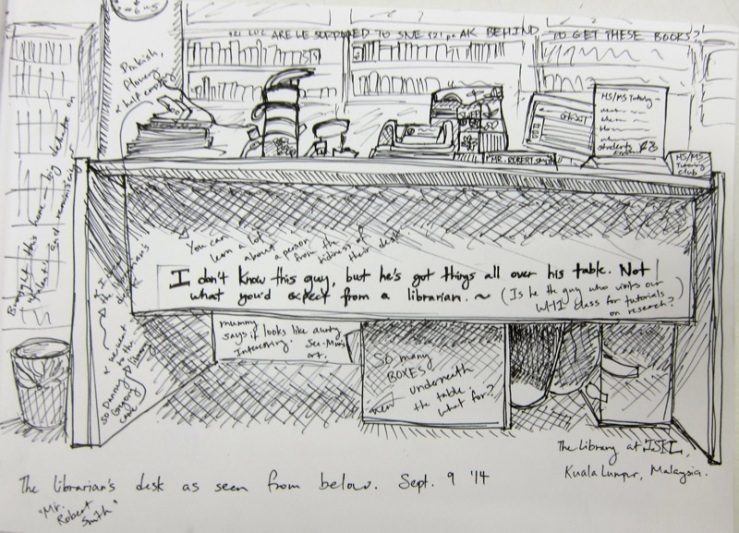
One idea I’d sold my host Ian on, was that we could get the kids to create a whole bunch of great sketchbook pages documenting the stories of the school. They could interview the staff in the kitchen, draw the equipment in the gym, sketch the poses people struck while studying in the library, and at the week’s end, we’d have a great collaborative project that he could curate somewhere. It wasn’t a bad idea but it didn’t set the kids on fire. I was excited to poke into all corners of the school, but these kids spend all day all year there and there were few revelations left, despite my exhortations to discover a new way of seeing. We did spend a couple of days drawing the turtles in the pond, the band rehearsing, the lost and found. But I realized that this very loose assignment was too ambitious and not sufficiently attuned to the way the kids think.

This was not like teaching adults. It’s not the self-motivated atmosphere of Sketchbook Skool. Kids aren’t in high school because they want to be, they’re not looking for ways to realize their potential. They’d much rather hang out with their friends or play video games. So they need you to focus them, tell them what you expect them to do, and make it finite. The older kids are working towards their International Baccalaureate, sort of like AP classes in the US, so they need final projects for their portfolios, not meandering explorations of the recycling cans or the locker rooms. My first days of loose experimentation in creative freedom left them lost, afraid of doing wrong and wasting precious time.

IMG_7005
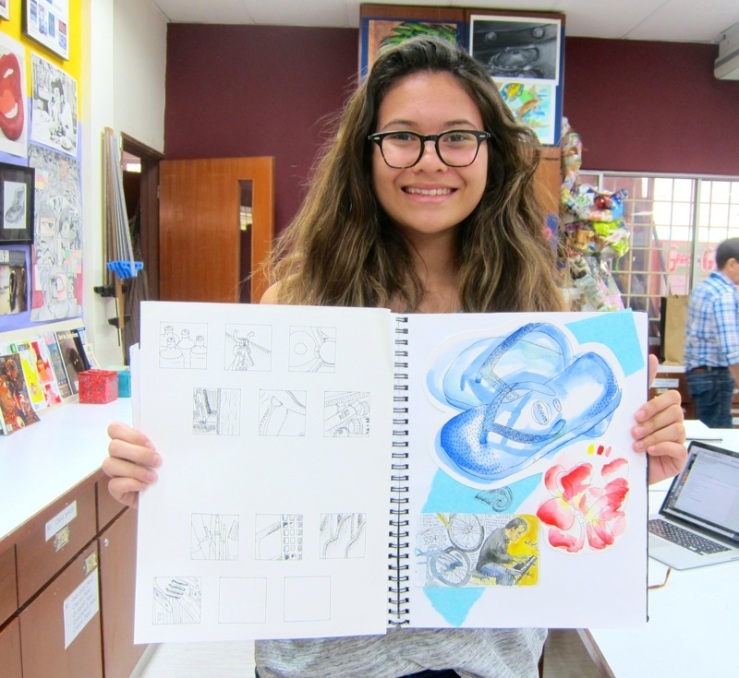
Next we gave them more specific assignments. Draw six things that are round but very different sizes, draw them the same size and arrange them evenly across the page. Draw a stack of books you’ve read in the library, giving them dimension, paying attention to the letterforms. Interview and draw one worker in the kitchen. Draw the place you’ll miss the most after you graduate. This was better, and they certainly did the assignments uncomplainingly, but much of the work was still sketchy and lacked passion.

Next step was to tone down all the demands of illustrated journaling, rather than insisting on 1. interesting drawings, 2. confident line work, 3. insightful, witty stories in 4. nice calligraphy, with 5. good composition and 6. a well laid-out page — let’s just get excited about drawing.

IMG_6958
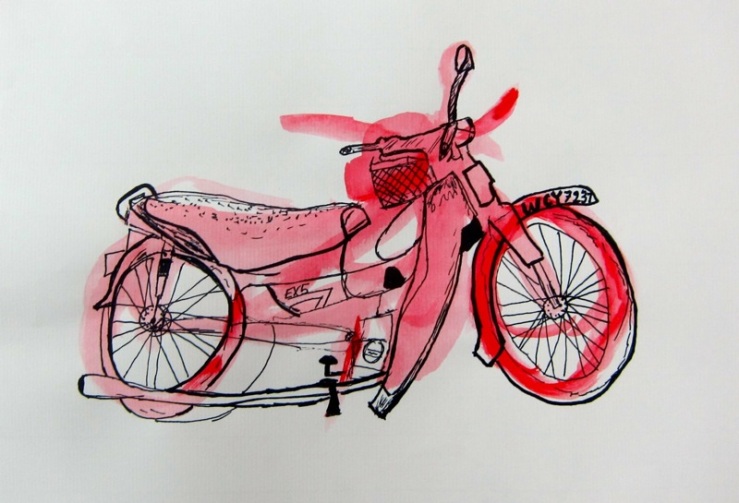
Things took off when I demonstrated how to do a technique I showed in Sketchbook Skool, I call “slow/fast”. First we drew a one-minute gesture drawing with a fat brush dipped in watercolor, followed by a carefully observed, detailed pen drawing right on top of the initial study.

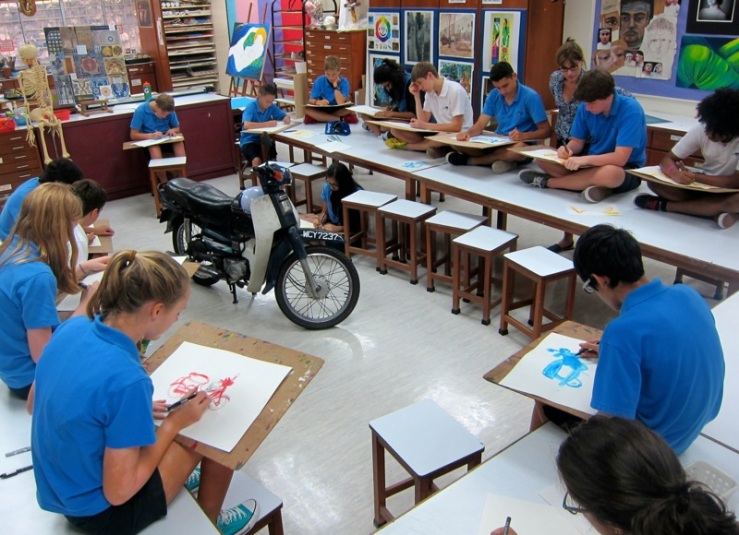
We wheeled a motor scooter into the middle of class and sat around it drawing. The kids were silent, lost in drawing, and the results were awesome. The teacher told me, “This is usually my most unruly and disruptive class and I have never seen them so engaged. And I love the drawings they did. Many asked if they could keep working on them in their free time.”

IMG_6983

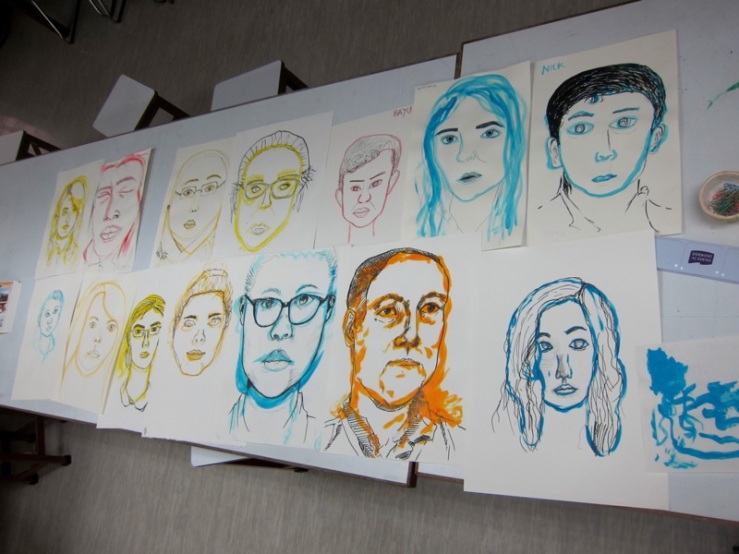
I tried the same Slow/Fast technique with another group, dividing them into pairs and having them pose for each other. The portraits were a huge leap from the work they’d done early in the week, individual, well-observed and alive.

IMG_6975

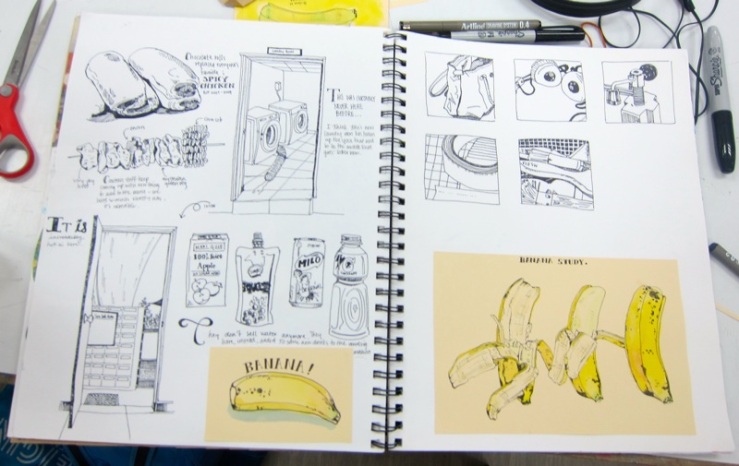
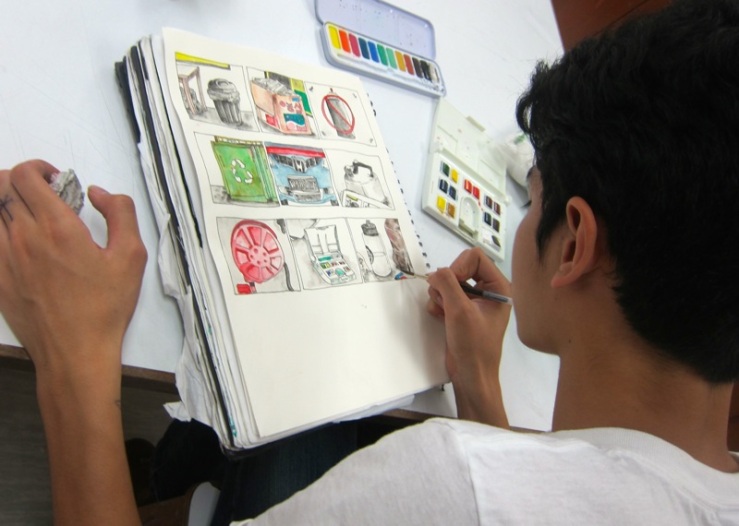
Next we made a dozen or more squares on the page, then drew little snapshots of random scenes through a viewfinder, like a contact sheet or scenes from a movie. Again, the drawings were carefully observed and lively, the compositions were interesting and fresh. Initially we knocked out each little drawing in a minute or two, but then many of the kids went back and added more detail and color.
IMG_6999I also taught through example. I shared the pages I had made outside of class drawing around Kuala Lumpur, I passed around old sketchbooks, showed images I had made over the years. I did a lot of drawing, participated in the exercises, then walked around pointing things out here and there, try this, consider that.
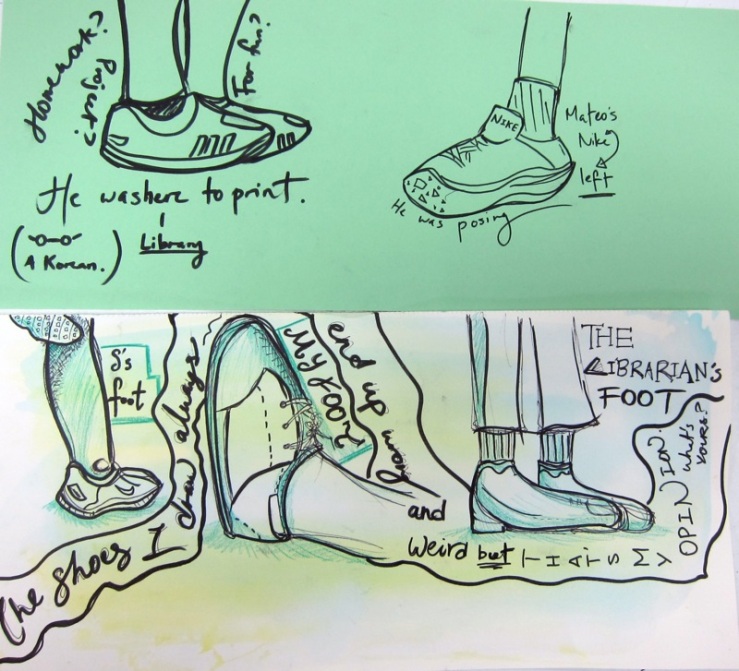
On the last day, I hauled out my slides and books again, and this time the response was different. Now they loved drawing and it made sense so we could delve deeper into conversations about layout, expression, inspiration, technique, possibilities.

My biggest lesson was that you first need to show students how it feels to love making art. You need to have that momentary flash when you see why it’s so great. It could be the deep meditative experience that comes from really concentrating and going deep. It could be that moment when you pull out of that daze and look at what you have made and are blown away. Just doing one great drawing give hope. Even if the next one sucks, you know you can do it because you did it once. And when you have that knowledge, you have secure ground to build on.

IMG_6922
Early in the week, one girl made several really great pages but I would hear her muttering to herself or her neighbor how much she sucked at drawing. Then I saw that she had written, in graceful swirling letters, right on her page, that she thought this drawing was awful and that she was no good. I explained how untrue I thought this was but also how, by asserting it over and over, she was creating a self-fulfilling process. We kept pushing ahead with more experiments that would distract her monkey mind and by the week’s end, she showed me drawing after drawing with pride.

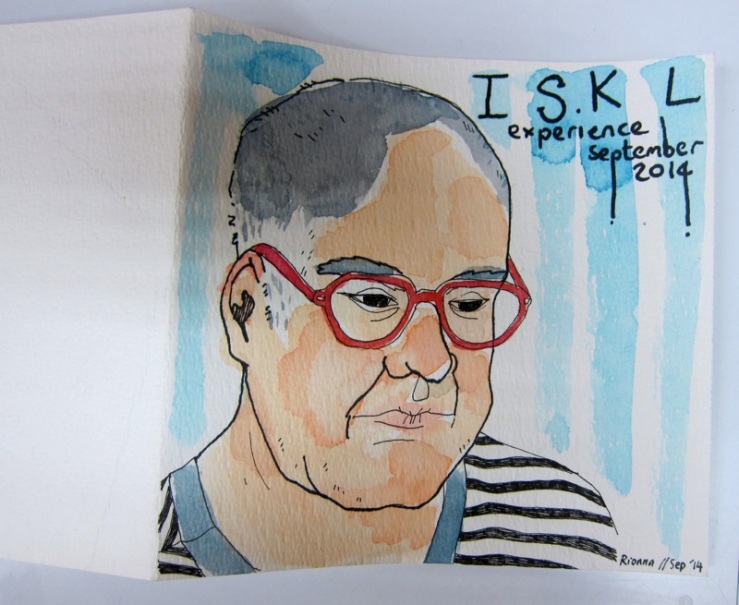
I felt good but I wasn’t really sure if I’d really made an impression on the classes. So many of these kids are reserved and polite and not effusive and the monkey was still wondering if all this time and travel and work had been worthwhile, for them or for me. On Saturday afternoon, I went back to my desk to pack up my stuff and there on my laptop was a card. On the cover was a lovely watercolor portrait of me and inside the students had written (neatly lettered and beautifully composed) how much my time had meant to them, how much they had learned, how they now embraced risk and mistakes and how grateful they were I had come to their school.

IMG_7011
It felt like every corny movie about teaching I’ve ever seen, Mr. Chips, Mr. Holland, Mr. Kotter, but I was really touched. It’s a cliché, I know, but those kids taught me more than I taught them.
Now on to Beijing, to learn some more.